




Can magnesium bisglycinate blend safely with vitamin B6 or ashwagandha in stress support supplements?
Magnesium bisglycinate combined with either vitamin B6 or ashwagandha is an appealing formulation technique for supplement firms producing stress support, relaxation, and sleep-oriented products. But making a successful product is more than just combining three popular chemicals in the same capsule. All their chemical qualities, active concentrations, moisture sensitivity, manufacturing conditions, and end product stability must be addressed. Shaanxi Hongda Phytochemistry Co., Ltd. Hongda Phytochemistry sells magnesium bisglycinate chelate powder to nutraceutical producers requiring consistent quality of raw material and flexibility of formulation. Its stated parameters are 98% product spec, 20% elemental magnesium, and a reported test of 99.5%. Real magnesium composition, humidity, and compatibility testing are key to reliable commercial manufacturing for firms looking to produce magnesium-B6 capsules or magnesium-ashwagandha stress support mixes.
Why Magnesium Bisglycinate Works Well in Stress Support Formulations
Magnesium Supports Multiple Physiological Processes Related to Stress
Magnesium participates in hundreds of enzyme reactions and helps keep muscle and nerve cells working properly. It is involved in energy metabolism, neuromuscular transmission, and physiological processes associated with the maintenance of proper nervous system function. That’s why you’ll commonly find magnesium in dietary supplements designed to enhance relaxation and general wellness. Magnesium bisglycinate chelate powder offers a special supply of magnesium based on an amino acid. In this form, magnesium is coupled to the amino acid glycine. This kind is often used in premium formulations instead of standard inorganic magnesium compounds, due to its ease of digestion and mineral purity. But marketers should not be marketing magnesium supplements as a treatment for anxiety, insomnia, or stress-related issues. Its function in a commercial formulation should be described within the allowable nutritional claims and substantiated by the scientific evidence required. The NIH Office of Dietary Supplements provides complete information on the physiology and dietary requirements of magnesium.[1]
Why Magnesium Bisglycinate is a Good Choice for Relaxation Products: Glycine
Glycine is a naturally occurring amino acid in the body that participates in both protein synthesis and neurotransmission. The coordinating ligand in magnesium bisglycinate also forms the chelate structure. This combination offers the formulator a material that is chemically distinct from either magnesium oxide or magnesium carbonate. The important factor for manufacturers is knowing whether it is chelated magnesium and not simply magnesium with free glycine mixed in. So a specification for a magnesium bisglycinate chelate powder should include: chemical identity, elemental magnesium, assay, and free glycine. These features are particularly important, especially in the creation of premium relaxation products, since ingredient consistency has a direct effect on the calculation of formulations and on the declaration of the label. Hongda Phytochemistry uses regulated liquid-phase chelation in its production process. The product data indicates that the free glycine is controlled to less than 2%. When evaluating this standard, buyers should ask for the analytical method necessary and evidence particular to the batch.
Can Magnesium Bisglycinate and Vitamin B6 Be Used Together?
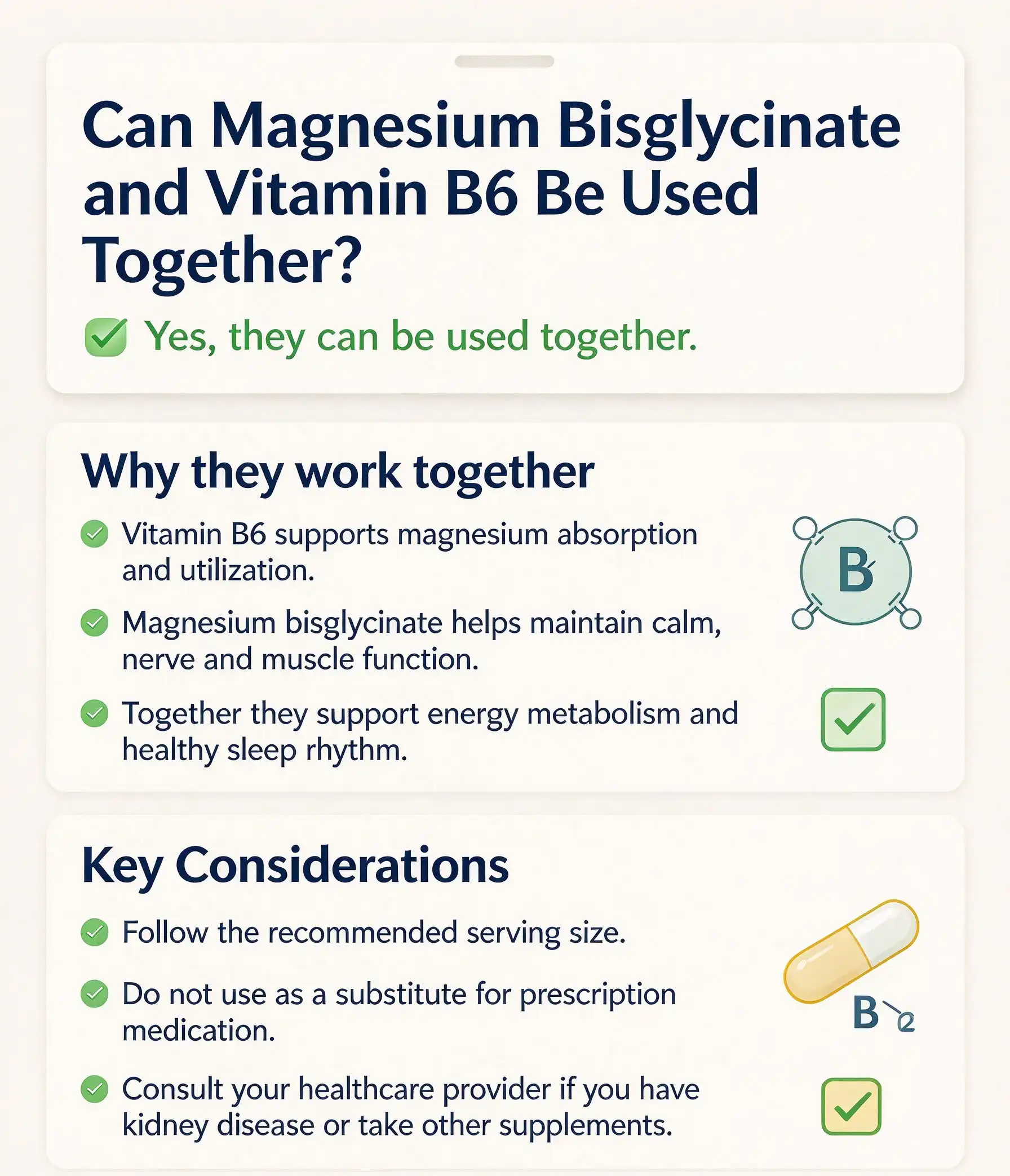
Yes. Magnesium and vitamin B6 may be taken together as one dietary supplement, and this combination has been investigated in humans. Vitamin B6 is crucial to aspects of normal nervous system support, helping with amino acid metabolism, neurotransmitter generation, and healthy nervous system function.[2] A randomized clinical study in 2019 compared magnesium supplementation with magnesium plus vitamin B6 in stressed individuals with low magnesium levels. Both groups improved, although not significantly better overall for the combination. In a cohort with greater baseline stress, better improvement was shown with the combination formula. That’s a crucial distinction for responsible marketing: the study doesn’t prove that any and all magnesium-B6 pills deliver additional benefits for stress. But magnesium bisglycinate chelate powder and vitamin B6 might be a terrific match for well-designed nutrient products.
What Makes Magnesium-Ashwagandha Combinations Interesting?
Ashwagandha is a plant ingredient used in ancient Ayurvedic practices and is being added to modern stress support products. The quantities of withanolides and other constituents in extracts depend on the plant material, the solvent used for extraction, and the manufacturing process. While study formulations and doses vary greatly, a number of clinical trials have investigated ashwagandha for perceived stress, anxiety, and sleep outcomes.[3] Magnesium chelate bisglycinate is a supplemental mineral ingredient for formulations targeted to nutritional and botanical ingredients. However, the combination of these materials should not be taken as proof of a synergistic therapeutic effect. Brands have to make the identification, standardization, and stability of the botanical extract. According to the NIH Office of Dietary Supplements, research regarding ashwagandha is promising, but there isn’t sufficient information on its safety for long-term use.
Health Professional Fact Sheet
|
Ingredient
|
Main formulation role
|
Important quality considerations
|
|---|---|---|
|
Magnesium bisglycinate
|
Magnesium source and amino acid chelate
|
Chelation identity, elemental magnesium, free glycine
|
|
Vitamin B6
|
Vitamin component supporting normal nervous system function
|
Pyridoxine form, assay, moisture and dosage
|
|
Ashwagandha extract
|
Botanical component for stress-oriented formulations
|
Botanical identity, withanolide standardization, contaminants
|
|
Vitamin B12
|
Optional nutritional component
|
Active form, potency, light stability
|
|
L-theanine
|
Optional amino acid ingredient
|
Identity, purity, particle size and compatibility
|
How to Formulate Magnesium With B6 or Ashwagandha SuccessfullyChoose the Correct Vitamin B6 Form Before Calculating the Formula
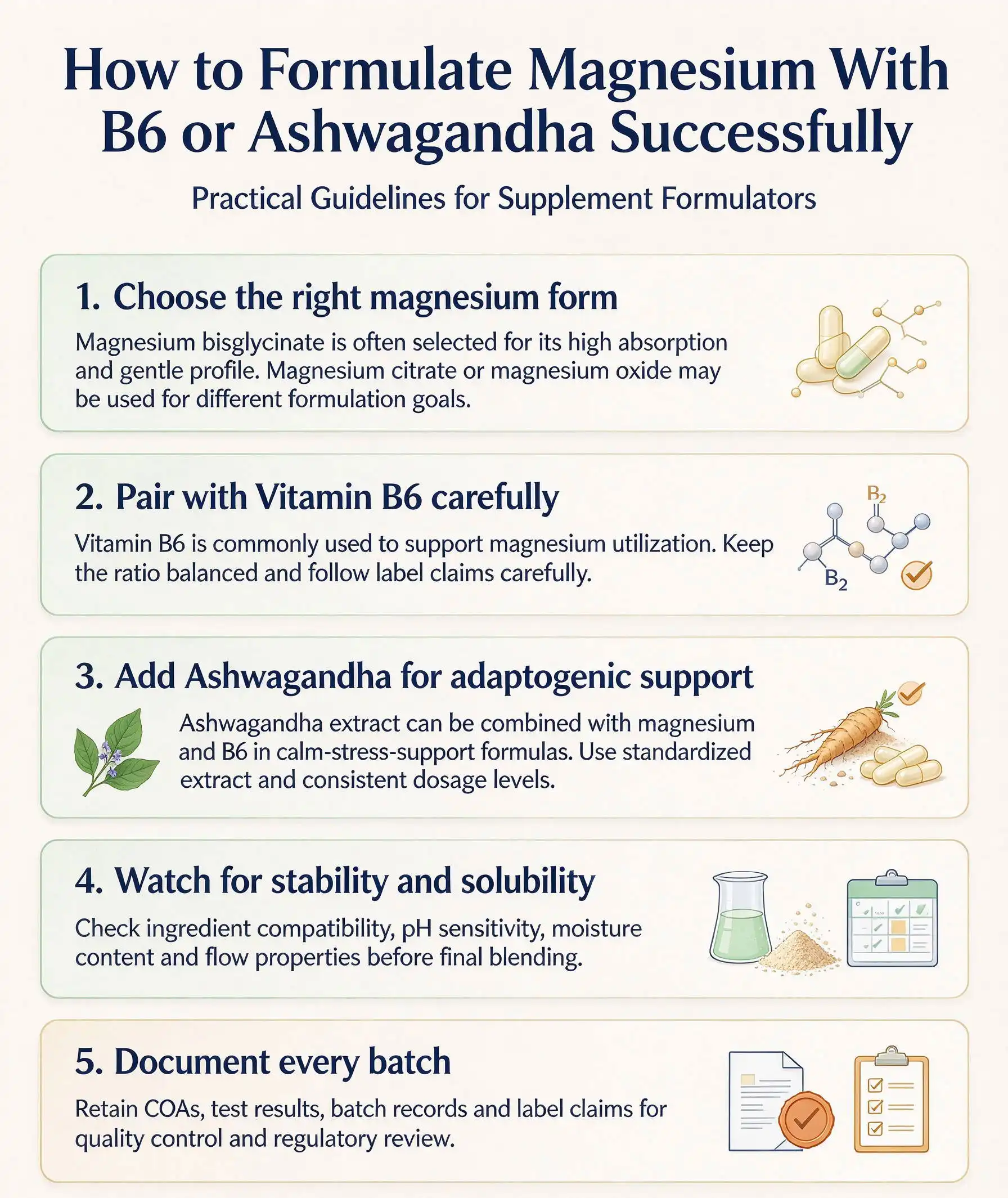
Vitamin B6 has many forms, such as pyridoxine hydrochloride and pyridoxal-5-phosphate. Pyridoxine hydrochloride is also a common option within the conventional supplement manufacturing business, since it offers a handy raw material for the production of capsules and tablets. Another alternative for developers of specialist nutrition formulae is pyridoxal-5-phosphate. Selection is based on target market demands, cost of ingredient, data on dosage and stability. When either form is coupled with magnesium bisglycinate chelate powder, the formulator should compute the elemental magnesium as the nutritional magnesium dose, rather than the total chelate ingredient weight. This is especially important since commercial grades differ in their elemental magnesium concentration. Batch-specific COA should be available to verify the exact composition prior to approval of formulation calculations. Finished product testing over the indicated shelf-life should confirm magnesium and vitamin B6 levels.
Standardize Ashwagandha Extract Before Combining It With Magnesium
Ashwagandha extract is a complex plant material, not just a single mineral molecule. Two extracts with the same plant name might have substantially distinct profiles of active ingredients. Some are standardized to total withanolides, some to particular withanolides or proprietary extraction processes. These differences might be in color, taste, behavior with moisture, and compatibility with other substances. Therefore, while preparing blends of magnesium bisglycinate chelate powder, the manufacturers should confirm the botanical identity and the level of standardization before testing the blend. The identified botanical markers may be verified by HPLC or other suitable chromatographic methods. You should also consider carrier components, extraction solvents, residual solvents, and contamination limits. This helps formulation teams avoid presuming all ashwagandha extracts are interchangeable, and it makes the finished product easier to standardize between production batches.
Select Dosage Based on Elemental Magnesium and Market Requirements
One common error in formulation is to base the dosage of magnesium on the total weight of magnesium bisglycinate, rather than the amount of elemental magnesium in the compound. Separate numbers. For example, a commercial grade that is 20% elemental magnesium would potentially need 500 mg of that ingredient to produce 100 mg of elemental magnesium. But this calculation is only accurate if the true composition of the product and batch is confirmed at 20%. The theoretical elemental magnesium concentration of pure anhydrous magnesium bisglycinate is around 14.1%. Clarity of formulation and any other magnesium source. Superior commercial standard. Hongda product site: 98% standard, 20% magnesium. Buyers should compare these numbers to the supplier’s compositional explanation before deciding on labeling. This applies especially to magnesium bisglycinate chelate powder for US and European markets.
Build a Compatibility Matrix Before Moving to Mass Production
A mixture in the laboratory may seem homogeneous immediately after mixing but may behave differently after several weeks of storage. Therefore, vitamin B6 and ashwagandha should be investigated independently and in conjunction with bisglycinate de magnesium bisglycinate wholesale in China. The initial screening should cover color, odor, powder flow, particle size distribution, moisture, and visible aggregation. Then the consistency of the mixture, the behavior of the capsule filling, the tablet compression, and the recovery of the active ingredient should be tested. You may require further testing on taste, solubility, texture, and water activity for candy or drink powders. The individual ingredients, two-component combinations, and the final three-component formula are summarized in a convenient compatibility matrix under identical environmental conditions. This means R&D teams can identify which ingredient or interaction is responsible for the change, rather than making unnecessary changes to the whole mix.[6]
For supplement manufacturers developing magnesium-B6 capsules or magnesium-ashwagandha blends, selecting a reliable raw material supplier is an important step toward achieving consistent formulation quality. Before moving to pilot production, it is worth verifying elemental magnesium content, chelation identity, moisture levels, and compatibility with other active ingredients. Hongda Phytochemistry provides magnesium bisglycinate chelate powder for bulk nutraceutical applications, with technical specifications and quality documentation available for supplier evaluation. If you are planning a new relaxation or stress support supplement, contact the Hongda technical team at duke@hongdaherb.com to discuss raw material specifications, request a sample, and explore suitable ingredient options for your formulation.
Protect Blend Stability From Moisture, Caking, and Ingredient Interactions
Why Hygroscopicity Matters in Magnesium-Botanical Blends
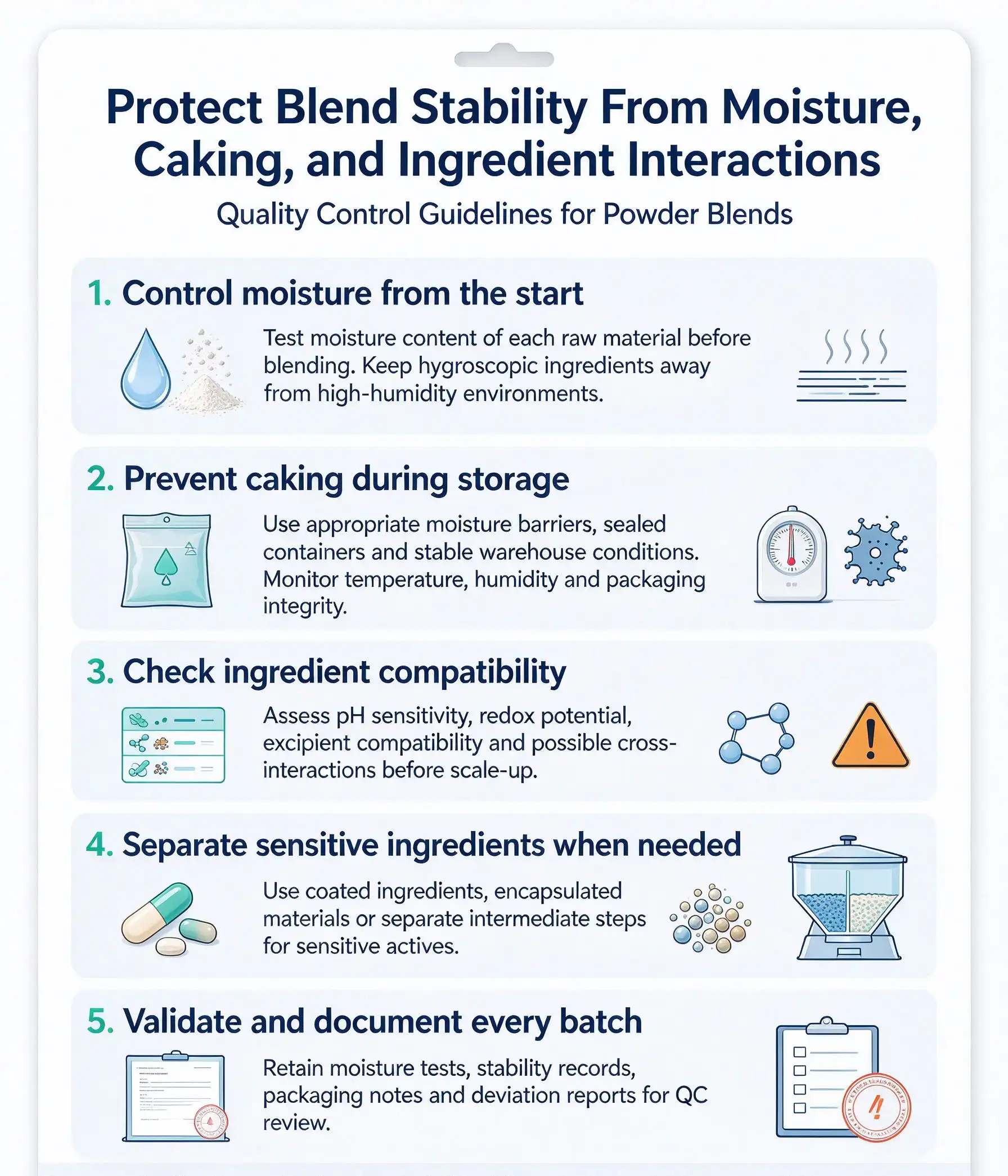
We point out the issue of moisture management when mixing minerals with plant extracts. The powders of ashwagandha may have some residual moisture and may also contain various carrier materials and vitamin components that may respond differently to humidity and temperature. When combined with magnesium bisglycinate chelate powder, the combination may show changes in flowability, particle aggregation, and storage behavior. Such modifications may affect the accuracy of the filling of the capsule and the efficiency of the production of the tablet. Buyers should get loss on drying data and, if appropriate, water activity figures for each ingredient. Hongda’s stated magnesium bisglycinate loss on drying is 3.20% with a maximum specification of 5.0%. Its product description also mentions reduced hygroscopicity performance and better particle morphology. However, the stability of a final magnesium-B6-ashwagandha combination has to be established by actual formulation testing and cannot be extrapolated from the individual specification of the mineral element.
How to Reduce Caking During Storage and Transportation
Caking is a common phenomenon wherein powder particles absorb moisture, develop liquid bridges, or suffer physical changes during long-term storage. These problems are especially difficult to foresee in the face of temperature differences in international transportation. Therefore, adequate packaging and controlled warehouse conditions are required for bulk magnesium bisglycinate chelate powder. Hongda describes the use of pressure-resistant fiber drums with double-layer polyethylene inner bags. The product site further states that aluminum foil sealing and nitrogen flushing protect the powder from moisture exposure during long-distance marine shipping. Standard packaging: 25 kg per drum, 27 drums per pallet. However, it is up to buyers to conduct their own package validation, such as seal integrity and accelerated humidity exposure testing. Moisture-proof containers and properly designed desiccants may also be used for the finished supplements to help retain the flowability of the powders and the stability of the contents during their intended shelf life.
Detect Incompatible Ingredients Before They Affect Finished Products
Not all chemical reactions are simple ingredients that don't go together. Sometimes the first sign may be a change of color, smell, dissolution, or powder spreading. Botanical extracts may include naturally occurring acids, polyphenols, carbohydrates, and residual processing components that impact the behavior of a mineral blend. The specific form of vitamin B6 selected may also need to be protected against poor storage or production conditions. Manufacturers should thus look at the recovery of active components, degradation signs, and physical qualities over time. In the case of the magnesium bisglycinate chelate powder with ashwagandha, special attention should be given to the carrier system of the botanical extract, which may affect moisture absorption and blend consistency. The stability program should include initial, intermediate, and final testing under defined temperature and humidity conditions. These results provide a better basis for the determination of a shelf life than the simple averaging of the expiration dates of the constituent components.
Use Pilot Production to Confirm Commercial Manufacturing Performance
What works in the laboratory beaker may not work on the commercial manufacturing line. Segregation or uneven distribution of the active ingredient may occur due to variations in the geometry of the mixer, the time of mixing, the size of particles, and the density of the mixture. Before pilot-scale manufacturing, laboratory compatibility testing must be done. The practical development approach begins with small laboratory batches, followed by pilot blending and finally testing representative samples from production-scale runs. Measured magnesium bisglycinate supplier. The key parameters include blend homogeneity, bulk density, capsule weight fluctuation, tablet hardness, and assay of the completed product. Hongda’s product description mentions an instant-dissolve grade, which is believed to dissolve 40% faster than standard powders, and particle morphological adjustment to avoid sticking during tablet compression. Brands should inquire about equivalent test conditions and verify performance in their own production equipment before making these claims in commercial product development.
How to Verify Raw Material Quality and Choose a Reliable Supplier
Check Chelation Identity Instead of Relying on Marketing Claims
And just because a magnesium ingredient is called bisglycinate doesn’t mean it’s a completely chelated product. Commercial products may include a combination of magnesium oxide and glycine, which might provide a deceptive impression if the buyer simply looks at the appearance or the total assay. The FTIR spectroscopy may provide information on coordination-related structural features, and the total magnesium can be determined by ICP-OES or atomic absorption spectroscopy. HPLC with a suitable approved technique may be useful in the determination of free glycine. These exams address diverse questions and should be read together. Hongda says it uses FTIR verification and a regulated liquid-phase chelation process for its magnesium bisglycinate chelate powder. The published product information says free glycine is less than 2%. Buyers should acquire representative batch data and understand the analytical foundation for a chelation claim before accepting it. This is especially important when comparing wholesale magnesium components from various suppliers.
Evaluate Batch Testing and Factory Manufacturing Capabilities
A good supplier should be able to show the journey of each batch from raw material inspection to finished-product release. Shaanxi Hongda Phytochemistry Co., Ltd., founded in 2001, covers an area of around 20,000 square meters with more than 10 contemporary production lines and 100,000-class purification workshops. The firm has over 150 workshop personnel and a yearly manufacturing capacity of up to 3,000 tonnes throughout its ingredient range. It has a laboratory set up with university professors and equipped with HPLC, GC, spectrophotometers, atomic absorption, and other testing equipment. The key concern for clients procuring magnesium bisglycinate chelate powder is whether these capabilities allow documented, batch-specific testing. So, procurement teams need to ask for current COAs, raw material specs, testing methods, equipment calibration documents, and retained-sample rules — not just the factory scale.
Review the Actual Product Specifications Before Ordering
Hongda’s published product information is a good beginning point for supplier qualification. The magnesium bisglycinate chelate powder is said to be a white powder, is 98% specification, and has 20% elemental magnesium. The published analysis shows an assay of 99.5%, loss on drying of 3.20%, and ash content of 4.10%. Microbiological findings include total plate count below 1,000 CFU/g, yeast and mold below 100 CFU/g, and negative for E. coli and Salmonella. According to the published heavy metal results, the amount of Arsenic and Lead is 0.68 ppm. These numbers should be taken along with the actual analytical procedures and the commercial grade. In particular, the 20% magnesium claim has to be reconciled with the composition of pure anhydrous magnesium bisglycinate, which potentially contains ~14.1% magnesium. Transparent specification review helps businesses avoid the pitfalls of faulty label calculations and unanticipated ingredient variances.
|
Quality indicator
|
Hongda published result
|
Why it matters for combination formulas
|
|---|---|---|
|
Assay
|
99.5%
|
Supports raw material identity and specification review
|
|
Loss on drying
|
3.20%
|
Helps assess moisture-related stability
|
|
Ash content
|
4.10%
|
Provides additional composition information
|
|
Particle size
|
100% passing 80 mesh
|
Supports blending and processing evaluation
|
|
Total plate count
|
Below 1,000 CFU/g
|
Microbiological quality control
|
|
Yeast and mold
|
Below 100 CFU/g
|
Important for botanical-mineral blends
|
|
E. coli
|
Negative
|
Microbiological safety assessment
|
|
Salmonella
|
Negative
|
Microbiological safety assessment
|
Source: Hongda Phytochemistry's published magnesium bisglycinate product analysis. Actual batch COAs should be obtained before purchase.
Confirm European and American Compliance Documentation
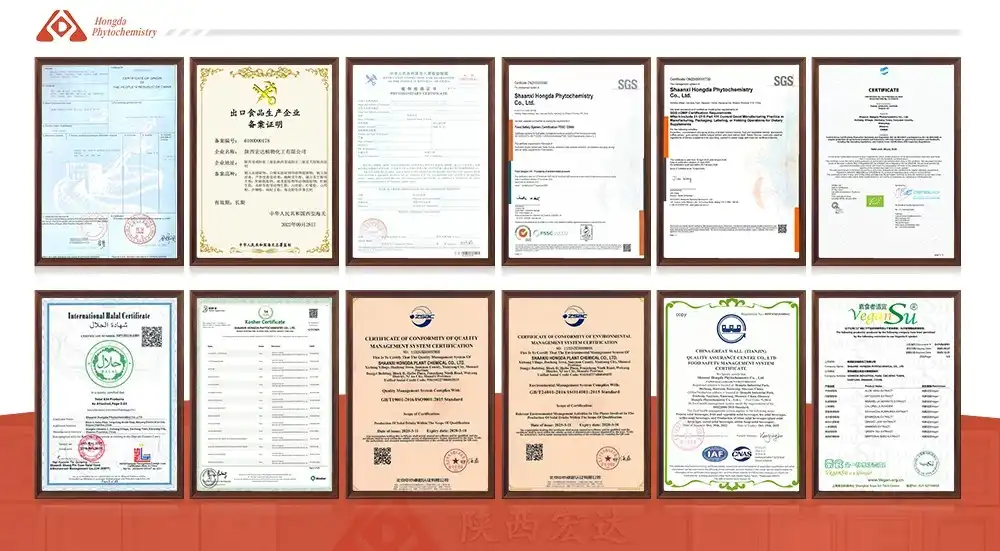
Before a stress support formula goes into commercial production, regulatory documents should be checked. In the United States, dietary supplement producers are required to follow relevant FDA rules, including 21 CFR Part 111, which governs production, packing, labeling, storage, and quality control. In Europe, Directive 2002/46/EC provides the framework for vitamins and minerals in food supplements, although botanical ingredients are still subject to further review under the relevant national legislation. Brands should also check the permissible types of ingredients, maximum levels of usage when appropriate, limitations for contaminants, declarations for allergens, and the language used in marketing claims. Hongda has certifications and qualifications including cGMP, FSSC 22000, ISO 22000, ISO 9001, BRC, Halal, Kosher, and organic certifications from the EU and USDA NOP. Buyers should get current certifications and verify their scope and validity. In particular, national regulatory variances and safety concerns need independent study for ashwagandha products.[3][4][5]
Conclusion
When ingredient identity, dose, compatibility, and finished-product stability are carefully examined, magnesium bisglycinate may be coupled with either vitamin B6 or ashwagandha in stress support supplements. Vitamin B6 gives an alternative nutritional choice. Ashwagandha is a botanical formula alternative. But good product creation is more than choosing the ingredients. Commercial quality is a function of real chelation, elemental magnesium precision, moisture control, batch consistency, and regulatory paperwork. Hongda Phytochemistry has production facilities and laboratory testing capability to supply herbs magnesium bisglycinate wholesale in China. Brands may be supported by reputable sources of raw materials and thorough formulation experiments to provide a consistent product for worldwide markets.
FAQ
1. Can magnesium bisglycinate be combined with vitamin B6?
Yes. Both ingredients can be included in the same supplement, provided their dosages, specifications, and finished-product stability are properly evaluated.
2. Can magnesium bisglycinate and ashwagandha be used together?
Yes. They can be formulated together in stress support products. However, their combination does not automatically establish a synergistic clinical effect.
3. Does magnesium bisglycinate react with vitamin B6?
They are generally compatible formulation ingredients. Manufacturers should still conduct blend uniformity and stability testing.
4. How can manufacturers prevent moisture-related caking?
Use moisture-resistant packaging, controlled warehouse conditions, appropriate desiccants, and accelerated humidity testing.
5. What should buyers check when purchasing magnesium bisglycinate powder?
Review FTIR identity, elemental magnesium, free glycine, moisture, heavy metals, microbiological results, and batch-specific COAs.
Develop Your Next Stress Support Formula With HONGDA
A successful stress support supplement starts with reliable ingredients and careful formulation development. HONGDA supplies magnesium bisglycinate chelate powder for nutraceutical manufacturers, private-label brands, and ingredient distributors seeking consistent bulk raw materials. Whether you are developing magnesium-B6 capsules, magnesium-ashwagandha blends, relaxation powders, or multifunctional nutritional formulas, our team can help evaluate ingredient specifications, particle sizes, compatibility, and quality documentation. With manufacturing experience dating back to 2001, established laboratory resources, and international quality certifications, Shaanxi Hongda Phytochemistry Co., Ltd. supports customers throughout ingredient selection and procurement. Contact our technical team at duke@hongdaherb.com to request product samples, obtain a batch-specific COA, and discuss your next wholesale magnesium ingredient project.
References
1. National Institutes of Health, Office of Dietary Supplements. Magnesium: Fact Sheet for Health Professionals. NIH.
2. Pouteau, E., Kabir-Ahmadi, M., Noah, L., et al. Superiority of Magnesium and Vitamin B6 over Magnesium Alone on Severe Stress in Healthy Adults with Low Magnesemia: A Randomized, Single-Blind Clinical Trial. PLOS ONE, 2018, 13(12): e0208454.
3. National Institutes of Health, Office of Dietary Supplements. Ashwagandha: Is It Helpful for Stress, Anxiety, or Sleep? Health Professional Fact Sheet. NIH.
4. U.S. Food and Drug Administration. Current Good Manufacturing Practice in Manufacturing, Packaging, Labeling, or Holding Operations for Dietary Supplements, 21 CFR Part 111.
5. European Parliament and Council. Directive 2002/46/EC on the Approximation of the Laws of the Member States Relating to Food Supplements. Official Journal of the European Communities, 2002.
6. International Council for Harmonisation. ICH Q1A(R2): Stability Testing of New Drug Substances and Products. 2003.