




How to avoid orange color fading of liposomal CoQ10 powder during mass production?
If you ask a production manager what the first thing to fail in a liposomal CoQ10 campaign is, they will never tell you it’s an assay discrepancy; it’s a paler orange than the drum before it. Color change is the first signal a plant receives. The color of coenzyme Q10 maps its chemical integrity practically line for line. Hongda Phytochemistry: orange is seen as a process variable, not decoration. Each liposomal coenzyme q10 powder is engineered to prevent the. Shaanxi Hongda Phytochemistry Co., Ltd. regulates the four triggers that bleach color during scale-up: heat over the payload's melting range, dissolved oxygen during atomization, excessive shear, and trace contact metals. The result is a consistently yellow-orange powder which is still in agreement with the authorized sample.
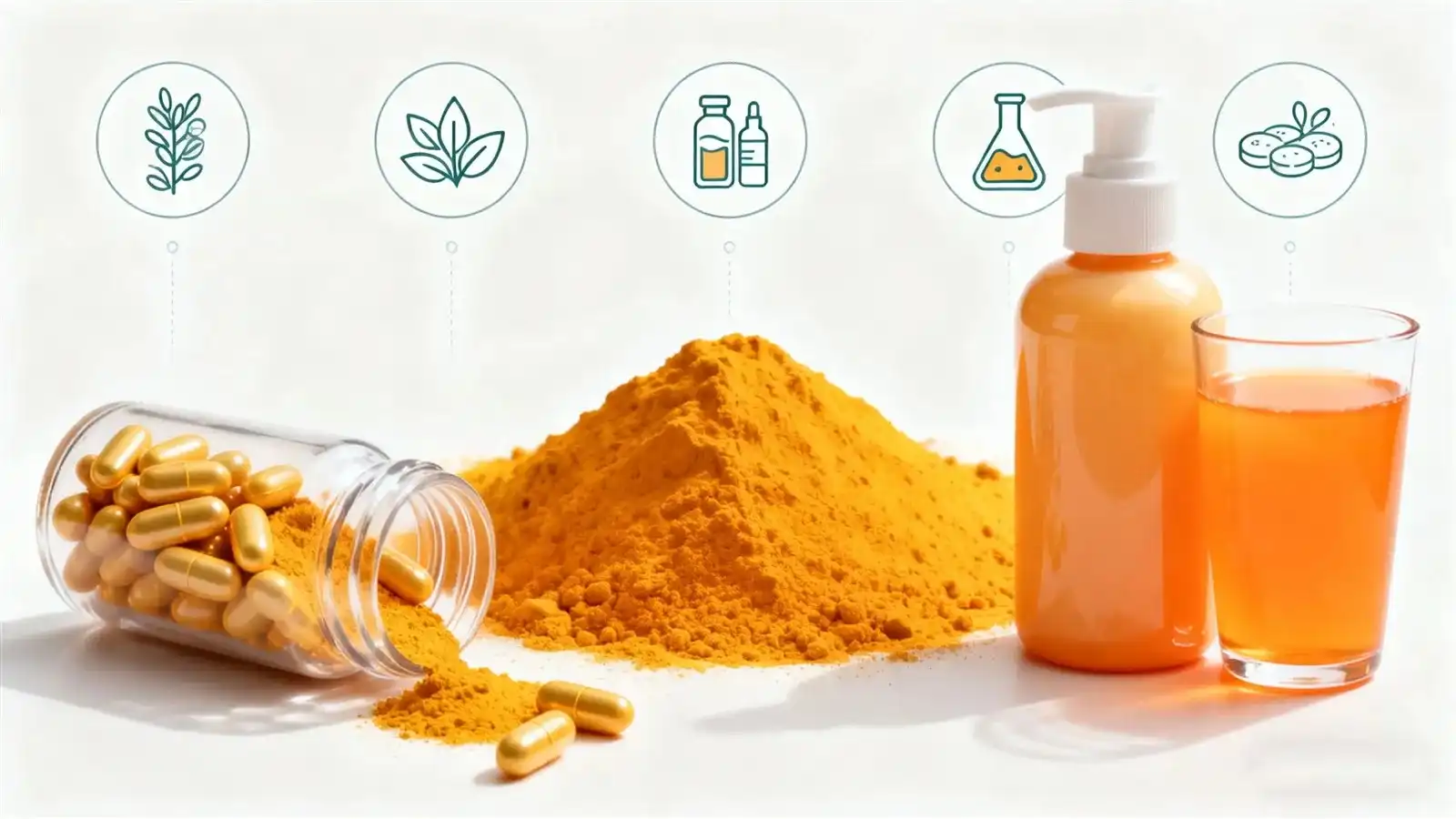
Reading the Orange: Why Colour Is a Process Signal
What the Yellow-Orange Hue Actually Represents
The yellow-orange color of coenzyme Q10 is due to the same conjugated quinone ring and isoprenoid chain that perform its redox function; therefore, pigment and activity are chemically identical. If the color fades to pale, that structure has been damaged by oxygen across the double bonds, by heat approaching the melting range of the crystal, 48–52°C, by UV radiation, or by trace metals catalyzing oxidation. For a liposomal coenzyme Q10 powder, it is much more difficult, since the phospholipid bilayer itself scatters light; thus, a partially collapsed population of vesicles looks paler before chemical breakdown even occurs. So hue is a proxy in real time to measure, not admire.[1][3][4][5]
The Four Routes Through Which Orange Fades
Four pathways account for most color complaints, frequently arriving simultaneously. The heat is visible: atomized droplets impinge on extremely hot input air, and evaporation cools them, but a high output temperature still burns the powder bed. Oxygen is quieter because atomization increases the surface area by thousands of times. Shear is subtlest: excess homogenization goes beyond the optimal and begins rupturing vesicles and releasing free CoQ10 onto particle surfaces where it oxidizes quickest. Contact metals like iron and copper catalyze lipid oxidation at concentrations too low to be visible. A liposomal coenzyme Q10 powder targeting repeatable color must shut down all four gates.[2][3][4][5]
Why Colour Loss Rarely Travels Alone
A pale drum is never just pale. Other than the visual change, experienced QC teams will also detect assay slip, creeping loss on drying, widening particle-size distribution, and occasionally even a slight oily odor returning to the scent. That cluster is economically important, since a customer who sees color would request a retest, and the second test seldom separates out one characteristic. So Hongda Phytochemistry accompanies each color check with the statistics behind it, using the spectrophotometer result as evidence, not judgment. It's also the test of any list of coenzyme Q10 powder makers: question what else changes when color moves on a coenzyme q10 powder supplier line.[1][3][5]
|
Trigger
|
Mechanism
|
Symptom
|
Countermeasure
|
|---|---|---|---|
|
High outlet temperature
|
Thermal stress
|
Dull brown tone
|
Lower outlet, short residence
|
|
Oxygen in drying air
|
Surface oxidation
|
Even paleness
|
Nitrogen blanketing
|
|
Excess homogenisation
|
Vesicle rupture
|
Crystalline specks
|
Fixed passes, pressure
|
|
Iron, copper contact
|
Metal catalysis
|
Blotchy patches
|
Stainless contact parts
|
|
Light during packing
|
Photo-degradation
|
Bleached surface
|
Light-proof drum, liners
|
Decisions Made Before the Homogeniser Starts
Most colour problems are baked into raw-material selection long before drying.
Starting Assay Headroom and Crystal Identity
Color constancy starts with what goes into the feed tank. A high-assay CoQ10 crystal begins with higher chromatic headroom, so little processing loss is ever noticeable. For example, Hongda Phytochemistry examines every incoming batch of ubiquinone raw crystal for identity, oxidation signs, and impurities, rejecting material outside specified standards rather than adjusting afterward. The present batch of liposomal coenzyme Q10 powder assays at 73.1% against a 70% ± 5% specification, and that margin is intentional: it absorbs heat, shear, and oxygen without pushing the powder past a visible limit. Before any homogenization, a melting point meter is routinely used to validate the identification of the crystals.
Why Sunflower Phospholipids Hold Hue Better
How successfully that headroom is protected is down to the carrier. Hongda employs non-GMO phospholipids from sunflower, not soy lecithin. The color advantage is real: sunflower phospholipids have fewer oxidation-prone residues and fewer pro-oxidant trace metals; thus the bilayer resists yellowing and staleness. Multi-step refining eliminates the grassy, oily scent cheap lecithin may impart, and this is important since an oily smell often precedes a noticeable color change. The bilayer also shelters the payload from the oxygen in the drum headspace, reducing the process that causes a liposomal coenzyme Q10 powder to fade. Removing soy further resolves GMO declarations and allergy labeling in any coenzyme Q10 powder supplier debate.[3][4][5]
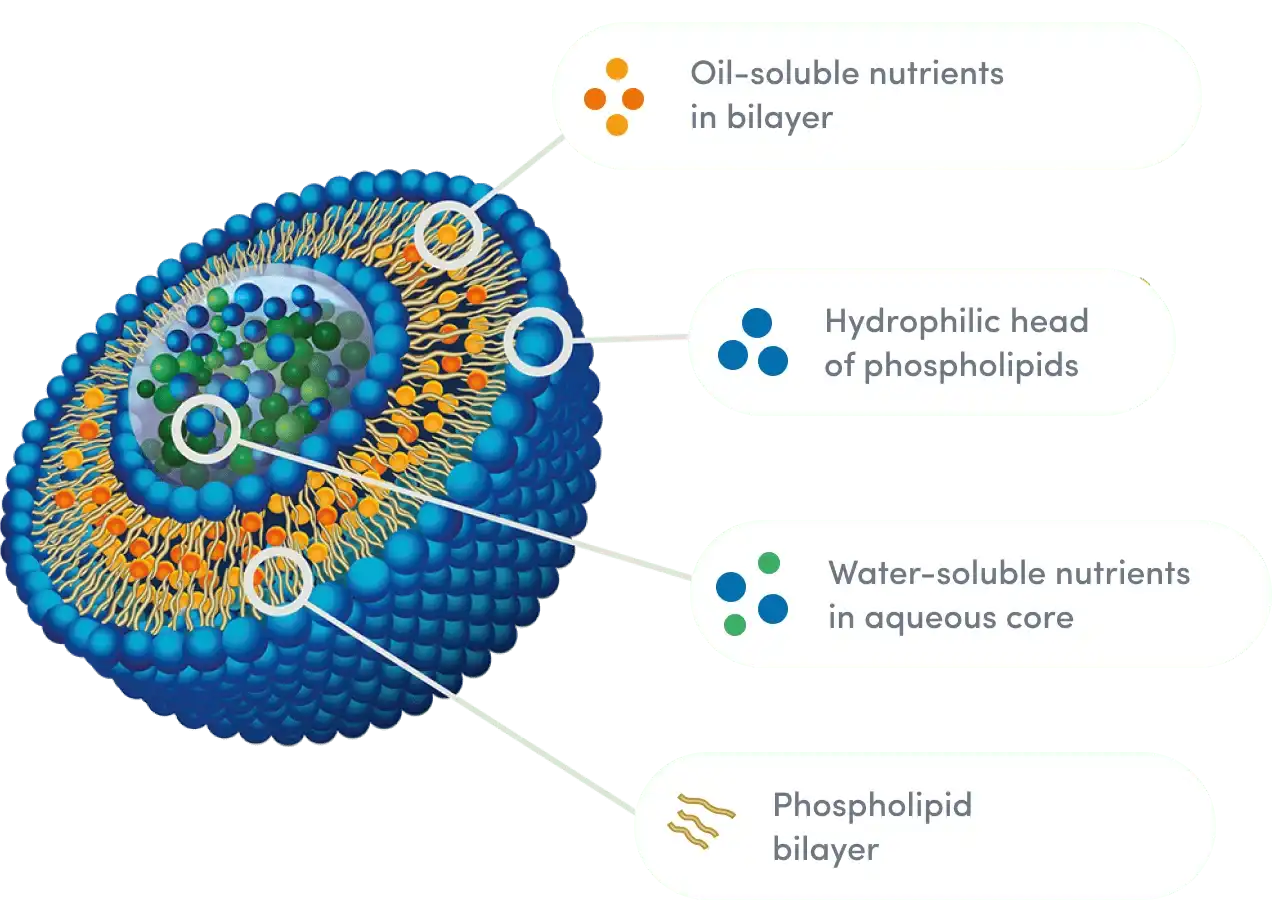
Water, Metal Ions and the Invisible Catalysts
It is unusual to include two inputs into a color study until everything else has been ruled out. Water is first because any remaining moisture would promote oxidation. So Hongda limits loss on drying to 1.2% against a 5.0% limit and packs into a moisture-proof drum with dual liners. The second is metal ions: parts-per-billion iron or copper from worn contact parts catalyze lipid oxidation long before rust ever forms. Every batch is checked by atomic absorption spectrophotometry. Lead, arsenic, mercury, and cadmium are declared as not found. The same device rules out catalytic metals in a coenzyme q10 powder manufacturer before packaging.[3][5]
The Heat, Shear and Oxygen Window Where Fading Happens
Drying is where colour is won or lost, and the decision takes minutes.
Homogenisation Pressure and the Point Vesicles Break
Homogenisation develops the vesicle, and beyond an optimum it destroys it. Each pass reduces particle size and deepens the orange, but when the bilayer is no longer able to relax, vesicles break, and free CoQ10 migrates to the particle surface, paling to crystalline specks. Hongda regulates pressure and pass count as locked parameters rather than operator judgment and then confirms the output with a DLS-PDI scan and an encapsulation-efficiency measurement every batch. In testing, the spheres are rated to 50,000 psi, providing a cushion for consumers downstream. It is a liposomal coenzyme Q10 powder with limited size distribution, which means it scatters light uniformly, so it has a constant orange appearance.[4][5]
Spray-Drying Temperatures Against a 50°C Payload
Ubiquinone melts at around 48-52 °C. This number should be on every set-up sheet. The input air is much hotter, but this is OK since evaporative cooling shields the wet droplet. The risk is when the particle dries out and approaches air temperature. So the outlet rather than entrance temperature is the key control variable. The payload is kept below its melting range by a limited residence time and a cold discharge, thereby avoiding the dull tint of thermal stress. In the drying process itself, Hongda analyzes not just the completed powder, so a drifting outlet temperature is detected when a liposomal coenzyme Q10 powder lot may still be fixed. Still looking for uniform yellow-orange.[2][5]
Nitrogen Blanketing and Low-Oxygen Handling
Every liter of drying air is a liter of potential oxidant, and atomization is the most important factor. Nitrogen blanketing of the feed and atomization zone eliminates oxygen at the point when surface area is exploding. Cheaper than adding more scavengers. Many processors turn to tocopherols first; Hongda prefers to remove oxygen before depending on antioxidants, as antioxidants are ingested while an inert environment inhibits the reaction. Closed transfer into barrels that are light-proof and moisture-proof eliminates light and humidity. Judge it on your own line: send specification and plant conditions to duke@hongdaherb.com and request lot photographs, video, and the COA set for a liposomal coenzyme Q10 powder.[2][3]
Measuring Colour Instead of Guessing: In-Process Checkpoints
A colour you cannot measure is a colour you cannot hold batch after batch.
Spectrophotometer Readings and a Defined Acceptance Band
“looks paler” is not a specification. A repeatable software takes color and transforms it to numbers using a spectrophotometer, records the lot for reference, and establishes an acceptability band that operators may check in minutes. Color is never assessed in isolation at the Hongda SGS standard laboratory, which uses spectrophotometers along with high-performance liquid chromatographs, gas chromatographs, atomic absorption spectrophotometers, polarimeters, automated titrators, and melting point meters. That instrumentation determines any examination of coenzyme Q10 bulk powder manufacturers, since it determines whether a provider can substantiate a claim or just state one. Every batch of liposomal coenzyme Q10 powder is registered against maintained reference material, providing trend data rather than memory.
Pairing Colour With Assay, Encapsulation and Particle Size
Color alone may be misleading, as a changed particle size influences light scattering and the perceived depth of shadow, without any chemical change. The solution is to read color with the structural numbers. HPLC assay, encapsulation efficiency, DLS-PDI particle scan, and zeta potential are all reported per lot. If the test and encapsulation are retained but the color change is physical, i.e., moisture absorption, then the drum is retrievable. If the color is the same as the test, oxidation has begun, and the window should be tightened. One photo is the present coenzyme q10 bulk powder manufacturer's lot: 73.1% assay, 1.2% loss on drying, 90% passing 20 mesh, 50 cfu/g
|
Checkpoint
|
Method
|
Hongda lot result
|
|---|---|---|
|
CoQ10 assay
|
HPLC
|
73.1% of 70% ± 5%
|
|
Particle size
|
DLS-PDI, 20 mesh
|
90% pass
|
|
Moisture
|
Loss on drying
|
1.2% of 5.0% limit
|
|
Heavy metals
|
Atomic absorption
|
Not detected
|
|
Microbial count
|
Plate count
|
50 cfu/g
|
Retained Reserve Samples as Your Own Stability Study
From each batch, there is one jar. Hongda preserves reserve samples of every batch in production, so a supplier’s stability promise is something a customer can evaluate for themselves. When a customer is looking at two deliveries twelve months apart, they may take both reference samples and run them side-by-side under similar circumstances, separating out storage effects from manufacturing variance. It also implies a color complaint comes in with proof attached. If the maintained reference has not shifted, then the reason is in the customer's warehouse or packing, not the drum. That is how every liposomal coenzyme Q10 powder campaign moves from fire-fighting to trend-setting.[5]
Holding the Hue From Pilot Batch to 3,000 Tons a Year
Scale is where most colour programmes quietly fail, usually for unglamorous reasons.
Workshop Class, Line Design and Repeatability
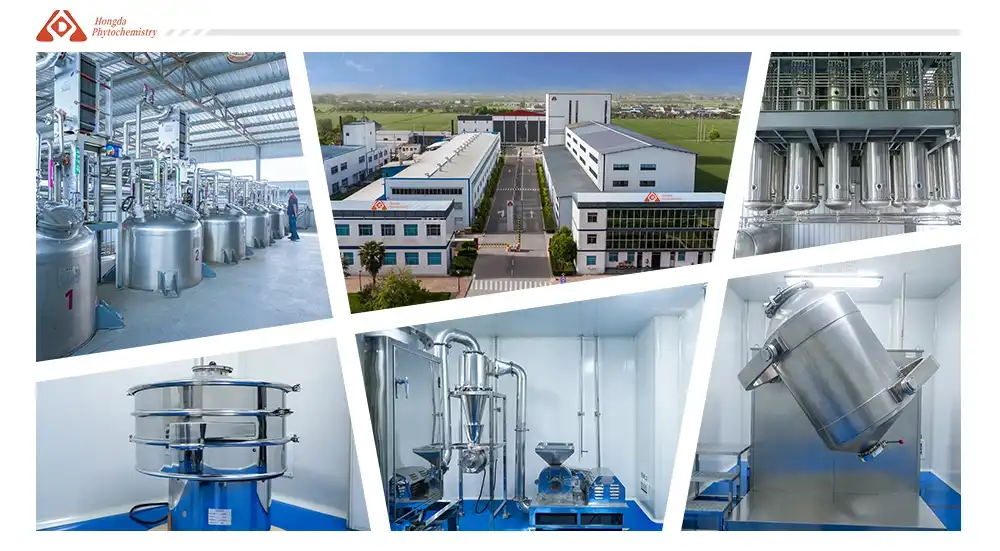
Scaling a liposomal process doesn’t fail on chemistry; it fails on housekeeping factors no one monitored at pilot size. Hongda has over 10 advanced manufacturing lines in 100,000-level purification workshops, controlling particle load, temperature, and humidity in an enclosure where pilot and multi-ton runs get the same air. More than 150 technicians operate to locked criteria, not individual judgment, and intermediate sampling by homogenization and drying captures variation within the batch. Annual production is close to 3,000 tons and seasonal brands may restock without having to change lines in the middle of a program, often a source of color drift in a liposomal coenzyme Q10 powder supply chain.
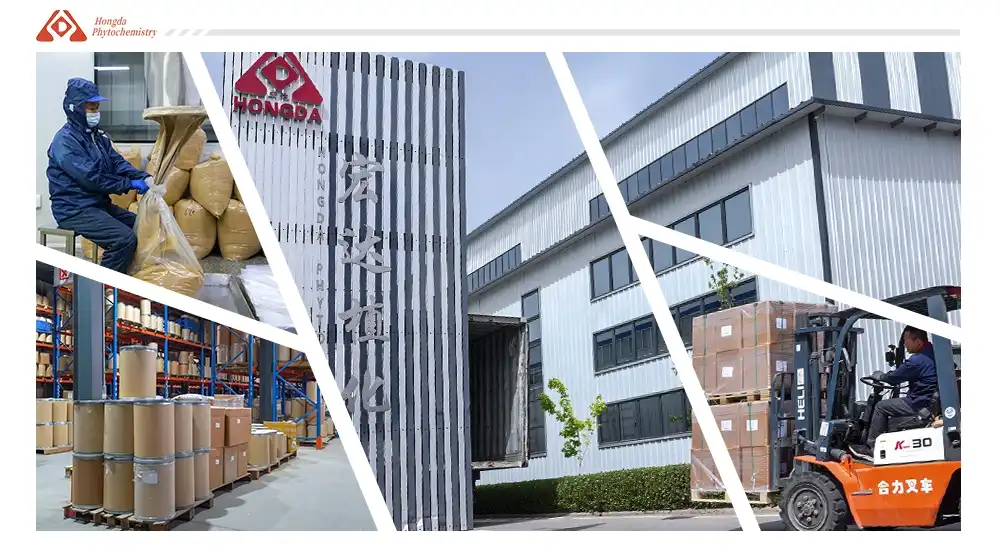
Warehouse Zones, Drums and the Last Mile
Storage is part of the process, not an afterthought. Many finished batches are packed in 25-kilogram light- and moisture-proof fiber drums with dual food-grade liners. The 3,000-square-metre warehouse is divided into six areas, A to F, with fruit and vegetable powders in A and B, plant extracts in C and D, vitamins and amino acids in E, reference samples in F, each with personnel responsible for sterilization. Before release, shipments are tested for composition, residues, moisture, metals, and microorganisms. Shipments of coenzyme powder manufacturer are en route to US and Western Europe stock and arrive within three to five business days.
|
Stage
|
Colour risk
|
Hongda control
|
|---|---|---|
|
Bulk packing
|
Light, humidity
|
Light-proof drum, dual liners
|
|
Warehousing
|
Heat, cross-contact
|
Six zoned areas, sterilisation
|
|
Overseas transit
|
Dwell time, heat
|
US and EU stock, short routes
|
|
Pre-shipment release
|
Multi-parameter
|
Composition, metals, microbes
|
|
Repeat ordering
|
Line switching
|
Ten plus lines, 3,000 t output
|
Certificates, Audits and the Evidence Behind Repeatability
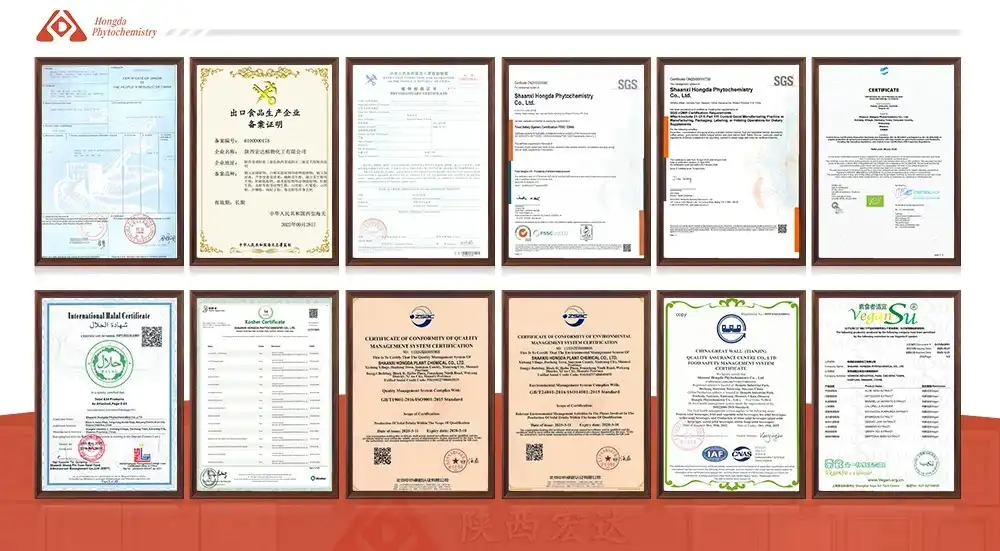
The documentation allows a buyer to dispute a color claim internally. Founded in 2001, Hongda was named a National High-tech Development Enterprise in 2010. Hongda has food production licenses, feed additive production licenses, Halal, Kosher, BRC, FDA registration, ISO22000, ISO9001, and organic certification, and will be joined in 2025 by cGMP, FSSC22000, SC certification, and EU and NOP organic scope. This work is backed by two R&D institutes and more than twenty professor-level researchers, and the same traceability logic is used in three planting bases. Independent ISO-17025 verification is welcomed for any coenzyme powder manufacturer evaluation. Repeatable color in a liposomal coenzyme Q10 powder is a recorded habit, not one fortunate batch
Conclusion
It's never one mistake in mass manufacturing; heat, oxygen, shear, and metals all arrive simultaneously. It's color fading, and it appears first in the drum. The cure is layered: get assay headroom, choose an oxidation-resistant carrier, lock down homogenization and drying settings, test color against structural data, and safeguard the powder until goods-in. Shaanxi Hongda Phytochemistry Co., Ltd. puts all of this into its everyday practice: non-GMO sunflower phospholipids, locked-parameter high-pressure homogenization, batch-by-batch HPLC and spectrophotometer verification, kept reserve samples, and light-proof drums. The honest query is, compared to any liposomal coenzyme q10 powder, who could replicate that orange lot after lot.
FAQ1. What makes the orange fade?
Heat above 48–52°C, oxygen during atomisation, excess shear, and trace metals; several usually act together.
2. Does paler mean weaker?
Usually. Colour tracks chemical integrity, so every reading is paired with HPLC assay and encapsulation data.
3. How is consistency held?
Locked pressure and pass counts, controlled outlet temperature, nitrogen blanketing, per-lot DLS-PDI scanning and retained reference samples.
4. What packaging protects it?
A 25 kg light-proof, moisture-proof fibre drum with dual food-grade inner bags, supported by US and Western Europe warehouse stock.
5. Can earlier lots be verified?
Yes. Retained reserve samples exist for every production batch, and independent ISO-17025 third-party verification is supported on request.
Keep the Orange With HONGDA: Fade-Resistant Liposomal CoQ10 at Scale
Shaanxi Hongda Phytochemistry Co., Ltd. has refined plant-derived actives since 2001, operating roughly 20,000 square metres of workshops, more than ten production lines and 100,000-level purification areas, with annual capacity near 3,000 tons across six warehouse zones. Two R&D institutions, an SGS-standardized laboratory, and over twenty senior researchers keep development moving. Whether you need a 10–50 g sample, a 1 kg trial batch, or a 25 kg shipment of liposomal coenzyme q10 powder, the team shares the full COA set, lot photographs, and reconstitution video. Email duke@hongdaherb.com today for a quotation and process support.
References
1. Ernster, L. and Dallner, G. (1995). Biochemical and medical aspects of ubiquinone function. Biochimica et Biophysica Acta, 1271(1), 195–204.
2. Gharsallaoui, A., et al. (2007). Applications of spray-drying in microencapsulation of food ingredients. Food Research International, 40(9), 1107–1121.
3. Choe, E. and Min, D.B. (2006). Mechanisms and factors for edible oil oxidation. Comprehensive Reviews in Food Science and Food Safety, 5(4), 169–186.
4. Lasic, D.D. (1993). Liposomes: From Physics to Applications. Elsevier, Amsterdam.
5. McClements, D.J. (2015). Food Emulsions: Principles, Practices, and Techniques, third edition. CRC Press, Boca Raton.