

_1745918362135.webp)

Cosmetics Breakthrough: Reishi Mushroom Powder Bulk for Anti-Aging & Skin Wellness Products
Cosmetic manufacturers are increasingly exploring mushroom-derived ingredients for skincare formulations, particularly those built around antioxidant, moisturizing, soothing, and skin-aging research. Hongda Phytochemistry and shaanxi hongda phytochemistry co., ltd. supply reishi mushroom powder bulk for manufacturers developing serums, creams, masks, essences, and other personal-care products. Reishi, botanically known as Ganoderma lucidum, contains polysaccharides and triterpenes that have been investigated for their potential roles in skin-related applications.
Current research supports further cosmetic exploration, while formulation performance ultimately depends on the extraction method, specification, concentration, and finished-product system.
Why Is Ganoderma lucidum Drawing Attention in Skincare?
Reishi has a long history as a mushroom ingredient, but its modern cosmetic appeal is increasingly linked to its chemical composition. Activities for antioxidant, anti-inflammatory, moisturizing, and other skin-related activities have been studied for the constituents of polysaccharides, triterpenoids, and phenolic compounds. Cosmetic ingredient reviews on mushrooms show that these chemicals may be used in products targeted toward fighting the visible signs of skin aging and maintaining skin condition.
This is an important point: research findings are not to be taken as statements of finished products. Several research studies employ different species of reishi, extraction procedures, concentrations, and test models. This makes raw-material standardization and formulation testing extremely critical for producers.
Polysaccharides as a Key Formulation Consideration
One of the key components of polysaccharides related to Ganoderma lucidum. Their water interaction properties render them of interest for cosmetic systems where hydration and skin feel are key formulation targets.
Reishi polysaccharides have been identified for antioxidant and skin-related actions, and recently their potential for human skincare uses has been studied.
Thus, buyers of reishi mushroom powder bulk should analyze the provided polysaccharide specification in conjunction with the extraction process, particle size, moisture, microbiological parameters, and other quality indicators. A quantitative polysaccharide value alone does not tell the whole story of how an ingredient will behave in a completed mixture.
Triterpenes and the Cosmetic Research Profile
Another group of chemicals typical in Reishi are triterpenes, which consist of ganoderic acids and similar substances. Scientific investigations have been conducted to evaluate their antioxidant and inflammation-related properties, and the association between reishi extract and pathways connected with skin aging has been studied recently.
This gives a scientific basis for the exploration of reishi in goods positioned around skin appearance and health, but manufacturers should confirm the performance of their unique formulation rather than just transferring results from laboratory studies to commercial claims.
Quality Specifications Matter When Buying Bulk Reishi Powder
For the cosmetic maker, quality of ingredients means reproducibility. High batch-to-batch variability of a raw material can interfere with formulation development and finished-product testing.
Bulk buyers of reishi mushroom powder should check the supplier’s specification sheet and batch paperwork. Depending on the intended application, important metrics can include botanical identification, appearance, particle size, moisture, polysaccharide content, microbiological limitations, heavy metals, pesticide residues, and other pertinent quality indicators.
Documentation for Global Cosmetic Supply Chains
A professional provider should be able to supply documents suitable for the intended market and application. A Certificate of Analysis helps customers verify batch-specific parameters, and a Technical Data Sheet gives information about the ingredient itself. An SDS can also be required as part of a company’s internal material management and regulatory procedures.
If suitable to the individual production site and product, further supplier qualification may be supported by certifications such as ISO, BRC, FSSC 22000, Kosher, Halal, cGMP, and organic certifications. Manufacturers should not use a list of certifications as a substitute for product-specific documentation. Instead, they should carefully check the current scope of the certificate and its validity.
Traceability and Supply Consistency
The issue of traceability is especially critical if reishi mushroom powder bulk is to be utilized in repeated commercial manufacturing. Information on cultivation, provenance of raw material, processing, identification of batch, packaging, and storage can allow firms to create a more controlled purchasing process.
Packaging and logistics should also be planned before production for bulk orders. Standard packaging such as 25 kg barrels may be suitable for bigger manufacturing operations. Other packaging or order quantities may be considered depending on product specifications and supplier capabilities.
Where Reishi Powder Can Fit Into Skincare Formulations?
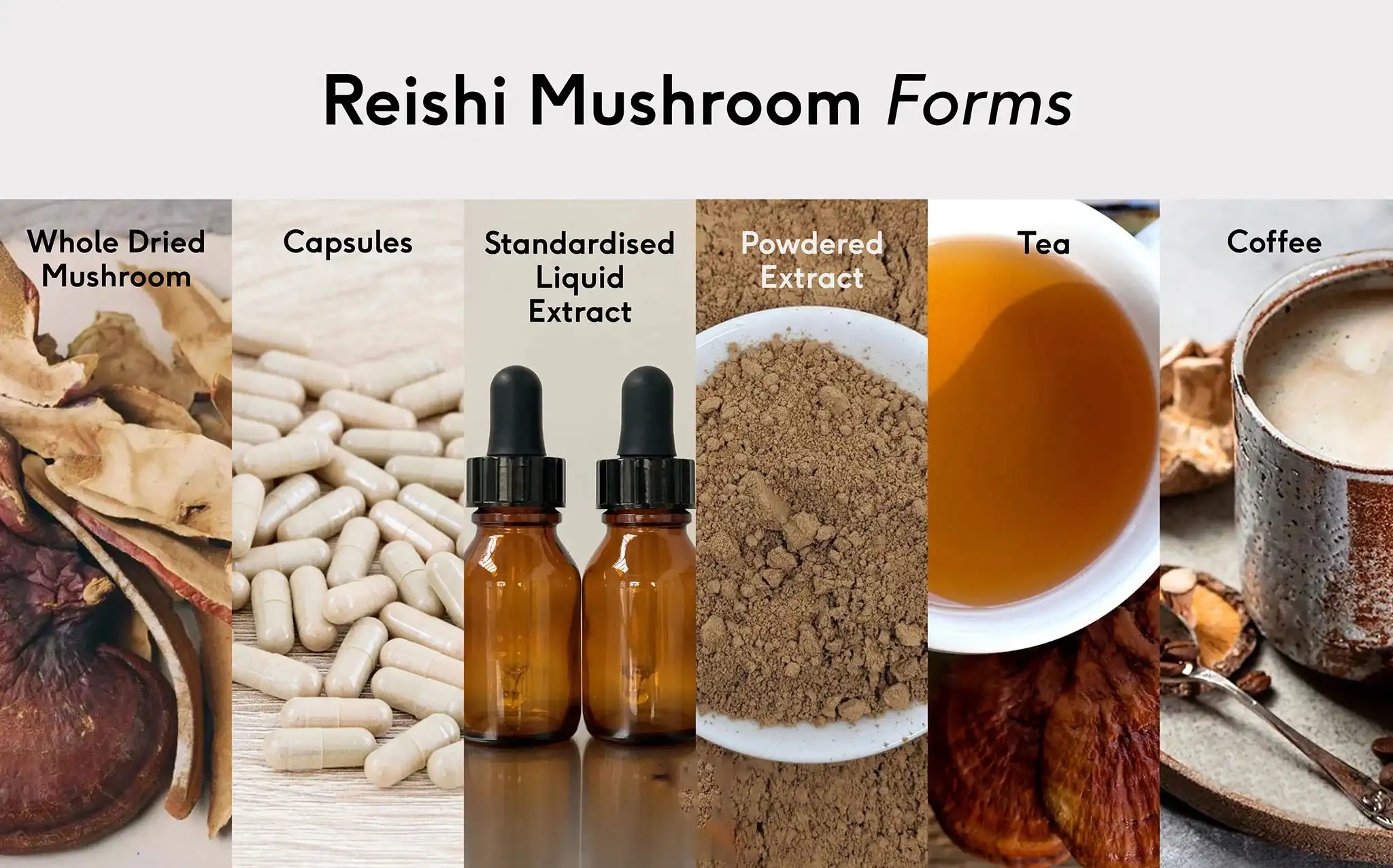
Reishi’s adaptability can be applied to a number of cosmetic product areas. However, powder properties might impact dispersion, color, texture, and stability, and hence formulation trials must be undertaken to identify suitable processing conditions and usage levels.
Serums and Essences
Reishi-derived compounds could be studied for serums and essences marketed for hydration, antioxidants, or botanical ingredient stories. Water compatibility and dispersion behavior are of major importance for companies producing lightweight formulations.
If the source material is a powder and not a pure extract, formulators should also assess solubility, sedimentation, color contribution, and compatibility with the other ingredients prior to commercial manufacturing.
Creams and Moisturizers
The reishi mushroom powder bulk can also be utilized in cream and lotion systems. In these products, formulators can see the effect of the ingredient on viscosity, appearance, odor, emulsion stability, and skin feel.
The final product should be tested for cosmetic performance in the entire formulation. Where relevant for the target market, finished product testing should be employed to support claims around wrinkles, hydration, elasticity, or soothing.
Facial Masks and Botanical Skincare
Face masks and other plant-based treatments are great with powder ingredients. Their visual esthetic and story of natural ingredients could be of use for firms seeking to build mushroom-centric, plant-based cosmetic products.
In these applications manufacturers should pay special attention to powder dispersion, particle size, microbiological requirements, color, and compatibility with clay, gel, hydrogel, or other mask bases.
What Cosmetic Manufacturers Should Evaluate Before Ordering?
It is not enough to choose a bulk ingredient based on the price per kilogram. First, the maker should determine what cosmetic form the product should be. Then determine what raw material features are most important to that product.
A practical assessment might involve:
-
Raw Material Identification: Confirm Botanical Name, Plant Part/Fungus Used, and Extraction/Processing Procedure
-
Active ingredient specification Review standards for the specified polysaccharide, beta-glucan, or triterpene as appropriate.
-
Quality documents: Ask for a CoA, TDS, SDS, microbiological data, or other testing documentation that is current.
-
Dispersion, solubility, color, odor, pH compatibility, and stability of finished product Compatibility with formulation Test.
-
Supply Ability: MOQ, packing, lead time, batch consistency, customization, and export documents must be confirmed.
-
The method offers R&D and purchasing teams with a clearer basis for deciding whether a certain reishi ingredient is right for their formulation.
Conclusion
Reishi is a mushroom-based material that is garnering a great deal of attention for cosmetic research and formulation development. Its polysaccharides and triterpenes have been evaluated for antioxidant activity, skin aging, and other cosmetic applications, with additional studies continuing to assess its potential in topical formulations.
Manufacturers are watching Reishi mushroom powder in bulk, but they need to look past the marketing hype. Consistency of specifications, transparent testing, traceability, documentation, formulation compatibility, and reliable supply can also be used to determine the success of a commformulaskincare product. Through scientific knowledge, product-specific testing, and proper quality controls, cosmetic businesses may evaluate reishi mushroom powder bulk more realistically and develop formulae that meet their technical and market requirements.
Cooperate with Shaanxi Hongda Phytochemistry Co., LTD.
As the leading China Reishi Mushroom Powder Bulk factory, China Reishi Mushroom Powder Bulk supplier, and China Reishi Mushroom Powder Bulk manufacturer, Shaanxi Hongda Phytochemistry Co., LTD., offers unparalleled expertise in natural plant extract production. Since our establishment in 2001, we've maintained our position as a premier China Reishi Mushroom Powder Bulk wholesale provider, covering 20,000 square meters of modern production facilities with over 10 production lines and 100,000-level purification workshops. Our SGS standardized laboratory, equipped with more than 20 professor-level R&D personnel and advanced testing equipment including HPLC, GC, and UV spectrophotometers, ensures every batch of Reishi Mushroom Powder Bulk for sale meets the highest international standards.
Our diversified 3,000-square-meter warehouse system maintains extensive inventory across six specialized storage areas, guaranteeing reliable supply chains and timely delivery of high-quality reishi mushroom powder bulk worldwide. The competitive Reishi Mushroom Powder Bulk price structure, combined with our comprehensive certifications including HALAL, KOSHER, cGMP, FSSC22000, ISO9001, ISO22000, and ORGANIC certifications, provides exceptional value for cosmetic manufacturers seeking premium ingredients. Our OEM/ODM capabilities extend beyond raw material supply to include customized product development, from soft capsules and hard capsules to tablets and premixed powders, enabling complete product solutions tailored to your specific requirements.
Partner with us to access our 25 years of production experience, sustainable sourcing from our three dedicated planting bases, and commitment to environmental responsibility. Contact duke@hongdaherb.com today for pricing information, technical specifications, and customization options that will elevate your cosmetic formulations with our premium reishi mushroom powder bulk.
FAQ
1: What is the minimum order quantity for Reishi Mushroom Powder Bulk?
Our minimum order quantity is 50kg, with bulk discounts available for orders exceeding 100kg.
2: How long does Reishi Mushroom Powder Bulk remain stable in cosmetic formulations?
Our powder maintains 24-month stability in airtight packaging, with excellent heat stability up to 180°C during manufacturing.
3: What certifications does your Reishi Mushroom Powder Bulk hold for cosmetic applications?
We hold USDA/EU Organic, KOSHER, HALAL, BRC, ISO9001, ISO22000, cGMP, and FSSC22000 certifications.
4: Can you provide customized particle sizes for specific cosmetic applications?
Yes, we offer customization services including particle size modifications (standard 80-100 mesh) and specialized processing for unique formulation requirements.
References
1. Wachtel-Galor, S., Yuen, J., Buswell, J.A., & Benzie, I.F.F. (2011). Ganoderma lucidum (Lingzhi or Reishi): A Medicinal Mushroom. Herbal Medicine: Biomolecular and Clinical Aspects, 2nd edition.
2. Zhu, X.L., Chen, A.F., & Lin, Z.B. (2007). Ganoderma lucidum polysaccharides enhance the function of immunological effector cells in immunosuppressed mice. Journal of Ethnopharmacology, 111(2), 219-226.
3. Songulashvili, G., Elisashvili, V., Wasser, S.P., Nevo, E., & Hadar, Y. (2007). Basidiomycetes laccase and manganese peroxidase activity in submerged fermentation of food industry wastes. Enzyme and Microbial Technology, 41(1-2), 57-61.
4. Paterson, R.R.M. (2006). Ganoderma – A therapeutic fungal biofactory. Phytochemistry, 67(18), 1985-2001.