


_1745918362135.webp)

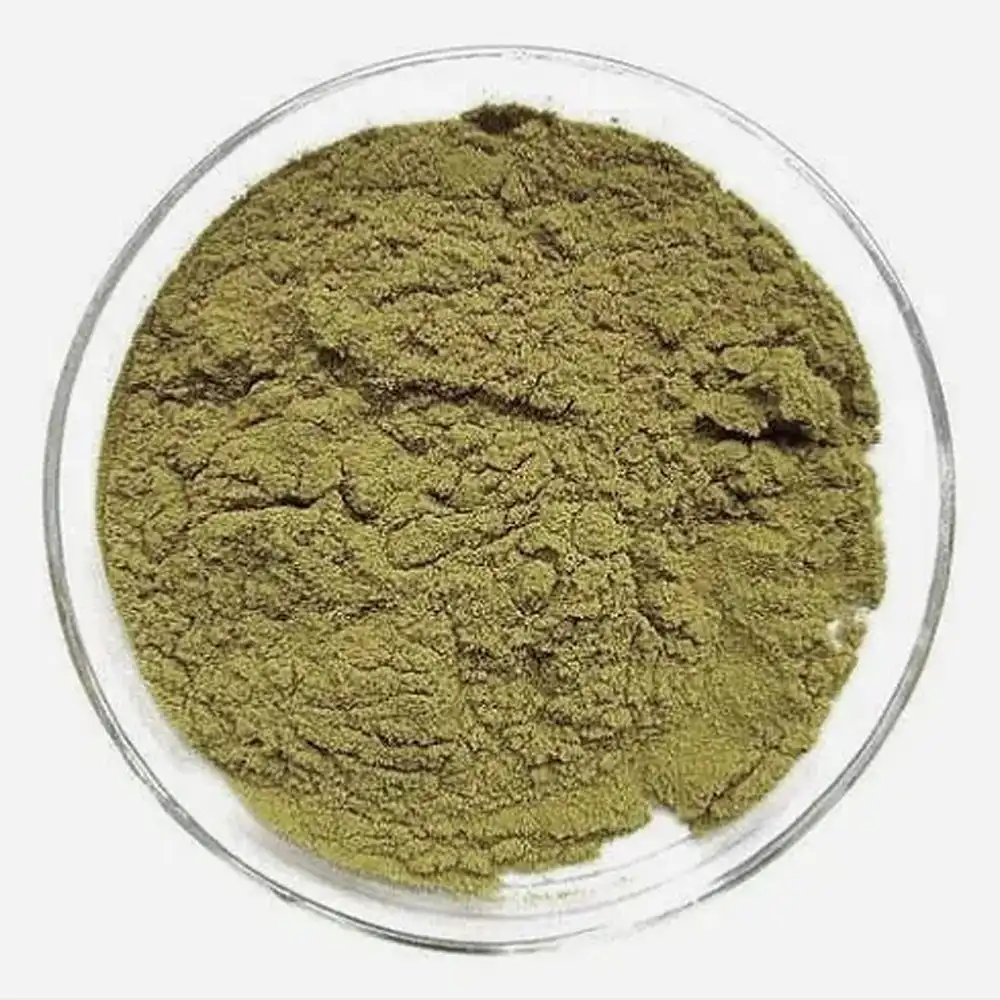
It’s famously difficult to get iron into a multivitamin, prenatal mix, or fortified powder since it interacts with other minerals, discolors final goods, and frequently leaves a metallic flavor that hurts customer acceptability. Hongda Phytochemistry’s ferrous bisglycinate powder directly tackles this difficulty by being formulated to work well with other actives, rather than conflict with them. Shaanxi Hongda Phytochemistry Co., Ltd. is a specialist manufacturer that makes this substance with the chelation stability, low reactivity, and proven purity that formulators require when iron is only one component in a bigger nutritional matrix.
Why Iron Compatibility Is a Formulation Challenge
Common Interactions Between Iron and Other Minerals
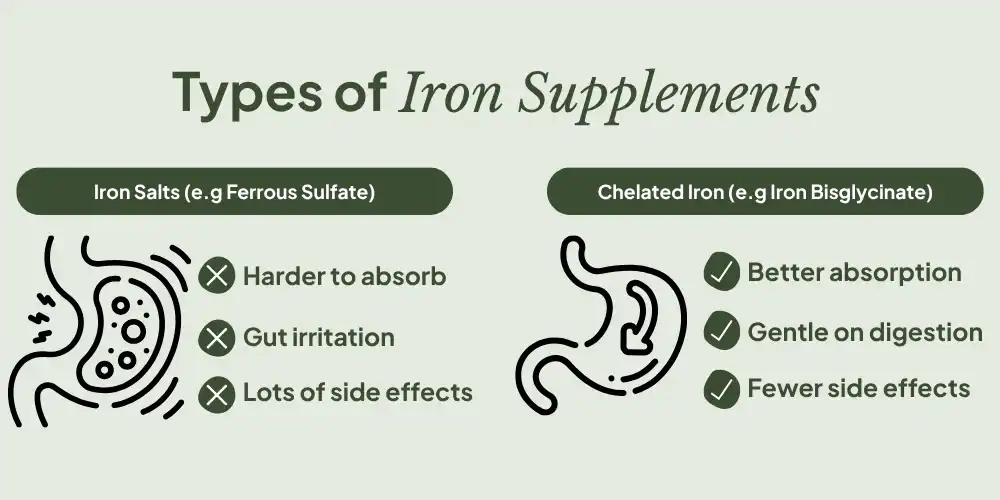
Iron competes with zinc, calcium, and copper for common absorption routes. If improperly mixed in one formula, all the minerals involved might suffer from reduced bioavailability. This rivalry may operate against label claims, and formulators using inorganic iron salts typically have to split dose intervals or utilize encapsulation strategies. Ferrous bisglycinate powder solves some of this difficulty on a chemical level, since the chelated structure alters the interaction of the iron ion with surrounding minerals over the course of digestion, thereby alleviating some of the direct competition seen with unbound iron. This is not to say all probable interactions go away, but formulators routinely find fewer stability concerns when they formulate a multivitamin mix based on a chelated iron source instead of a free ionic salt with zinc, calcium, and copper in the same capsule.[1][2][3]
How Chelation Reduces Nutrient Interference
Because the iron in ferrous bisglycinate powder is chelated to two glycine molecules, it acts more like an amino acid during absorption than a free mineral ion looking for a transport channel. This structural difference is one reason formulators seeking to develop complex multi-nutrient blends are increasingly leaning toward this ingredient over ferrous sulfate or ferrous fumarate, both of which tend to be more aggressive in reacting with other actives in the same tablet or capsule shell. The net effect is a formulation that stays together more reliably over a longer shelf life without unexpected potency loss in co-formulated nutrients, a benefit that is especially beneficial to brands doing yearly stability tests to support extended expiry dates on final goods.[2][5]
Color and Taste Stability in Finished Products
In addition to absorption chemistry, formulators are quite concerned about how an iron source would alter the sensory attributes of a completed product. Bulk ferrous bisglycinate powder is valued for contributing less gray coloring and metallic taste, which is sometimes seen in inorganic iron salts. This is a big advantage for candies, chewables, and flavored powder mixtures where look and taste are key factors in repurchase. This sensory stability over a full shelf-life window requires consistent raw material quality, which is why sourcing decisions around this ingredient carry more weight than buyers sometimes expect, especially for brands whose entire product positioning is built around being an easier, more pleasant way to take iron.
|
Iron Form
|
Mineral Interaction Risk
|
Color Stability
|
Typical Format Fit
|
|---|---|---|---|
|
Ferrous Sulfate
|
High
|
Poor
|
Basic tablets
|
|
Ferrous Fumarate
|
Moderate-High
|
Moderate
|
Tablets, capsules
|
|
Ferric Pyrophosphate
|
Low
|
Good
|
Fortified foods
|
|
Ferrous Bisglycinate Powder
|
Low
|
High
|
Multivitamins, gummies, powders
|
Performance of Ferrous Bisglycinate Powder Across Formulation Matrices
Tablets and Capsules
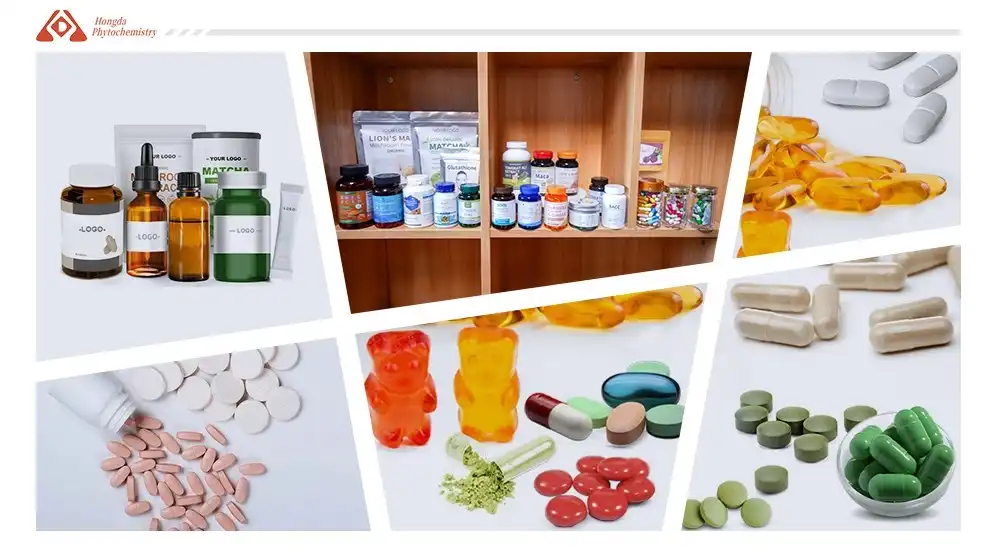
Iron glycinate powder is stable in compressed tablets under the pressure and heat of compression. Ferrous bisglycinate shows less deterioration than more reactive inorganic iron sources. Capsule formulators prefer the relative neutrality to popular excipients like magnesium stearate or silica, which makes blend uniformity testing easier and therefore fewer formulation changes before a batch is suitable for scale-up. Because the chelated structure is resistant to premature breakdown, potency testing at the end of a shelf-life study tends to be less variable than formulas built around ferrous sulfate in the same base matrix, thus decreasing the risk of a product going out of label-claim compliance before its printed expiration date.[5]
Gummies and Chewables
Gummy formulations are especially merciless toward reactive iron sources, since heat, moisture, and acidic flavoring ingredients all promote undesired color and taste changes during manufacture and storage. The ferrous bisglycinate powder works much better in this format with a more balanced taste profile and no browning reaction that sometimes occurs in gummies manufactured with inferior iron salt. This performance advantage is one of the main reasons why children’s and prenatal gummy brands are increasingly specifying chelated iron sources in their formulation briefs, considering that these audiences are especially sensitive to taste rejection and parents are quick to ditch a product their child refuses to take consistently.
Powdered Drink Mixes and Sachets
Iron sources for single-serve powder sachets and drink mixes need to dissolve cleanly in water, without sediment or an unpleasant aftertaste. Compared to coarser inorganic salts, ferrous bisglycinate powder often dissolves more uniformly and has less metallic taste in the final beverage, which is important when the same formulation incorporates fruit flavoring or other sensitive flavor profiles. Formulators should still check with their supplier on particle size specifications, as a finer, well-controlled powder will disperse more consistently in large production batches, especially if the mixing equipment at commercial scale is different from the smaller lab-scale trials used during initial development.[2][4][5]
Liquid and RTD Formulations
Ready-to-drink and liquid iron compositions also have the additional concern of long term suspension stability since any settling or separation is instantly obvious to the user. The chelated form of wholesale ferrous bisglycinate powder is less prone to settling out in solution than unbound iron salts, yet formulators usually mix it with suitable suspending agents to provide a prolonged shelf life. Liquid products: For the development of liquid products should request the stability data for the pH range needed, as acidity varies widely in juice-based and water-based delivery systems, and a stability profile validated at one pH does not necessarily apply to a differently formulated beverage base.
Sourcing Ferrous Bisglycinate Powder for Multi-Nutrient Products
What to Confirm Before Buying in Bulk Ferrous Bisglycinate
For buyers ordering ferrous bisglycinate in bulk, it is important to validate the amount of elemental iron, chelation ratio, and particle size distribution before ordering. These three criteria influence how the ingredient will behave after it is blended into a complicated composition. It’s a good idea to ask for a sample batch to do compatibility testing with the particular vitamins and minerals you plan to use in the final product. Even chelated iron can react differently depending on the exact vitamin blend, binder system, or coating technology used in any given formula, so this is a wise move that can uncover potential interaction problems before you commit to a full production run.
Evaluating a Ferrous Bisglycinate Manufacturer
A quality ferrous bisglycinate manufacturer should be willing to discuss its chelation process, how it maintains consistency from batch to batch, and provide documentation of testing its product for elemental iron content and heavy metal limits. Ideally, recent third-party audit summaries should be available, not just internal claims. Manufacturers who are hesitant to discuss these details at length or cannot explain variations between batches are generally not prepared to support the tight specification tolerances required for multi-nutrient formulations at a commercial scale, and buyers who skip this step often discover the gap only after a costly reformulation cycle.
Specification Consistency Across Large Formulation Runs
Even minor variations in raw material requirements are magnified in large-scale, multi-nutrient manufacturing runs where a modest change in the elemental iron content of incoming lots may throw the dosing accuracy of a whole batch of final product out of whack. Instead of one certificate of analysis, buyers should ask their supplier for a documented history of recent batch specifications. This will show whether or not the manufacturer has maintained tight process control over time, or only meets specification on occasion. This is especially important when a formula is scaled from a pilot run to full commercial production volume.
|
Specification
|
Why It Matters
|
|---|---|
|
Elemental Iron Content
|
Determines accurate dosing across formulations
|
|
Chelation Ratio
|
Confirms bonding completeness and stability
|
|
Particle Size Distribution
|
Affects blend uniformity and dissolution
|
|
Heavy Metal and Microbial Testing
|
Confirms compliance with international safety standards
|
Why Shaanxi Hongda Phytochemistry Supports Complex Formulations
Facility Scale and Production Capacity
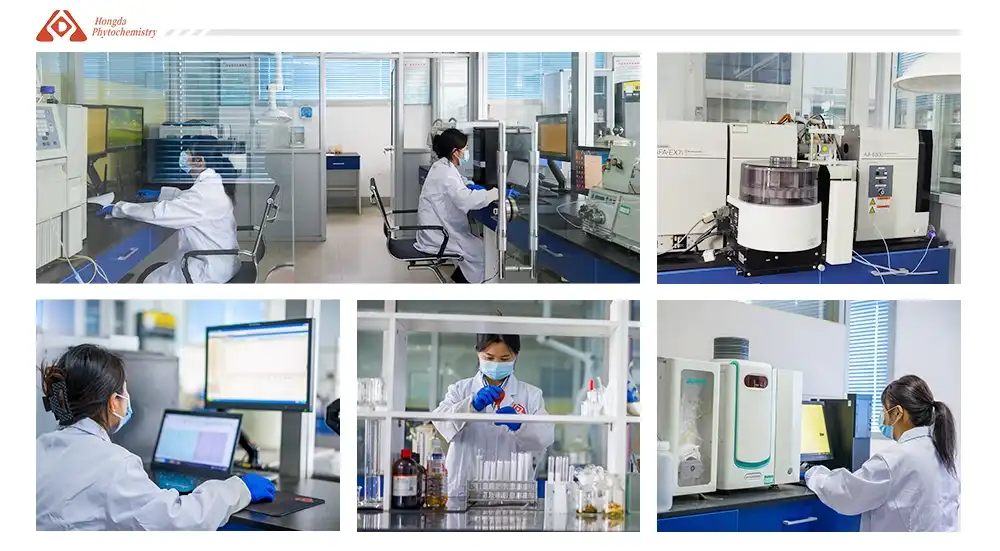
Shaanxi Hongda Phytochemistry Co., Ltd. maintains a facility of about 20,000 square meters, with more than ten contemporary production lines and 100,000-level purification workshops, which gives the firm the infrastructure required to keep a close eye on its ferrous bisglycinate powder process. The factory has a capacity for full product range output of up to some 3,000 tons per year, and a workforce of over 150 workshop operation technicians. "This means we can support the formulation trials and the regular bulk volumes that established multi-nutrient brands need, without the long lead times that smaller blending operations often struggle to avoid during peak ordering seasons," he said.
In-House SGS Standardized Testing
Each batch of ferrous bisglycinate powder from a ferrous bisglycinate manufacturer is confirmed at a laboratory jointly built with university professors and standardized to the procedures of SGS, with no less than twenty professor-level researchers and testing workers. Spectrophotometers for atomic absorption, automatic titrators, and high-performance liquid chromatographs are among the equipment used to verify elemental content, pesticide residue limits, moisture, heavy metals, and microbial counts prior to release, providing formulators with documented reassurance that specifications will remain stable throughout their production timeline, rather than subtly drifting from one purchase order to the next.
Certifications for International Compliance
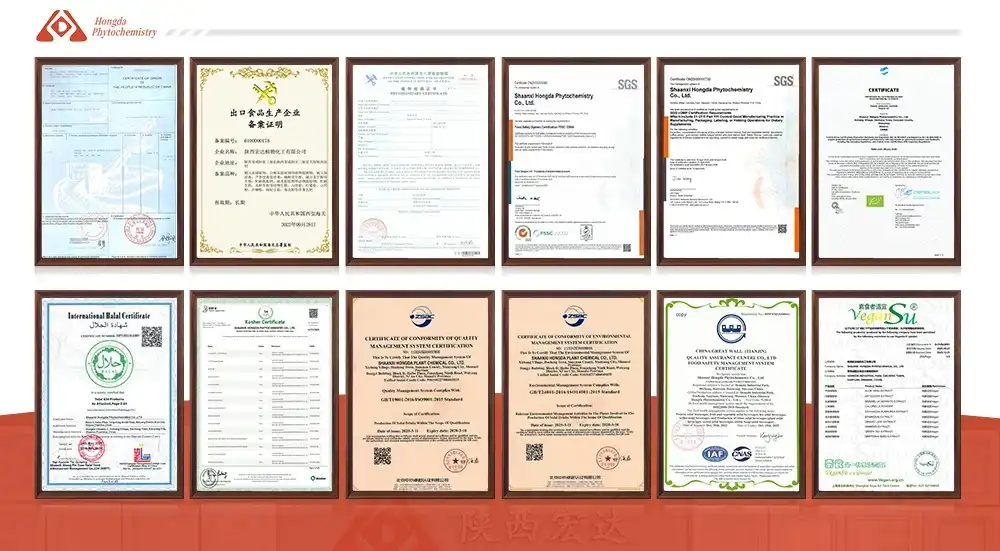
From 2001 to 2024, Shaanxi Hongda has obtained national high-tech business, food production and feed additive licenses, halal and kosher certification, BRC and FDA registration, and organic certification. In 2025, the firm gained cGMP, FSSC22000, SC certification, ISO22000, ISO9001, and EU and NOP organic certification, as well as new national patents. Current certificate copies can be requested for ferrous bisglycinate powder, or a compatibility trial can be discussed directly at duke@hongdaherb.com before committing to a full production run for formulators working on multi-nutrient products intended for international distribution. The technical team can also advise on the most relevant certifications for a particular target market.[6]
Practical Considerations for Bulk Buyers
Requesting Wholesale Ferrous Bisglycinate Quotations
Buyers interested in purchasing ferrous bisglycinate in wholesale quantities should request quotations that are itemized according to order volume, packaging specifications, and testing documentation included, as a lower headline price may not include third-party testing or sample shipping costs that appear later as additional fees, quietly reducing the price gap that initially drew attention to that specific quotation. It is better to provide a few detailed quotations side by side rather than just one price per kilogram, as this gives a more realistic picture of the actual landed cost of a large multi-nutrient production run, especially when freight, documentation fees, and any required retesting on arrival are included in the final calculation.
Packaging and Storage Stability
Ferrous glycinate powder should be kept in moisture barrier-coated packaging in a cool, dry place, protected from direct light, heat, and humidity since prolonged exposure to humidity might compromise flowability and chelation stability during longer storage periods. For buyers that produce large batches of formulation, it is important to confirm the recommended shelf life under their storage conditions and to request updated stability data if production schedules go beyond the standard testing window provided at initial sourcing, since climate conditions at different manufacturing or warehousing sites can significantly impact real-world shelf life.
Building a Long-Term Supply Relationship
Multi-nutrient formulations are very dependent on specification consistency, and so it is often better for buyers to establish a long-term relationship with one verified supplier rather than to switch sources frequently to chase small price differences. Re-validating a new raw material against an existing formula matrix is a time-consuming and testing-budget-consuming exercise that a stable relationship avoids. A proactive supplier, one that communicates about production scheduling, certification renewals, and any specification changes, can help formulators avoid unpleasant surprises during reformulation cycles, which ultimately protects both product quality and brand image over time, and also cuts the internal review burden each time a new production batch needs approval before release.
Conclusion
Ferrous bisglycinate powder works well in complicated multi-nutrient formulations due to its chelated structure, which minimizes mineral interference, resists discolouration, and is compatible with tablets, gummies, powders, and liquids. Shaanxi Hongda Phytochemistry supports this achievement with expanded manufacturing, in-house SGS-standardized testing, and a developing international certification portfolio. Formulators should ask for documentation and a compatibility sample before they commit to sourcing their next multi-nutrient product and test it specifically against their own vitamin and mineral mix, not just broad compatibility claims from a data sheet.[2][5]
FAQ
Q1: Does ferrous bisglycinate powder interact with other minerals in a formula?
A: It generally interacts less than inorganic iron salts, though buyers should still test compatibility with their specific formulation.
Q2: Is ferrous bisglycinate powder suitable for gummy formulations?
A: Yes, it typically resists discoloration and metallic taste better than inorganic iron sources used in gummies.
Q3: What specifications should I confirm before a bulk purchase?
A: Elemental iron content, chelation ratio, and particle size distribution are the key specifications to verify.
Q4: Can Shaanxi Hongda Phytochemistry provide samples for compatibility testing?
A: Yes, samples and current documentation can be requested directly from the sourcing team.
Q5: How should ferrous bisglycinate powder be stored?
A: In moisture-barrier packaging away from heat and light to preserve flowability and chelation stability.
Formulate With Confidence Using HONGDA
If your team is developing a multi-nutrient product that depends on a stable, low-interaction iron source, Shaanxi Hongda Phytochemistry can provide current specifications, certificates of analysis, and compatibility samples of ferrous bisglycinate powder tailored to your formulation. With scaled production capacity, in-house SGS-standardized testing, and certifications supporting global distribution, HONGDA is positioned to be a dependable long-term partner. Reach out today at duke@hongdaherb.com to request documentation and discuss your bulk sourcing needs.
References
1. National Institutes of Health, Office of Dietary Supplements — Iron Fact Sheet for Health Professionals
2. Journal of Nutrition — studies on iron bioavailability and mineral interaction in fortified foods
3. Linus Pauling Institute, Oregon State University — Micronutrient Information Center, Iron
4. World Health Organization — Guidelines on Food Fortification with Micronutrients
5. U.S. Pharmacopeia — Dietary Supplement Compendium, Mineral Chelate Monographs
6. International Organization for Standardization — ISO 22000 and ISO 9001 Food Safety Management Standards