



_1745918362135.webp)

There is no one iron source that formulators naturally flock to in a vacuum. The choice between ferrous fumarate powder and iron bisglycinate is often less about finding a winner and more about finding the right chemistry for a particular product aim. Hongda Phytochemistry’s ferrous fumarate powder, with its elemental composition, stability, and proven purity, is a great match for a broad variety of formulation techniques. Shaanxi Hongda Phytochemistry Co., Ltd. is a specialised manufacturer that offers formulators the scientific basis to confidently determine whether ferrous fumarate powder or a chelated alternative is the best fit for their future product.[2][3]
Two Established Iron Compounds, Two Different Chemistries
What Defines Ferrous Fumarate Powder?
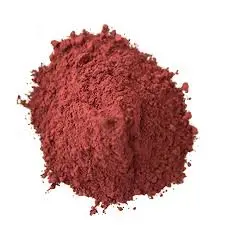
Ferrous fumarate powder is made by mixing iron with fumaric acid, an organic acid that naturally plays a part in the body’s own energy metabolism cycle. This combination leads to a moderate water solubility of the product, between the completely soluble inorganic salts and the less soluble compounds utilised largely for food fortification purposes. That equilibrium is key to why ferrous fumarate powder has endured as a reference iron in pharmaceutical formulations and public health fortification programs, delivering reliable elemental iron without the extreme reactivity of some cheaper alternatives. That track record provides a well-documented basis for regulatory bodies and formulators alike to continue to rely on the compound.[1][2][5][6]
What Defines Iron Bisglycinate?
Iron bisglycinate employs a fundamentally different chemical method, attaching the iron ion to two glycine amino acid molecules to create a stable ring. This chelation protects the iron from some of the digestive interactions that inorganic and semi-organic salts undergo, and this is the main reason why formulators opt for it when digestive tolerance is the determining element in a formulation brief. The trade-off is a generally lower elemental iron percentage and a more involved manufacturing process, both of which appear later in cost and dosing comparisons between the two ingredients. Formulators weighing these factors should treat them as genuine trade-offs rather than simple drawbacks to be dismissed outright.[4][6]
Why the Chemistry Difference Shapes Everything Else?
All other points of comparison in this article, from absorption behaviour to pricing to which product category each ingredient is best suited for, stem from this fundamental chemical difference. The powder ferrous fumarate has a modest solubility, which makes the production process simple and inexpensive, but still gives a reasonable amount of absorption. Iron bisglycinate, however, is processed by chelation, which loses some elemental efficiency for a milder impact on the stomach. Understanding this trade-off up front helps formulators move beyond judging the choice as simply “better” or “worse” and instead evaluate it against their specific product goals, whether that means optimising for cost efficiency at scale or building a premium product around consumer-facing gentleness claims.
|
Attribute
|
Ferrous Fumarate Powder
|
Iron Bisglycinate
|
|---|---|---|
|
Binding Type
|
Organic acid salt
|
Amino acid chelate
|
|
Approx. Elemental Iron
|
~33%
|
~20%
|
|
Water Solubility
|
Moderate
|
Moderate to high
|
|
Typical Use
|
Fortification, general supplements
|
Sensitive-stomach formulas
|
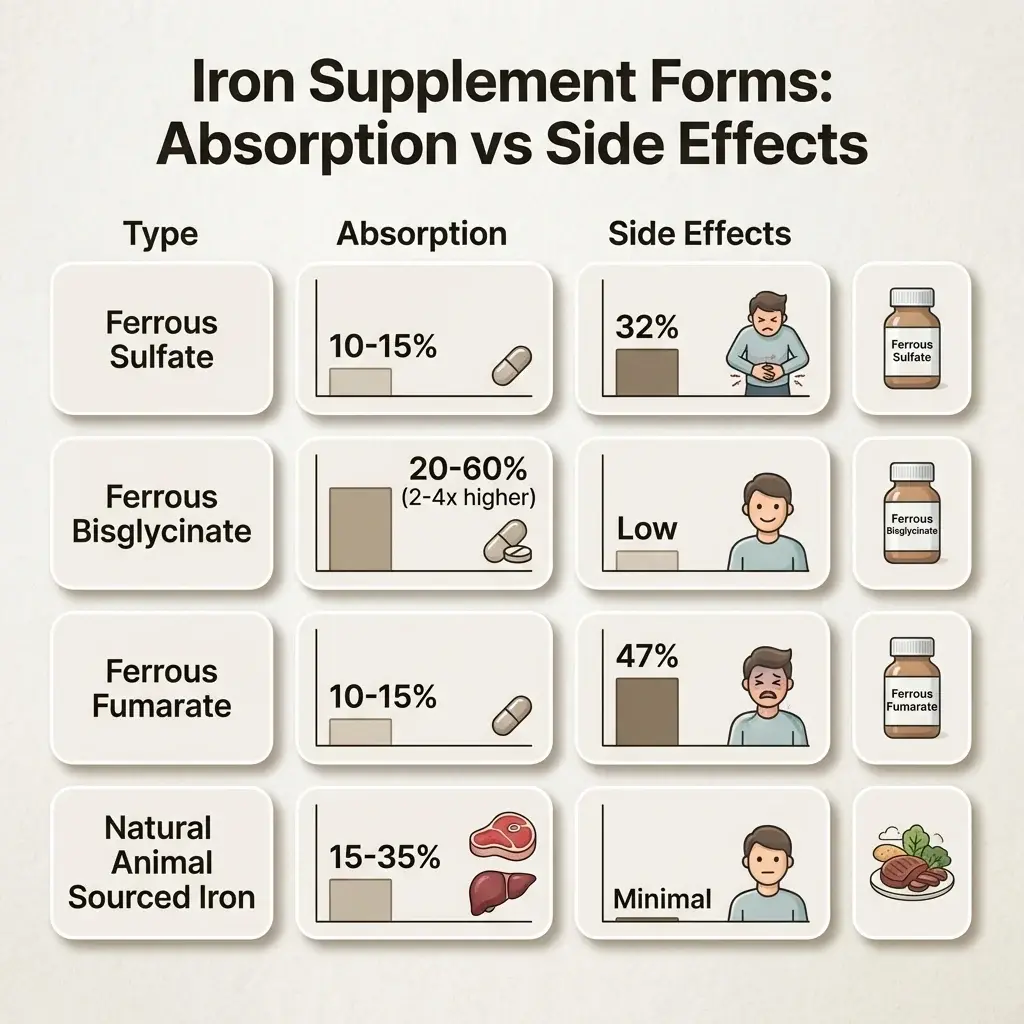
Choosing Based on Absorption and Tolerance Needs
When Ferrous Fumarate Powder Is the Practical Choice?
If a formulation requires a large elemental iron contribution without a big tablet or capsule, ferrous fumarate powder is often the more practical solution. The concentration of ferrous fumarate powder is such that it is efficient to dose at commercial scale. It also works reliably in a broad general population that does not report unusual sensitivity to standard iron supplements, making it a sensible default for mainstream multivitamins, general wellness products, and large-scale fortification initiatives where cost efficiency and elemental delivery matter more than a specialised gentleness claim, especially in markets where price sensitivity is a major purchasing driver.[2][3][5]
When Iron Bisglycinate's Gentleness Matters More?
If a business is explicitly targeting customers who have had stomach pain with regular iron supplements, or if all of a product’s advertising is about being an easier, softer way to take iron, then iron bisglycinate is the more convincing choice. However, a ferrous fumarate supplier may still be relevant for brands comparing different iron sources and formulation options. Prenatal and pediatric-adjacent brands favour this chelated form for this very reason, as even a small improvement in tolerance can significantly improve daily compliance for a population often already dealing with other digestive sensitivities in pregnancy or early childhood, where consistency of use directly impacts therapeutic outcomes.
Absorption Efficiency in Real-World Use
There’s a good body of evidence behind both substances showing considerable absorption, but they’re different methods. For ferrous fumarate powder, absorption is mostly reliant on the usual mineral transport system in the body following slow dissolution in the gut. Iron bisglycinate, however, can be partially absorbed via amino acid transport systems and so may be less susceptible to variations in stomach acidity or competing minerals in the diet. In practice, real-world absorption results are very much dependent on the quality and consistency of the formulation from both ingredients, not just the underlying chemistry alone, which is why buyers should always evaluate a specific supplier’s documentation rather than relying purely on generalised comparisons between the two compound classes.[3][4][6]
Elemental Iron and Dosing Implications
When employing ferrous fumarate powder, formulators may frequently get the desired daily iron dosage in a smaller tablet or capsule, since it often contains a larger proportion of elemental iron than iron bisglycinate. For brands where pill size and swallowability are a concern, this becomes a relevant practical consideration, especially in markets where consumer feedback on capsule size has a direct impact on repeat purchase rates. A tablet that is perceived as too large can discourage consistent daily use, no matter how effective the actual underlying formula is. When doing dosage calculations, purchasers should always verify the particular amount of elemental iron listed on a current certificate of analysis instead of using published general averages.
Matching the Ingredient to the Product Category
Food Fortification and Large-Scale Public Health Programs
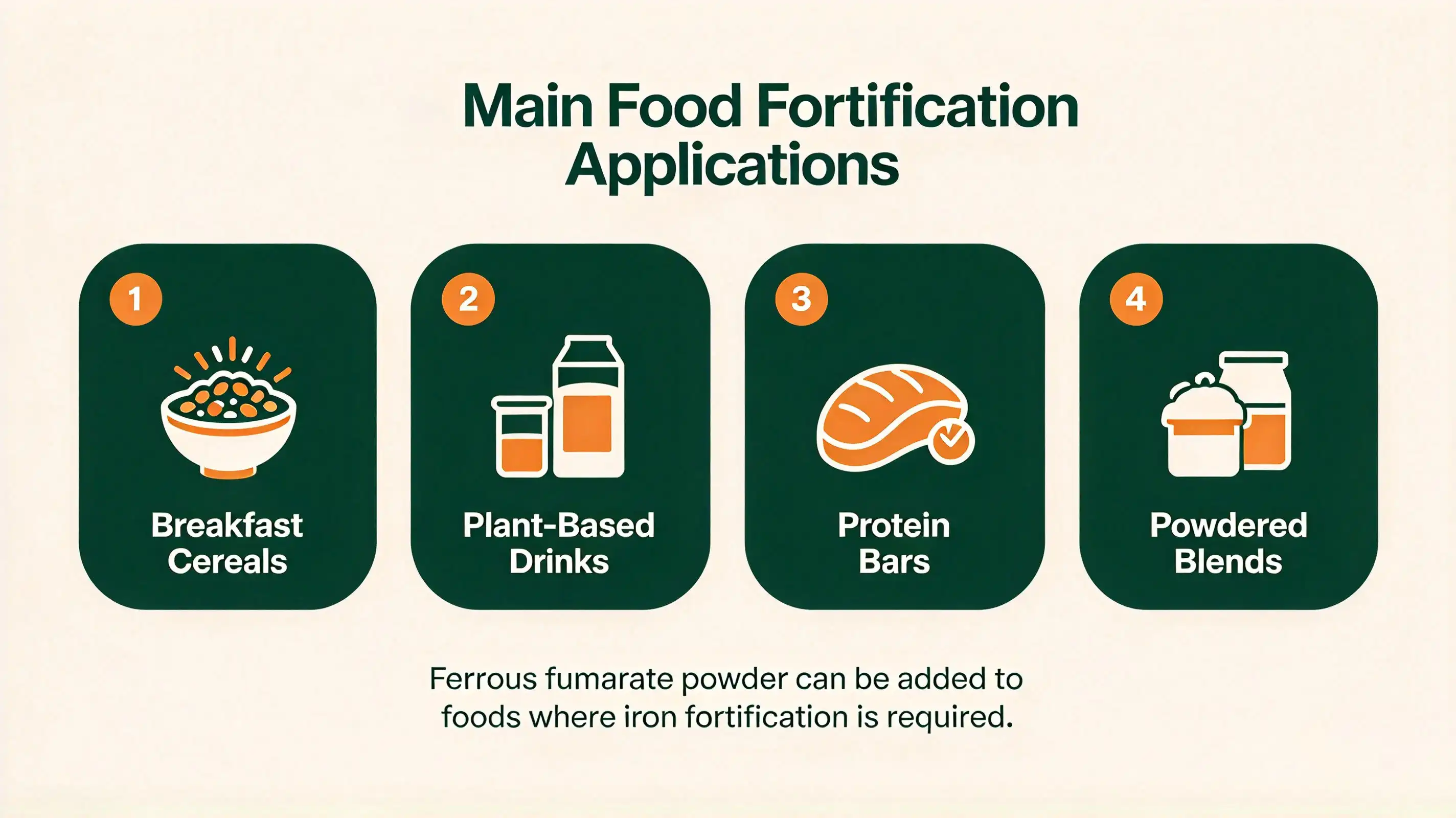
The overwhelming preference for ferrous fumarate powder over chelated alternatives in most large-scale food fortification projects is due to its cost profile and processing stability, which fit the massive production quantities that these programs need. It survives baking, extrusion, and long-term storage with little loss of potency. It is well suited for staple foods such as flour and infant cereal, where the higher cost of a chelated ingredient would be difficult to justify in a population-scale distribution program, especially in regions where fortification budgets are already stretched thin across multiple micronutrient priorities.
Premium Consumer Supplements and Sensitive-Stomach Positioning
Iron bisglycinate is used by premium supplement manufacturers marketing directly to customers who have suffered with iron supplementation before, as the ingredient enables a clear, distinct marketing message on gentleness and tolerance. These brands are generally happy to absorb the elevated ingredient cost as their target consumer has already shown a willingness to pay a premium for a product that solves a specific pain point rather than compete solely on price against mainstream multivitamin options based around ferrous fumarate powder, a segmentation strategy that has proven durable across the wider supplement category.[4][6]
Multi-Nutrient and Combination Formulas
In complicated multivitamin and prenatal formulae where iron competes with several other minerals, both compounds may work well, but the decision typically comes down to what additional actives are included and how sensitive the entire formula is to mineral competition. If cost-effectiveness and elemental delivery are the most important factors, then ferrous fumarate powder is a good choice in formulations. If a formulation contains many other minerals competing for the same absorption pathways, and a brand wants to avoid that interaction as much as possible, even at the expense of a smaller elemental iron contribution per serving, then iron bisglycinate might be preferable.
Cost, Sourcing, and Supply Chain Realities
Price Differences and What Drives Them
Iron bisglycinate is usually more expensive than ferrous fumarate powder, due to the more complex chelation procedure and extra testing necessary to verify that iron and glycine are fully bonded. This price discrepancy should be viewed in the light of the overall product economics by buyers, rather than in isolation, as sourcing ferrous fumarate supplement wholesale in China may allow a formula built around the more affordable ferrous fumarate powder to leave room in the budget for other premium ingredients or a more competitive retail price point, both of which can meaningfully influence a product’s overall market positioning.
What to Ask a Ferrous Fumarate Supplier?
A reputable ferrous fumarate provider will provide documentation for each batch of production, including elemental iron content, particle size distribution, and testing methods, as well as a detailed description of the process by which the solubility qualities are validated during quality control. If buyers get vague or incomplete answers to these questions, they should take it as a sign to keep looking at other suppliers. Consistency in documentation is what ultimately protects a brand’s labelling accuracy and formulation stability over time, especially once a formula is committed to a printed dosing chart that is difficult to change after launch. If you have any specific technical questions about source documentation, please contact duke@hongdaherb.com.
Supply Consistency at Commercial Scale
Once a recipe progresses from tiny trial batches to consistent production runs, supply consistency at commercial scale is very important, no matter which iron source a brand chooses. Buyers should ask for a recorded history of recent batch specifications rather than a single certificate of analysis, since the history shows if a provider has tight control of the process over time. The same consideration applies whether you are sourcing ferrous fumarate powder or a chelated alternative, although the testing parameters to review will differ between the two ingredient categories, and buyers switching suppliers for either should expect to adjust their evaluation checklist accordingly.[6]
Why Shaanxi Hongda Phytochemistry Supports Both Product Strategies?
Manufacturing Scale Behind Ferrous Fumarate Powder
Shaanxi Hongda Phytochemistry Co., Ltd. operates a roughly 20,000-square-meter facility with more than ten modern production lines and 100,000-level purification workshops, providing the infrastructure needed to maintain tight, consistent process control over its ferrous fumarate powder line. With an annual output capacity reaching approximately 3,000 tons across its full product portfolio and more than 150 workshop operation technicians, the factory supports both fortification-scale bulk orders and smaller trial runs for brands still finalizing their formulation strategy, without the extended lead times that smaller operations sometimes struggle to avoid during peak demand periods.
Testing That Backs Every Batch
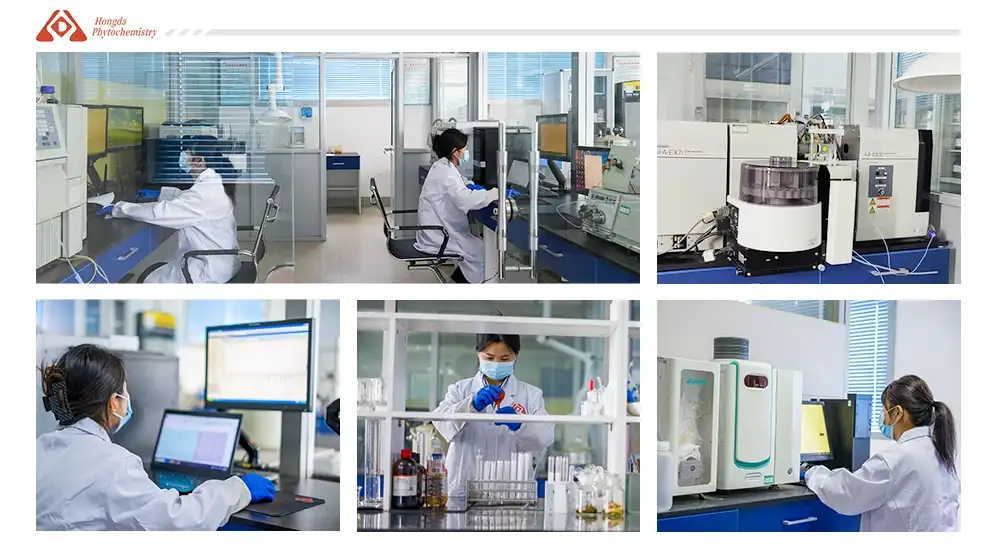
Every batch of ferrous fumarate powder is verified through a laboratory jointly established with university professors and standardized to SGS protocols, staffed by more than twenty professor-level researchers and testing personnel, whose combined expertise covers everything from raw material screening to final product release testing. Equipment including high-performance liquid chromatographs and atomic absorption spectrophotometers confirms elemental iron content, moisture, heavy metals, and microbial counts before release, giving buyers documented proof of the specifications that matter most when comparing this ingredient against a chelated alternative.
Requesting Ferrous Fumarate Supplement Wholesale in China
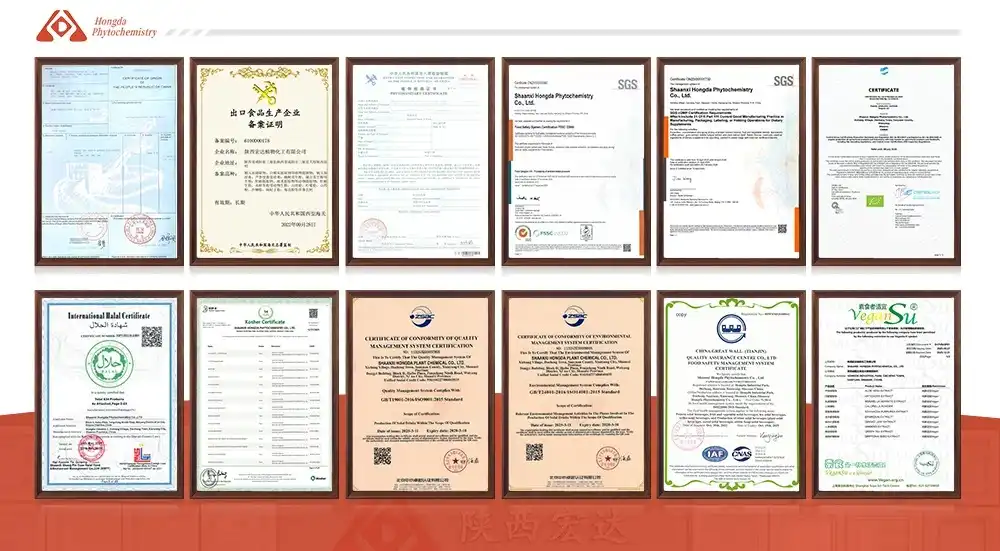
Brands seeking ferrous fumarate supplement wholesale in China can rely on Shaanxi Hongda's certification portfolio, which includes national high-tech enterprise status, FDA registration, halal and kosher certification, and 2025 additions such as cGMP, FSSC22000, ISO22000, and ISO9001. This documentation supports import compliance across multiple international markets, giving buyers a dependable foundation whether they ultimately choose ferrous fumarate powder, a chelated alternative, or a combination strategy across their product line, and it reduces the friction typically involved in expanding into new regulated territories.
|
Certification
|
Why It Matters
|
|---|---|
|
ISO 9001 / ISO 22000
|
Documents consistent quality and safety management
|
|
FDA Registration
|
Supports compliant import into the United States
|
|
cGMP / FSSC22000
|
Confirms controlled, hygienic manufacturing practices
|
|
Halal / Kosher
|
Expands access to dietary-restricted markets
|
Conclusion
Ferrous fumarate powder and iron bisglycinate each serve distinct formulation goals, with the fumarate form favoring cost-efficient, high-elemental applications and the chelate favoring sensitive-stomach positioning. Shaanxi Hongda Phytochemistry supports the fumarate side of this decision with scaled production, in-house SGS-standardized testing, and an expanding certification portfolio. Buyers weighing this comparison should request documentation and samples before finalizing their formulation strategy, testing each option directly against their target consumer's expectations for taste, pill size, and overall daily compliance rather than relying on published averages alone.
FAQ
1. Is ferrous fumarate powder cheaper than iron bisglycinate?
Generally yes, since it requires a less involved manufacturing process than amino acid chelation.
2. Does ferrous fumarate powder contain more elemental iron than iron bisglycinate?
Yes, it typically delivers a higher elemental iron percentage per gram than chelated forms.
3. Why do fortification programs prefer ferrous fumarate powder?
Its cost efficiency and processing stability suit the large-scale production these programs require.
4. Can ferrous fumarate powder and iron bisglycinate be used in the same product line?
Yes, some brands offer both forms across different products targeting different consumer needs.
Choose the Right Iron Source With HONGDA
If your team is weighing ferrous fumarate powder against a chelated alternative, Shaanxi Hongda Phytochemistry can provide current specifications, certificates of analysis, and sample batches to support your decision. With scaled production capacity, in-house SGS-standardized testing, and certifications supporting global compliance, HONGDA is positioned to help you formulate with confidence. Reach out today at duke@hongdaherb.com to request documentation and discuss your bulk sourcing needs.
References
1. World Health Organization — Guidelines on Food Fortification with Micronutrients
2. National Institutes of Health, Office of Dietary Supplements — Iron Fact Sheet for Health Professionals
3. Journal of Nutrition — comparative studies on iron compound bioavailability and formulation performance
4. American Journal of Clinical Nutrition — research on amino acid chelate versus organic salt iron absorption
5. Food and Agriculture Organization of the United Nations — Iron Fortification Compound Selection Guidance
6. U.S. Pharmacopeia — Dietary Supplement Compendium, Mineral Chelate and Salt Monographs