



_1745918362135.webp)

How Does Ferrous Fumarate Powder Improve Iron Absorption?
Iron insufficiency is one of the most prevalent nutritional deficiencies in supplement formulas, and the raw material a company picks dictates whether that gap truly fills. Hongda Phytochemistry has established a reputation for ferrous fumarate powder as one of the most effective sources of iron accessible to formulators by eliminating the two difficulties that lesser iron salts deal with: oxidation and poor tolerability. As Shaanxi Hongda Phytochemistry Co., Ltd. grows its raw material portfolio, its ferrous fumarate powder is celebrated for its potent blend of high elemental iron yield and great chemical stability, providing worldwide customers with a material that reliably performs from drum to completed capsule.
What Makes Ferrous Fumarate Powder a Smarter Choice for Iron Fortification?
High Elemental Iron Density Per Gram
Elemental iron content is one reason formulators turn to ferrous fumarate powder before alternative iron salts. Hongda’s ferrous fumarate has an elemental iron loading of around 32.5% to 33%, which is much greater than the ferrous gluconate iron yield, which is nearer 12%. And that density is important because it enables a formulator to provide a therapeutically significant amount of iron – frequently 14 to 28 mg elemental iron per serving – without blowing out the capsule size or tablet weight. For companies competing in smaller, easier-to-swallow sizes, ferrous fumarate powder is the practical answer: less raw material hitting the same aim also helps manage ingredient cost per unit. This efficiency is one of the primary reasons why ferrous fumarate has remained a popular basis for anaemia support formulations and ordinary multivitamins.
Chemical Stability That Preserves Bioavailability
Raw iron salts are extremely reactive, and oxidation is the nemesis of any iron supplement resting on a shelf for eighteen months. Hongda’s production technique locks ferrous ions in the fumarate form, the type the body absorbs most effectively, and prevents their conversion to poorly absorbed ferric iron throughout processing and storage. This stability is one of the main reasons ferrous fumarate powder beats many earlier iron salts in shelf life testing: potency holds closer to label claim at the twelve and eighteen month points, and the powder avoids the caking and discolouration that afflict less stable sources. For a business that sells in areas where shipping durations are protracted, such resiliency means fewer complaints and a product that works as it was meant to.
A Cleaner Sensory Profile for Finished Products
A metallic aftertaste is the primary reason customers give up on iron supplements mid-bottle, and it’s a concern Hongda built against in their ferrous fumarate powder. Ferrous fumarate powder has a much softer flavour than ferrous sulphate, which is strong and bitter and lingers in chewables and gummies, which is why ferrous fumarate is preferred for paediatric formulations, prenatal chewables and flavoured liquid tonics. The powder’s tiny, screened particle structure makes it easier to distribute in premixes, eliminating the black spots frequently associated with an iron-fortified product. Taste and appearance are frequently the difference between a supplement that people finish and one that is left half-used in a cabinet for companies whose recurring purchase is driven by sensory advantage.[2]
|
Iron Salt
|
Elemental Iron Content
|
Typical Tolerability
|
Common Use Case
|
|---|---|---|---|
|
Ferrous Fumarate
|
~32.5%–33.0%
|
Moderate–High
|
Tablets, capsules, fortification
|
|
Ferrous Sulfate
|
~20%
|
Lower (GI upset common)
|
Low-cost tablets
|
|
Ferrous Gluconate
|
~12%
|
Higher
|
Liquid tonics, chewables
|
|
Ferrous Bisglycinate
|
~18%–20%
|
High
|
Premium chelated formulas
|
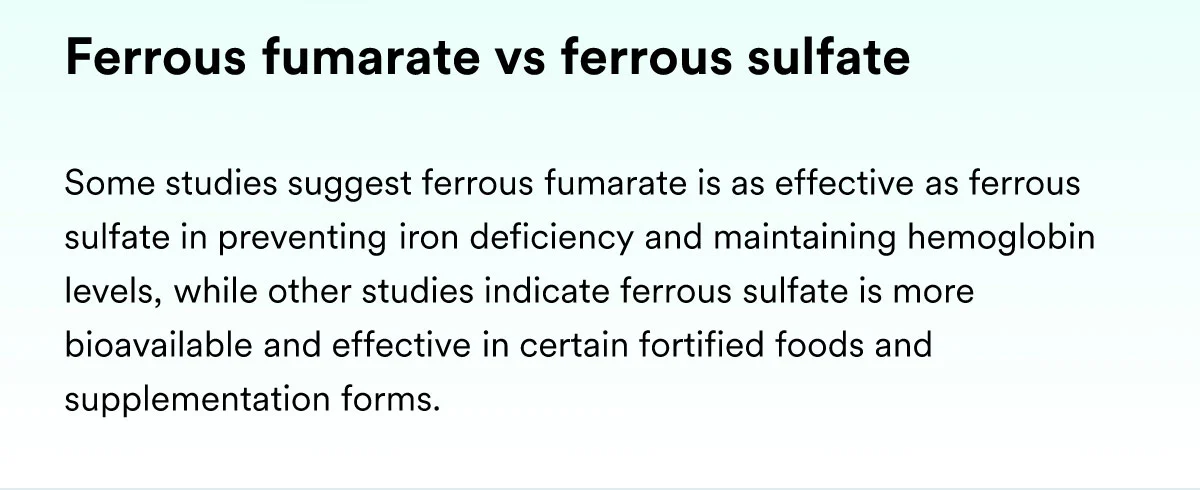
The Absorption Pathway: How Ferrous Fumarate Powder Reaches the Bloodstream
Dissolution and Ionization in Gastric Acid
The process of absorption starts long before the iron ever arrives at the gut. When eaten, the ferrous fumarate powder dissolves in the acid of the stomach, and free ferrous ions are released that remain in solution and ready for absorption further down the digestive system. The fumarate salt is already in the reduced Fe2+ form that the body favours. This means that the dissolution is very efficient, without the additional step of reduction that the ferric-based compounds need before absorption. Gastric acid also inhibits the premature precipitation of the released iron as it travels toward the duodenum, the main site of iron absorption, thereby ensuring that it remains soluble until it reaches the duodenum, rather than being carried directly through the gut. Here’s a major benefit built into ferrous fumarate powder. It arrives at the absorption site ready to get to work.[5]
Uptake Through Intestinal Enterocytes
Enterocytes lining the duodenum and upper jejunum express DMT1, the divalent metal transporter that is the major pathway for absorption of food and supplementary iron into the body. The ferrous fumarate powder provides iron in the Fe²⁺ state suitable for transport by DMT1 across the brush border of the enterocyte with no further processing. Ferric compounds need to be reduced at the cell surface prior to transport. This more direct route is often cited by formulators and a ferrous fumarate supplier as a practical reason why ferrous fumarate powder tends to demonstrate favourable absorption kinetics over ferric alternatives. After entry into the enterocyte, iron is either stored as ferritin or shuttled to the basolateral membrane for release into circulation.[1][5]
Systemic Transport Into Hemoglobin Synthesis
Iron that crosses the basolateral membrane via the transporter ferroportin is oxidised back to the ferrous form by hephaestin so it may bind transferrin, the protein that carries iron through the circulation to the bone marrow. Developing red blood cells take up iron from the ferrous fumarate powder to synthesise haemoglobin. This is the stage which eventually leads to an increase in haemoglobin and ferritin levels in a person recovering from iron-deficiency anaemia. And the efficiency of the previous phases has a direct impact on how fast the last step will exhibit quantifiable benefits. This is why the chemical form of the raw ingredient is as important as the dosage on the label.[3][5]
“Are you looking at raw material documentation or absorption data for a new formulation?” Hongda's technical staff can take you through certificates of analysis and choices for samples directly — just drop us a line at duke@hongdaherb.com.
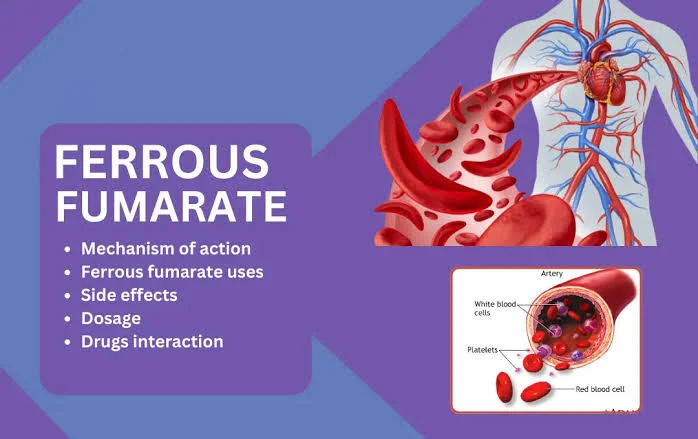
Factors That Influence How Well the Body Absorbs Iron?
Pairing With Vitamin C and Organic Acids
Even a well-absorbed raw material may benefit from good co-formulation. Ascorbic acid is one of the most powerful boosters of non-heme iron absorption. It stabilises the ferrous iron in a soluble, reduced form in the gut, and produces a soluble chelate that may counter the inhibiting impact of phytates and polyphenols in many meals. Ferrous fumarate powder is absorbed far better with vitamin C than iron alone, which is why many prenatal and general health products include the two together in one tablet. One of the best evidence-supported absorption options available today is to create a combination formula based on ferrous fumarate powder and a standardised supply of vitamin C.
Particle Size and Powder Formulation Design
Physical form is also important. Chemistry is not the only factor in absorption effectiveness. Hongda screens their ferrous fumarate powder to a specified particle size range. This enhances the dissolving rate in stomach juice and ensures the powder disperses uniformly instead of aggregating into bigger particles that dissolve more slowly. Even if it has nothing to do with efficacy, this visual problem has an impact on perceived quality. Fine, homogeneous particles also contribute to minimising colour spotting, which may occur in tablets and capsules when iron is unevenly distributed. For firms using high-speed presses, direct compression grade ferrous fumarate powder removes the requirement for pre-granulation altogether.
Meal Timing and Dietary Interactions
The time and way you take a supplement affect how much iron the body really absorbs. These may all inhibit the absorption of non-heme iron when taken with a supplement, and therefore many labelling advisories advise taking iron at a different time than calcium-rich foods or between meals. Because ferrous fumarate powder is generally gentle on the stomach, it is more practical for customers who need to follow this sort of scheduling instructions but don't want to induce nausea while their stomach is empty.
Formulation Applications Across Tablets, Capsules, and Fortified Foods
Direct Compression Grades for High-Speed Tableting
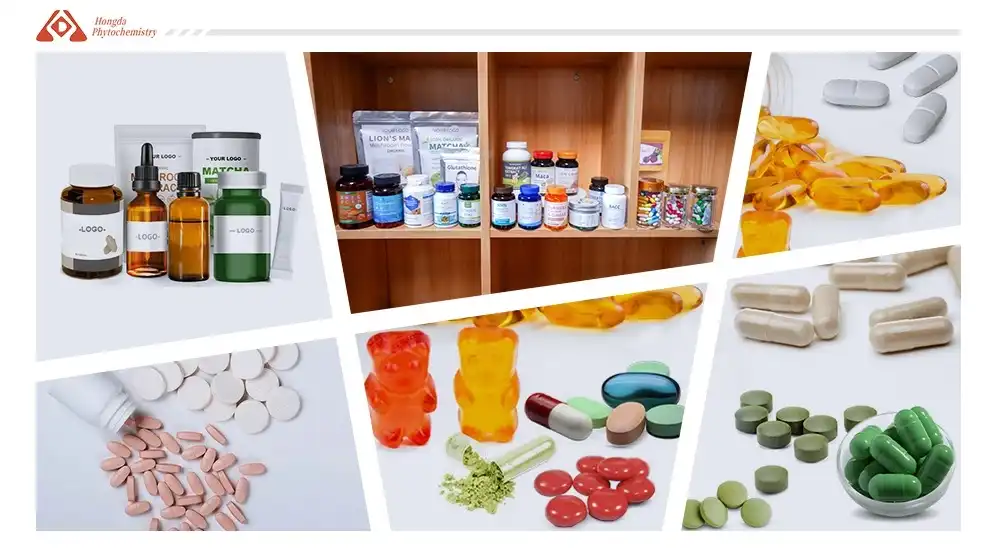
Potency is a concern for large-scale producers, but so is throughput, and that’s where Hongda’s DC-grade ferrous fumarate powder fits into the factory floor. For companies sourcing ferrous fumarate supplement wholesale in China, this grade is suitable for high-speed tablet presses and provides the flow characteristics and compressibility required to eliminate the need for complicated pre-granulation procedures, saving production time and costs. The powder is prepared to a minimum of 99% purity and is inspected for a constant particle size, so that tablets formed from this grade will have uniform hardness and weight across extended production runs, decreasing rejection rates on the line for both contract manufacturers and private-label companies.
Fine Powder for Premixes and Food Fortification
Tableting is not required for all uses. Ferrous fumarate powder of a finer grade is used in food and beverage fortification applications such as baby formula bases, cereal fortificants, and powdered nutritious drinks. The fine powder will mix consistently into big batches without settling or clumping. And that is precisely what Hongda’s fine powder does. It distributes uniformly in premixes so each serving has a constant amount of iron. Such homogeneity is critical for fortification programs that target vulnerable populations. Well-screened ferrous fumarate powder provides producers the consistency that regulators require.[4]
Combination Formulas With Folic Acid and B-Vitamins
Iron is seldom a standalone on a supplement information panel. In prenatal vitamins, postpartum recovery blends, and general anemia-support formulations, ferrous fumarate powder is often paired with folic acid and vitamin B12, substances that function together during red blood cell synthesis and iron metabolism. To make these combinations, you need an iron source that remains stable enough to sit alongside other actives without deteriorating during the product’s shelf life, and ferrous fumarate’s locked Fe²⁺ structure lends itself well to that type of stability better than more reactive salts.
|
Grade
|
Particle Characteristics
|
Recommended Application
|
|---|---|---|
|
DC Grade
|
Coarse, free-flowing
|
High-speed direct-compression tableting
|
|
Fine Powder
|
Finely screened, low clumping
|
Premixes, food and beverage fortification
|
|
Capsule Grade
|
Medium fineness, high bulk density
|
Capsule filling, softgel blending
|
Why International Buyers Choose Shaanxi Hongda Phytochemistry as Their Ferrous Fumarate Supplier?
Certifications That Simplify Import Compliance
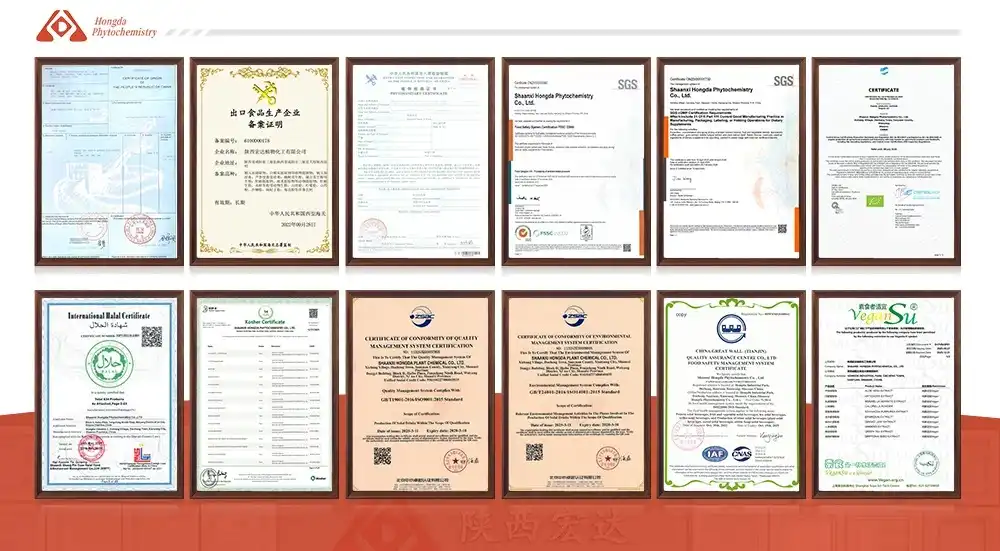
Choosing the right ferrous fumarate supplier is as much about paperwork as it is about the ferrous fumarate powder itself, and this is an area Shaanxi Hongda Phytochemistry has invested in heavily. Since its founding in 2001, the company has built a certification portfolio that now includes cGMP, FSSC22000, ISO22000, ISO9001, HALAL, KOSHER, BRC, FDA registration, and both EU and NOP organic certifications, alongside multiple national patents earned since being recognized as a National High-tech Development Enterprise in 2010. For import teams navigating regulatory frameworks across North America, Europe, and the Middle East, this documentation shortens vendor qualification considerably, since much of the compliance groundwork is already in place before the first sample shipment arrives.
Testing and Traceability From Raw Material to Drum
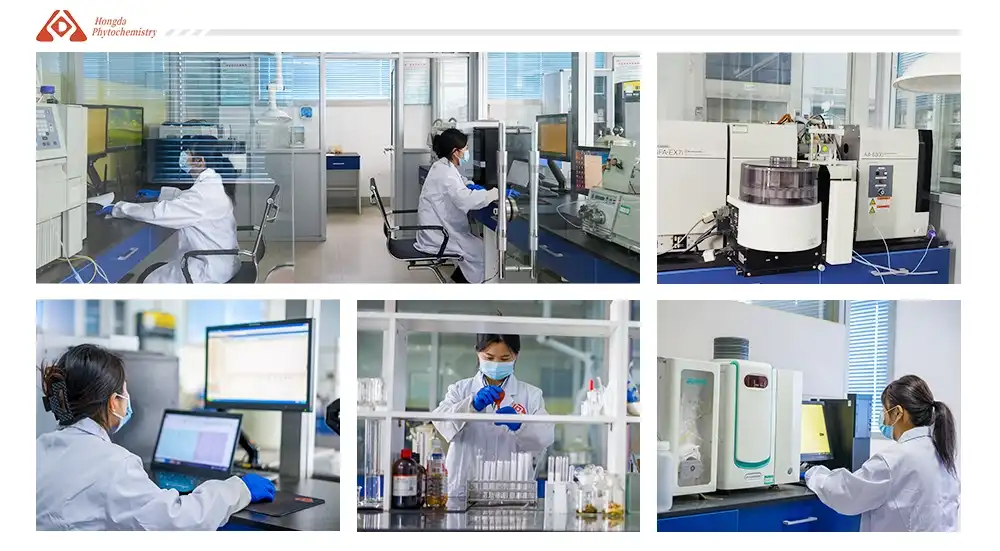
Every batch of ferrous fumarate powder leaving Hongda's facility passes through an SGS-standardized laboratory staffed by more than twenty professor-level researchers, equipped with liquid chromatographs, atomic absorption spectrophotometers, and automatic titrators among other instrumentation. Before shipment, the company tests for active ingredient content, heavy metals, moisture, and microbial contamination, generating documentation buyers can hand directly to their own quality teams. This matters most to brands sourcing ferrous fumarate supplement wholesale in China for the first time, since verified certificates of analysis reduce the uncertainty that comes with a new cross-border supplier relationship. Traceability extends back through the company's own planting bases, giving buyers visibility competitors rarely offer.
Production Capacity for Reliable Wholesale Supply
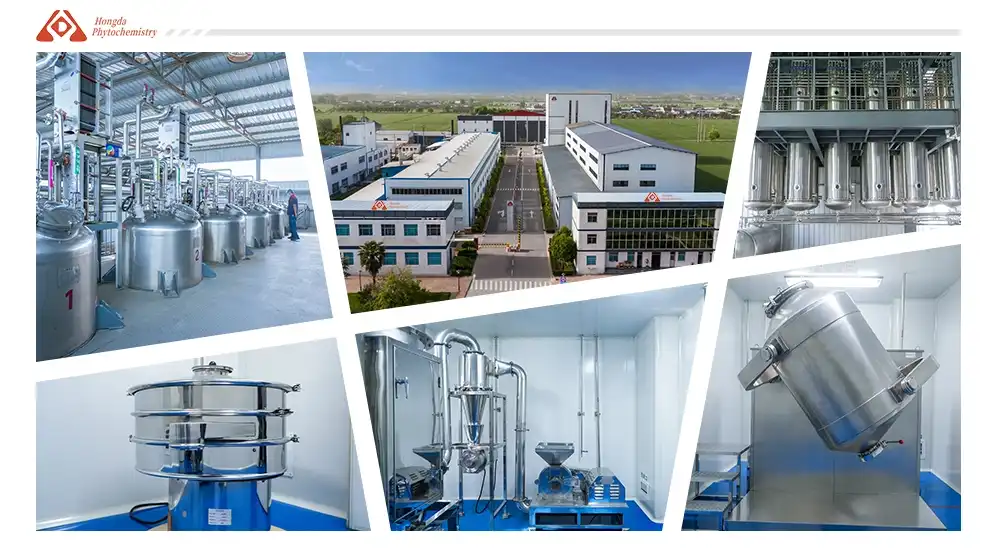
Supply reliability is often the deciding factor once quality and compliance are roughly equal between two suppliers. Hongda's 20,000-square-meter facility runs more than ten modern production lines within a 100,000-level purification workshop environment, supported by a 3,000-square-meter warehouse across six storage zones, giving the company an annual capacity of roughly 3,000 tons across its ingredient portfolio. That scale allows standing inventory of ferrous fumarate powder rather than manufacturing to order, shortening lead times for repeat wholesale buyers.
|
Category
|
Detail
|
|---|---|
|
Founded
|
2001
|
|
Facility
|
~20,000 m², 10+ production lines, 100,000-level workshops
|
|
Annual Capacity
|
~3,000 tons
|
|
In-House Lab
|
SGS-standardized, 20+ professor-level staff
|
|
Certifications
|
cGMP, FSSC22000, ISO22000, ISO9001, HALAL, KOSHER, BRC, FDA, Organic (EU & NOP)
|
Conclusion
Ferrous fumarate powder earns its place in iron-deficiency formulations through high elemental iron content, chemical stability, and a genuinely favorable absorption pathway compared with many alternative iron salts, and Hongda Phytochemistry has spent over two decades refining production to protect that performance. From gastric dissolution through enterocyte uptake to hemoglobin synthesis, each step benefits from the powder's locked Fe²⁺ structure and controlled particle engineering. For formulators who need an absorption claim rather than just a label number, sourcing a well-characterized, thoroughly tested ferrous fumarate powder is one of the simplest ways to raise the odds of real-world results.
FAQ
1. What is the elemental iron content of Hongda's ferrous fumarate powder?
Approximately 32.5% to 33%, among the highest of the commonly used iron salts.
2. Is ferrous fumarate powder gentler on the stomach than ferrous sulfate?
Most formulators and consumers report a milder gastrointestinal profile and less metallic aftertaste compared with ferrous sulfate.
3. What formulation grades of ferrous fumarate powder does Hongda offer?
DC grade for direct-compression tableting, fine powder for premixes and fortification, and a capsule-filling grade with higher bulk density.
4. Does pairing ferrous fumarate powder with vitamin C improve absorption?
Yes. Ascorbic acid keeps iron in its soluble ferrous state and helps offset inhibitors like phytates, improving overall uptake.
Partner With HONGDA for Dependable Ferrous Fumarate Powder Supply
If your brand needs a ferrous fumarate powder that performs consistently from raw material testing to finished dosage form, Shaanxi Hongda Phytochemistry Co., Ltd. is ready to support your next formulation. With more than two decades of manufacturing experience, an SGS-standardized in-house laboratory, and certifications spanning cGMP, FSSC22000, HALAL, KOSHER, and organic standards, HONGDA gives international buyers the documentation and supply reliability that cross-border sourcing demands. Whether you need DC-grade powder for tableting, fine powder for fortification, or a custom specification for private label, our team can walk you through certificates of analysis, samples, and MOQ pricing. Email duke@hongdaherb.com today to move your formulation forward with a long-term partner.
References
1. Hallberg, L., Hulthén, L. "Prediction of dietary iron absorption: an algorithm for calculating absorption and bioavailability of dietary iron." American Journal of Clinical Nutrition.
2. Toblli, J.E., Cao, G., Olivieri, L., Angerosa, M. "Comparative study of the gastrointestinal tolerability and bioavailability of different oral iron compounds." Pharmacology.
3. Cook, J.D. "Diagnosis and management of iron-deficiency anemia." Best Practice & Research Clinical Haematology.
4. World Health Organization. "Iron Deficiency Anaemia: Assessment, Prevention, and Control — A Guide for Programme Managers." WHO Press.
5. Muñoz, M., Villar, I., García-Erce, J.A. "An update on iron physiology." World Journal of Gastroenterology.