



_1745918362135.webp)

How Does Liposomal Berberine Powder Boost Bioavailability?
Liposomal berberine powder changes the way berberine supplements are usually taken by enclosing the active ingredient in phospholipid bilayers. Berberine is a plant chemical widely recognised to the nutraceutical sector for its potential uses in metabolic health, cardiovascular support and functional nutrition products. However, conventional berberine products may have limitations in terms of absorption efficiency, taste and customer tolerance. Hongda Phytochemistry is run by shaanxi hongda phytochemistry co., ltd. and supplies leading ingredient solutions to supplement brands and manufacturers globally. Liposomal berberine powder is a novel delivery system, using current encapsulating technology to preserve berberine throughout digestion, helping to enable better component utilisation and opening new possibilities in the production of premium supplements.
Why Liposomal Delivery Improves Berberine Performance
Overcoming Challenges of Conventional Berberine Formulations
Traditional berberine supplements are frequently utilised in nutritional goods, but their formulation efficacy may be hampered by many issues, such as poor water solubility and digestion stability. Such obstacles may lower the quantity of active chemical accessible for absorption.
Liposomal technology overcomes these restrictions by entrapping berberine molecules in phospholipid layers. These tiny structures shield the substance from harsh circumstances in the gut and assist it to interact more efficiently with the routes in the intestine responsible for absorption.
This delivery technology offers businesses a viable way to generate berberine products with higher stability, enhanced flavour attributes and more market appeal.
How Phospholipid Encapsulation Supports Better Delivery
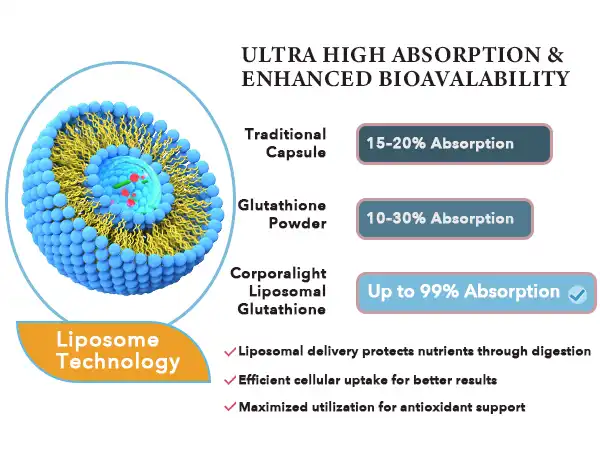
A liposome consists of phospholipid bilayers that resemble natural cell membrane structures. When berberine is encapsulated inside these layers, the active compound receives additional protection during processing, storage, and digestion.
This approach offers several advantages:
- Improved ingredient stability
- Better dispersion in finished products
- Reduced unpleasant taste
- Greater formulation flexibility
These benefits make liposomal formulations suitable for modern supplement categories, including capsules, powders, stick packs, and functional beverages.
The Science Behind Enhanced Berberine Bioavailability
Protecting Berberine Through the Digestive Process
Bioavailability = the amount of a substance accessible for the body to utilise after eating. Something to think about: plant chemicals like berberine are stable during digestion.
Liposomal delivery techniques establish a safe environment for Liposomal berberine powder and assist in minimising premature breakdown. The phospholipid structure gives the substance more stability prior to the site of absorption.
This increased protection may enable the makers to formulate for more effective nutrient delivery than certain standard berberine formulations.
Supporting Efficient Cellular Uptake
Liposomes are biocompatible with biological membranes because of their phospholipid composition, which may facilitate the interaction between the encapsulated substance and intestinal cells.
Another delivery route that may help to increase ingredient transport is via liposomal systems, instead of depending simply on normal absorption pathways.
For supplement producers, this implies the same active ingredient in a more sophisticated delivery system that matches the rising customer demand for effective and science-based nutrition solutions.
Key Benefits of Liposomal Berberine Powder for Supplement Brands
Creating Premium Metabolic Health Products
Berberine is a popular ingredient in products formulated for metabolic health. It has grown in popularity as customers seek natural ingredients to encourage healthy living.
The delivery properties of liposomal berberine are enhanced, giving marketers the ability to develop premium formulations aimed at:
- Daily metabolic support
- Healthy glucose metabolism
- Active lifestyle nutrition
- Healthy aging products
The advanced delivery format can help products differentiate themselves in competitive supplement markets.
Improving Consumer Experience Through Better Formulation
The bitter flavour of traditional berberine is a hurdle. Developing palatable goods, particularly powders and functional drinks, may be challenging.
Encapsulation technology limits direct exposure to the flavour profile of the substance and allows producers to consider more consumer-friendly packaging for products.
Potential applications include:
- Gummies
- Beverage powders
- Capsules
- Multi-ingredient wellness blends
Better sensory performance of Liposomal berberine powder can contribute to improved customer satisfaction and product acceptance.
Technical Factors That Determine Liposomal Berberine Quality
Particle Characteristics and Encapsulation Control
The performance of a liposomal ingredient depends heavily on manufacturing precision. Reliable production requires careful monitoring of important quality indicators, including:
- Particle size distribution
- Encapsulation efficiency
- Ingredient purity
- Stability during storage
Manufacturers assess these qualities using analytical testing procedures to ensure consistency between one batch of manufacturing and another.
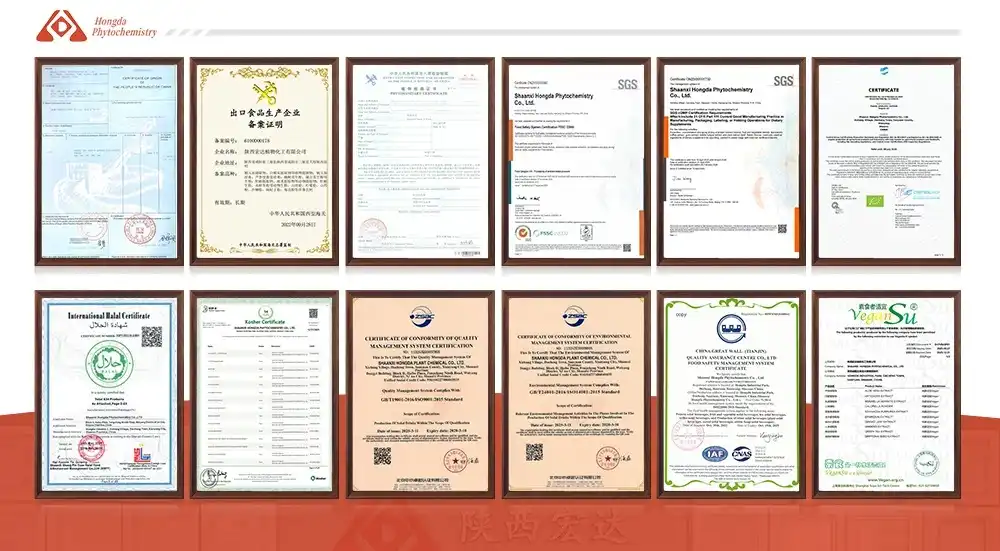
Hongda Phytochemistry employs regulated manufacturing processes and quality management systems to ensure the dependable performance of ingredients for clients worldwide.
Selecting Suitable Phospholipid Materials
The choice of phospholipid source influences product positioning and formulation compatibility. Many manufacturers select plant-based phospholipids, such as sunflower lecithin, to meet clean-label and allergen-conscious market demands.
The selection of high-quality raw materials helps support:
- Product stability
- Consumer-friendly labeling
- Flexible formulation development
For brands targeting premium nutrition markets, ingredient sourcing transparency is an important factor when selecting suppliers.
Comparing Liposomal and Conventional Berberine Formats
Differences in Absorption and Product Performance
Conventional berberine supplements may require careful formulation strategies to overcome absorption challenges. Liposomal systems provide an alternative approach by using encapsulation technology to improve delivery efficiency.
Key differences include:
| Feature | Conventional Berberine | Liposomal Berberine |
|---|---|---|
| Delivery method | Free compound | Phospholipid encapsulation |
| Taste control | Limited | Improved |
| Formulation flexibility | Moderate | High |
| Stability protection | Basic | Enhanced |
For product developers, these differences create opportunities to build more competitive supplement products.
Advantages for Product Development and Manufacturing
Powder-based liposomal ingredients provide practical benefits compared with some liquid delivery systems.
Advantages include:
- Easier transportation
- More convenient storage
- Compatibility with dry formulations
- Flexible manufacturing applications
This makes liposomal berberine attractive for companies developing scalable commercial products.
B2B Procurement Guide for Liposomal Berberine Ingredients
Evaluating a Reliable Ingredient Supplier
Choosing the right supplier is essential for maintaining product quality and supply reliability. Procurement teams should consider:
- Manufacturing capabilities
- Quality management systems
- Testing documentation
- Production consistency
- Technical support
A professional supplier should provide documentation such as:
- Certificate of Analysis (COA)
- Product specifications
- Safety information
- Quality testing records
These materials help brands complete product development and regulatory preparation more efficiently.
Supporting OEM and Customized Product Development
Different supplement companies have different requirements depending on their target markets and product formats.
Experienced ingredient manufacturers can support:
- Custom formulations
- Bulk ingredient supply
- Packaging solutions
- Technical consultation
- Application guidance
Hongda Phytochemistry works with supplement brands and manufacturers by providing Liposomal berberine powder ingredient solutions designed for commercial product development.
Storage, Handling, and Application Considerations
Maintaining Ingredient Stability
Proper storage is important for preserving liposomal structures and maintaining ingredient quality.
Recommended practices include:
- Keeping products in dry environments
- Protecting materials from excessive heat
- Using appropriate packaging solutions
- Following supplier storage recommendations
Good handling procedures help manufacturers maintain product consistency throughout transportation and production.
Integrating Liposomal Berberine Into Finished Products
When developing finished products, manufacturers should consider ingredient compatibility, processing conditions, and dosage requirements.
Liposomal berberine can be incorporated into:
- Dietary supplements
- Functional nutrition products
- Combination formulas
- Wellness-focused product lines
Careful formulation planning helps preserve the benefits of the delivery system while achieving the desired consumer experience.
Future Market Opportunities for Liposomal Berberine
Growing Demand for Advanced Delivery Systems
Consumers are looking more and more for a combination of natural ingredients and sophisticated delivery systems in supplements. This development is opening up new potential for liposomal components throughout the world.
Liposomal berberine fits well with this shift, providing a science-based solution to the improvement of ingredient performance and product distinctiveness.
Strategic Value for Global Supplement Companies
For companies in congested wellness categories, sophisticated delivery systems may bring considerable benefits.
Companies that invest in superior ingredients, trusted suppliers, and inventive formulas are better equipped to adapt to changing customer preferences.
Conclusion
Liposomal berberine powder is a cutting-edge method to enhance the administration of berberine, using phospholipid encapsulating technology to safeguard the active component and provide superior bioavailability. Liposomal systems provide benefits over standard berberine forms in formulation flexibility, flavour control, component stability, and premium product positioning.
If they choose an experienced ingredient partner to help them, brands, OEMs, and distributors may formulate dependable and competitive goods. Hongda Phytochemistry offers companies the opportunity to create novel nutritional products using current delivery technology, supported by regulated production procedures, quality documentation, and technical assistance.
The growing need for effective and accessible wellness solutions means that Liposomal berberine powder offers producers a new opportunity to build distinctive supplements for global health markets.
FAQ
1. What makes liposomal berberine powder more effective than regular berberine?
The higher efficiency comes from phospholipid encapsulation, which keeps berberine from breaking down in the digestive system and makes it easier for cells to take it in through membrane fusion processes. Compared to regular berberine hydrochloride, this technology makes it 10–20 times more bioavailable. This means that medicinal benefits can be achieved at much lower amounts while gastrointestinal side effects are minimized.
2. How should liposomal berberine powder be stored to maintain potency?
For best keeping, keep the temperature between 15°C and 25°C and the relative humidity below 60%. The freeze-dried powder should be kept away from light and moisture, and covered containers should keep air out so that the phospholipids don't lose their structure. If you store it correctly, the product will stay stable for 24 months.
3. What quality certifications are important when sourcing liposomal berberine powder?
cGMP compliance, ISO 22000 or FSSC 22000 food safety management systems, and FDA site registration are all important certificates. Other important certifications are HALAL, KOSHER, and, if appropriate, organic certificates. Suppliers should give full certificates of analysis that show how well the particles are encapsulated, how widely they are distributed in size, and how pure the product is.
4. Can a liposomal berberine powder be combined with other ingredients in formulations?
Yes, liposomal berberine works well with mixtures of different ingredients and may help other lipophilic chemicals get absorbed through the phospholipid transport system. But it is best to do compatibility testing before mixing berberine with minerals or charged chemicals that could interact with it or change the stability of liposomes.
5. What minimum order quantities should I expect for liposomal berberine powder?
Standard minimum orders for stock formulas are usually between 1 and 5 kilograms. If you buy more than 25 to 100 kilograms a year, you can get better prices. Custom formulas and private marking services may have higher minimums of 25 to 50 kilograms, but they offer a lot of value by giving you the chance to make your product stand out.
Partner with HONGDA for Premium Liposomal Berberine Powder Manufacturing Excellence
Shaanxi Hongda Phytochemistry is ready to help you reach your buying goals. Liposomal berberine powder with pharmaceutical-grade liposomal berberine powder that has been designed to be as bioavailable as possible and work consistently well. Our advanced high-pressure homogenization technology gets encapsulation rates higher than 90% and exact particle size control between 80 and 150 nanometers. This makes sure that the best absorption properties are achieved, which supports our premium market positioning. As a top provider of liposomal berberine powder, we keep all the necessary certifications, such as cGMP, FSSC 22000, and FDA facility registration, to meet your legal compliance needs in all global markets. You can email our technical team at duke@hongdaherb.com to ask for samples, talk about bulk prices, or look into custom formulation options that are made to fit your needs.
References
1. Zhang, H., Wei, J., Xue, R., Wu, J.D., Zhao, W., Wang, Z.Z., Wang, S.K., Zhou, Z.X., Song, D.Q., Wang, Y.M., and Pan, H.N. (2019). Berberine lowers blood glucose in type 2 diabetes mellitus patients through increasing insulin receptor expression. Metabolism, 99, 72-81.
2. Kumar, A., Ekavali, Chopra, K., Mukherjee, M., Pottabathini, R., and Dhull, D.K. (2015). Current knowledge and pharmacological profile of berberine: An update. European Journal of Pharmacology, 761, 288-297.
3. Li, Y.H., Li, Y., Yang, L., Wang, H.Y., Wang, B.F., Yu, Y.D., Wang, Y.S., Qiu, L.L., Zhang, Q. and Tang, Q. (2020). Promoting effect of berberine on mitochondrial biogenesis protects against liver injury. Toxicology and Applied Pharmacology, 389, 114871.
4. Chen, W., Miao, Y.Q., Fan, D.J., Yang, S.S., Lin, X., Meng, L.K., and Tang, X. (2011). Bioavailability study of berberine and the enhancing effects of TPGS on intestinal absorption in rats. AAPS PharmSciTech, 12(2), 705-711.
5. Liu, C.S., Zheng, Y.R., Zhang, Y.F. and Long, X.Y. (2016). Research progress on berberine with a special focus on its oral bioavailability. Fitoterapia, 109, 274-282.
6. Feng, R., Shou, J.W., Zhao, Z.X., He, C.Y., Ma, C., Huang, M., Fu, J., Tan, X.S., Li, X.Y., Wen, B.Y. and Chen, X. (2015). Transforming berberine into its intestine-absorbable form by the gut microbiota. Scientific Reports, 5, 12155.
_1752212606907.webp)
_1751617791569.webp)