


_1745918362135.webp)

This administration method has proven effective inside the human body, making Liposomal Curcumin Powder the delivery method of choice for developers of anti-inflammatory, joint health, and antioxidant formulations. Hongda Phytochemistry has tailored its material to meet this physiological excursion. [1] The encapsulation technique prevents curcumin from degrading long enough to get to the tissues where it can do meaningful activity. Shaanxi Hongda Phytochemistry Co., Ltd. has built its reputation on solving the oldest and most persistent problem of curcumin: poor bioavailability. It’s done so by controlling particle size, validating encapsulation efficiency, and using a non-GMO phospholipid carrier designed to perform. We can trace the chemical from ingestion to cellular function and demonstrate precisely why this format routinely outperforms the usual curcumin extract.[1][2][6]
The Journey of Liposomal Curcumin Powder Through the Digestive System
Why Does Standard Curcumin Fail Before Absorption?
However, before we get into how the liposomal form wins, it helps to understand precisely what is wrong with conventional curcumin. Free curcumin is poorly soluble in water (~0.6 μg/mL in aqueous solution), which limits the quantity of the drug available to interact with and be absorbed by the gut lining. Any little amount that does break down is promptly degraded by liver enzymes and gut bacteria before it can reach the systemic circulation in substantial amounts. The limited solubility and quick metabolism mean that a regular dosage of curcumin is removed from the body before it has any visible physiological impact. This is exactly the issue that liposomal curcumin powder was developed to solve at the formulation level.[1][4][6]
That’s why many products have historically included piperine—an extract of black pepper known to slow down several metabolic breakdown processes—with ordinary curcumin. Piperine does help the situation a little, but it doesn't do enough to fix the solubility problem. Some formulators have even suggested that piperine could slow down the metabolism of other medications taken simultaneously. Liposomal curcumin powder removes the dependency totally. Phospholipid encapsulation solves the solubility and stability problems at the source, not in an indirect fashion.[1][2]
How does the Phospholipid Shell Survive Stomach Acid?
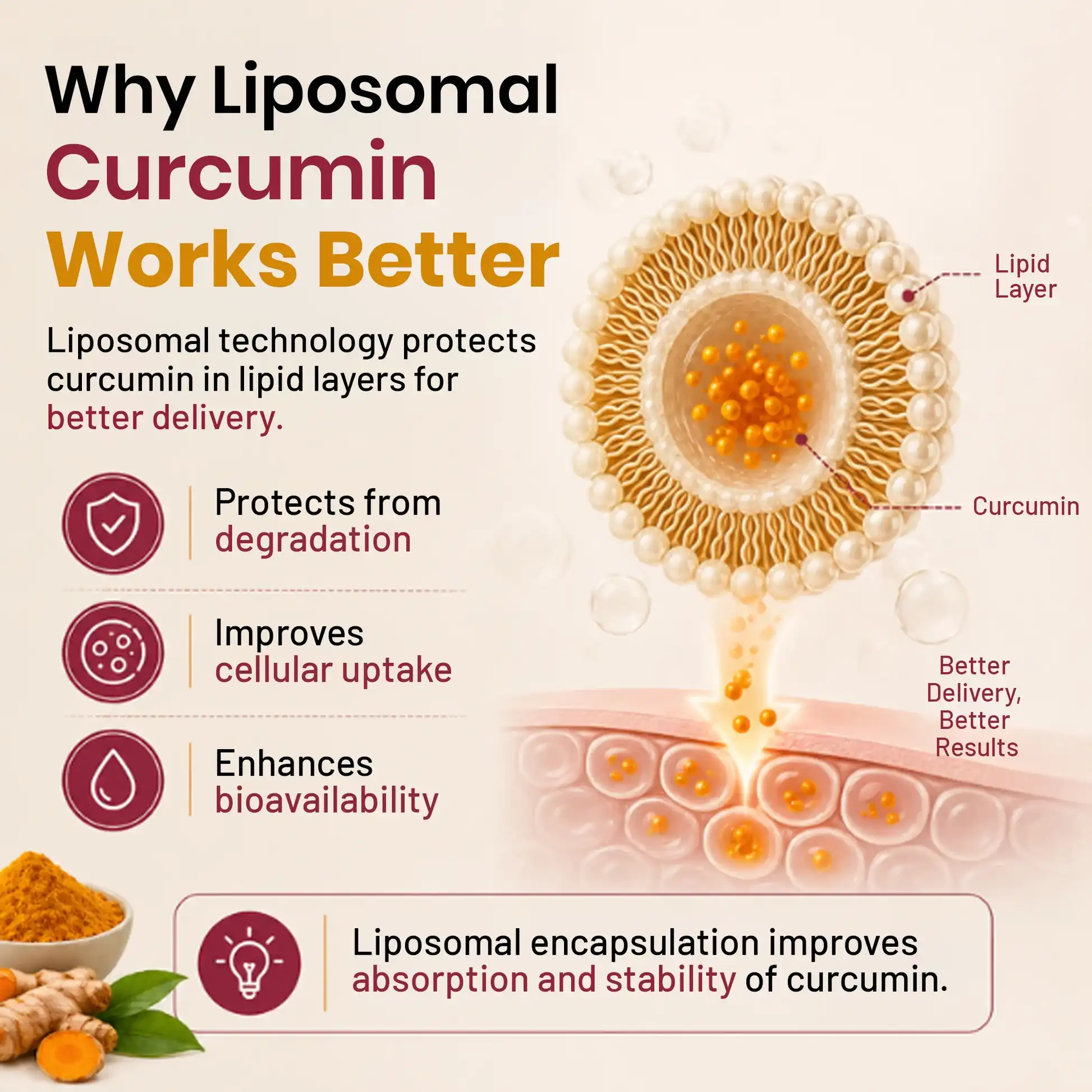
When consumed, the way that liposomal curcumin powder works is significantly different from the unencapsulated extract. The curcumin molecule is enclosed by a phospholipid bilayer, which is quite similar to the human cell membrane. The shell is tough enough to withstand the stomach’s acidity, so the curcumin payload isn’t broken down and destroyed in most of a regular dosage before it exits the stomach. Hongda’s recipe is made using non-GMO phospholipids derived from sunflower seeds. Consideration is given to their stability under these circumstances as well as the fact that they guarantee that the encapsulated curcumin reaches the small intestine, where the absorption process actually starts, without degradation. This defensive phase is arguably the most important distinction between liposomal and conventional curcumin therapy.[2][6]
Passing Through the Intestinal Wall
Once in the small intestine, the liposome’s membrane-like shape permits liposomal curcumin powder to come into direct contact with the intestinal epithelial cells in a manner that raw curcumin cannot. The phospholipid covering is like the lipid bilayer of the cell membrane itself, and hence the liposome may be fused with or taken up by intestinal cells far more effectively than a water-insoluble substance just floating about in the gut. The increased bioavailability that has been consistently demonstrated in clinical studies compared to non-encapsulated curcumin is due to the significant increase in the percentage of curcumin payload entering the lymphatic and circulatory systems via liposomal delivery compared to a typical extract.
Liposomal Curcumin Powder — Product Specification
|
No.
|
TEST ITEM
|
SPECIFICATION
|
RESULT
|
|||
|
1
|
Description
|
Yellow Powder
|
Conform
|
|||
|
2
|
Particle size (20 mesh)
|
≥90%
|
Conform
|
|||
|
3
|
Loss on drying
|
≤5.0%
|
2.33%
|
|||
|
4
|
Bulk Density
|
Measured value
|
368g/L
|
|||
|
5
|
Tapped Bulk Density
|
Measured value
|
721g/L
|
|||
|
6
|
Heavy Metals
|
Arsenic (As)
|
≤2.0ppm
|
Conform
|
||
|
Lead (Pb)
|
≤0.5ppm
|
Conform
|
||||
|
Mercury (Hg)
|
≤0.3ppm
|
Conform
|
||||
|
Cadmium (Cd)
|
≤0.3ppm
|
Conform
|
||||
|
7
|
Microbiological
|
Total plate count
|
≤10000cfu/g
|
10cu/g
|
||
|
Total molds and yeasts
|
≤1000cfu/g
|
10cfu/g
|
||||
|
Coliforms
|
≤10MPN/g
|
≤0.3MPN/g
|
||||
|
E.Coli
|
Negative/25g
|
Negative
|
||||
|
Salmonella
|
Negative/25g
|
Negative
|
||||
|
Staphylococcvs
|
Negative/25g
|
Negative
|
||||
|
8
|
Assay
|
Curcumin
|
70.0%±5%
|
71.6%
|
||
|
Phospholipids (NON-GMO)
|
15.0%±5%
|
12.9%
|
||||
|
Fatty Acids
|
15.0%±5%
|
13.8%
|
||||
|
Conclusion
|
Meet the in house standard.
|
|||||
What Happens Once Liposomal Curcumin Powder Enters Circulation?
Sustained Blood Concentration
One of the most therapeutically important benefits of liposomal administration is the time period of active curcumin that can be detected in the bloodstream post-absorption. The phospholipid shell continues to shield the substance even after it enters circulation; thus, liposomal curcumin powder maintains a high level of blood concentration for a much longer window than unencapsulated curcumin, which tends to surge momentarily before it’s swiftly eliminated. This sustained presence is hugely important for anti-inflammatory and joint health applications, as a longer period of increased circulation gives curcumin more chance to get to and act on target tissues in the body, rather than being metabolized away before it can exert a useful physiological effect.
Cellular Uptake and Membrane Fusion
The liposomal curcumin is able to pass the intestinal wall due to the same membrane-mimicking structure that permits it to enter individual cells once it reaches target tissue. Liposomes may merge directly with cell membranes and release curcumin into the intracellular milieu where oxidative stress and inflammatory signaling occur. This is a much different delivery method than passive diffusion, which is primarily how unencapsulated curcumin would need to enter the cells, assuming it lasted long enough to ever get to them. A reliable liposomal curcumin powder manufacturer formulates liposomal curcumin powder particularly for this fusion process, so cellular absorption is more efficient and consistent across various tissue types in the body.
Reaching Target Tissues
Once absorbed and circulated, curcumin in the liposomal formulation has a far higher chance of getting to the precise tissues where anti-inflammatory and antioxidant activity is most needed—think joint cartilage, connective tissue, and cells involved in immunological signalling. This targeted reach is part of the reason why liposomal curcumin powder is increasingly being used in joint health, sports recovery, and general wellness formulations—the improved circulation profile of the ingredient means it has a genuine physiological presence at these sites, rather than being a compound that theoretically has anti-inflammatory properties but never reaches the tissue in sufficient concentration to exert them.
The Biological Actions Curcumin Performs Once Absorbed
Inflammatory Pathway Modulation
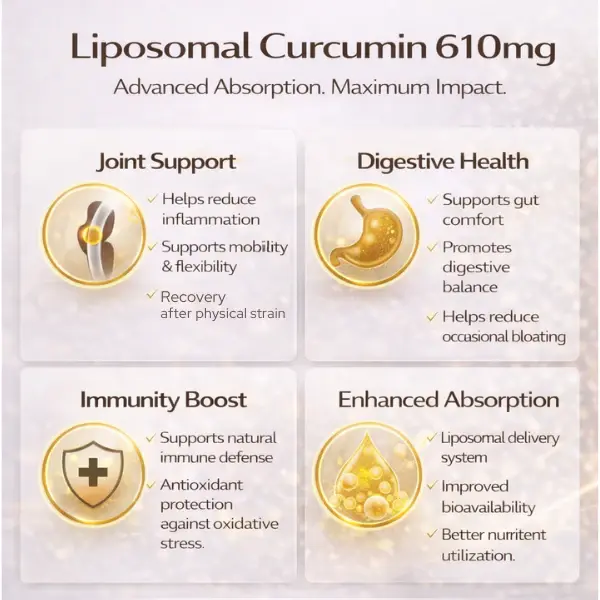
Once curcumin enters the target tissue at a sufficient dosage, it triggers its effects on a number of inflammatory signaling pathways, principally NF-κB and TNF-α, both of which play a role in the promotion of chronic inflammation throughout the body. Liposomal curcumin powder bioavailability is boosted, which implies that a greater percentage of these interactions can really take place compared to a regular extract. The drug has to reach an appropriate intracellular concentration before it can truly affect these pathways. This mechanism is relevant in a wide variety of inflammatory conditions, including joint pain, intestinal inflammation, and general muscle irritation, which is why curcumin remains one of the most researched natural anti-inflammatory compounds despite increasing competition from newer botanical actives.[3]
Antioxidant and Free Radical Activity
Curcumin also has direct antioxidant activity, in addition to its anti-inflammatory impact. Antioxidants are able to neutralize free radicals that harm cell structures over time. Liposomal curcumin powder merely makes this more effective by guaranteeing that more curcumin is available at the cellular level where oxidative damage is occurring. This allows the substance to intercept free radicals before they can damage DNA, cell membranes, or connective tissue. The antioxidant activity of curcumin is not separate from its anti-inflammatory activity but rather is an adjunct to it. Chronic inflammation and oxidative stress are very closely related biological processes that go hand-in-hand and amplify each other in the absence of intervention in the body over time.[5]
Supporting Cellular Health Long-Term
The synergistic anti-inflammatory and antioxidant effects of curcumin support expanded cellular health outcomes with constant dosing over time. Liposomal curcumin powder is especially suited to this kind of long-term use: the secret to daily supplementation is to keep the substance at significant blood levels between doses, rather than spiking and vanishing in a matter of hours. For this reason, formulators creating medicines for long-term, daily use, as opposed to short-term, symptomatic treatment, always choose liposomal delivery—because the pharmacokinetic profile is far more aligned with how customers really take a daily health supplement.[4][5][6]
The Manufacturing Process Behind Hongda's Liposomal Curcumin Powder
Encapsulation Technology and Particle Formation
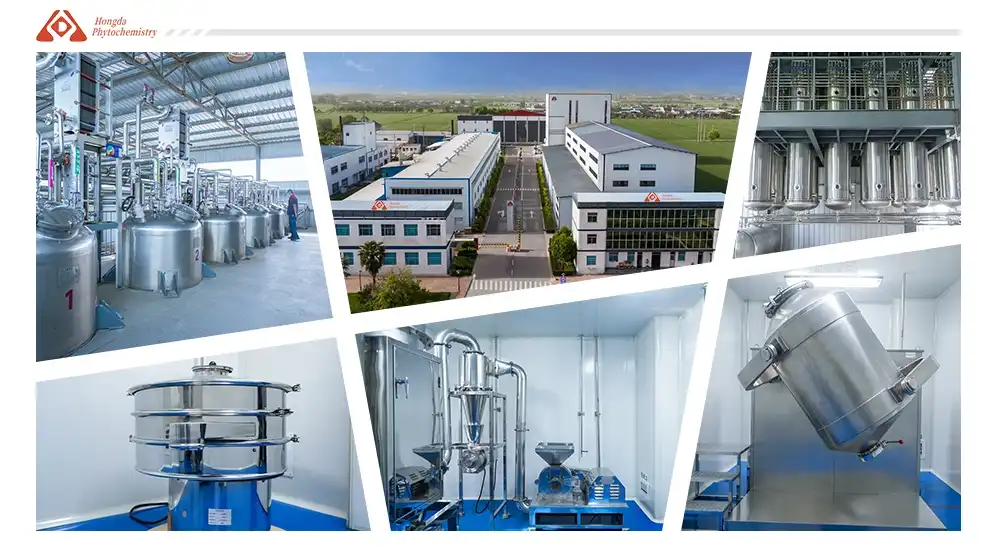
The foregoing physiological benefits can only be achieved by careful manufacturing control at the production stage. Hongda’s Liposomal Curcumin Powder is produced by high-pressure processing. Dynamic light scattering testing shows that the liposomes are homogeneous and the particle size range is regulated at 100-200 nanometers. This uniformity is crucial, since uneven particle size directly negates the bioavailability advantages discussed throughout this paper. This is done at Shaanxi Hongda Phytochemistry Co., Ltd. in a 20,000-square-meter plant with more than ten modern production lines and 100,000-level purification workshops, giving the company the infrastructure to maintain this precision at a commercial scale, rather than only in small laboratory batches.
Testing That Confirms Bioavailability
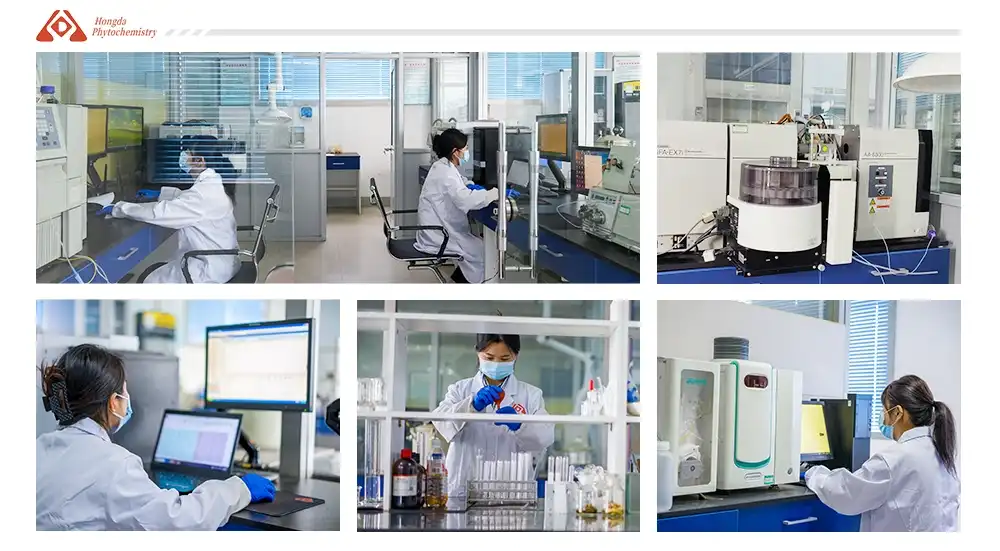
Verification is the only way to know the accuracy of manufacturing, which is why each batch of liposomal curcumin powder is tested at Hongda’s SGS-standardized laboratory before distribution. As a reliable liposomal curcumin supplier, Hongda uses its laboratory, which has more than 20 professor-level researchers and is equipped with high-performance liquid chromatographs and other analytical tools, to verify particle size distribution, encapsulation efficiency, and active curcumin concentration for each manufacturing cycle. This testing regimen provides formulators with the assurance that the bioavailability profile detailed in technical documentation is what is really sent in each order—not generic statements that may or may not be true of each batch a supplier delivers.
Certifications Backing Product Reliability
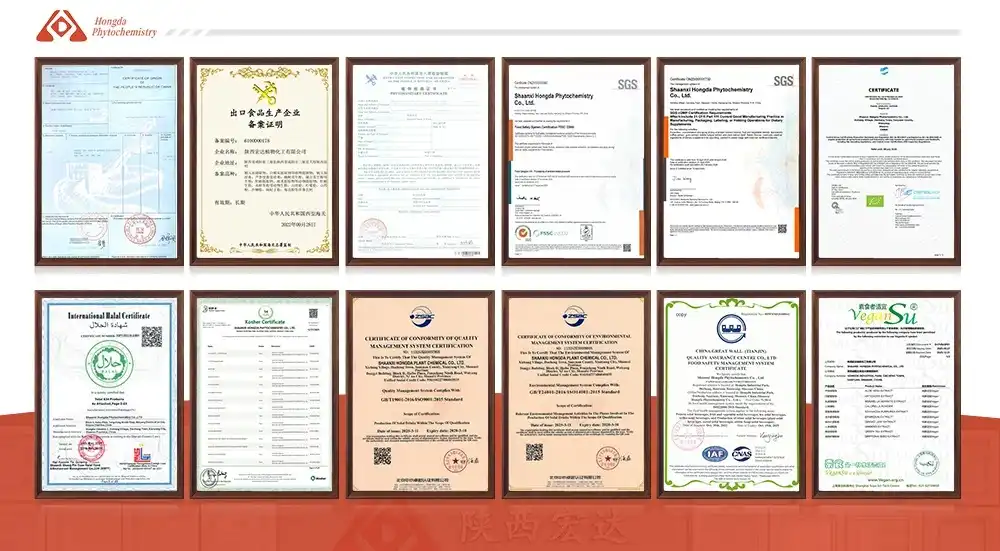
From 2001 to 2024, Shaanxi Hongda has created a comprehensive certification basis, including national high-tech business recognition, FDA registration, halal, kosher, BRC, and organic certification. The firm also obtained cGMP, FSSC22000, ISO22000, ISO9001, EU and NOP organic certification, and numerous new national patents in 2025. These certifications provide brands purchasing liposomal curcumin powder with documentation to support ingredient claims and cross-border regulatory compliance as US and European markets continue to build in requirements for substantiated bioavailability claims for botanical supplement ingredients.
|
Certification Type
|
Details
|
|---|---|
|
Manufacturing Quality
|
cGMP, ISO9001, ISO22000, FSSC22000
|
|
Regulatory Access
|
FDA Registration, BRC, National High-Tech Enterprise
|
|
Dietary Standards
|
Halal, Kosher
|
|
Organic Recognition
|
Organic (EU), Organic (NOP)
|
Sourcing Liposomal Curcumin Powder That Performs as Described
What Separates a Genuine Manufacturer From a Trader?
It only makes sense to figure out what liposomal curcumin powder does in the body if the product a business really buys works as claimed. Unfortunately, many of the firms providing liposomal curcumin are middlemen that are reselling material obtained from unknown sources and have no equipment or paperwork to confirm particle size or encapsulation effectiveness. In comparison, a real liposomal curcumin powder producer supervises the whole manufacturing process from obtaining the raw curcumin through the high-pressure encapsulation to the final verification in the lab. Hongda has its own testing laboratory and production facilities, giving it a vertically integrated business, which means it can stand behind the physiological performance claims made throughout this article, not just copy generic claims from other suppliers' product sites.
Evaluating a Supplier's Documentation Before Ordering
Formulators should always ask suppliers for the precise proof that supports their bioavailability claims before purchasing. This comprises DLS particle size reports, encapsulation efficiency statistics, and HPLC tests verifying active curcumin concentration in each batch. A competent liposomal curcumin provider will be happy to give you this information and explain how it was collected, rather than give vague guarantees about the quality of the product. Hongda distributes this material as a normal part of the sourcing process, allowing formulators a clear scientific foundation to evaluate whether the ingredient can genuinely achieve the physiological performance their product claims rely on, before any commercial commitment is made.
If you are evaluating these technical details for a new formulation, you can contact Hongda’s technical team at duke@hongdaherb.com to request the relevant particle size, encapsulation efficiency, and HPLC documentation before moving forward with sample testing.
From Sample Testing to Commercial Supply
New brands of liposomal curcumin powder seldom want to commit to a substantial purchase before verifying that the ingredient works as intended in their own recipe. Hongda backs this careful approach with inexpensive minimum order numbers for first trials so that brands may evaluate absorption, taste, and stability in a genuine product before ramping to commercial levels. As demand grows, the company’s production capacity of over 150 workshop technicians and its annual output capacity in the thousands of tons make the switch to bulk ordering easy, giving formulators the confidence that the same physiological performance validated in a trial batch will be mirrored in every subsequent commercial shipment.
Conclusion
Liposomal curcumin powder protects curcumin during digestion and allows effective cellular absorption and maintenance of blood concentration long enough to have substantial anti-inflammatory and antioxidant effects. At Hongda Phytochemistry, this mechanism is supported by precision production, rigorous testing, and a rising base of certification. Brands eager to create using an ingredient that works as advertised may contact Hongda to discuss specs and samples immediately.
FAQ
1. Why does encapsulation improve how curcumin works in the body?
It protects curcumin from stomach acid and rapid metabolism, allowing far more of it to reach circulation and target tissue intact.
2. How long does liposomal curcumin stay active in the bloodstream?
It maintains elevated blood concentration for a considerably longer window than standard curcumin extract, which is rapidly cleared.
3. What particle size does Hongda maintain for consistent absorption?
Production is controlled within a 100 to 200 nanometer range, verified through dynamic light scattering measurement.
4. Does the phospholipid carrier affect how the ingredient is absorbed?
Yes, the non-GMO sunflower seed carrier mimics cell membrane structure, supporting efficient intestinal and cellular uptake.
Formulate With HONGDA's Liposomal Curcumin Powder
If your team wants an ingredient that performs the way clinical bioavailability data suggests it should, Hongda Phytochemistry can supply pharmaceutical-grade Liposomal Curcumin Powder backed by verified particle size control and full analytical documentation. From small trial batches to commercial-scale orders, HONGDA's technical team can help align specifications, testing reports, and lead times with your formulation goals. Contact duke@hongdaherb.com today to request samples, technical data sheets, or a formulation consultation, and build your next product on an ingredient proven to work the way the science describes.
References
1. Journal of Nutritional Biochemistry, research on curcumin absorption, metabolism, and bioavailability.
2. Journal of Liposome Research studies on phospholipid encapsulation mechanisms and cellular uptake.
3. Molecules journal, research on curcumin's interaction with NF-κB and TNF-α inflammatory pathways.
4. Nutrients journal, clinical comparisons of pharmacokinetics between liposomal and standard curcumin.
5. Antioxidants journal, studies on curcumin's free radical scavenging activity at the cellular level.
6. International Journal of Molecular Sciences reviews on nanoscale delivery systems for bioactive compounds.