


_1745918362135.webp)

There is a clear trend underway in the supplement and functional food sector. Brands that have traditionally used normal curcumin extract are now reformulating using Liposomal Curcumin Powder instead. Leading that move has been Hongda Phytochemistry, which has been providing manufacturers with an encapsulated curcumin ingredient designed to overcome the absorption issues that have long plagued turmeric-based products. Shaanxi Hongda Phytochemistry Co., Ltd. has over 20 years of experience in the industry of plant extraction. This expertise is applied to its liposomal curcumin powder. The product has controlled particle size and confirmed encapsulation efficiency. It uses a non-GMO phospholipid carrier to meet the requirements of clean labels. Understanding why so many businesses are making this transition tells us a lot about where the anti-inflammatory ingredient sector is going next.[1][2][3][6]
The Shift Away From Standard Curcumin Extract
Why Bioavailability Became a Dealbreaker?
For years, companies acknowledged that curcumin was poorly absorbed, an inevitable constraint. They compensated by using large dosages or mixing the curcumin with piperine, but this only partly filled the gap. That tolerance is gone as customers are more educated and are demanding goods that genuinely offer quantifiable results, not just an impressive milligram count on the label. Standard curcumin is poorly soluble in water and is rapidly degraded after ingestion, such that only a tiny percentage of what a consumer consumes ever becomes physiologically active. Now that’s the kind of substantiated performance that today’s more skeptical supplement buyer wants to see before repurchasing a product. Liposomal curcumin powder was formulated to fill that void, with encapsulation protecting the compound through digestion so that a much higher percentage makes it to circulation.[1][3][6]
What Brands Discovered When They Switched?
The same story is told by all the manufacturers who have already made the switch: reformulating with liposomal curcumin powder lets them either decrease the dosage and maintain the efficacy or keep the dosage and get much better results—either way, their product is more competitive. The liposomal formulation keeps active curcumin levels in the circulation higher for longer, so companies can back up anti-inflammatory and joint health claims with greater certainty than they could with unencapsulated extract. This has been particularly useful for businesses in more regulated areas where weak claims are no longer enough for regulators or retail partners who are demanding more and more proof of an ingredient’s efficacy.[1][3][5]
Hongda Phytochemistry's Role in the Shift
With the demand for encapsulated curcumin increasing rapidly, Hongda Phytochemistry has adjusted its production capacity accordingly. The company’s 20,000-square-meter facility has more than ten contemporary production lines operating inside 100,000-level purification workshops, providing the scalability to deliver liposomal curcumin powder to brands transitioning from modest pilot orders into full commercial production. Instead of simply adding an ingredient to its existing product line, Hongda built dedicated processing capability around solving the two largest shortcomings of curcumin: poor solubility and quick breakdown. That’s one of the reasons so many brands switching to liposomal formats have turned to Shaanxi Hongda Phytochemistry Co., Ltd. as their supply partner.
This posture was not overnight. Hongda’s laboratory was created collaboratively with university professors under the SGS standards and has more than 20 professor-level researchers and testing personnel, and is also equipped with high-performance liquid chromatographs, spectrophotometers, automated titrators, and other equipment. That investment in research allowed the company to get its liposomal processing down to a science long before industry-wide demand, which is one reason why brands switching suppliers today often find Hongda several production cycles ahead of newer entrants still working to stabilize their own encapsulation technology.
|
Factor
|
Standard Extract
|
Liposomal Curcumin Powder
|
|---|---|---|
|
Water Solubility
|
Very low (~0.6 mcg/mL)
|
Significantly improved via encapsulation
|
|
Blood Concentration Duration
|
Short, rapid decline
|
Extended, sustained release profile
|
|
Typical Carrier
|
None
|
Non-GMO sunflower seed phospholipids
|
|
Common Pairing
|
Piperine (black pepper extract)
|
Standalone or combination formulas
|
What's Driving Brand Demand for Liposomal Curcumin Powder?
Consumer Expectations for Visible Results
Today’s supplement shopper is much more research-driven than before, often comparing ingredient forms before they purchase and reading reviews that clearly say whether a product “actually worked". This change in consumer behaviour has placed direct pressure on firms still employing traditional curcumin extract, as savvy customers increasingly understand liposomal administration as the most credible choice. Brands now have a real solution to this criticism with liposomal curcumin powder – a delivery system that has the absorption statistics to back it up, not just marketing-speak. Companies that have made the move report fewer consumer complaints about lack of obvious impact, which feeds directly into repeat buy rates and lessens the bad evaluations that stealthily weaken a product’s market performance over time.
Social proof has intensified this tendency as well. The growing number of wellness content makers and healthcare practitioners who are advocating for liposomal forms over traditional extracts has significantly increased consumer knowledge of the difference, extending well beyond the specialised audience that previously carefully followed ingredient research. It’s a reputational risk that didn’t even exist to the same degree a few years ago, but brands that are reluctant to adapt risk being publicly called out for choosing an inferior delivery format. This is driving formulation teams to work more closely with a reliable liposomal curcumin powder manufacturer and move more toward liposomal curcumin powder as the safer long-term option.
Clean-Label and Allergen-Conscious Formulation
In North America and Europe, the trend is definitely toward smaller, allergen-conscious ingredient lists, and this has impacted which liposomal technology manufacturers are ready to embrace. A lot of the previous liposomal formulations used soy-based phospholipids, which may cause sensitivity issues and make allergy labelling more difficult. Instead, Hongda’s Liposomal Curcumin Powder employs non-GMO sunflower seed phospholipids, fitting the clean-label standards that have become almost a must for firms looking to reach health-conscious retail channels. This is a greater detail than it may seem, as one single allergy worry hidden in a supplement’s ingredient panel might rule a product out of consideration by an increasingly label-savvy customer base.
Competitive Pressure in the Anti-Inflammatory Category
The anti-inflammatory and joint health product space has gotten crowded, and differentiation is more difficult to achieve by marketing alone. Brands still evolving with regular curcumin extract are increasingly competing on price rather than performance, a hard place to be in a sector where perceived effectiveness drives most purchase choices. When manufacturers switch to liposomal curcumin powder, they have a real performance edge they can utilise to sell their goods instead of the same old generic turmeric claims that dozens of other products employ. The competitive pressure has expedited the industry-wide trend; if a few prominent brands are successful in differentiating on absorption technology, others feel compelled to follow suit or risk losing market share to goods with better-established claims.
Inside the Technology Brands Are Adopting
Particle Size and Encapsulation Efficiency
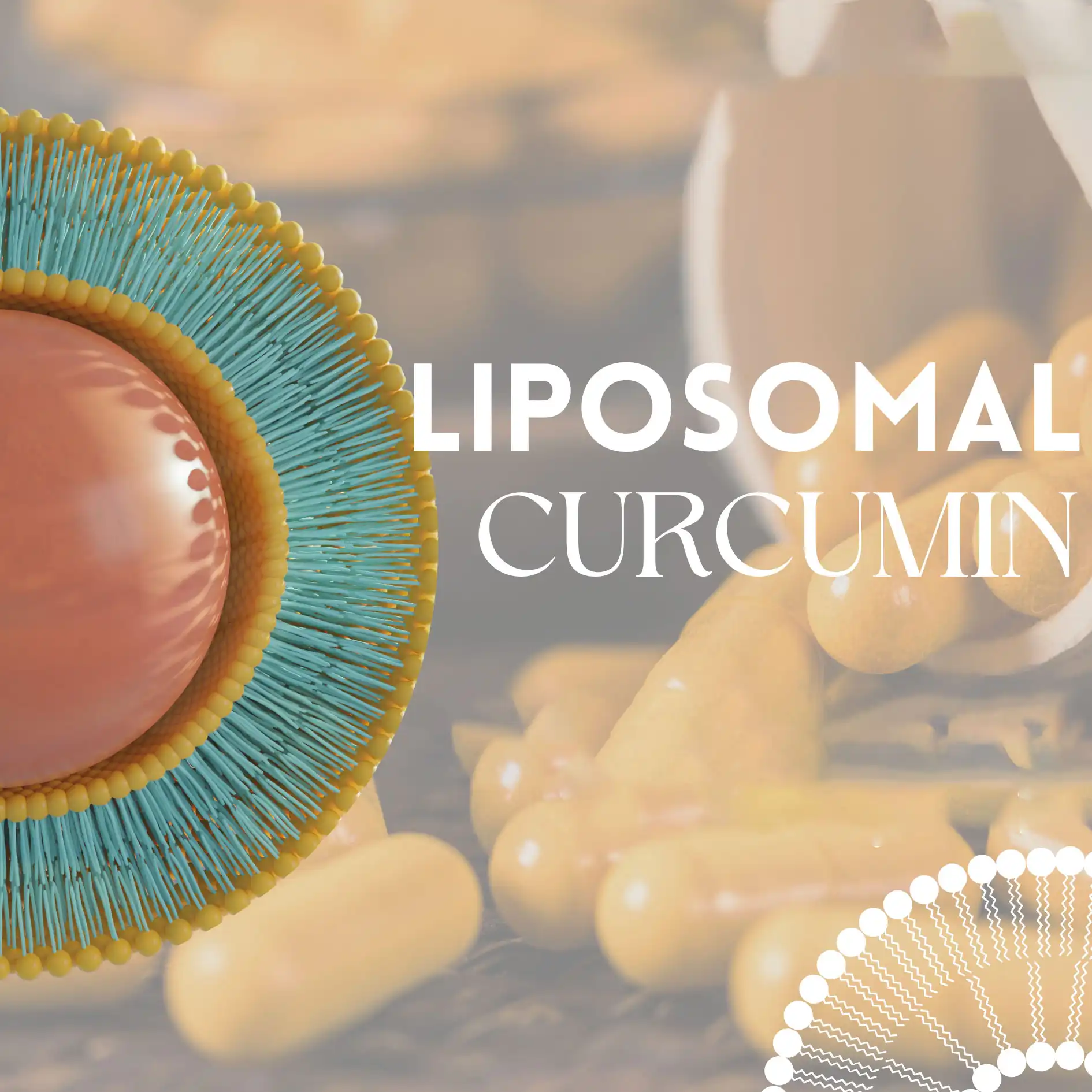
Brands may improve their performance by moving to manufacturing accuracy, not marketing promises. Hongda’s Liposomal Curcumin Powder has a particle size between 100 and 200 nanometres, confirmed by a dynamic light scattering test. Encapsulation efficiency is around 90 per cent. These figures are not arbitrary, as both the particle size and encapsulation rate are closely linked to the amount of curcumin that actually survives digestion intact. When considering a new supplier, brands should always ask for this data before making the move, since a liposomal product that is not uniform in particle size or has a low encapsulation efficiency will perform poorly, no matter how well the component is promoted on a technical data sheet.[2][3]
Non-GMO Sunflower Phospholipid Carrier
Selecting a phospholipid carrier is among the more technical factors underlying a liposomal recipe, but it has an outsized influence on both product performance and market positioning. Hongda’s liposomal curcumin powder formulation is free from soybean phospholipids and instead utilises non-GMO sunflower seed phospholipids. This supports both allergy safety and the non-GMO label that retail partners in Europe and North America are increasingly seeking. This carrier choice also impacts the stability of encapsulation, with the phospholipids from sunflower tending to form more consistent liposome structures during the high-pressure processing stage, contributing to the narrow particle size distribution that gives the finished ingredient a reliable absorption profile.[2][4][6]
Quality Assurance and Certifications
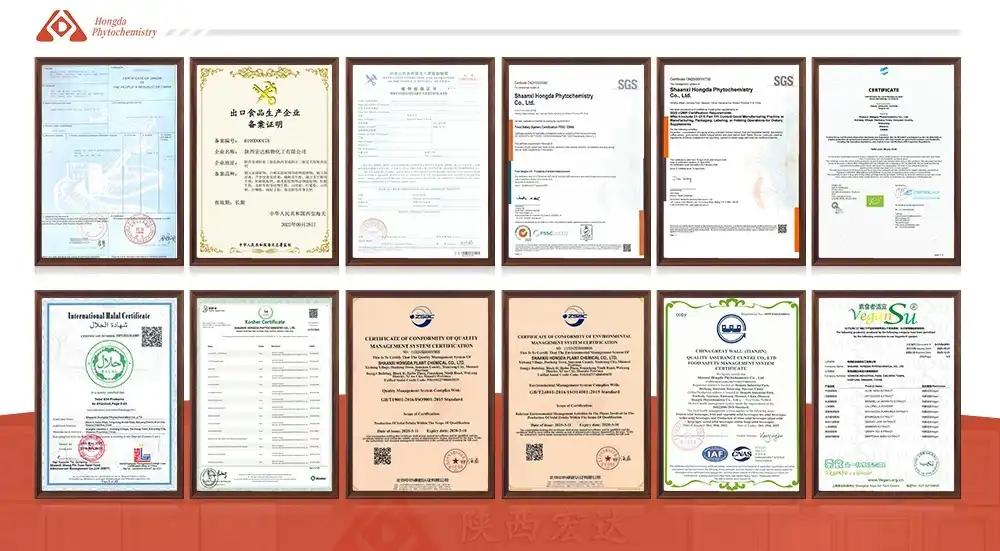
When brands change suppliers, ingredient performance is seldom the only factor. Documentation and certification coverage are also important for regulatory compliance and retail clearance. Shaanxi Hongda Phytochemistry Co., Ltd. established a wide certification base from 2001 to 2024: national high-tech enterprise, FDA registration, halal, kosher, BRC, and organic certifications. In 2025, the company expanded the certification base with cGMP, FSSC22000, ISO22000, ISO9001, EU, and NOP organic certifications. As a reliable liposomal curcumin supplier, the company ensures that every batch of liposomal curcumin powder is tested in its SGS-standardised laboratory before distribution, providing brands with the documentation required to back up ingredient claims and satisfy cross-border compliance standards, without the delays of third-party testing.
For brands evaluating a transition to liposomal curcumin powder, contacting Hongda Phytochemistry at duke@hongdaherb.com can provide access to technical specifications, testing documentation, and formulation support before making a supplier decision.
| Certification Type | Details |
|---|---|
| Manufacturing Quality | cGMP, ISO9001, ISO22000, FSSC22000 |
| Regulatory Access | FDA Registration, BRC, National High-Tech Enterprise |
| Dietary Standards | Halal, Kosher |
| Organic Recognition | Organic (EU), Organic (NOP) |
How Do Brands Evaluate a New Supplier Before Switching?
Vetting a Manufacturer's Production Capability
Reformulating an existing product line is a big deal, so brands don’t just sign on with a new supplier until they’ve confirmed the manufacturing capability first. When sourcing teams evaluate a producer of liposomal curcumin powder, they usually ask for certifications of the facility, batch testing procedures, and documentation of uniform particle size over many manufacturing batches, not just one sample batch. Hongda provides extensive technical documentation, including HPLC and DLS testing data, to assist in this review process before a brand commits to reformulating around their liposomal curcumin powder. This openness decreases the risk brands incur when they transition away from a supplier they may have done business with for years, replacing ambiguity with verifiable manufacturing data.
Questions Worth Asking Before Committing
Besides certificates, firms looking to partner with a new liposomal curcumin supplier need to ask specific questions like lead times, minimum order quantities, and whether the supplier can meet bespoke concentration demands as formulations grow. How responsive a supplier is during the sample period is often a good indicator of how a supplier relationship will work when regular commercial orders start. Brands that forgo this investigation can learn, after committing to a reformulation, that a supplier can’t maintain consistent quality at scale, which can be considerably more disruptive than sticking with a known but failing ingredient. Asking these issues up front safeguards both the reformulation timeframe and the brand’s current consumer connections.
It also helps to know how a vendor manages seasonal demand surges and repeat order fulfillment, as a manufacturer that does a great job on a single sample shipment isn’t often as consistent when monthly reorders start rolling in. Hongda’s warehouse is divided into six dedicated storage zones, covering about 3,000 square meters, and designed to handle just this sort of ongoing fulfillment. This allows brands to see for themselves what reliable, repeat supply really looks like before they commit to moving away from their current curcumin source.
Making the Transition Without Disrupting Existing Formulas
A major issue for businesses when altering curcumin sources is whether the change would affect flavor, texture, or stability in a current, already-approved product. In many cases, Hongda’s technical team will partner with the brand’s formulation personnel to guide them through the transition, educating them on the differences in solubility, color, and shelf stability between liposomal curcumin powder and conventional extract. Brands can trial the new ingredient on small production runs before committing to a full reformulation with a low minimum order quantity for initial trials. This minimizes the risk of disrupting a product customers already trust whilst still capturing the performance benefits that motivated the switch in the first place.
Conclusion
Brands are moving to liposomal curcumin powder to fix the absorption issues that have held up regular curcumin for years. It's a measured performer, clean-label compatible, and in a better competitive position. Hongda Phytochemistry backs up this transition with regulated production, many certifications, and expert supervision throughout the reformulation process. Brands looking to make the move can reach out to Hongda immediately to discuss specs and sample availability.
FAQ
1. Why are brands moving away from standard curcumin extract?
Standard curcumin has poor water solubility and degrades quickly, limiting how much reaches circulation compared to liposomal formats.
2. Does switching to liposomal curcumin require reformulating an entire product?
Not necessarily; many brands test the ingredient in small trial runs before committing to a full reformulation.
3. What phospholipid carrier does Hongda use?
Non-GMO sunflower seed phospholipids, chosen for allergen safety and clean-label compatibility.
4. How is quality verified for each batch?
Every batch passes through Hongda's SGS-standardized laboratory using HPLC and DLS testing methods.
Make the Switch to HONGDA's Liposomal Curcumin Powder
If your brand is considering a move away from standard curcumin extract, Hongda Phytochemistry can support your reformulation with pharmaceutical-grade Liposomal Curcumin Powder backed by verified particle size control and a growing international certification portfolio. From small trial batches to full commercial volumes, HONGDA's technical team can guide your transition without disrupting the formulas your customers already trust. Contact duke@hongdaherb.com today to request samples, technical documentation, or a formulation consultation, and give your product line the absorption advantage that is reshaping the category.
References
1. Journal of Nutritional Biochemistry, research comparing curcumin bioavailability across delivery formats.
2. Journal of Liposome Research: studies on phospholipid encapsulation and curcumin stability.
3. Nutrients journal: clinical comparisons of liposomal curcumin versus standard extract absorption.
4. Food and chemical toxicology, safety, and formulation assessments of liposomal delivery systems.
5. Molecules journal: research on curcumin's anti-inflammatory mechanisms and pathway activity.
6. The International Journal of Molecular Sciences reviews curcumin formulation advances for supplement applications.