


_1745918362135.webp)

More and more buyers sourcing raw magnesium ingredients for supplements, functional beverages, and clinical nutrition formulas are asking the same question: how does magnesium bisglycinate chelate powder compare to magnesium citrate in terms of performance, and which should be in a modern formulation? For years, Shaanxi Hongda Phytochemistry Co., Ltd. has been refining a chelated magnesium line that is easy to absorb, gentle on digestion, and consistent on an industrial scale. In this post, we will go over the chemistry of chelation versus citrate, what a serious buyer should look for in a supplier, and how Hongda’s magnesium chelate bisglycinate powder is manufactured, tested, and sent out to formulators across the world.
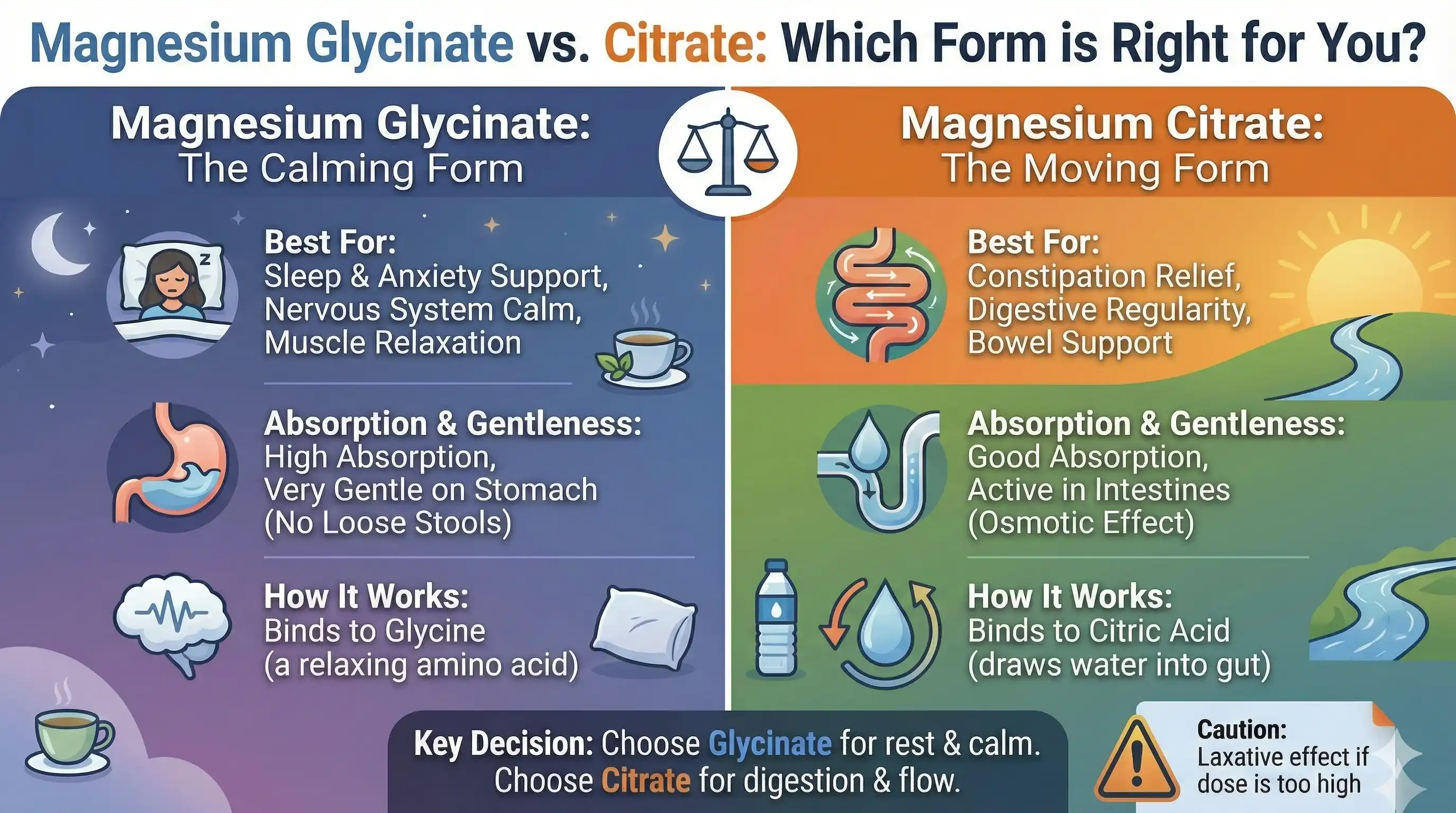
Magnesium Chelate Bisglycinate vs Citrate: The Core Comparison
Chelation Structure and Why It Changes Absorption?
The phrase "chelate" refers to a mineral that is bound in a ring-like structure by an organic ligand. This is precisely what occurs when magnesium attaches to 2 molecules of glycine. Magnesium Bisglycinate Chelate This amino acid shield is used in magnesium chelate bisglycinate to transport the mineral across the intestinal wall, utilizing the same peptide transport channels that the body now employs for dietary protein, instead of depending just on passive mineral diffusion. However, citrate is an organic acid salt, which dissociates more rapidly in the gut, releasing free magnesium ions that have to compete with other minerals for absorption sites. This structural difference accounts for almost all of the performance differences between the two forms and is why formulators are increasingly calling out magnesium chelate bisglycinate when absorption efficiency is of utmost importance rather than just meeting a label claim for elemental magnesium content.
Bioavailability and Absorption Rate Data
Multiple studies in independent absorption research have demonstrated amino acid chelates such as magnesium chelate bisglycinate to be better absorbed than citrate and considerably better absorbed than oxide, as measured by retained magnesium and not swallowed magnesium. The glycinate-bound form is less prone to premature dissociation in the acidic environment of the stomach; therefore, more of the mineral is intact when it reaches the small intestine, where active transport may take place. Citrate is somewhat effective against the oxide, but still loses a good amount of its magnesium to unabsorbed mineral salts going through the stomach. For manufacturers of products intended to correct inadequacies, enhance sleep, or help muscle recovery, this difference in available magnesium directly translates into the perceived efficacy of the treatment, eventually driving repeat sales and positive reviews for the finished consumer product.[1][2][3][4][5]
Gastrointestinal Comfort and Compliance
Digestive tolerance is one of the most common reasons why formulators transition from citrate to a chelated version. Magnesium chelate bisglycinate is absorbed to a great extent via amino acid transporters rather than resting in the intestinal lumen as free ions; therefore, it tends to induce significantly less of the loose-stool effect associated with citrate at similar elemental dosages. This is very important for daily-use goods. A customer who has gastric upset in the first week is considerably less likely to stick with the regimen long enough to reap any benefits. For brands in the sleep, stress, or general health sectors whose outcomes are based on months of daily compliance, there is even more reason to choose the softer chelate form when building a long-term supplemental product.[1][4][5]
Where Buffered Forms Fit In?
Some formulators inquire about blending a chelate with a buffered mineral base as a way to balance cost with elemental yield. That’s where the term "magnesium bisglycinate chelate buffered magnesium oxide" comes up in technical sourcing talks. A magnesium bisglycinate powder supplier can support formulators in evaluating the chelate component alongside the buffered mineral base, providing flexibility to meet a desired elemental magnesium figure without inflating capsule size. Hongda’s technical staff will regularly consult with clients who need to balance dosage form size against label claims on these blend ratios. The customer may either provide the pure chelate or provide blend percentages based on the intended use of the final product and regulatory market.[3][5]
|
Attribute
|
Magnesium Bisglycinate Chelate
|
Magnesium Citrate
|
Magnesium Oxide
|
|---|---|---|---|
|
Elemental Magnesium (approx.)
|
14–18%
|
16%
|
60%
|
|
Relative Bioavailability
|
High
|
Moderate–High
|
Low
|
|
Gastrointestinal Tolerance
|
Well tolerated
|
Moderate, laxative at high doses
|
Often poorly tolerated
|
|
Solubility
|
Water soluble
|
Water soluble
|
Poorly soluble
|
|
Typical Application
|
Capsules, powders, functional beverages
|
Powders, effervescent formats
|
Tablets, bulk fortification
|
Sourcing Magnesium Chelate Bisglycinate for Global Supply Chains
Choosing a Magnesium Bisglycinate Powder Supplier
Chemistry is vital, but so is choosing the correct magnesium bisglycinate powder provider. The consistency of the raw material will decide if a completed composition operates the same way batch after batch. Buyers should search for providers who are able to produce certificates of analysis for each lot, have a uniform particle size distribution, and have a verified source of the glycine and magnesium raw ingredients used in synthesis. A supplier with in-house testing, rather than depending only on third-party laboratories, usually can turn over documentation more quickly and identify quality slip sooner. Hongda's own laboratory infrastructure allows the company to test magnesium chelate bisglycinate at multiple stages of production, giving international buyers confidence before the material ever leaves the warehouse.[4][5]
What Sets a Qualified Magnesium Bisglycinate Manufacturer Apart?
Not all magnesium bisglycinate manufacturers are on the same level or with the same level of regulatory rigor, and this becomes apparent as soon as a customer begins to compare certifications, production capacity, and traceability paperwork side-by-side. A business that can make thousands of tonnes per year across numerous product lines would usually have more advanced quality processes than a tiny contract producer operating from a single batch reactor. Hongda possesses modern production lines in a purification workshop of 100,000 level and has an SGS-standardized laboratory with professor-level researchers to support the magnesium chelate bisglycinate, so it can support small trial orders and large recurring contracts without affecting the depth of testing.
Wholesale Magnesium Bisglycinate: Pricing, MOQ and Lead Times
Buyers assessing wholesale magnesium bisglycinate price can anticipate cost to vary with purity grade, particle size specification, and order volume, since unique processing needs add time and testing costs regardless of order quantity. Generally, factory direct sourcing is better on pricing and delivery dependability than trading organizations since lead times are usually lower when a supplier has standing inventory rather than making completely to order. Formulators wanting a full price, lead times, or a sample of Hongda’s magnesium chelate bisglycinate powder to use before committing to a bulk purchase may talk directly to the technical sales team at duke@hongdaherb.com to start that discussion. The most reliable technique to check a match before scaling is still to do a small trial batch before a full production run.
Documentation and Import Compliance
If you export nutraceutical raw ingredients internationally, you’ll need a documentation package that’s a lot more extensive than just a simple invoice, and a good magnesium bisglycinate manufacturer should be able to create this paperwork promptly. Buyers importing into the US, EU, and other regulated markets increasingly require certificates of analysis, heavy metal and microbiological testing reports, halal and kosher certifications where applicable, and safety data sheets as usual. Hongda’s certification portfolio, which includes food production licensing, FDA registration, organic certification under both the EU and NOP frameworks, and recently added cGMP and FSSC22000 status, is designed to reduce friction at customs and give import compliance teams confidence when clearing shipments of magnesium chelate bisglycinate into regulated territories.
Inside Hongda's Manufacturing and Quality Assurance
From Cultivation to Finished Chelate Powder
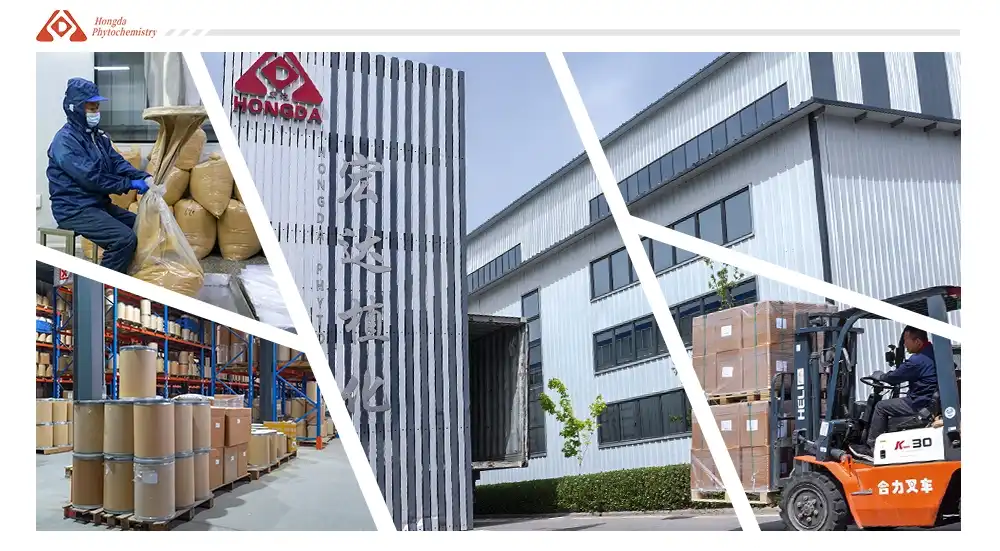
Shaanxi Hongda Phytochemistry Co., Ltd. was founded in 2001 and has created a plant with an area of around 20,000 square meters, backed by more than ten contemporary manufacturing lines and a 100,000-level purification workshop. The firm is best known for botanical extracts sourced from its own planting grounds, but its amino acid and mineral division applies the same raw-material discipline to the manufacturing of magnesium chelate bisglycinate, monitoring inputs from receipt through synthesis, drying, and milling. More than 150 workshop technicians run these lines on a daily basis, and the factory’s yearly output capacity of over 3,000 tonnes throughout its product range means bulk purchasers are not fighting over restricted production slots when making recurrent orders for chelated mineral powders.
Laboratory Testing and Certifications
Every batch of magnesium chelate bisglycinate manufactured in Hongda is tested at a laboratory jointly built with university researchers in accordance with SGS standards, with more than twenty professor-level scientists and testing workers. The lab is equipped with high-performance liquid chromatographs, atomic absorption spectrophotometers, and automated titrators. The lab can verify elemental magnesium concentration, chelation ratio, heavy metals, and microbiological limits before release. The thoroughness of testing is complemented by a certification portfolio that has been continuously grown since 2001 and includes licenses for food production and feed additives, halal and kosher certification, and BRC and FDA registration. cGMP, FSSC22000, ISO22000, ISO9001, and EU and NOP organic certifications were added in 2026.
|
Quality Element
|
Detail
|
|---|---|
|
Laboratory Partnership
|
SGS-standardized lab, university co-established
|
|
R&D Personnel
|
20+ professor-level researchers and testing staff
|
|
Key Testing Equipment
|
HPLC, gas chromatograph, atomic absorption spectrophotometer, automatic titrator
|
|
2025 Certifications Added
|
cGMP, FSSC22000, SC, ISO22000, ISO9001, EU Organic, NOP Organic
|
|
Annual Production Capacity
|
Approximately 3,000 tons across product lines
|
Packaging, Storage and Logistics for Bulk Orders
Hongda's warehouse of 3,000 square meters is divided into six special storage areas, separating products such as vitamin and amino acid products, including magnesium chelate bisglycinate, from fruit and vegetable powders and botanical extracts to minimize the possibility of cross-contamination and to facilitate inventory rotation. Company sterilization processes are managed by qualified people for each storage zone, and the facility carries sufficient standing inventory to meet delivery time constraints even for larger recurring purchase orders. Export packaging is made to the buyer's needs, whether it means moisture-barrier bulk bags for container shipment or smaller retail-ready versions for customers who are manufacturing finished consumer products directly from raw chelate powder.
Formulation and Application Guidance
Capsules, Tablets and Softgel Applications
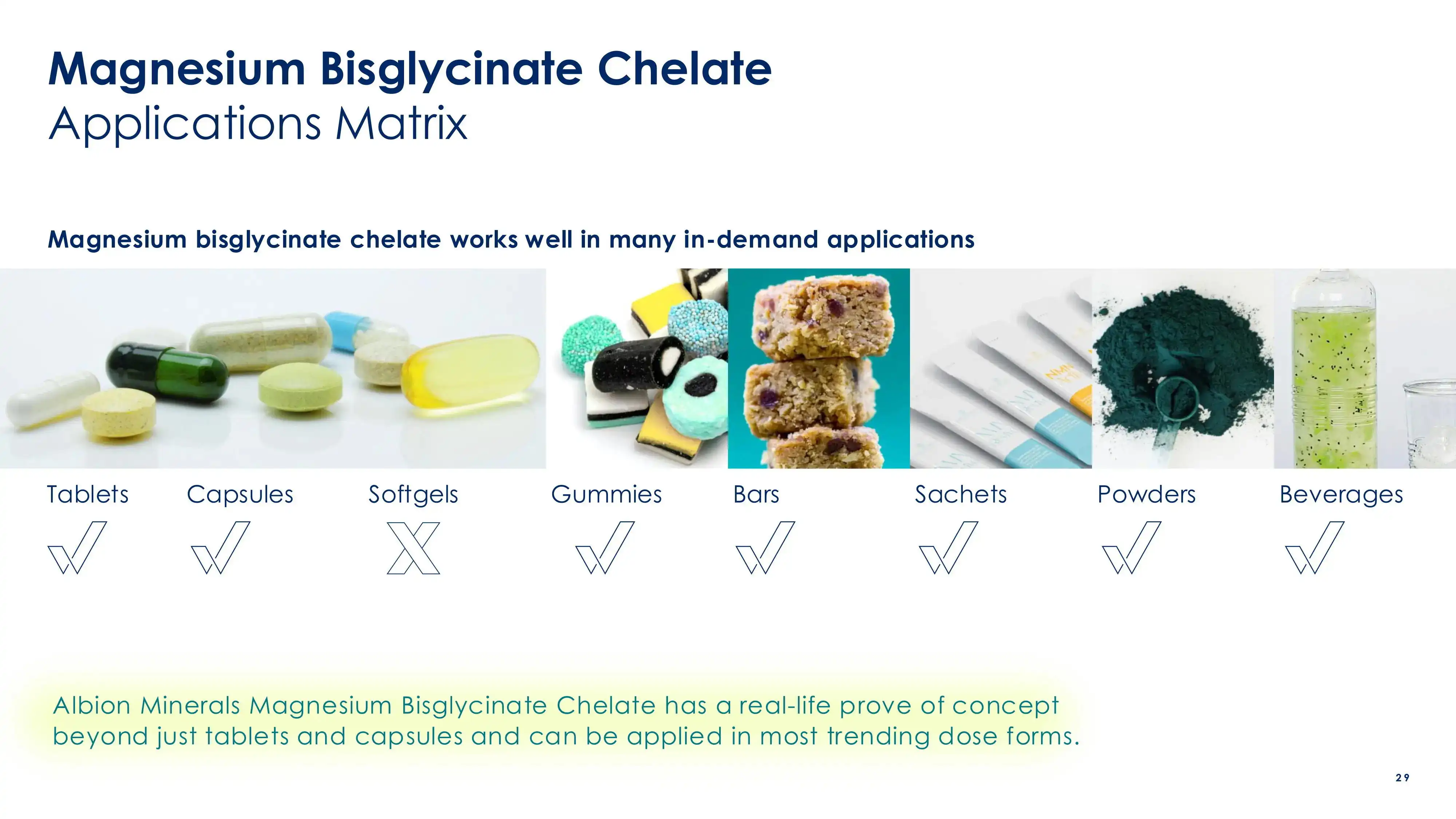
Magnesium chelate bisglycinate flows well through standard encapsulation machinery and can be crushed cleanly into tablets with standard excipients, making it an easy drop-in replacement for formulators wishing to stray from oxide-heavy blends. For buyers sourcing wholesale magnesium bisglycinate, this processing flexibility can also simplify bulk formulation and manufacturing. Consumers may find it more difficult to swallow, but the chelate provides a considerable dosage of elemental magnesium at a lower per-capsule fill weight than many rival forms; thus, marketers may normally be able to achieve label claims without converting to a bigger capsule. This is particularly true when the combination product already includes other minerals or botanicals, where each milligram of fill volume is a consideration in the final size of the capsule and its swallowability grade in consumer testing.
Powder Blends and Functional Beverage Systems
Magnesium chelate bisglycinate is water-soluble and is ideal for powdered drink mixes, sleep support sachets, and post-workout recovery blends where a gritty or chalky mouthfeel would be harmful to a product’s marketability. The chelate is a clean-dispersing material with a low aftertaste, which is of importance in flavored beverage applications, in which the masking of mineral bitterness presents a substantial formulation problem at present. Oxide leaves visible sediment. This is why the milling process of Hongda might be adjusted to meet these criteria for each order. Hongda customers, beverage formulators, often choose a smaller particle size, mainly because they want to prolong the dissolving period in cold-mix applications.
Custom Formulation Support and Sample Requests
There is seldom one fixed standard that formulators prefer, and Hongda’s technical team often works with customers to modify particle size, moisture content, and chelation ratio for magnesium chelate bisglycinate depending upon the finished dosage form and target market. Especially when a brand is expanding into new categories and the raw material specification that used to work is no longer the best, this kind of collaborative formulation support is quite helpful. Please contact the Hongda team directly if you would like to explore these alternatives, request a certificate of analysis, or arrange for a sample shipment in advance of a bigger purchase so that we may discuss your unique project requirements prior to formulation.
Conclusion
In terms of absorption efficiency and gastrointestinal tolerance, magnesium chelate bisglycinate is always better than citrate; however, a mixed approach with oxide is still a possibility when elemental yield and cost are goals. For formulations using magnesium bisglycinate chelate buffered magnesium oxide, this ingredient can provide an additional option for balancing formulation requirements. This ingredient is supplied by Shaanxi Hongda Phytochemistry Co., Ltd., a firm with 20 years of manufacturing experience, comprehensive testing to SGS standards, and a portfolio of certificates created for international standards. If you are a formulator ready to go forward, the next logical step to a stronger finished product is to contact us for a sample and documentation.
FAQ
1. Is magnesium chelate bisglycinate better absorbed than magnesium citrate?
Yes, amino acid chelation generally improves absorption efficiency compared to citrate, particularly at higher doses.
2. Does magnesium chelate bisglycinate cause digestive upset like citrate can?
Most users tolerate it well, since chelated magnesium relies less on the laxative mechanism associated with unabsorbed citrate ions.
3. Can magnesium chelate bisglycinate be blended with buffered magnesium oxide?
Yes, blending is common when a formulator needs both high elemental content and improved absorption in one product.
4. What certifications does Hongda hold for its magnesium chelate bisglycinate?
Hongda's certifications include FDA registration, organic certification in the EU and NOP frameworks, cGMP, FSSC22000, ISO22000, and ISO9001.
Partner With HONGDA for Reliable Magnesium Chelate Bisglycinate Supply
Whether you are formulating capsules, powders, or functional beverages, HONGDA's magnesium chelate bisglycinate powder offers the absorption and manufacturing consistency serious brands require. Backed by SGS-standardized testing, a growing international certification portfolio, and factory-direct pricing, Hongda is positioned to support both trial orders and long-term wholesale supply agreements. Reach out today at duke@hongdaherb.com to request documentation, discuss custom specifications, or arrange a sample shipment, and take the next step toward a stronger, better-tolerated magnesium formulation for your customers.
References
1. Schuchardt, J.P. and Hahn, A., "Intestinal Absorption and Factors Influencing Bioavailability of Magnesium: An Update," Current Nutrition & Food Science.
2. Walker, A.F., et al., "Mg Citrate Found More Bioavailable Than Other Mg Preparations in a Randomized, Double-Blind Study," Magnesium Research.
3. Firoz, M. and Graber, M., "Bioavailability of US Commercial Magnesium Preparations," Magnesium Research.
4. Blancquaert, L., Vervaet, C., and Derave, W., "Predicting and Testing Bioavailability of Magnesium Supplements," Nutrients.
5. Ates, M., et al., "Comparative Absorption Profiles of Organic and Inorganic Magnesium Compounds in Dietary Supplementation," Biological Trace Element Research.