


_1745918362135.webp)

How to Use Liposomal Vitamin C Bulk in Nutritional Formulations?
It is better to use liposomal vitamin C bulk than ascorbic acid to make the next generation of vitamin C pills. This is something brands need to figure out. This question has been asked by many people around the world for years to Hongda Phytochemistry. The liposomal vitamin C bulk from Shaanxi Hongda Phytochemistry Co., Ltd. is made using a phospholipid encapsulation process that was created to solve the absorption issues that regular vitamin C supplements have had for a long time. You should add this to a recipe for the best results, but there's more to it than that. It is important to know how the structure works for each type of mix, whether it's pills, drinks, or powder. This part talks about how to best use liposomal vitamin C bulk when getting ready. If you are putting out your first product or adding new forms to an existing line, this guide will show you how to include it, deal with it, and find a production partner that can help you get solid results at scale.
Liposomal Vitamin C Bulk: Why Delivery Format Determines Formulation Success?
The Absorption Problem Standard Vitamin C Can't Solve
It is well known that the body can only take in so much standard ascorbic acid. Your body can't take in any more of a chemical if you eat or drink too much of it. This means that a lot of it either doesn't do anything or makes your stomach hurt when you take too much of it.[1][6] It's been years since this ceiling made formulators unhappy. Brands that wanted to sell a vitamin C product with real higher strength haven't had many good options besides making more pills or taking lower returns. Liposomal vitamin C bulk solves the issue in a totally different way. It changes how the molecule moves through the body in the first place, jumping over the roof instead of trying to break through it with more volume. [2][3] This way, it doesn't try to force more raw ascorbic acid through a route that is already full.
How Phospholipid Encapsulation Changes the Equation?
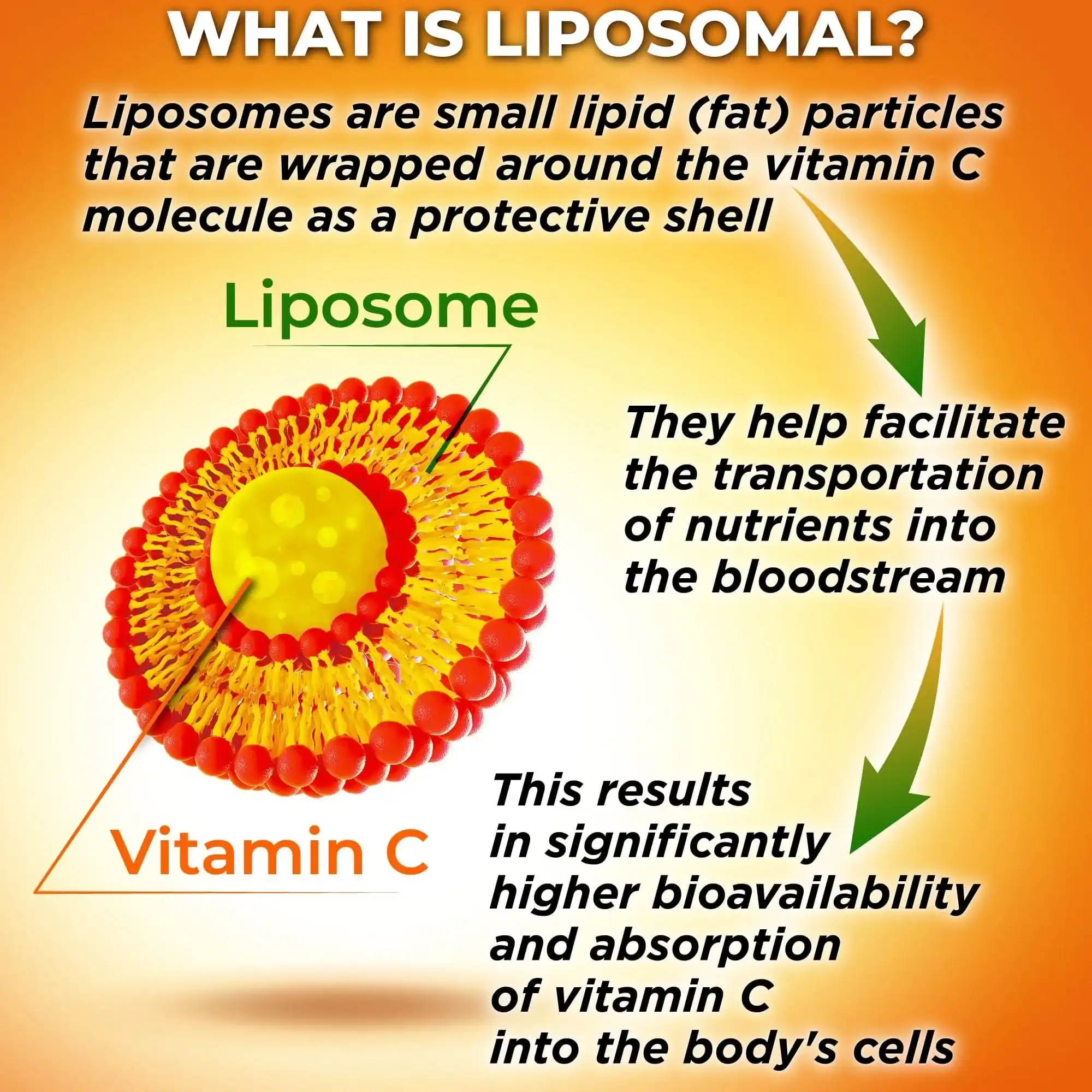
A core thin-film hydration and ultrasonic nano-shearing coupling process is used to make the liposomal vitamin C mass from Shaanxi Hongda. This forms a phospholipid coating around the vitamin C, which forms tiny pockets with a structure that is a lot like the structure of human cell membranes.[2][5] This coating keeps the substance from breaking down in the stomach, which is what usually stops the body from absorbing vitamin C. Adding more raw materials isn't the only way for formulators to boost effectiveness. At amounts that would not be possible or would be too expensive to use with regular ascorbic acid alone, liposomal vitamin C bulk can often give a very different end profile for people who are making new goods.[3]
What Sets Hongda's Liposomal Vitamin C Bulk Apart?
Another way that Shaanxi Hongda turns the liposomal fluid into a stable powder is by using a special low-temperature spray drying method. So the raw material doesn't break down in the stomach acid before it gets to the intestines, this is done. The company's liposomal vitamin C bulk is available in ranges of fifty to fifty-five percent. This gives formulators choices based on how strong they want their end product to be. A separate liposomal research and development lab backs up each batch and can change the particle size, quantity, and stability to suit different needs. Liposomal vitamin C can be mixed with liposomal iron, glutathione, or berberine, for example, so that brands can make wellness lines with more than one ingredient.
Best Practices for Incorporating Liposomal Vitamin C Bulk into Capsules and Tablets
Calculating Inclusion Rates for Capsule Formats
If a pill recipe is being changed from regular ascorbic acid to liposomal vitamin C bulk, the new vitamin C shouldn't be used in place of the old one gram for gram.[1][3] The fifty to fifty-five percent range is for a concentrated substance that is enclosed in a capsule, not for raw ascorbic acid. This means that the functional goal of the finished product should be used instead of the milligram count shown on an old standard vitamin C label to figure out what should be included. Pills that work better and last longer are more likely to be made when you use an objective sheet instead of an old recipe.
Compression Considerations for Tablet Manufacturing
When people make tablets with liposomal vitamin C bulk, they need to know that it doesn't flow or compress the same way regular ascorbic acid powder does.[2][5] Instead of just crystallization, nano-shearing and spray drying are used to make the ingredient. This means that the way its particles behave when compressed can be very different from that of regular vitamin C. Before beginning a full production run, it is helpful to do pre-formulation compatibility tests to find the best binder ratios and compression forces.
Combining with Complementary Nutrients
Liposomal vitamin C bulk mixes well with minerals, enzymes, and actives that are contained in phospholipids.[2][5] Because of this, it can be used as the main ingredient in pill lines that help the immune system, skin health, or overall health. It is often mixed with zinc, quercetin, or other liposomal actives to make a product with a fuller range of nutrients.[4][5] This is possible because the shared phospholipid delivery mechanism works well with many encapsulated ingredients and doesn't make the last capsule fill unstable.
Avoiding Common Formulation Mistakes
One of the worst things that formulators do when they try to encapsulate liposomal vitamin C bulk is treat it like regular vitamin C.[1][2] It's especially important to remember this when picking the ingredients and managing the weight. Working together with the manufacturer's technical team early on in the formulation process can help you avoid having to pay a lot of money to redo the formulation later on because the liposomal structure is more sensitive to external stress than raw ascorbic acid. This is especially true if the end product's specs have already been used on marketing and packing.
Formulating Liposomal Vitamin C Bulk into Beverages, Powders, and Effervescent Products
Water Reconstitution and Microemulsion Behavior
The way liposomal vitamin C bulk works when it comes in touch with water is very helpful. By making the particles very small during production, the powder doesn't settle or cloud, but instead dissolves into a clear microemulsion. This stops the oil and water from separating and building up, which normally happens when phospholipid-based ingredients are used in liquid uses.[5] It's easy to mix back together, which is a big reason why drink makers prefer liposomal vitamin C bulk to ascorbic acid and older liposomal formats that had trouble with sedimentation. One thing that formulators often notice when they test a new beverage base for the first time is that it can make a finished product stand out on the shelf because of how it looks and feels in the mouth. Even when they're not thinking about food technology, these are two things that people care a lot about.
Stick Packs and Ready-to-Drink Powder Mixes
Since liposomal vitamin C bulk dissolves easily in water, it works well in stick packs, bags, and powder mixes that are ready to drink. It should be smooth and free of any residue after a quick stir or shake. Powder liposomal formats don't need to be shipped or kept in a cold chain like liquid liposomal formats do. This means that brands can better handle their inventory and distribution while still offering the higher bioavailability that liposomal delivery provides. Because of this, powder formats are very appealing to brands that want to sell their goods in many places, since cold chain logistics can make an already tough and pricey international supply chain even tougher.
Effervescent and Functional Beverage Applications
There are times when an ingredient needs to dissolve quickly and reliably without changing the taste or carbonation balance. Liposomal vitamin C bulk works well in these situations. This ingredient is very useful because it can be used in a lot of different drinks and is known to be stable. Companies that make everything from daily health shots to sports nutrition drink mixes can use it.
The table below summarizes how liposomal vitamin c bulk compares across key formulation-relevant properties.
|
Property
|
Liposomal Vitamin C Bulk
|
Standard Ascorbic Acid
|
|---|---|---|
|
Absorption Pathway
|
Bypasses digestive ceiling via encapsulation
|
Limited by saturable absorption
|
|
Water Behavior
|
Dissolves into microemulsion
|
Simple dissolution, no emulsion
|
|
Shipping Requirements
|
No cold chain needed (powder form)
|
No cold chain needed
|
|
Beverage Sediment
|
Minimal, smooth texture
|
Can vary by formulation
|
|
Typical Specification
|
50–55% concentration
|
Often near 100% ascorbic acid
|
Comparison compiled from Hongda Phytochemistry production documentation for liposomal vitamin c bulk.
Manufacturing, Handling, and Stability Considerations for Liposomal Vitamin C Bulk
Temperature Sensitivity During Processing
Vitamin C is inherently sensitive to heat and oxidation, and manufacturers working with liposomal vitamin c bulk need to manage processing temperatures carefully to protect both the vitamin's potency and the phospholipid shell surrounding it as a liposomal vitamin c powder manufacturer.[2] Ingredient addition during appropriate stages of production, rather than early in high-heat processing steps, generally helps preserve both the encapsulation integrity and the active compound's functional potency through to the finished product. Formulators new to this ingredient category often benefit from running a small pilot batch before committing to full-scale production, since even minor adjustments to addition timing can noticeably affect the finished product's stability and appearance.
Storage Conditions That Preserve Potency
Liposomal vitamin c bulk should be stored in cool, dry, sealed conditions to protect it from moisture and heat exposure between production runs. Manufacturers and brands handling bulk inventory should avoid repeated exposure to fluctuating temperatures, since inconsistent storage conditions can gradually compromise the liposomal structure well before a batch reaches its labeled shelf life, undermining the very bioavailability advantage the format was chosen for in the first place. Establishing clear internal handling protocols for bulk ingredient storage, rather than treating it the same as a standard vitamin premix, helps protect the investment a brand makes when choosing a premium liposomal format from a liposomal vitamin c powder manufacturer.
Shelf Life Advantages Over Liquid Liposomal Formats
One of the practical reasons brands choose liposomal vitamin c bulk over liquid liposomal vitamin C is shelf stability. Powder formats typically maintain potency considerably longer than liquid liposomal formulations, which often require refrigeration and have a much shorter usable window once opened. This stability advantage translates directly into lower inventory waste and more flexible international shipping for brands operating across multiple markets and climate zones.
Sourcing Liposomal Vitamin C Bulk from a Reliable Manufacturer
What to Look for in a Liposomal Vitamin C Powder Manufacturer?
Selecting the right liposomal vitamin c powder manufacturer is arguably as important as the formulation decisions made afterward, since inconsistent encapsulation quality can undermine even a carefully designed product. Buyers should look for manufacturers able to provide documented particle size verification, encapsulation efficiency data, and evidence of R&D capability for customizing concentration and solubility to match specific application needs, rather than suppliers offering a single, non-adjustable specification.
Evaluating a Liposomal Ingredients Supplier's Documentation
A dependable liposomal ingredients supplier should be willing to provide batch-specific documentation, including HPLC verification of vitamin C content and, where requested, transmission electron microscopy imaging that visually confirms the spherical bilayer vesicle structure rather than a simple powder blend. [2][5] Buyers evaluating potential partners should treat a willingness to share this level of documentation as a meaningful signal of manufacturing transparency and long-term reliability.
Supply Capacity, Certifications, and OEM Support
Shaanxi Hongda Phytochemistry Co., Ltd. supports liposomal vitamin c bulk buyers with an annual production capacity of roughly 3,000 tons, a 3,000-square-meter warehouse organized into six dedicated storage zones, and certifications including cGMP, ISO9001, ISO22000, FSSC22000, Halal, Kosher, and EU and NOP Organic status. Combined with dedicated OEM and custom development support, this infrastructure allows the company to serve both small trial orders and large recurring supply agreements without the availability gaps that smaller, less-resourced suppliers often struggle to avoid.

Specification details for Hongda's liposomal vitamin c bulk from a liposomal ingredients supplier are summarized below for quick reference.
|
Item
|
Specification
|
Test result
|
Test Method
|
|
Vitamin C
|
50%-55%
|
53.38%
|
HPLC
|
|
Appearance
|
White to pink powder
|
Complies
|
Visual
|
|
Odor and Taste
|
Characteristic
|
Complies
|
Sensory
|
|
Loss on Drying
|
≤5%
|
1.60%
|
Ch.P2020
|
|
Residue Solvents
|
Ethanol ≤ 5000ppm
|
Complies
|
GC-HS
|
|
Heavy metal
|
Lead (Pb) ≤3ppm
|
Complies
|
ICP-MS
|
|
Arsenic (As) ≤3ppm
|
Complies
|
ICP-MS
|
|
|
Cadmium(Cd) ≤1ppm
|
Complies
|
ICP-MS
|
|
|
Mercury(Hg) ≤0.1ppm
|
Complies
|
ICP-MS
|
|
|
Total Plate Count
|
≤1000cfu/g
|
Complies
|
USP-NF 2022
|
|
Yeast&Mould
|
≤100cfu/g
|
Complies
|
USP-NF 2022
|
|
E.coli
|
Negative
|
Negative
|
USP-NF 2022
|
|
Salmonella/25g
|
Negative
|
Negative
|
USP-NF 2022
|
|
Staphylococcus Aureus
|
Negative
|
Negative
|
USP-NF 2022
|
|
Storage
|
Preserve in a well-closed, light-resistant, and protect from moisture.
|
||
|
Packing
|
20kg/drum.
|
||
|
Shelf life
|
2 years.
|
||
Conclusion
Using liposomal vitamin c bulk effectively means treating it as a distinct formulation category, not a direct substitute for standard ascorbic acid. Success depends on recalculating inclusion rates around its concentrated potency, respecting its temperature and storage sensitivities, and matching the format to the right finished product category. Shaanxi Hongda Phytochemistry Co., Ltd. supports formulators with documented encapsulation data, OEM flexibility, and internationally recognized certifications behind every batch. Reach out today to request samples or discuss your next formulation project.
FAQ
1. Can liposomal vitamin c bulk be substituted directly for standard ascorbic acid?
No, its concentrated potency and encapsulation mean inclusion rates should be recalculated around the finished product's functional target.
2. Does liposomal vitamin c bulk dissolve well in beverages?
Yes, it reconstitutes into a translucent microemulsion in water, avoiding the sedimentation common with standard liposomal powders.
3. How should liposomal vitamin c bulk be stored?
It should be kept cool, dry, and sealed to protect both vitamin C potency and phospholipid structure.
4. Is Hongda a certified liposomal vitamin c powder manufacturer?
Yes, Shaanxi Hongda holds cGMP, ISO9001, ISO22000, FSSC22000, Halal, Kosher, and Organic certifications.
Formulate Smarter with Liposomal Vitamin C Bulk | HONGDA
Ready to build your next formulation around a genuinely differentiated vitamin C ingredient? Shaanxi Hongda Phytochemistry Co., Ltd. combines advanced phospholipid encapsulation technology, documented quality data, and flexible OEM support to help your team achieve better, more consistent results with liposomal vitamin c bulk. Whether you need bulk supply, custom concentration options, or hands-on technical guidance, our team is ready to help. Contact us today at duke@hongdaherb.com to request specifications or a sample, and discover why formulators worldwide trust Hongda as a dependable liposomal ingredients supplier.
References
1. Padayatty, S. J., Sun, H., Wang, Y., et al. (2004). Vitamin C pharmacokinetics: implications for oral and intravenous use. Annals of Internal Medicine.
2. Allen, T. M., & Cullis, P. R. (2013). Liposomal drug delivery systems: from concept to clinical applications. Advanced Drug Delivery Reviews.
3. Davis, J. L., Paris, H. L., Beals, J. W., et al. (2016). Liposomal-encapsulated ascorbic acid: influence on vitamin C bioavailability and capacity to protect against ischemia-reperfusion injury. Nutrition and Metabolic Insights.
4. Carr, A. C., & Maggini, S. (2017). Vitamin C and immune function. Nutrients.
5. Zhao, L., Temelli, F., & Chen, L. (2017). Encapsulation and delivery of bioactive compounds using liposomal and other lipid-based systems. Food & Function.
6. Levine, M., Conry-Cantilena, C., Wang, Y., et al. (1996). Vitamin C pharmacokinetics in healthy volunteers: evidence for a recommended dietary allowance. Proceedings of the National Academy of Sciences.