



_1745918362135.webp)

The Honest Answer: What Berberine Can and Cannot Do for Weight Management
The Short Answer: A Supportive Ingredient, Not a Shortcut
So is liposomal berberine useful for weight loss? The best response is that it may assist you in achieving your weight management objectives when paired with a balanced diet, physical exercise, and healthy behaviors, but it cannot substitute for these. “Berberine is a plant alkaloid that has been studied in glucose and lipid metabolism, and those pathways naturally link to body composition. Liposomal berberine powder is an upgraded delivery. The phospholipid bilayer is meant to preserve the berberine, enhance its behavior in the stomach, and make everyday usage more pleasant. That is important since supplements are only effective if individuals maintain taking them. Leading manufacturers frame liposomal berberine as one aspect of a lifestyle plan, fostering customer confidence and keeping marketing promises realistic.
What the Research Says About Berberine and Body Weight
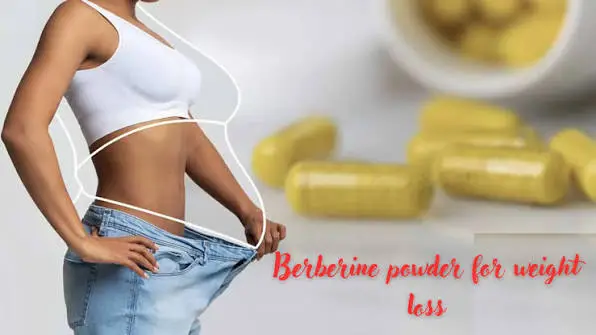
Berberine's clinical studies present a sober but optimistic picture. Several meta-analyses of randomized studies have found small decreases in body weight, body mass index, and waist circumference in patients using berberine, often associated with improvements in glucose and lipid indicators.[1][2] The effects are subtle, rather than spectacular, and vary with dosage, duration, and research population. Much of this study employed ordinary berberine, not liposomal versions; thus, it supports the potential of the chemical more than it establishes any one delivery strategy to be better than another.[1][2][5] That’s good for companies. It enables liposomal berberine powder to be positioned around improved delivery and tolerability, while the underlying berberine study provides the scientific foundation for weight-management messaging.
Why Liposomal Delivery Enters the Conversation
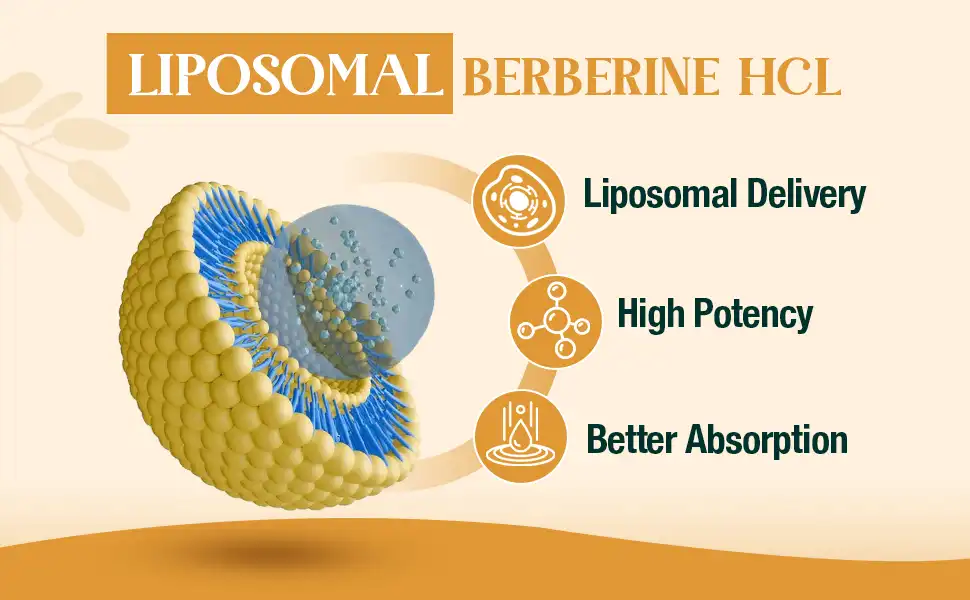
The problem with berberine is practical. In its common form, it is poorly absorbed.[4] At greater dosages, it may be unpleasant on the digestive system. Powders and beverages tend to be hard to enjoy due to their bitterness. A liposomal format is a delivery method; thus, buyers who compare it to a normal China berberine HCl powder are truly comparing delivery systems, not simply potency. Hongda’s liposomal berberine powder is made using high-pressure homogenization, which wraps the berberine in a phospholipid bilayer that protects it from stomach acid and, according to Hongda, helps absorption in the small intestine. That means you get more berberine with a smaller dosage and less digestive load, the business says. For customers who have had a hard time staying consistent with traditional berberine, that better experience could be what makes the difference between a product they try once and one they purchase repeatedly.
How Liposomal Berberine Powder Supports Weight-Management Goals
AMPK Signaling and Metabolic Activity
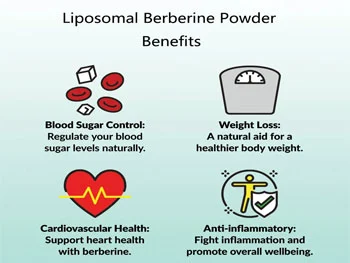
The mechanism of liposomal berberine hydrochloride is mostly activation of AMPK. AMPK is an enzyme that is commonly referred to as a cellular energy sensor. Cells seem to oxidize more fatty acids and to take in more glucose when AMPK is turned on, two activities that are intimately related to how the body deals with energy.[3] As Hongda points out, its liposomal carrier effectively distributes berberine to the target cells to assist in enhancing AMPK expression, glucose transport, and fatty acid oxidation while maintaining healthy blood sugar levels. For formulators, this mechanistic tale is important as it allows China berberine HCl powder to naturally fit into the categories of metabolic wellness, healthy weight, and active lifestyle. It also provides content teams with precise wording focused on improving metabolic function, not advertising quick weight reduction, which makes labels compliant in regulated markets.
Gut Comfort and Compliance in Daily Use
Comfort breeds compliance, and compliance breeds results. Berberine may be hard on the gut for some individuals. This is one of the reasons many people discontinue early. The maker says Hongda’s phospholipid coating prevents the berberine from coming into direct contact with the gut wall, making it easier to take daily doses. Also mentioned on the product site is a microcapsule breaking rate of less than 3.5 percent, so the protective shell remains intact until it reaches the gut. Liposomal berberine powder also offers a gut health message: Thanks to the gentleness of the substance, manufacturers may pitch it to customers seeking metabolic assistance with an easy daily routine. The products consumers can use every day without thinking twice are more likely to offer value over months than days.
Taste Masking and Daily Use Formats
Bitterness is the largest sensory hurdle for berberine compounds. The usual bulk berberine powder is rather bitter and dry on the tongue, so companies frequently have to sweeten it up a lot. Hongda’s liposomal berberine wraps the molecule in thick phospholipid microcapsules, so the shell functions as a barrier between berberine and the taste receptors. The business offers a fast-dissolving recipe including apple cider vinegar powder, chromium picolinate, and erythritol, which yields a somewhat milky, moderately acidic drink that is devoid of bitterness. That leaves room for sachets, stick packs, and powdered drink mixes for people not keen on capsules. A palatable format expands the audience and enables everyday usage for weight-management companies. Hongda lists the main areas of liposomal berberine powder as in Table 1.
|
Focus Area
|
Role Described by Hongda
|
Product Design Use
|
|---|---|---|
|
AMPK pathway
|
Supports glucose transport and fatty acid oxidation
|
Metabolic and healthy weight formulas
|
|
Gut comfort
|
Lipid coating limits direct irritation
|
Sensitive-stomach and daily-use products
|
|
Cardiovascular markers
|
Linked to LDL and metabolic markers
|
Heart and metabolic health blends
|
|
Antioxidant support
|
Helps keep inflammatory responses healthy
|
Cellular wellness combinations
|
|
Taste profile
|
Bitterness masked inside microcapsules
|
Sachets, sticks, and drink mixes
|
Building Weight-Management Products With Liposomal Berberine Powder
Companion Ingredients That Fit the Story
Weight-management shelves reward items with a common narrative, and companion substances help convey it. Hongda’s own ideas for customization include a clean-label metabolic drink with liposomal berberine hcl powder, apple cider vinegar powder, and chromium picolinate; or a soft capsule with wholesale berberine powder, conjugated linoleic acid, and ashwagandha extract for balanced cortisol and fat metabolism. Another idea is to combine liposomal berberine with liposomal NMN and high-purity trans-resveratrol in hard capsules for Cellular Health. Each blend is designed to serve a certain customer need, using berberine as the main ingredient. If you are looking for a formula, want to get samples, or need technical paperwork for your own weight-management idea, just send an email to duke@hongdaherb.com, and the Hongda team will assist you in formulating a viable beginning formula.
Choosing Specification and Dose Format
One practical benefit of this element is specification flexibility. Hongda liposomal berberine powder is available in 10 to 90 percent and HPLC assay. The look of the product is yellow powder. The product page shows the certificate of analysis with a liposomal berberine content of more than 30 percent. The minimum order is 1 kg, so small companies may try it without having to commit to a huge order. Buyers who are used to wholesale berberine powder in your everyday hydrochloride form will move on from raw strength to supplied value, encapsulation, particle size, and comfort. For each market, work back from your intended serving and capsule size to choose the specification and have your regulatory advisor validate the dosage. Customized procedures and specifications are available on request.
Storage, Shelf Life, and Quality Data
Good data helps companies plan launches with confidence. The shelf life of Hongda’s liposomal berberine powder in its original container is 24 months when kept in a cool, dry area away from moisture and light. Loss on drying: 3.05 grams per 100 grams vs. 5 grams per certificate of analysis. Residue on ignition: 1.28 grams per 100 grams. Microbial results: Total plate count: 124 cfu per gram; yeast and mold: 45 cfu per gram, all within limits. Tests for E. coli, Salmonella, and Staphylococcus aureus are negative, and heavy metals are compliant by ICP-MS. Finished granules or hard capsules also exhibit no oil leakage, no clumping, or layering after two years, Hongda said. The specification findings of liposomal berberine powder are shown in Table 2.
|
Item
|
Specification
|
Result
|
Method
|
|---|---|---|---|
|
Appearance
|
Yellow fine powder
|
Conforms
|
Visual
|
|
Particle size
|
95% through 80 mesh
|
Conforms
|
Screening
|
|
Residue on ignition
|
≤5 g/100g
|
1.28 g/100g
|
3g/550°C/4hrs
|
|
Loss on drying
|
≤5 g/100g
|
3.05 g/100g
|
3g/105°C/2hrs
|
|
Content
|
Liposomal berberine >30%
|
Conforms
|
HPLC
|
|
Lead / Arsenic / Cadmium / Mercury
|
≤2 / ≤2 / ≤1 / ≤0.01 mg/kg
|
Conforms
|
ICP-MS
|
|
Total plate count
|
≤1000 cfu/g
|
124 cfu/g
|
AOAC 990.12
|
|
Yeast and mold
|
≤100 cfu/g
|
45 cfu/g
|
AOAC 997.02
|
|
E. coli / Salmonella / S. aureus
|
Negative
|
Conforms
|
AOAC methods
|
Sourcing Liposomal Berberine Powder for Global Weight-Management Brands
Production Technology Behind Consistent Quality
Consistency begins with method. Serious liposomal berberine makers manage the pressure, phospholipid quality, solvents, and drying, and Hongda provides some of those specifics. The berberine and non-GMO phospholipids meet within a 120 MPa ultra-high-pressure microfluidic chamber to produce nanocapsules with a mean size of 80 to 150 nm via dynamic light scattering. The encapsulation solvents are restricted to food-grade anhydrous ethanol and deionized water; the phospholipids are > 65% PC, and residual solvent levels after vacuum desorption are ~ 50 ppm. It is then freeze-dried in a low-temperature centrifugal freeze dryer to retain the active ingredient for the 24-month shelf life. The procedure is clean label and vegan-friendly since no synthetic surfactants are employed, which is increasingly demanded by overseas purchasers for berberine powder bulk.
Documentation, Certifications, and Transparency
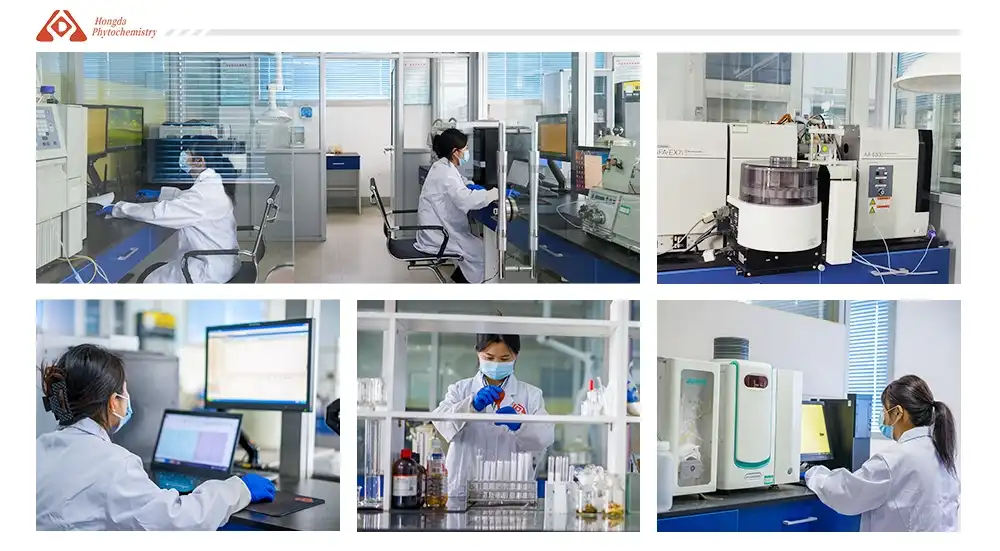
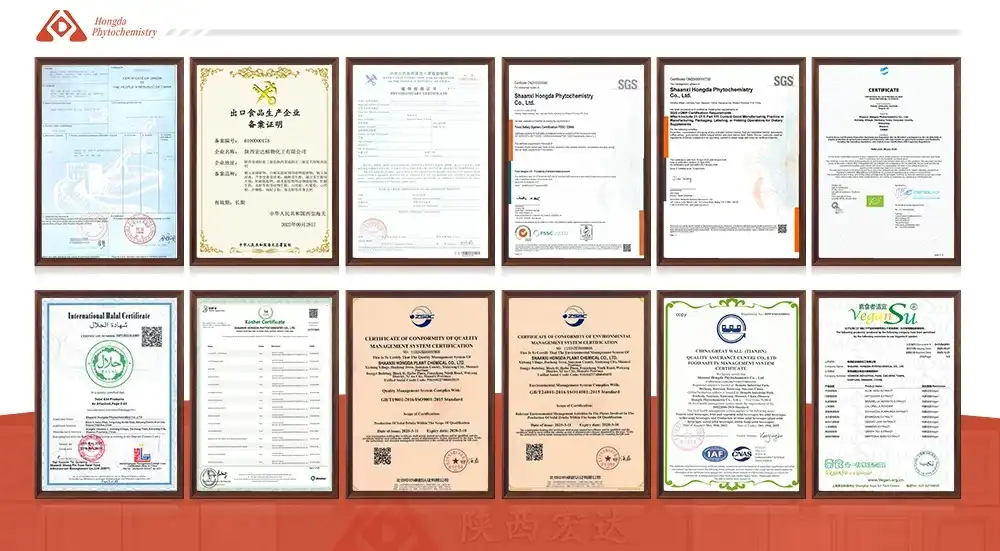
Buyers of the liposomal berberine powder should demand proof, not words. Hongda offers a standard certificate of analysis, including TEM pictures and particle size distribution data for each batch, so you can observe the spherical vesicles that distinguish a true liposome from a simple powder combination. The facility is registered and certified cGMP, ISO22000, HACCP, HALAL, and KOSHER by the US FDA, and the firm has obtained FSSC22000, ISO9001, and EU and NOP organic certifications until 2025. There is an SGS-standard laboratory, established with university professors and equipped with more than 20 professors or higher-level staff, which conducts HPLC, gas chromatography, spectrophotometry, and atomic absorption. Together, these materials help speed up supplier audits and help support the statements your brand wishes to make.
Inventory, Delivery, and Partnering With Hongda
Supply dependability will preserve our launch dates. Hongda keeps roughly five tons of dynamic stock of liposomal berberine powder in its warehouses in Xi'an and the United States, fulfilling orders within 48 hours and providing local delivery within 24 hours from spot warehouses in major US and European cities. Prices are fixed at the plant level, and the corporation books priority freight to control export volatility. Shaanxi Hongda Phytochemistry Co., Ltd. was created in 2001 and was awarded the title of National High-tech Development Enterprise in 2010. The company covers an area of 20,000 square meters, with more than ten manufacturing lines, 100,000-level purification workshops, over 150 technicians, and an annual output capacity of 3,000 tons. Table 3 summarizes the main supply facts for liposomal berberine powder.
|
Item
|
Details
|
|---|---|
|
Specification
|
10%-90%, customizable
|
|
Appearance
|
Yellow powder
|
|
Particle size
|
80-150 nm by DLS
|
|
Encapsulation
|
Above 85%, targeting 90% or higher
|
|
Minimum order
|
1 kg
|
|
Shelf life
|
24 months
|
|
Stock and dispatch
|
About 5 tons; orders dispatched within 48 hours
|
|
Batch documents
|
COA, TEM images, particle size distribution reports
|
Conclusion
Liposomal berberine is a legitimate ingredient for weight-management products when provided honestly: a supporting, properly-dosed type of berberine that plays well with food and exercise. Research on berberine shows minor advantages, and Liposomal berberine manufacturer administration is designed to help with absorption, comfort, and taste so individuals can be consistent. Hongda backs up that guarantee with 80 to 150 nm vesicles, recorded quality data, TEM proof, and customizable parameters from 10 to 90 percent. Start small with a pilot, match the component with partners who fit your narrative, develop claims you can justify. Get samples and documentation for your next weight-management launch from Hongda.
FAQ
Q: Is liposomal berberine good for weight loss?
A: It can support weight management alongside diet and exercise, but it is not a shortcut, and results vary between individuals.
Q: How is liposomal berberine different from standard berberine?
A: Berberine is wrapped in a phospholipid bilayer to protect it, improve delivery, ease digestive comfort, and mask bitterness.
Q: What encapsulation rate does Hongda report?
A: Above 85 percent, with an average particle size of 80 to 150 nm by dynamic light scattering.
Q: What is the minimum order and shelf life?
A: Orders start at 1 kg, and shelf life is 24 months in original packaging, stored cool, dry, and away from light.
Q: How does Hongda prove the product is a true liposome?
A: Each batch comes with a certificate of analysis, TEM images, and a particle size distribution report.
Launch Your Weight-Management Line with HONGDA Liposomal Berberine
HONGDA is ready to help your brand launch a weight-management product built on liposomal berberine powder that customers can taste, trust, and take every day. Shaanxi Hongda Phytochemistry Co., Ltd. offers customizable specifications from 10 to 90 percent, batch-level TEM and particle size documentation, US and Xi'an warehouse stock, and R&D support for capsules, sachets, and drink mixes. Our team can recommend companion ingredients, dosing formats, and packaging that fit your market, then ship samples quickly so your pilot can begin. Send your target formula, volume, and destination to duke@hongdaherb.com, and let HONGDA turn a strong ingredient story into a dependable supply for your customers.
References
1. Asbaghi, O., Ghanbari, N., Shekari, M., et al. (2020). The effect of berberine supplementation on obesity parameters, inflammation and liver enzymes in patients with type 2 diabetes mellitus: A systematic review and meta-analysis of randomized controlled trials. Complementary Therapies in Clinical Practice, 38, 101071.
2. Ilyas, Z., Perna, S., Al-Thawadi, S., et al. (2020). The effect of berberine on weight loss in order to prevent obesity: A systematic review. Biomedicine & Pharmacotherapy, 127, 110137.
3. Lee, Y. S., Kim, W. S., Kim, K. H., et al. (2006). Berberine, a natural plant product, activates AMP-activated protein kinase with beneficial metabolic effects in diabetic and insulin-resistant states. Diabetes, 55(8), 2256-2264.
4. Liu, Y.-T., Hao, H.-P., Xie, H.-G., et al. (2010). Extensive intestinal first-pass elimination and predominant hepatic distribution of berberine explain its low plasma levels in rats. Drug Metabolism and Disposition, 38(10), 1779-1784.
5. Allen, T. M., & Cullis, P. R. (2013). Liposomal drug delivery systems: From concept to clinical applications. Advanced Drug Delivery Reviews, 65(1), 36-48.