



A practical question product producers are often asking: Is liposomal glutathione powder shelf-stable for softgel and drinkable supplement production? The honest answer is yes, if the powder is properly made and the format is created around the sensitivity of glutathione to moisture, oxygen, and trace metals.[1][2][3] Shaanxi Hongda Phytochemistry Co., Ltd., known to customers as Hongda Phytochemistry, has a liposomal glutathione powder factory of 20,000 square meters with over ten production lines, a purification workshop rated at 100,000, and an SGS-standard laboratory. Because it is a dry, free-flowing powder and not a wet dispersion, it gives softgel and sachet producers better control over water – the major predictor of most stability outcomes. This lesson shows how to take advantage of it.
The Short Answer: What Decides Shelf Stability
Hongda's Liposomal Glutathione Powder Starts From a Controlled Base
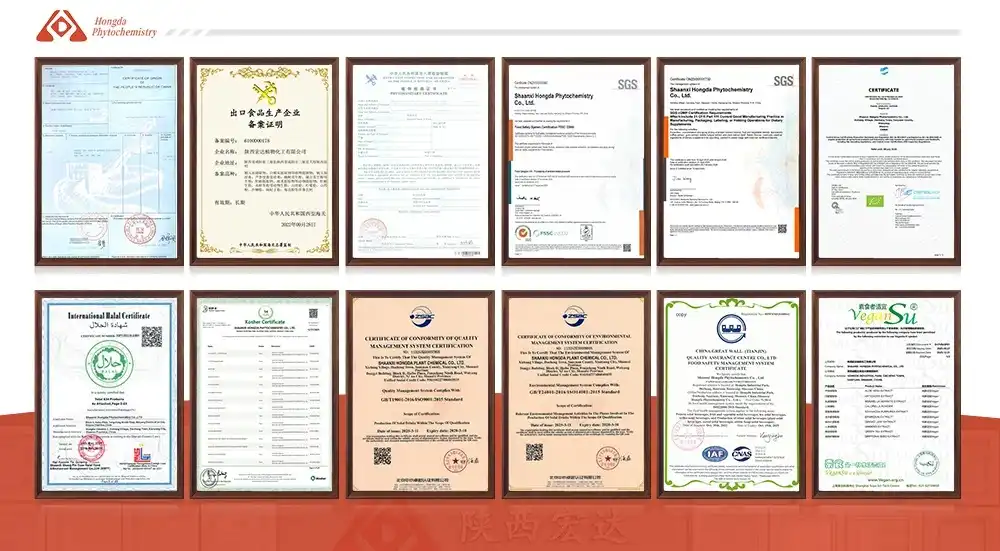
Shelf life begins at the plant. Hongda Phytochemistry makes liposomal glutathione powder under purifying and drying conditions, with an annual capacity of up to 3,000 tons and more than 150 workshop staff, guaranteeing that lots stay consistent on repeat orders. Every consignment is tested for chemicals, pesticide residues, dampness, heavy metals, and microorganisms. Moisture data, specifically, gives softgel and sachet teams a number to protect against. We have a laboratory with over twenty R&D and test specialists and instruments such as high-performance liquid chromatographs, which help us to undertake analytical work on batches. When choosing a glutathione powder manufacturer, ask for this kind of proof first, in addition to certifications like FSSC 22000, ISO 22000, cGMP, FDA, halal, and kosher. When a manufacturer is transparent about their starting numbers, it makes your own stability planning a lot easier.
Why Glutathione Is a Demanding Ingredient
Glutathione is a little tripeptide that possesses an active thiol group that loves to donate electrons. That’s why it’s an antioxidant and why it has to be protected. Oxygen, humidity, and trace metals such as copper or iron may cause reduced glutathione to dimerize to its oxidized disulfide form, and heat speeds up this process. Liposomal glutathione powder has a lipid layer around it to help protect the molecule, but it’s not a locked vault, so the circumstances under which it is made still matter. Those who understand this chemistry design around it, keeping fills dry, limiting air exposure, avoiding needless metal contact, and selecting packaging that inhibits moisture. The priority must be a product that delivers on its label claim until its expiry date, not one that just fades away on the shelf.
Powder Versus Liquid: Why Dry Wins for Stability
Water is the great promoter of chemical change; thus, the simplest strategy for stability is to take it away. A liquid glutathione powder manufacturer product must contend with oxidation, microbial danger, pH drift, and vesicle fusion all at once, and frequently must be refrigerated or heavily preserved. A dry liposomal glutathione powder sidesteps most of those problems. It’s simpler to ship and store and allows the firm the ability to fill a softgel, press a pill, or put a sachet together at a later time. This flexibility is an advantage for companies that create multiple product lines from one ingredient. Hongda Phytochemistry has a warehouse of 3,000 sq m, which is well-stocked and separated into six storage areas. Thus, brands may plan production runs without having to wait for long. So the powder form is helpful for logistics. And for chemistry.
Softgel Production: Protecting Powder Inside an Oil Fill
Dispersing Powder in Oil Without Waking Up Moisture
Most softgels are comprised of powders floating in an oil base, and that format may be good for liposomal glutathione powder since oil contains very little water. Success depends on particle size, viscosity, and mixing. The powder has to be moistened enough and deaerated and suspended so that it may be filled into the capsules properly. For the brands buying bulk glutathione powder, it is sensible to undertake a small pilot batch to test out flow, settling, and dose uniformity before scaling up. The results might change depending on the oil used and thickeners. Keep the compounding area dry, clean, and free from rust and metal particles. Use clean gear. Keep the combination as short a period as possible before encapsulation.[4] Hongda Phytochemistry can provide powder information to aid your formulation team in finding the right carriers and establishing realistic fill-weight targets.
Shell Water and Drying: The Hidden Moisture Path
A softgel shell is moist when it’s formed. Gelatin or plant-based shells retain water during encapsulation. Water moves between the fill and the shell until the capsule is dry and at balance. The biggest softgel-specific problem for the liposomal glutathione powder is migration since even little amounts of moisture reaching the powder might cause oxidation. The best strategy is to control the drying, to monitor shell and fill moisture at release, and to choose shell formulations that have water behavior that is compatible with the fill. Some manufacturers use a protective layer of oil and others prefer shells with reduced moisture content. Test early and often, as the softgel moisture balance may shift over the first several weeks of storage. “Sharing your finished-capsule stability data with your powder supplier can help both parties tighten specs on the next batch.
Antioxidant Support, Nitrogen, and Packaging
Once the capsules are dry, the main thing is to keep out oxygen and humidity. Most manufacturers will add an oil-soluble antioxidant to the fill, nitrogen flush during compounding, and then pack the resulting softgels into either aluminum blister strips or hermetically sealed bottles with a desiccant. These processes are cheap when compared to the cost of a failed stability study. Light shielding helps too; opaque capsules or amber bottles are sensible choices.[4] Liposomal glutathione powder early trials: It’s straightforward to run two- or three-pack kinds at the same time to see what amount of protection the product needs. Document every decision since retailers and regulatory consultants often ask how a brand maintains the stability of labile chemicals from manufacture to the shelf, and a complete record makes that question a short, confident answer.
|
Risk Point
|
Why It Matters
|
Practical Control
|
|---|---|---|
|
Powder wetting and mixing
|
Uneven dose and trapped air
|
De-aerate, pilot lot, uniformity test
|
|
Shell-to-fill water transfer
|
Moisture reaches the powder
|
Controlled drying, release moisture check
|
|
Oxygen during compounding
|
Thiol oxidation
|
Nitrogen flush, shorter hold time
|
|
Storage packaging
|
Humidity and light exposure
|
Aluminium blister or desiccant bottle
|
Planning a softgel pilot? Email duke@hongdaherb.com with your fill oil, capsule size, and target dose, and the Hongda team will discuss sample amounts of glutathione free radical scavenger wholesaler in China for your trial.
Drinkable Formats: Sachets, Sticks, and Ready-to-Mix Powders
Why Powder-to-Mix Is the Smartest Drinkable Route
The most dependable drinking format for most brands is a dry sachet or stick pack, which the user mixes with water. The liposomal glutathione powder remains dry until use, preventing months of exposure to water, oxygen, and microbial danger. A glutathione free radical scavenger wholesaler is typically sought by overseas purchasers because they want something that fits this paradigm, is dry and simple to handle, and can be mixed with other actives such as vitamin C or botanical powders. In constructing the mix, avoid moisture-sensitive partners with hygroscopic fillers, utilize low-moisture sweeteners, and use flavor systems that do not contain free water. A good dry mix provides your consumer a handy drink and your quality team a stable product.
Taste, pH, and Mixing Behaviour in the Glass
Since glutathione includes sulfur and some consumers pick up a subtle savory smell, flavor design is important. Citrus, berry, and tropical notes tend to do it justice, with sweetening agents smoothing off the aftertaste. pH also affects stability: reduced glutathione is often more stable at a slightly acidic pH than at a neutral or alkaline pH; therefore, many formulators like to add a gentle acidulant to the mix. Try blending the liposomal glutathione powder in cold water, warm water, and plant-based milk, and observe the amount of time between blending the beverage and drinking it. The experience is preserved with a brief use instruction on the pack, such as stir and consume soon. They’re little things, but they make the difference between a buyer buying your product again or not.[1][2][3]
Ready-to-Drink Liquids: Possible, but Demanding
Brands question whether our liposomal glutathione powder may be used in a bottled ready-to-drink product. Yes, this is doable, but it takes a lot more development work. Water activity is high; therefore, oxidation, pH drift, vesicle changes, and microbial control have all to be tackled simultaneously. Typical techniques include filling under inert (oxygen-free) conditions, limited headspace, opaque containers, cautious acidification, and extensive shelf-life experiments at a number of temperatures. Most developers start with a dry sachet to get to market faster and look at a bottled drink as a second-generation product. If you do use liquids, make sure that the research looks at glutathione concentration, oxidised-to-reduced ratio, particle size and microbiology. Expect lengthier trials than for dry forms. You can get actual sales data while the liquid format grows by starting with powder-to-mix.
|
Format
|
Stability Outlook
|
Key Control
|
Best For
|
|---|---|---|---|
|
Softgel (oil suspension)
|
Good when moisture is controlled
|
Shell drying, nitrogen, blister packs
|
Premium capsule lines
|
|
Stick pack or sachet
|
Very good in barrier packaging
|
Low-moisture blend, foil laminate
|
Drinkable powders
|
|
Bottled ready-to-drink
|
Most demanding
|
Low oxygen, acidification, long studies
|
Later-stage products
|
Proving Stability and Sourcing With Confidence
A Stability Panel Built Around the Glutathione Molecule
More than skin deep: A handy panel for glutathione products. Measure the reduced glutathione level by an appropriate chromatographic technique. Follow the oxidized form at the same time. Add moisture or water activity. Add particle size after rehydration. Add microbiological counts. Follow the normal ICH Q1A(R2) settings, often long-term storage coupled with accelerated storage at 40°C and 75% humidity for six months, but test in your final softgel or sachet pack, not in an open container. Regularly using equipment such as high-performance liquid chromatography in the laboratory of Hongda Phytochemistry makes it easy to discuss procedure specifics with technical teams. Schedule the initial data pulls early so that any packaging or fill changes may be made before launch. Brands that measure patiently are rewarded with liposomal glutathione powder
Buying Glutathione Powder Bulk From a Dependable Source
Buying in bulk has its own stability problems. Ask about the packaging of the liposomal glutathione powder. Are the liners and desiccants used? How are the containers loaded? What are the suggested storage conditions once a drum has been opened? Insist on maintained samples and a Certificate of Analysis for each batch. Hongda Phytochemistry has enough stock and six organized storage sites. They attempt to provide on time, which reduces the danger of ingredients waiting in uncontrolled circumstances. When purchasing glutathione free radical scavenger wholesaler, break down big drums into smaller working bags in a dry area, seal firmly, and note opening dates. These regular routines extend the usable life of your inventory and provide consistent output lots throughout the year.
|
Item
|
Specification
|
|
Appearance
|
Off-white to light yellow powder
|
|
Loss on Drying
|
≤ 5.0%
|
|
Particle Size
|
≥ 90% through 20mesh
|
|
Bulk Density
|
Measured value
|
|
Tapped Bulk Density
|
Measured value
|
|
Lead
|
≤ 0.5ppm
|
|
Arsenic
|
≤ 2.0ppm
|
|
Cadmium
|
≤ 0.3ppm
|
|
Mercury
|
≤ 0.3ppm
|
|
Total Plate Count
|
≤ 10000cfu/g
|
|
Yeasts&Molds
|
≤ 1000cfu/g
|
|
Coliforms
|
≤ 10MPN/g
|
|
E.Coli
|
Negative/25g
|
|
Salmonella
|
Negative/25g
|
|
Staphylococcus Aureus
|
Negative/25g
|
|
Fatty Acids
|
10.0%-20.0%
|
|
Phospholipids (NON-GMO)
|
10.0%-20.0%
|
|
Glutathione
|
65.0%-75.0%
|
Working With a Glutathione Free Radical Scavenger Wholesaler in China
Choose carefully, since China sourcing can provide size, speed, and technological depth. A supplier of glutathione free radical scavenger in China should have manufacturing credentials, laboratory competence, export experience, and clear documentation. Hongda Phytochemistry, founded in 2001, is a National High-tech Enterprise. It has received certifications such as BRC, FDA, organic, cGMP, FSSC 22000, and ISO 9001, which assist brands in entering the U.S. and European markets. Two R&D institutes and three planting bases are added to the supply chain to offer traceability and innovation. Request samples of liposomal glutathione powder, compare them to your standards, and verify packaging, delivery, and paperwork beforehand. Those queries are appreciated from a candid partner, since clear expectations safeguard both sides along the way.
|
Question
|
Why Ask
|
Evidence to Request
|
|---|---|---|
|
What is the moisture at release?
|
Predicts oxidation risk
|
Certificate of analysis result
|
|
How is the powder packed?
|
Controls humidity and oxygen exposure
|
Written packing specification
|
|
Are lots tested for safety?
|
Supports import compliance
|
Heavy metal and microbial reports
|
|
Which certifications are held?
|
Supports market entry
|
Certificate copies
|
|
Can samples be supplied?
|
Enables your own trial
|
Sample request confirmation
|
Conclusion
Glutathione powder bulk may be a reliable ingredient for softgels and drinkable supplements if marketers respect its chemistry. Avoid moisture and oxygen. Package the mixture in ways that keep it safe. Try powder-to-mix sachets or carefully dried softgels before ready-to-drink liquids. Stability panel to support each format. Reduced glutathione oxidation, particle size, microbiology. With every order, Shaanxi Hongda Phytochemistry Co., Ltd. delivers a 20,000 square meter factory, an SGS-standardized laboratory, rigorous pre-shipment testing, extensive inventory, and internationally recognized certifications, assisting brands in the United States and Europe to launch with data they can trust and a shelf life they can clearly state on the label, batch after batch and market after market.
FAQ
1. Is liposomal glutathione powder suitable for softgels?
Yes, as an oil suspension, when shell moisture, oxygen, and packaging are controlled.
2. What is the easiest drinkable format?
A dry sachet or stick pack that is stirred into water just before drinking.
3. Why is moisture such a concern?
Water speeds oxidation of glutathione and can cause caking in powders.
4. Which tests should I run?
Reduced glutathione content, oxidised form, moisture, particle size, and microbial counts.
5. How can I request samples?
Email your format and dose targets to duke@hongdaherb.com.
Request Your Samples | HONGDA
If you are planning a softgel or drinkable glutathione line, choose a partner that tests before it ships. Shaanxi Hongda Phytochemistry Co., Ltd. offers liposomal glutathione powder supported by a modern factory, an SGS-standardized laboratory, ample inventory, and certifications that open doors in the United States and Europe. Share your format, target dose, and packaging plans, and our specialists will reply with documentation, practical suggestions, and sample options. Whether you are a formulator, an OEM brand, or a distributor, start the conversation today and bring a stable, appealing product to market. Write to duke@hongdaherb.com and let HONGDA help you build your next launch with a stable, well-documented ingredient.
References
1. Wu G, Fang YZ, Yang S, Lupton JR, Turner ND. Glutathione Metabolism and Its Implications for Health. Journal of Nutrition. 2004;134(3):489-492.
2. Forman HJ, Zhang H, Rinna A. Glutathione: Overview of Its Protective Roles, Measurement, and Biosynthesis. Molecular Aspects of Medicine. 2009;30(1-2):1-12.
3. Sies H. Glutathione and Its Role in Cellular Functions. Free Radical Biology and Medicine. 1999;27(9-10):916-921.
4. Gullapalli RP. Soft Gelatin Capsules (Softgels). Journal of Pharmaceutical Sciences. 2010;99(10):4107-4148.