


_1745918362135.webp)

Is Magnesium Bisglycinate Chelate Powder Good for Stress Relief?
Manufacturers of top stress-management formulas choose magnesium bisglycinate chelate powder because it relieves tension well. Instead of competing for mineral routes, this chelated magnesium form binds magnesium ions to two glycine molecules for better absorption via amino acid transport channels. People who are looking for food solutions that support mental balance, relaxation, and general health are now paying a lot of attention to stress management. Choosing the right magnesium ingredient can have a big impact on the quality of a product, how well it sells, and where it stands in the market for supplement brands and functional food makers. Scientists who make supplements are interested in magnesium bisglycinate chelate powder because it is well-tolerated, easily absorbed, and works with a variety of nutritional forms. Its chelated structure helps make minerals more stable than some other magnesium salts, and it can be used in capsules, tablets, powders, and functional drinks. Manufacturers of stress-relieving products need to know about the science behind magnesium bisglycinate, the benefits of using it in certain formulations, and the criteria used to evaluate suppliers in order to make reliable products that can compete in the market.
Understanding Magnesium Bisglycinate Chelate Powder for Stress Support
How the Chelated Structure Improves Magnesium Delivery
When magnesium is mixed with two glycine molecules in a steady chelation process, magnesium bisglycinate chelate powder is made. This structure makes a mineral complex that is meant to make things more stable and help the body use minerals more efficiently.
Compared to some inorganic forms of magnesium, chelated magnesium is better tolerated by the digestive system. Glycine is an amino acid that is important for the proper functioning of the nervous system, so its presence is also good for you.
For supplement manufacturers, this structure offers several formulation benefits:
- Better consumer tolerance compared with some harsher magnesium salts
- Neutral taste characteristics for powder applications
- Compatibility with multiple supplement formats
- Suitable mineral delivery for daily wellness products
These characteristics make magnesium bisglycinate a popular choice for premium stress-support and relaxation formulations.
The Relationship Between Magnesium and Stress Management
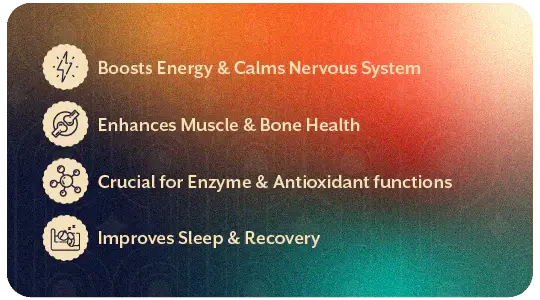
Among other things, magnesium is needed for nerves to work properly, muscles to contract and relax, and the body to use energy. For normal biological processes to happen, more than 300 enzymes need magnesium as a supporting nutrient.
Researchers have looked into the link between magnesium and:
- Controlling the nervous system
- Relaxation of muscles
- Quality of sleep
- Pathways for stress reaction
Magnesium helps nerve cells talk to each other in a healthy way, which is important for chemical function. GABA is a neurotransmitter that is linked to relaxing and calmness. It is also involved in pathways relating to GABA.
Taking magnesium supplements is not a cure for stress-related disorders, but making sure you get enough magnesium may help your nervous system stay healthy and help you deal with daily stress as part of a healthy lifestyle.
Why Formulators Prefer Magnesium Bisglycinate for Stress-Relief Products
Improved Tolerability Compared With Traditional Magnesium Salts
Consumer obedience is one of the most important things supplement makers think about. When taken in large amounts, some forms of magnesium may make your stomach hurt.
Magnesium bisglycinate is often chosen over magnesium oxide and some other mineral salts because it is easier on the digestive system.
Some common recipe benefits are:
- Less likely to have bad effects on digestion
- Design for flexible dosage
- It works better for long-term supplementation
- Better experience for customers
For companies that make goods to help people deal with stress every day, higher tolerance can lead to happier customers who buy from them again.
Flexible Applications in Functional Foods and Supplements
The way magnesium bisglycinate is made means that it can be used in a lot of different kinds of products.
- Taking pills and capsules
- Powder in sacks
- Drinks that do things
- Mixes of healthy foods
People who make drinks care a lot about things like how well they dissolve, how they taste, and the size of the particles.
Things can get better with good instant-dissolve grades if you:
- Putting together the mix
- How consistent the product is
- Making things easy for customers
When making tablets, how well they are made is also affected by how the magnesium bisglycinate chelate powder moves and how safe the process is. When brands work with a supplier who can help with particle engineering and formulation, they can make the finished products better.
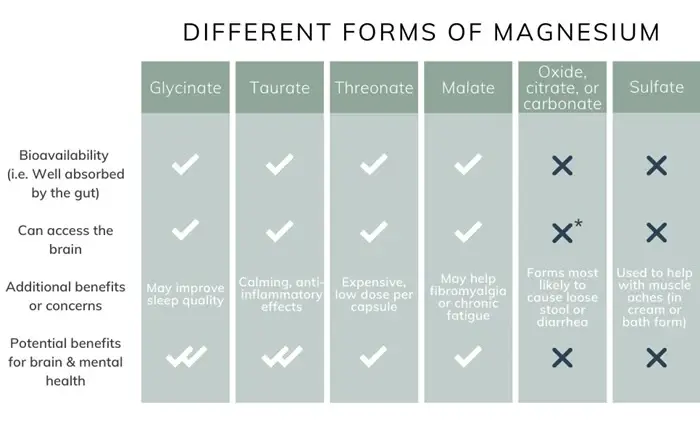
Magnesium Bisglycinate Chelate Powder Compared With Other Magnesium Forms
Magnesium Oxide and Magnesium Citrate Considerations
Different magnesium salts change the way a product works in different ways. Instead of just comparing magnesium amounts, procurement teams should look at each choice based on the goals of the product.
Oxide of Magnesium
When compared to chelated forms, magnesium oxide usually has a higher elemental magnesium content. However, it is less well absorbed.
It's usually chosen for:
- recipes that care about cost
- Supplements with basic minerals
- Products that focus on having a high magnesium concentration
But for some formulations, bigger serving sizes may be needed to get the nutrition profile that's wanted.
Magnesium Citrate
Magnesium citrate is widely used because of its established consumer awareness and acceptable absorption profile.
It may be suitable for:
- General wellness products
- Powder supplements
- Multi-mineral formulas
However, dosage flexibility and digestive tolerance of magnesium bisglycinate chelate powder should be considered when developing products for daily stress support.
Advantages of Magnesium Bisglycinate for Premium Formulations
Magnesium bisglycinate gives brands that want to compete in the high-end health market a number of benefits, including:
- High acceptance by consumers
- Good ability to handle stomach acid
- Clean-label placement is possible.
- Help for advanced health formulas
The cost of the element might be higher than that of some basic magnesium salts, but makers often see the extra value in terms of better product positioning and customer experience.When making high-end stress-relieving products, choosing the best ingredients and making sure customers are happy may be more important than finding the cheapest raw materials.
Quality Standards and Supplier Evaluation for Magnesium Ingredients
Key Documentation Buyers Should Request
It takes more than just looking at prices to find a trusted magnesium source. Procurement teams should look at the quality of the products, how well they follow the rules, and how reliable the suppliers are.
These are some important documents:
- Report of Analysis (COA)
- Results of heavy metal tests
- Reports on microbiological tests
- Data on stability
- Certifications for manufacturing
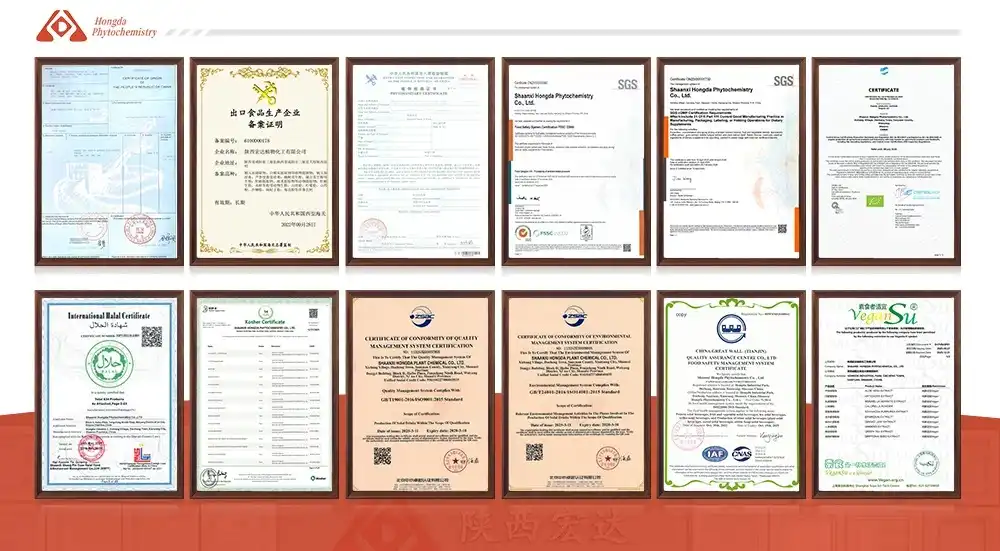
For sales in other countries, buyers may also look at certificates like:
- ISO systems for managing quality
- Certifications for food safety
- Certification as halal
- Certification as kosher
Full documentation lowers the risks of not following the rules and boosts trust in long-term supply partnerships for manufacturers.
Manufacturing Capability and Technical Support
A trustworthy provider should give you more than just raw materials. Brands can get technical help to solve formulation problems while they are making new products.
Some important skills a supplier should have are:
- Quality in every batch
- Specifications made just for you
- Help with formulation
- Choices for packaging
- Stable ability to make things
For instance, companies that make drinking powders might need better dissolving performance, while companies that make tablets might be more interested in flowability and compression qualities. Suppliers who are good at research and development (R&D) can make solutions that fit the needs of different products.
Sourcing Magnesium Bisglycinate Chelate Powder for Global Markets
Factors Affecting Bulk Purchasing Decisions
When supplement companies and wholesalers decide what to buy in bulk, they usually have to weigh:
- Quality of the goods
- How much
- Dependability in delivery
- Needs for regulations
- Help with technology
Besides the specifics of the ingredients, buyers should also look at:
- Capacity for production
- Procedures for quality control
- Knowledge of exporting
- Response from customer service
A steady supply chain of magnesium bisglycinate chelate powder helps brands keep the quality of their products uniform and keep production from stopping.
Why Supplier Partnership Matters for Product Success
The right seller of ingredients can become more than just a source of raw materials; they can also be a long-term partner in growth.
Suppliers with a lot of experience can help customers with:
- Advice on how to apply
- Customized methods for ingredients
- Getting documentation ready
- Needs specific to the market
When brands enter competitive stress-support markets, having an expert supplier can cut down on the time it takes to make new products and make them stand out.
Conclusion
More and more, magnesium bisglycinate chelate powder is being used in stress-relieving formulas because it has a chelated structure, is well tolerated by consumers, and can be used in a variety of supplement forms. Because it has both magnesium benefits and glycine support, it's a good choice for companies making high-end wellness products. When manufacturers and procurement teams are looking for the right magnesium ingredient, they have to carefully look at quality standards, documentation, compatibility with formulations, and the supplier's abilities. Global nutrition brands can get magnesium ingredient options from Shaanxi Hongda Phytochemistry Co., Ltd., which offers quality control systems, technical know-how, and personalized support. Companies can make magnesium-based goods that work, are stable, and compete in the growing health market by picking a source they can trust.
FAQ
1. Is magnesium bisglycinate safe for long-term use in commercial supplements?
When prepared within daily value limits (200-400 mg elemental magnesium), magnesium bisglycinate chelate powder has excellent long-term tolerance. For continuous supplementation procedures used in stress management, the chelated structure reduces gastrointestinal disturbance from inorganic salts. FDA and EFSA accept magnesium as GRAS with well-established safety profiles across broad populations, supporting confident formulation for adult consumers.
2. How quickly can stress-relief benefits be expected from magnesium bisglycinate supplementation?
In 2-4 weeks of continuous supplementation at therapeutic levels, clinical studies show stress response benefits. A pre-existing deficit may accelerate acute anxiolytic effects (within days), whereas HPA axis modulation and neurotransmitter optimization require persistent consumption. This timetable guides consumer education and product positioning to promote consistent use for best results.
3. Does magnesium bisglycinate interact with other common supplement ingredients in stress-relief formulations?
L-theanine, ashwagandha extracts, B-vitamin complexes, and adaptogenic botanicals work well with magnesium bisglycinate chelate powder. The pre-formed chelate structure protects bioavailability in complex matrices, unlike certain mineral forms that bind with polyphenols or compete for absorption. When using numerous hygroscopic compounds, formulation testing should ensure stability and potency during shelf life.
Partner with a Leading Magnesium Bisglycinate Chelate Powder Manufacturer for Your Stress-Relief Product Development
Purchasers, R&D formulators, and product development teams are invited to examine how our instant-dissolve grade Magnesium Bisglycinate Chelate Powder might improve stress-relief formulations. We offer sample, formulation consultancy, and commercial manufacturing of Magnesium Bisglycinate Chelate Powder in North American, European, and Asia-Pacific markets. When designing fast-acting powders, premium capsules, or functional drinks for the stress management sector, our technical team is ready to discuss your needs. Contact duke@hongdaherb.com for technical specs, COAs, bulk order price, or OEM/ODM customization to speed up product launch and maintain quality.
References
1. Boyle, N. B., Lawton, C., & Dye, L. (2017). The effects of magnesium supplementation on subjective anxiety and stress: A systematic review. Nutrients, 9(5), 429-448.
2. Pickering, G., Mazur, A., Trousselard, M., et al. (2020). Magnesium status and stress: The vicious circle concept revisited. Nutrients, 12(12), 3672-3691.
3. Schwalfenberg, G. K., & Genuis, S. J. (2017). The importance of magnesium in clinical healthcare. Scientifica, 2017, Article ID 4179326.
4. Tarleton, E. K., Littenberg, B., MacLean, C. D., et al. (2017). Role of magnesium supplementation in the treatment of depression: A randomized clinical trial. PLoS ONE, 12(6), e0180067.
5. Gröber, U., Schmidt, J., & Kisters, K. (2015). Magnesium in prevention and therapy. Nutrients, 7(9), 8199-8226.
6. Nielsen, F. H. (2018). Magnesium deficiency and increased inflammation: Current perspectives. Journal of Inflammation Research, 11, 25-34.