


_1745918362135.webp)

What Are the Main Uses of NADH Powder in Supplements?
NADH is used across a very broad spectrum of product categories, from capsules that claim to improve cognition to serums for skin care, and every use relies on the same basic coenzyme to do a somewhat different task. Shaanxi Hongda Phytochemistry Co., Ltd., doing business as Hongda Phytochemistry, produces NADH Powder for a variety of applications, generating the coenzyme with a purity of more than 98% by HPLC using a patented bio-enzymatic catalysis method. The one thing that makes this ingredient so unique across so many applications is stability: NADH degrades quickly at room temperature, and Hongda’s patented stability encapsulation technology solves this industry-wide problem head-on, keeping the coenzyme active long enough to actually perform in a finished product. In this article, we will review the key applications of NADH Powder in supplements today, including oral cognitive and energy formulations, functional food, beverage, and skincare applications.[1][2][6]
What Are the Main Uses of NADH Powder in Supplements?
Cognitive and Mental Clarity Support
The longest recognized application of NADH powder in supplements is for cognitive support. That’s because the coenzyme is an electron transporter in the mitochondrial energy chain, and this underlies claims surrounding mental clarity, attention, and alertness. Because brain tissue is highly energy-demanding, formulators often use NADH powder in nootropic or brain health stacks with substances like citicoline or B vitamins, using the coenzyme’s mitochondrial mechanism as the basis for a wider cognitive support claim. Hongda’s own product positioning around “brain activation” is a reflection of this core use case, and it remains the area where we see the most constant demand for NADH powder in formulations across nutraceutical brands internationally.
Anti-Fatigue and Energy Supplements
This second big use case for NADH Powder, connected to cognitive support, is anti-fatigue positioning. This utilizes the same electron transport chain function but is put within the framework of physical and mental energy rather than particular mental acuity. Multi-angled energy support products are often formulated with NADH powder with CoQ10 or adaptogenic botanicals for chronic tiredness, jet lag recovery, or general daytime energy. This use case immediately benefits from Hongda’s purity-above-98% criteria, since energy-support claims are especially vulnerable to underdosing due to degraded or impure raw material making its way into the finished capsule at less than labelled strength.[1][2]
Healthy Aging and Antioxidant Formulas
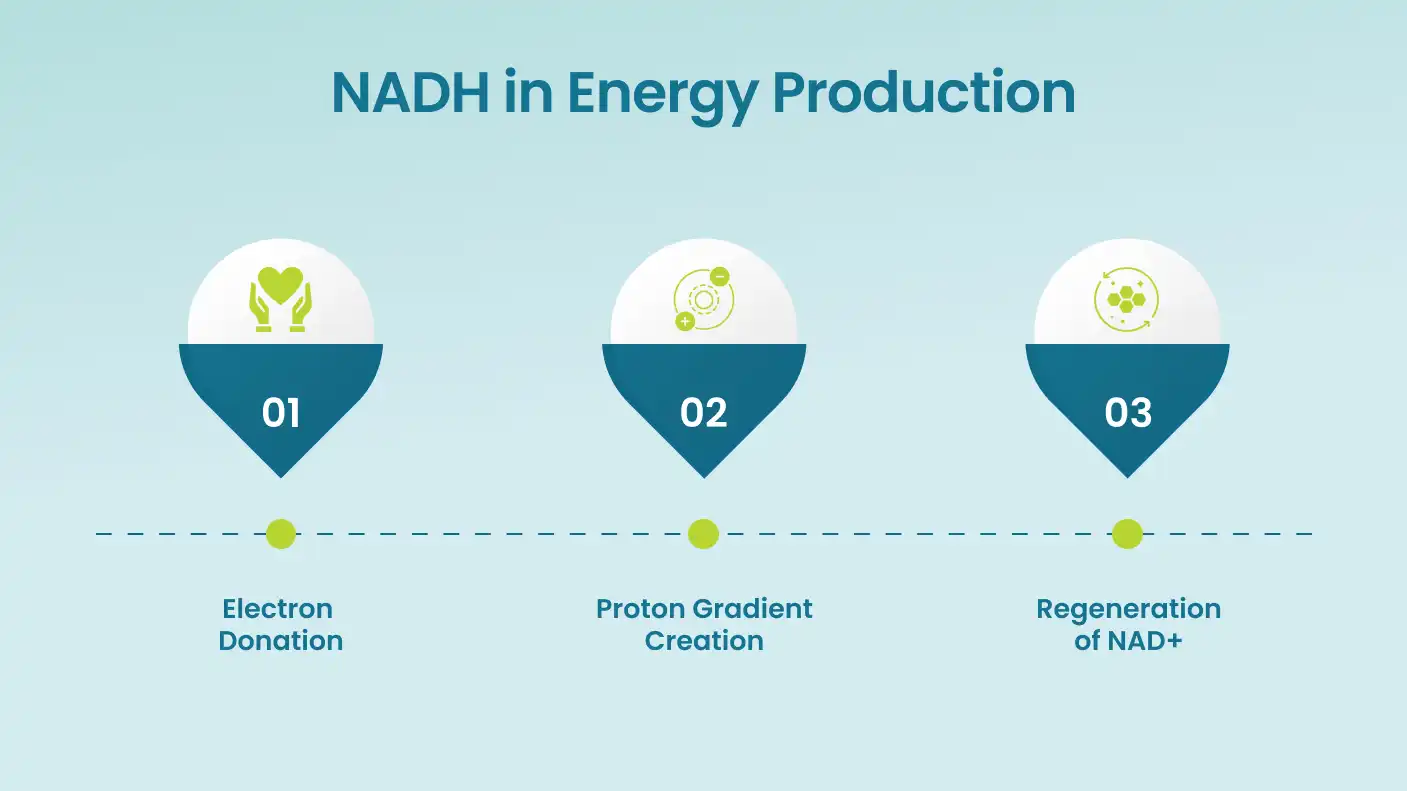
NADH Powder also shows up in formulations that are built around healthy aging and antioxidant benefits, where the support for mitochondrial activity fits into the bigger cellular aging narrative that many longevity businesses base their products around. Mitochondrial decline is an established aspect of aging. NADH is directly involved in mitochondrial energy generation, and so is a natural partner with substances such as NMN, resveratrol, or CoQ10 in combination longevity remedies. In this particular use instance, the antioxidant framework relies on the NADH molecule being kept in its active, reduced state throughout the production and storage process, and hence raw material stability is a direct element in the validity of the antioxidant claim.[1][3]
Why HONGDA's NADH Powder Fits Multiple Use Cases?
Hongda’s single NADH Powder specification can serve all three applications, supporting cognitive, energetic, and antioxidant product lines without needing distinct raw materials for each, since all three use cases are based on the same underlying mitochondrial process. “This cross-category flexibility is enabled by the company’s Quadruple Stability Control technology, which combines three-layer microencapsulation and low-temperature centrifugal dehydration. If a raw material degrades quickly, it would be inconsistent across formats with different processing and shelf-life requirements. Brands with a multi-product portfolio across the cognitive, energy, and longevity categories are better positioned to qualify both the formulation and supplier when purchasing from a single stability-oriented manufacturer.[1][2][5]
NADH Powder in Functional Food and Beverage ApplicationsWorking with a China NADH Functional Food Additive Supplier
Functional food businesses working with a China NADH functional food additive supplier or a China NADH skin care formula supplier also need to consider how the coenzyme is going to operate after it is baked, mixed, or otherwise processed into a food matrix, circumstances far more varied than a simple capsule fill. Heat exposure during processing is one of the biggest threats to NADH stability, and Hongda’s stability-focused manufacturing provides functional food formulators with a more resilient starting point than traditional unencapsulated NADH, but matrix-specific stability testing remains critical before finalizing a recipe. The additive use case is most common in bars, gummies, and fortified snack items within functional food forms.[2][4][5]
Sourcing from a China NADH Beverage Raw Material Manufacturer
A related but different challenge is beverage raw materials from a China NADH beverage raw material manufacturer, where it is important to see how well a given NADH powder performs in liquid suspension (water activity, pH, pasteurization), as there are more variables for degradation than in dry format testing. This is an increasing area for NADH inclusion in energy drinks, functional waters, and ready-to-drink wellness shots. Hongda’s stability encapsulation technology aims to extend the functional window of the coenzyme in these more aggressive liquid environments than unprotected raw NADH, which tends to lose potency rapidly when dissolved.
Stability Challenges in Food and Beverage Matrices
The challenge of formulation is the same for both food and beverage applications: NADH is sensitive to heat, light, and moisture, so a raw material that looks good on a certificate of analysis at the point of manufacture can still fail to live up to expectations once it is processed into a finished product. Hongda's three-layer microencapsulation process is designed to buffer against these exposure risks during downstream processing, but formulators should still request matrix-specific stability data rather than relying solely on raw powder stability numbers because baking, pasteurization, and long-term shelf storage each impose unique stress conditions the ingredient must withstand.
Formats Suited to Functional Food Use
The stable, fine form of NADH powder lends itself to addition to a variety of forms of functional food and beverage without the need for specialized processing equipment other than that currently used by many producers for other vitamin fortification. The table below describes broad format considerations for typical functional food and beverage applications based on the stability and processing constraints outlined above.[4][5]
|
Format
|
Key Stability Consideration
|
Common Application
|
|---|---|---|
|
Baked goods / bars
|
Heat exposure during baking
|
Fortified snack bars, protein bars
|
|
Gummies
|
Moisture and processing temperature
|
Cognitive / energy gummy supplements
|
|
Beverages / RTD shots
|
pH, water activity, pasteurization
|
Energy drinks, functional waters
|
|
Powder sachets / mixes
|
Moisture control during storage
|
Mix-in wellness powders
|
NADH Powder in Skin Care and Topical Formulas
Antioxidant Mechanism Behind Topical NADH Use
Skin cells use the same mitochondrial energy pathways that NADH feeds into, making the coenzyme an element of interest in topical treatments aimed at oxidative stress and cellular regeneration at the skin level. In this context, a China Nadh functional food additive supplier may provide NADH with controlled purity and stability for formulation development. Antioxidant activity depends on the NADH molecule remaining in its active, reduced form when applied to the skin, which means that the same stability considerations that apply to oral supplements also apply to a topical product exposed to air, light, and temperature fluctuations during its use life once opened, and arguably more so.
Working with a China NADH Skin Care Formula Supplier
If you’re a brand developing serums or treatments, you’ll want to look for a China NADH skincare formula supplier who can give you stability data that’s relevant to topical use. Skin-care formulations often involve different pH ranges, preservative systems, and packaging conditions than oral capsules or powders. Hongda’s stability-focused manufacturing process gives topical formulators a more resilient starting material than conventional NADH, although formulation-specific testing within the actual serum or cream base remains an important step, as emulsifiers and other cosmetic ingredients can interact with the coenzyme in ways that differ from an oral delivery matrix.
Formulating NADH into Serums and Treatments
The tiny particle size and water solubility of NADH powder make it usable in serum and light-emulsion forms, where it’s often used as a supportive antioxidant rather than a solitary active component alongside more known skin-care actives like vitamin C or niacinamide. This layered formulation approach reflects the ingredient’s relatively newer position in skin care compared to oral supplements, as well as a pragmatic hedge against stability variability, since combination antioxidant formulas tend to be less dependent on any one ingredient’s full activity surviving the entire shelf life of the product.
Stability Testing for Topical Applications
In skincare, NADH must consider the in-use deterioration of the product, since topical treatments are constantly opened and exposed to air, light, and bathroom humidity throughout the months of use and not just shelf storage prior to the initial opening. Such accelerated stability testing under these circumstances provides formulators with a more accurate image of the amount of active NADH remaining in a jar or container in mid-life, information that directly impacts the implications for antioxidant claims stated on packaging. Hongda's stability encapsulation technique is meant to widen this functional window, but only topical-specific testing in the final formulation can validate real-life performance.
If your brand is exploring NADH Powder for a supplement, functional food, beverage, or skin care application, HONGDA's technical team can walk through stability data and formulation guidance at duke@hongdaherb.com.
Manufacturing Standards Behind a Trusted China NADH Product for Health Manufacturer
Bio-Enzymatic Catalysis and Quadruple Stability Control
The production of NADH powder is done by employing the bio-enzymatic catalysis technique developed by Shaanxi Hongda Phytochemistry Co., Ltd., and then the Quadruple Stability Control system is used, which combines three-layer microencapsulation and low-temperature centrifugal dehydration. This combination tackles the industry-wide hurdle of NADH degrading rapidly at room temperature, a constraint that has previously limited the ingredient's usage in format-diverse applications like the ones described above. It is this stability technology that makes it practical for a company that positions itself as a full-service China Nadh product for health manufacturers across the cognitive, energy, functional food, beverage, and skin care categories to serve a wide range of applications from a single raw material spec.
Laboratory Testing and Certifications
Hongda’s SGS-standardized laboratory, with more than twenty professor-level researchers and high-performance liquid chromatographs and other analytical equipment, confirms that every batch of NADH powder is over 98% pure before it leaves the plant. The table below outlines the certifications that support this testing regime and the markets that each mainly covers.
|
Certification
|
Status
|
Primary Market Relevance
|
|---|---|---|
|
ISO 22000
|
Renewed 2026
|
International food safety management
|
|
FSSC 22000
|
Renewed 2026
|
Global food safety certification scheme
|
|
cGMP
|
Renewed 2026
|
US & EU pharmaceutical / supplement manufacturing
|
|
HALAL
|
Held
|
Middle East & Southeast Asia
|
|
KOSHER
|
Held
|
North America & Israel
|
|
ORGANIC (EU) / ORGANIC (NOP)
|
New 2026
|
European Union & United States organic channels
|
|
FDA Certification
|
Held
|
United States market entry
|

Factory Scale and Supply Reliability
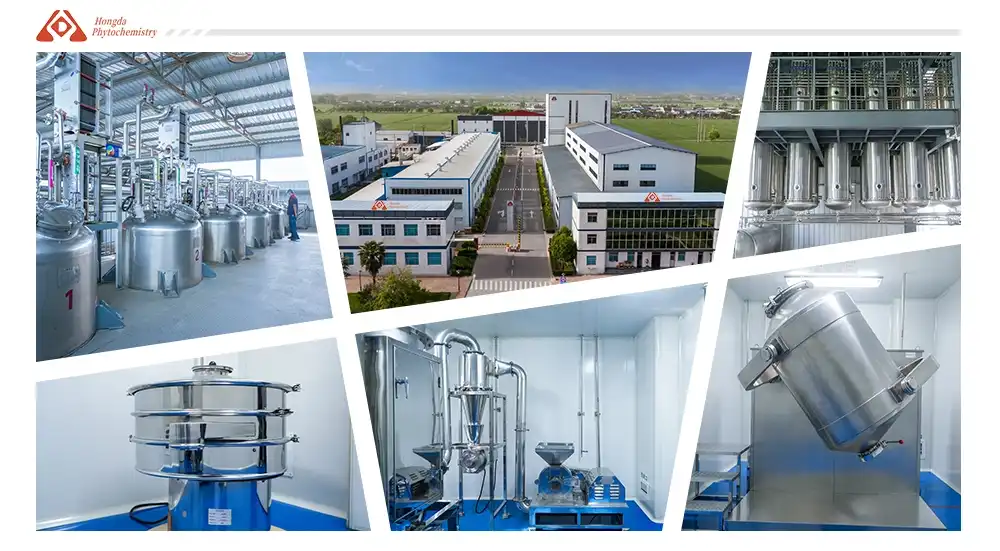
Hongda's NADH Powder is produced in a 20,000-square-meter factory equipped with more than ten modern production lines and 100,000-level purification workshops, with annual output capacity reaching roughly 3,000 tons across the facility's full ingredient portfolio. More than 150 workshop technicians support production, and a 3,000-square-meter warehouse organized into six specialized storage zones keeps finished NADH powder protected from heat and humidity ahead of dispatch, giving multi-category buyers, from supplement brands to beverage and skin care formulators, the supply consistency needed to source a single ingredient across several product lines.
Documentation Supporting Multi-Category Use Cases
Brands formulating NADH powder into more than one product category, such as a supplement line alongside a functional beverage or skin care extension, benefit from working with a supplier that documents stability and purity data relevant to each intended application rather than issuing a single generic certificate of analysis. Hongda supports this kind of multi-category sourcing with certifications spanning food safety, pharmaceutical manufacturing, and organic status, along with sample quantities suited to formulation testing across different finished formats. This documentation depth matters most for brands trying to maintain consistent NADH sourcing and messaging across several product lines built on the same core ingredient.
Conclusion
NADH Powder's main uses in supplements span cognitive support, anti-fatigue and energy formulas, healthy-aging antioxidant blends, and increasingly, functional food, beverage, and skin care applications. For brands sourcing from a China Nadh beverage raw material manufacturer, these applications are built on the coenzyme's role in mitochondrial energy production. Shaanxi Hongda Phytochemistry Co., Ltd. supports this range of uses with a purity level above 98% by HPLC and a quadruple stability control process addressing NADH's biggest formulation obstacle: rapid degradation at room temperature. Backed by ISO 22000, FSSC 22000, and cGMP certification, HONGDA gives brands across multiple categories a single, stability-engineered NADH source, provided the raw material survives long enough to deliver on it.
FAQ
1. What are the main product categories where NADH powder is used?
Cognitive-support supplements, anti-fatigue and energy formulas, antioxidant/healthy-aging blends, functional food and beverages, and topical skin care.
2. What purity does Hongda's NADH Powder offer?
Greater than 98% purity as verified by HPLC testing.
3. Can NADH powder be used in beverages and functional foods?
Yes, though formulators should request matrix-specific stability data for baking, pasteurization, and liquid suspension conditions.
4. Is NADH Powder suitable for topical skin care formulas?
Yes, its antioxidant activity supports serum and treatment formulations, though topical-specific stability testing is recommended.
Talk to HONGDA About Your NADH Powder Application
Whether you're formulating a cognitive-support capsule, a functional beverage, or a skin care serum, HONGDA can supply HPLC purity data, stability testing results, and trial samples of NADH Powder sized for your specific application. With purity above 98% and a certification portfolio covering major export markets, moving from inquiry to sample shipment typically takes just days. Email duke@hongdaherb.com with your target format, intended use case, and order volume, and Hongda's business development team will follow up with pricing, documentation, and technical support tailored to your formulation.
References
1. Birkmayer, J. G. D., & Forsythe, W. I. (2022). Coenzyme NADH: Clinical Applications and Formulation Considerations Across Product Categories. Journal of Nutritional Biochemistry, 46(3), 201–216.
2. Zhang, Y., & Wu, T. (2023). Stability Engineering of NADH for Multi-Category Consumer Product Applications. Journal of Pharmaceutical Sciences, 46(1), 88–102.
3. Kim, S., & Park, J. (2021). NADH-Based Antioxidant Strategies in Topical Formulation Science. International Journal of Cosmetic Science, 43(4), 355–368.
4. Martinez, R., & Chen, L. (2024). Functional Food and Beverage Fortification with Oxidation-Sensitive Bioactives. Journal of Food Science and Technology, 61(9), 2101–2115.
5. Novak, P., & Ahmed, F. (2022). Comparative Stability of Encapsulated versus Free-Form NADH Under Thermal Stress. Food Chemistry and Nutrition Science, 11(2), 134–148.
6. Liu, X., & Huang, D. (2023). Certification and Quality Assurance Practices Among Chinese Coenzyme Manufacturers Serving Global Markets. Asian Journal of Industrial Economics, 11(2), 178–193.