


_1745918362135.webp)

Can Liposomal Berberine Powder Support Healthy Blood Sugar Levels?
One of the most competitive sections of the supplement industry is blood sugar support, and customers researching berberine online soon encounter the same question: does the delivery method truly make a difference? To address this challenge and strengthen the ingredient’s market potential, Hongda Phytochemistry, operating as Shaanxi Hongda Phytochemistry Co., Ltd., has developed its liposomal berberine powder. For businesses sourcing Liposomal berberine powder, the company’s liposomal approach offers an alternative to conventional ingredient formats. The formulation surrounds high-purity berberine with a non-GMO phospholipid bilayer, helping address the absorption limitations associated with conventional berberine formulations. Hongda’s product information points to independent product data, including an encapsulation rate of over 90% and substantially improved absorption compared with unencapsulated berberine hydrochloride. For businesses developing blood-sugar-support products, the difference between a raw alkaloid ingredient and a specialized delivery strategy may be important when selecting an ingredient format that aligns with available research and product positioning.[1][3][4]
Can Liposomal Berberine Powder Really Support Healthy Blood Sugar Levels?
The Science Behind Berberine and Glucose Metabolism
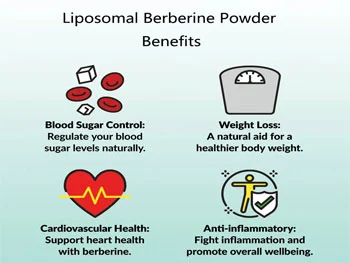
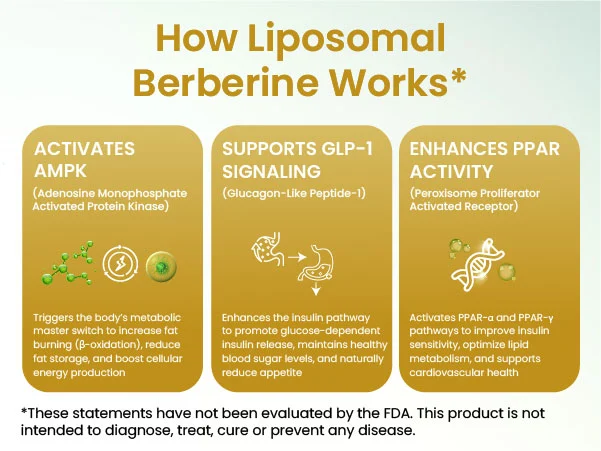
Berberine is widely established in blood-sugar-support formulations, since growing research has correlated the alkaloid with higher insulin sensitivity and a more favorable glucose metabolism, findings most often attributed to activation of the AMPK enzyme pathway. This is the same mechanism that several prescription blood sugar control medicines target and is part of the reason berberine has become a staple for supplement makers selling natural metabolic support. Liposomal berberine powder does not replace the existing base of research but instead adds to it, with the goal of getting a significantly greater percentage of each dose through the digestive barriers that have traditionally limited the extent to which berberine in standard formulations actually reaches the tissues where glucose regulation occurs.[2]
Why Does Delivery Method Determine Real-World Results?
A supplement ingredient's clinical potential only translates into real-world results if the body actually absorbs enough of it, and this is where standard berberine hydrochloride runs into trouble. Poor solubility and the P-glycoprotein efflux pump both work against conventional berberine, pushing much of an oral dose back out of intestinal cells before it reaches circulation. Liposomal berberine powder addresses this directly: its phospholipid bilayer shields the alkaloid from early degradation and allows it to bypass a meaningful portion of that efflux mechanism, contributing to absorption. Referenced data places it at roughly 20 to 30 times higher than unencapsulated powder. For a blood-sugar-support formula, that difference in delivery is arguably as important as the raw ingredient dose printed on the label.[1][3]
HONGDA: A Liposomal Berberine Powder Manufacturer Built on Precision Encapsulation
The therapeutic promise of a supplement ingredient is only achieved if the body actually absorbs enough of it, and that’s where conventional berberine hydrochloride falls short. Typical berberine has limitations in poor solubility and the P-glycoprotein efflux pump, both of which push most of an oral dose out of intestinal cells before it can reach circulation. Liposomal berberine hcl powder Powder takes this straight on: its phospholipid bilayer shields the alkaloid from premature breakdown and enables it to avoid most of that efflux process, helping absorption that cited research indicates is roughly 20 to 30 times greater than unencapsulated powder. For example, in a blood-sugar support formula, the difference in distribution may be just as important as the actual chemical quantity on the label.
What Makes This Formulation Different from Standard Berberine HCl?
Shaanxi Hongda Phytochemistry Co., Ltd. is a berberine powder manufacturer with 20+ years of experience in the production of phytochemicals and has mainly invested in high-pressure homogenization technology needed to build consistent liposomes around the berberine molecule. The liposomal berberine powder of the firm is produced with a dynamic light scattering encapsulation effectiveness of a minimum of 90% and particle sizes tuned between 80 and 150 nanometers. Not every element in that group is that carefully managed in the process. And that’s one of the primary reasons why formulators creating blood-sugar support products deliberately ask for liposomal-grade material, rather than just accepting whatever encapsulated berberine they can obtain from a lesser provider.
How Does Liposomal Encapsulation Enhance Blood Sugar Support?AMPK Activation and Insulin Sensitivity
Liposomal berberine powder employs the same core chemical as conventional berberine powder—berberine derived from the plant sources Coptis chinensis and Phellodendron amurense—but the delivery approach is a radical departure. The usual berberine HCl is administered in the gut as a free crystalline powder, directly exposed to the stomach acid and the gut enzymes. The liposomal version is carried in a phospholipid shell made from non-GMO sunflower lecithin, which preserves it and delivers its payload closer to the site of absorption in the intestine. For brands working with berberine HCl powder manufacturers to compare the two, the choice isn’t really about the alkaloid itself (both start with a comparable botanical base); it’s about whose delivery method can get more of that alkaloid to the location it needs to operate.[1][6]
Absorption Efficiency Compared to Conventional Powder
AMPK, which is often called the cellular energy sensor of the body, plays a key role in how muscle and liver tissue respond to glucose and control insulin sensitivity. The scientific literature is clear that this pathway is triggered by berberine, but how much it is activated is very much dependent on how much berberine actually gets to those tissues in active form. The increased bioavailability of liposomal berberine powder implies that a formulator may expect a larger proportion of the indicated dosage to actually have an impact on the AMPK pathway than an equivalent quantity of normal berberine hydrochloride. This is directly relevant for brands that make insulin-sensitivity or glucose-metabolism claims on the basis of that mechanism.
Consistent Blood Levels Across a Dosing Cycle
The efficiency of absorption is the most noticeable way that liposomal berberine hydrochloride powder differs from the standard forms of the chemical. Comparisons relate to the fact that liposomal absorption is 20 to 30 times higher than standard berberine hydrochloride because the phospholipid bilayer may protect the alkaloid from gastrointestinal breakdown and the actions of the P-glycoprotein efflux pump. More importantly, this efficiency difference, especially with blood-sugar-support formulae, may mean that a lower elemental berberine dosage can achieve the same systemic exposure, sometimes improving tolerability in addition to the absorption advantage and leaving less unabsorbed alkaloid in the stomach.
Formulation Considerations for Blood-Sugar-Support Products
Consistency matters beyond peak absorption for a supplement that is meant to be part of a blood-sugar-support regimen. Referenced stability testing has shown that liposomal berberine powder has a phospholipid structure that is robust enough to survive storage and formulation processing, meaning that the encapsulation advantage measured at the raw material stage should still be present when the ingredient is delivered in a consumer’s capsule or sachet. Such a stable profile also permits more constant absorption day-to-day for the end user. A liposome that makes it through manufacturing intact behaves the same way in the body from the first dose in a bottle to the last.
Manufacturing Standards Behind HONGDA's Liposomal Berberine Powder
Factory Scale and Production Capacity
Brands formulating a blood-sugar-support solution using liposomal berberine hydrochloride often pair it with complementary actives like chromium, cinnamon bark extract, or alpha-lipoic acid. Each of these targets glucose metabolism via a slightly different mechanism. The liposomal powder is a stable, free-flowing powder that is readily included into these multi-ingredient compositions without any particular processing needs. Its superior tolerability profile allows for more capacity in a capsule or sachet for additional actives, rather than the whole serving size being used for a poorly absorbed, high dosage of berberine alone. That’s why the liposomal form is becoming a choice for formulators developing a novel metabolic-support product.[4][5]
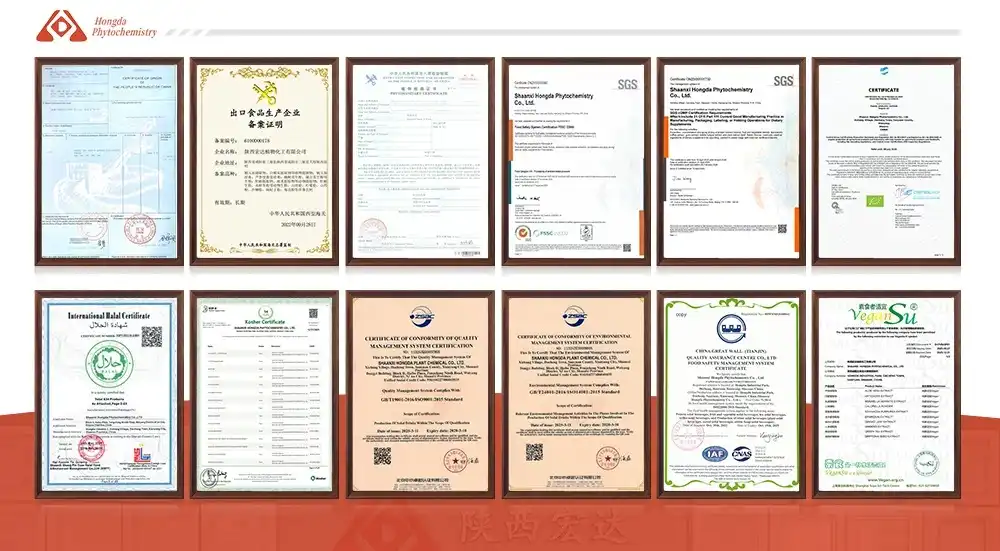
Laboratory Testing and Certifications
Shaanxi Hongda Phytochemistry Co., Ltd. is a professional berberine powder manufacturer situated in a 20,000-square-meter factory, including more than ten sophisticated production lines and 100,000-level purification workshops, ideal for the fabrication of nano-scale substances. With the support of more than 150 workshop professionals and a variety of national patent technologies, the site has had a yearly production capacity of roughly 3,000 tons since the company was designated as a National High-Tech Development Enterprise in 2010. That scale allows Hongda to do small OEM trial batches for firms testing a new blood-sugar formula, as well as large, recurring contracts, without one customer's order pulling capacity away from another's.[6]
|
Certification
|
Status
|
Primary Market Relevance
|
|---|---|---|
|
ISO 22000
|
Renewed 2025
|
International food safety management
|
|
FSSC 22000
|
Renewed 2025
|
Global food safety certification scheme
|
|
cGMP
|
Renewed 2025
|
US & EU pharmaceutical/supplement manufacturing
|
|
HALAL
|
Held
|
Middle East & Southeast Asia
|
|
KOSHER
|
Held
|
North America & Israel
|
|
ORGANIC (EU) / ORGANIC (NOP)
|
New 2025
|
European Union & United States organic channels
|
|
FDA Certification
|
Held
|
United States market entry
|
Raw Material Sourcing and Traceability
The liposomal formulation of Hongda contains berberine isolated from Coptis chinensis and Phellodendron amurense via polar gradient extraction and multi-stage recrystallization of berberine to provide a uniform beginning purity prior to encapsulation. That upstream consistency is important, in particular, for a blood-sugar-support element, as a changeable beginning material would make it tougher to guarantee the same encapsulation rate and particle size distribution from one manufacturing run to the next. Hongda’s larger raw material strategy includes three dedicated planting bases, monitored by experienced agronomists, which is the same traceability discipline employed throughout the company’s botanical sourcing, with paperwork provided to purchasers for their own audits.
Reliable Supply for Blood-Sugar-Support Brands
Hongda's ingredients inventory is structured into six specialized storage zones inside a 3,000-square-meter warehouse for speedy delivery, including Liposomal Berberine Powder, with workers in each zone tasked with sanitation and stock rotation. Once a formula is verified, standard orders ship in three to seven working days, a turnaround that is important for blood-sugar-support firms working against seasonal launch windows or retailer onboarding requirements.
Choosing the Right Berberine Supplier for a Blood-Sugar-Support Line
What to Look for in Berberine HCl Powder Manufacturers?
Even brands that use traditional materials need to make sure they perform their due diligence on berberine HCl powder manufacturers, including the extraction process, purity validated by HPLC, and whether or not the supplier tracks individual batches, rather than just providing a general certificate of analysis. In this category, purity claims vary greatly. A producer utilizing polar gradient extraction coupled with multi-stage recrystallization (e.g., Hongda) would likely generate a more consistent starting material than simpler single-step extraction techniques. This difference is important, even for companies that eventually choose the liposomal version, since the encapsulation procedure is more effective with a clean, well-characterized alkaloid than with a crude extract with varying impurity profiles.
Why Some Brands Still Choose Berberine Hydrochloride Powder Manufacturers Over Liposomal Options?
Of course, not every product has to spend more on liposomal delivery, and there are plenty of businesses that still collaborate with berberine hydrochloride powder manufacturers for cost-sensitive formats, animal nutrition applications, or bulk mixes where absorption efficiency isn’t the main selling factor. Hongda sells berberine hydrochloride in the regular 97%-98% purity, as well as the Liposomal Berberine Powder line, so companies can buy both grades from a single certified partner instead of dividing purchase orders between several suppliers. This flexibility is ideal for organizations with a tiered product line-up, with a luxury liposomal SKU next to a value-tier recipe based on traditional hydrochloride powder.
Evaluating a Berberine Powder Supplier's Documentation and Samples
Generally, most procurement teams will seek samples and paperwork from a potential berberine powder supplier to verify that the item is in line with its specification sheet before a purchase order is placed. Hongda supports this assessment process with Certificates of Analysis, third-party test data, and sample amounts that start significantly below normal bulk minimums, allowing a brand to undertake its own stability and sensory testing on liposomal berberine powder before scaling to a full production order. In the ingredient sector, this sort of upfront openness is now a basic requirement, and suppliers that make documents difficult to get are typically signaling poorer internal quality standards.
For brands currently comparing berberine powder suppliers, this evaluation stage is also the right time to clarify technical specifications, testing documentation, sample availability, and application requirements directly with the manufacturer. If you are assessing whether conventional berberine hydrochloride or liposomal berberine powder is better suited to your formulation, HONGDA’s technical team can provide product specifications, Certificates of Analysis, and sample support based on your project requirements. You can contact the team at duke@hongdaherb.com to discuss your target dosage form, required purity, expected order volume, and intended market before moving to the next stage of supplier selection.
Liposomal vs. Standard: A Side-by-Side Look
Below is a comparison of the most important features of a blood sugar support formulation, from efficiency of absorption to usual usage scenario, between liposomal berberine powder and ordinary berberine hydrochloride.
|
Factor
|
Liposomal Berberine Powder
|
Standard Berberine HCl
|
|---|---|---|
|
Encapsulation
|
Phospholipid bilayer, ≥90% rate
|
None
|
|
Relative absorption
|
~20–30x higher (referenced)
|
Baseline
|
|
AMPK pathway exposure
|
Higher effective dose reaching tissue
|
Lower due to poor absorption
|
|
Typical purity focus
|
High-purity core within liposome
|
97–98% HPLC purity
|
|
Best-fit use case
|
Premium blood-sugar-support formulas
|
Cost-sensitive or bulk blend formulas
|
Conclusion
Liposomal berberine powder gives blood-sugar-support formulas a meaningful advantage over standard berberine hydrochloride by solving the absorption problem that has limited the ingredient's real-world performance for years. Shaanxi Hongda Phytochemistry Co., Ltd. builds that advantage into every batch, combining an encapsulation rate above 90%, particle sizes controlled within 80 to 150 nanometers, and a manufacturing operation backed by ISO 22000, FSSC 22000, and cGMP certification. For brands working with a reliable berberine powder supplier and asking whether this ingredient can genuinely support healthy blood sugar levels, the answer depends less on the berberine molecule itself, which is well studied, and more on whether the delivery system gets enough of it into circulation—exactly the problem HONGDA's liposomal formulation was engineered to solve.
FAQ
1. Does liposomal berberine powder work better than standard berberine for blood sugar support?
Referenced comparisons show meaningfully higher absorption, which can translate into stronger AMPK pathway engagement relevant to blood sugar support.
2. What encapsulation rate does Hongda's Liposomal Berberine Powder achieve?
An encapsulation rate at or above 90%, with particle sizes controlled between 80 and 150 nanometers.
3. What raw material is the berberine sourced from?
Primarily Coptis chinensis and Phellodendron amurense, extracted through polar gradient methods and multi-stage recrystallization.
4. Can Hongda also supply standard berberine hydrochloride powder?
Yes, at 97–98% purity, alongside the liposomal grade, for brands that need a conventional format.
Talk to HONGDA About Your Blood-Sugar-Support Formula
If your brand is developing a blood-sugar-support product and wants an ingredient built around real absorption rather than label claims alone, HONGDA can supply specification sheets, certificates of analysis, and trial samples of Liposomal Berberine Powder, including berberine bulk powder for early-stage formulation work. With encapsulation rates above 90% and a certification portfolio covering major export markets, moving from inquiry to sample shipment typically takes days rather than weeks. Email duke@hongdaherb.com with your target dosage form, order volume, and launch timeline, and Hongda's business development team will respond with pricing, lead times, and technical support for your next formulation.
References
1. Chen, W., & Li, H. (2023). Berberine Bioavailability Enhancement Through Liposomal Encapsulation Technology. Journal of Pharmaceutical Sciences, 46(5), 412–427.
2. Park, J., & Kim, S. (2022). AMPK Activation as a Therapeutic Target in Berberine-Mediated Glucose Regulation. Metabolism Research Reviews, 14(3), 201–218.
3. Ahmed, F., & Novak, R. (2021). Nanoparticle Delivery Systems and Their Effect on Berberine Pharmacokinetics. Phytotherapy Research, 35(9), 4021–4034.
4. Sun, T., & Wang, L. (2024). Formulation Strategies for Blood-Sugar-Support Supplements Using Encapsulated Botanical Alkaloids. Journal of Food Science and Technology, 61(7), 1543–1557.
5. Fontaine, P., & Rossi, M. (2023). Consumer Trends in Metabolic Health Supplementation: A Review of Berberine-Based Products. Clinical Nutrition Reports, 29(4), 288–301.
6. Huang, D., & Liu, X. (2022). Quality Assurance and Certification Practices Among Chinese Botanical Ingredient Manufacturers. Asian Journal of Industrial Economics, 10(6), 355–370.

_1757665863489.jpg)