


_1745918362135.webp)

One steroid hormone API that is often found in women's health goods is progesterone powder. People who want to buy pharmaceuticals need to find a partner who knows about both the science and the rules that apply to each batch. Hongda Phytochemistry makes progesterone powder that is strong enough to be used in medicine for hormone replacement treatment, helping with pregnancy and other reasons. Shaanxi Hongda Phytochemistry Co., Ltd. has the labs that governments all over the world need for tests. According to the article, progesterone powder is mostly used in medicine. It also talks about how it is made to meet USP and EP standards and what people should check before buying a lot of it.
Progesterone Powder in Modern Pharmaceutical Manufacturing
What Progesterone Powder Is and Why Formulators Rely on It
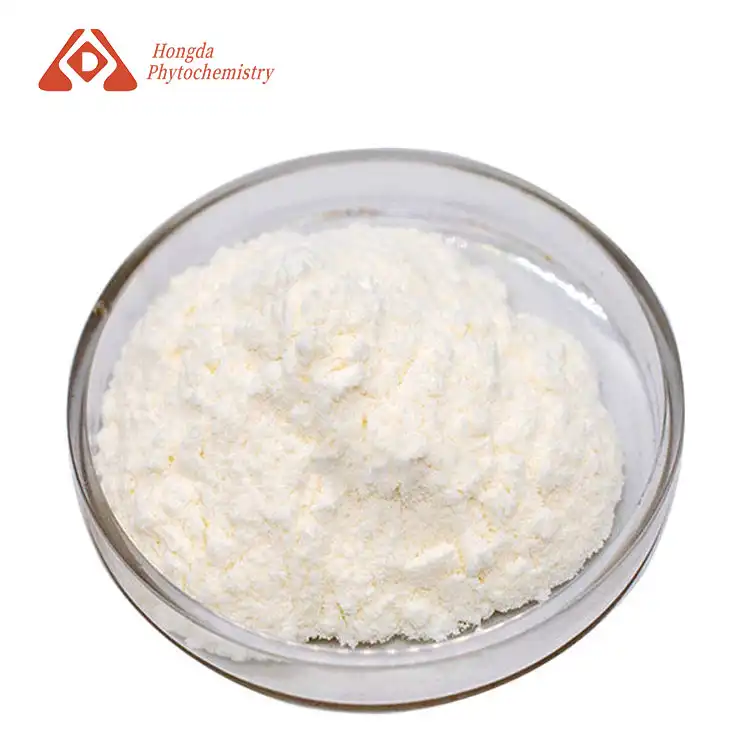
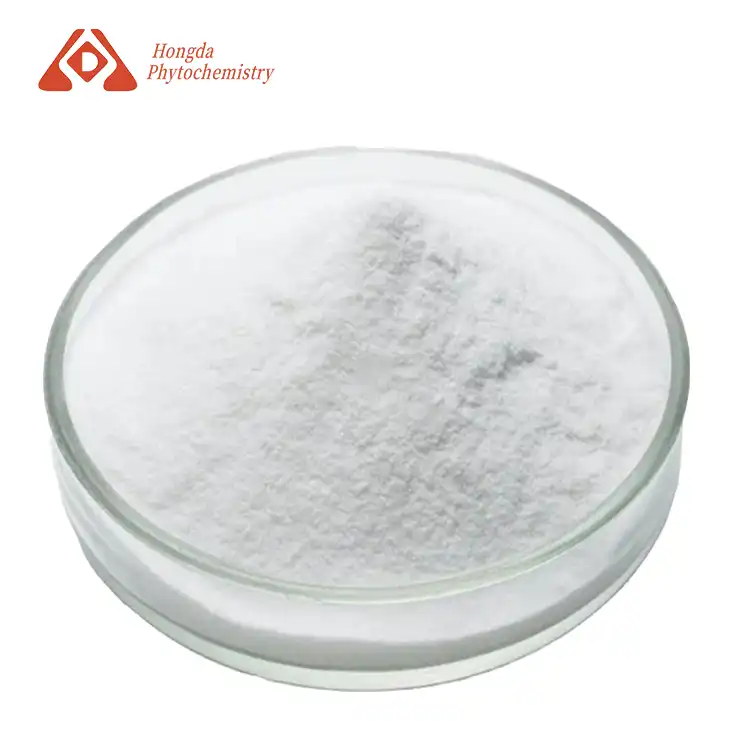
The form of progesterone that does the work is progesterone powder. The chemical formula for progesterone is C21H30O2. It is a naturally occurring steroid hormone. It is used by drug companies because its chemical make-up is similar to that of the progesterone that the corpus luteum makes in humans. For finished goods, this means they can be sold as bioidentical instead of manufactured. This is a big deal for business because more and more patients and doctors want bioidentical hormones for hormone therapy and luteal support. As you work on making progesterone powder, pay close attention to how the crystals look, how big the particles are, and how pure the powder is. These things have a direct effect on how well the pill, gel, or shot works when it gets to the patient.[6]
Why Hongda's Progesterone Powder Stands Out for Pharmaceutical Buyers?
To get progesterone powder for making regulated drugs, you need to work with a seller that can keep track of every step, from the raw materials to the finished drum. Hongda's production goes through 100,000-level purification workshops spread out over a 20,000-square-meter building. The workshops are backed by an in-house SGS-standard laboratory with more than twenty professor-level researchers and testing staff. Before it is released, that lab checks each batch of progesterone powder using high-performance liquid chromatography and other tools to check for potency, heavy metals, leftover solvents, and microbial contamination. The company has been a National High-Tech Enterprise since 2010 and makes progesterone powder with the same level of care that it uses for all of its other API and extract products.
Core Specifications Pharmaceutical Buyers Should Expect
Formulators should know the basic requirements for pharmaceutical-grade progesterone powder before they start comparing suppliers. The chemical is registered under the CAS number 57-83-0 and is usually sent according to USP, EP, or BP monograph standards, based on where it is going. The following table lists the most common core identity and quality parameters that buyers ask for during technical evaluation.
|
Items
|
Standard
|
Test Result
|
|
Appearance
|
White crystalline powder
|
Conform
|
|
Assay
|
98.0%~103.0%
|
99.1%
|
|
Melting Point
|
126~131℃
|
127.5~129.5℃
|
|
Loss On Drying
|
≤0.5%
|
0.19%
|
|
Specific Rotation
|
+175°~+183°
|
+180°
|
|
Total Impurity
|
≤0.8%
|
0.5%
|
|
Water Content
|
≤0.15%
|
0.14%
|
|
Lead(mg/kg)
|
≤2.0
|
Conform
|
|
Arsenic(mg/kg)
|
≤1.0
|
Conform
|
|
Cadmium(mg/kg)
|
≤1.0
|
Conform
|
|
Mercury (mg/kg)
|
≤0.1
|
Conform
|
|
Total Plate Count
|
≤1000cfu/g
|
Conform
|
|
Mold & Yeast
|
≤100cfu/g
|
Conform
|
|
E.Coli
|
Negative
|
Conform
|
|
Salmonella
|
Negative
|
Conform
|
|
Conclusion: Each Item meet with the USP42 standard . |
||
Main Pharmaceutical Uses of Progesterone Powder
Hormone Replacement Therapy Formulations
Hormone replacement treatment is still one of the main uses for progesterone powder, especially when mixed with other ingredients to help women going through perimenopause and menopause. When a woman with a healthy uterus is given oestrogen therapy, progesterone powder is added to the plan to keep the endometrial lining from being overstimulated by oestrogen. Oral micronised progesterone from this powder is metabolised differently than manufactured progestins, so formulators like it better for long-term hormone therapy plans because it works better. Manufacturers of capsules and soft gels rely on the raw progesterone powder having particles that are all the same size and being pure so that each dose will be absorbed in the body in the same way throughout the treatment term.
Luteal Phase Support in Fertility and IVF Treatment
During assisted reproduction procedures, like in vitro fertilisation, extra progesterone is often needed to support the lining of the uterus because ovarian stimulation stops the body's natural production. During the luteal phase, progesterone powder is given through vaginal pills, gels, or tablets that are taken by mouth to help keep conditions good for egg implantation. Fertility clinics and compounding pharmacies like to buy progesterone powder from suppliers who can promise consistency from batch to batch. This is because even small differences in potency can make dosing mistakes more likely during a treatment window where timing and hormone levels are closely watched. One of the fastest-growing markets for pharmaceutical-grade progesterone powder around the world is this use.[4]
Prevention of Preterm Birth
Several countries' clinical standards say that women in the second trimester who have a short cervix should take vaginal progesterone to lower their risk of giving birth early on their own. Progesterone powder is used to make vaginal gels, pills, and plugs because it has a history of safety in this group when mixed with other ingredients and sized to the right micronised particle size for vaginal absorption. Because the product is given directly to a group of vulnerable patients over a long period of pregnancy, this use case has very high standards for the quality of the raw materials. Suppliers of progesterone powder to this market segment must keep full records to back up their regulatory submissions for obstetric drug categories.[1][2]
Management of Menstrual and Menopausal Disorders
In addition to structured hormone therapy and fertility protocols, progesterone powder is used to make products that help with menstrual cycle problems, luteal phase deficiencies, and managing symptoms before a period. Compounding shops often use progesterone powder to make customised dose amounts that aren't available in commercial pills. This gives doctors the freedom to adapt treatment to each patient's unique hormonal profile. This group likes micronised progesterone powder with tightly controlled particle size distribution because smaller particles make it easier for the body to dissolve and absorb dosage forms that are taken by mouth or applied to the skin. This type of product is still popular, but more and more doctors are choosing bioidentical hormones over older manufactured progestins.[5][6]
How Is Progesterone Powder Processed for Pharmaceutical-Grade Use?
Micronisation and Particle Size Control
Because raw progesterone crystallises into pieces that are too big to be absorbed by the body reliably, micronisation is a normal step in the processing process that happens before progesterone powder gets to formulators. Jet-milling or air-micronisation equipment breaks down particles into single-digit microns. This greatly increases the surface area and makes it easier for the compound to dissolve in the digestive tract or vaginal mucosa. Because progesterone that hasn't been processed isn't bioavailable when taken by mouth, this step is what makes oral and vaginal dosage forms work at all. When a manufacturer of progesterone powder offers different particle sizes, it lets formulators match the raw material's properties to the dosage form, like a hard pill, a soft gel, or a cream base that goes on the skin.[3]
Purification and Compliance With USP/EP Standards
Before it can be called pharmaceutical-grade, progesterone powder that has been micronised has to meet strict standards for purity. Usually, this means that the purity is at least 99%, and there are strict limits on the amount of heavy metals, solvents, and related substances that can be left over. Hongda's process for cleaning goes through a lab with a level of 100,000 cleanliness. Each batch of progesterone powder is checked against USP and EP standard requirements before release paperwork is sent out. When buying something for a regulated market, the buyer should always ask for a current certificate of analysis along with it. This is because compendial compliance can change with monograph updates and needs to be confirmed batch by batch instead of just assuming from a general product listing.
Quality Testing Before Release
A manufacturing facility shouldn't let any batch of progesterone powder leave without a full testing panel that checks the powder's identity, assay potency, particle size distribution, residual solvent levels, and microbial limits. Scientists at the professor level work in Hongda's SGS-standard laboratory, which uses high-performance liquid chromatography, gas chromatography, and other tested equipment to run these tests. This method of testing in layers finds problems before they get to a customer's production line. This is very important in the pharmaceutical industry, where one lot of progesterone powder that doesn't meet specifications can stop a whole production batch and lead to expensive investigations.
Sourcing Progesterone Powder From a Reliable Manufacturer
Documentation Pharmaceutical Buyers Should Require
When choosing a source for controlled production of progesterone powder, you need to look at both price and paperwork very carefully. Buyers should ask for a safety data sheet, a certificate of analysis that is specific to the batch they are buying, and proof that the material is made to meet a certain standard. The list of paperwork that usually comes with a legal pharmaceutical purchase of progesterone powder is shown below.
|
Document
|
Purpose
|
|---|---|
|
Certificate of Analysis (CoA)
|
Confirms batch-specific potency and purity results
|
|
Safety Data Sheet (SDS)
|
Details handling, storage, and hazard information
|
|
Compendial Compliance Statement
|
Confirms USP/EP/BP monograph conformity
|
|
Stability Data
|
Supports shelf-life claims for regulatory filings
|
Why Do Hongda's Facilities Support Consistent Bulk Supply?
When a drug company plans to make progesterone powder for a long time, a steady supply is just as important as high quality at the start. Hongda has a 3,000-square-meter building with six storage areas that are kept clean and germ-free. This gives the company enough supplies to meet regular orders without having to wait for production to stop. The company has more than 150 workshop operation workers and can produce around 3,000 tonnes of progesterone powder each year across its various API and extract lines. This means that the same facility can handle both small sample requests and large, regular stock orders for progesterone powder.
Getting a Sample or Quote
Before making a business promise, a new raw material provider is usually judged by a sample and a look at their technical documents. Hongda's technical team can be reached directly at duke@hongdaherb.com to set up a sample shipment or go over compendial compliance details that are important to your target market if your team is comparing progesterone powder specifications, certificates of analysis, or prices for an upcoming formulation project. Buyers who are putting together regulatory reports can also ask for supporting documents ahead of time so that internal quality teams can look them over before a purchase order is sent out.
Practical Considerations for Formulators
Storage and Stability Requirements
Even though progesterone powder is biologically safe in air, it is still best to store it properly so that it stays effective for as long as the product is supposed to last. To keep the material from breaking down over time, it should be kept in a cool, dry place that is tightly sealed and shielded from light for long periods of time. When manufacturers package finished capsules or gels, they should also think about how to control moisture during encapsulation. This is because humidity exposure during processing can change how the progesterone powder flows and how stable it is over time.
Common Dosage Forms Using Progesterone Powder
Formulators turn progesterone powder into a number of different dosage forms, which are used in different medical situations. Hormone replacement treatment is still mostly taken by mouth in the form of soft-gel capsules. For fertility and preterm birth prevention, where localized absorption is desired, vaginal capsules, gels, and injections are most popular. Compounding shops can also use progesterone powder to make troches, creams, and oral forms that are specifically made for each order. Finding progesterone powder with well-known physical properties makes product development a lot easier because each format has different requirements for particle size and excipient compatibility.[3][4]
Regulatory and Documentation Support for International Markets
To sell a finished product with progesterone powder in more than one area, you need a supplier whose licenses are valid in more than one area. Hongda's new cGMP, ISO9001, and ISO22000 certifications, along with its earlier FDA-related and organic certifications, are meant to make it easier for regulatory affairs teams in North America, Europe, and other regulated markets to manage submissions. Having one source that already maintains this wide range of certifications makes due diligence a lot easier than getting compliance proof from a bunch of different smaller progesterone powder sellers.
Conclusion
Progesterone powder is used in many medicinal processes, such as hormone replacement therapy, pregnancy treatment, and preventing early birth. All of these require careful control over quality and particle size. Documentation, thorough testing, and a steady supply capacity are all important for reliable sources. With fully traceable batches and certified facilities, Hongda Phytochemistry gives formulators a solid base for making pharmaceutical products that are compliant and work well.
FAQ
1. What is progesterone powder primarily used for?
It is used as a raw material in hormone replacement therapy, fertility support, and preterm birth prevention formulations.
2. Why is progesterone powder micronized?
Micronization reduces particle size to improve dissolution and absorption in oral and vaginal dosage forms.
3. What compendial standards does Hongda's progesterone powder meet?
The product is manufactured to comply with USP, EP, and BP monograph requirements depending on the target market.
4. What documentation should buyers request before purchasing?
A batch-specific certificate of analysis, safety data sheet, and compendial compliance statement are recommended.
Source: Pharmaceutical-Grade Progesterone Powder | HONGDA
Looking for a progesterone powder supplier that can support your next hormone therapy, fertility, or obstetric formulation with full documentation and consistent bulk supply? Shaanxi Hongda Phytochemistry Co., Ltd. combines certified manufacturing, rigorous batch testing, and flexible order sizes to support pharmaceutical buyers from initial sample through recurring production. Our technical team can provide certificates of analysis, compendial compliance statements, and pricing tailored to your project. Reach out today at duke@hongdaherb.com to request a sample or discuss your next order, and put two decades of pharmaceutical manufacturing experience behind your supply chain.
References
1. Fonseca EB, Celik E, Parra M, Singh M, Nicolaides KH; Fetal Medicine Foundation Second Trimester Screening Group. Progesterone and the risk of preterm birth among women with a short cervix. New England Journal of Medicine. 2007;357(5):462-469.
2. Hassan SS, Romero R, Vidyadhari D, et al. Vaginal progesterone reduces the rate of preterm birth in women with a sonographic short cervix: a multicenter, randomized, double-blind, placebo-controlled trial. Ultrasound in Obstetrics & Gynecology. 2011;38(1):18-31.
3. Simon JA, Robinson DE, Andrews MC, et al. The absorption of oral micronized progesterone: the effect of food, dose proportionality, and comparison with intramuscular progesterone. Fertility and Sterility. 1993;60(1):26-33.
4. van der Linden M, Buckingham K, Farquhar C, Kremer JAM, Metwally M. Luteal phase support for assisted reproduction cycles. Cochrane Database of Systematic Reviews. 2015.
5. Prior to JC, progesterone for symptomatic perimenopause treatment—progesterone politics, physiology, and potential for perimenopause. Facts, Views & Vision in ObGyn. 2011;3(2):109-120.
6. Stanczyk FZ. All progestins are not created equal. Steroids. 2003;68(10-13):879-890.