


_1745918362135.webp)

What Should Manufacturers Control During Liposomal Glutathione Powder Production?
When people look for vitamins, they quickly learn that not all liposomal goods are made with the same care. One thing that really makes this change stand out is L-Glutathione Powder. Hongda Phytochemistry is known for having strict rules about how their goods are made. Every time Shaanxi Hongda Phytochemistry Co., Ltd. makes Liposomal Glutathione Powder, they pay close attention to every detail. They are careful when they choose the raw materials and when they pack the powder. To make liposomes, you can't just mix ingredients together. That is, even small changes in temperature, particle size, or wetness can hurt a product before it is sold. Liposomal Glutathione Powder makers need to keep a few things in mind so that the powder stays stable and is easy for the body to absorb. As well, it talks about what buyers should look for in a company's output standards before they buy something big.
Liposomal Glutathione Powder Production: Why Control Points Matter From the Start?
The Manufacturing Challenge Behind Glutathione Delivery
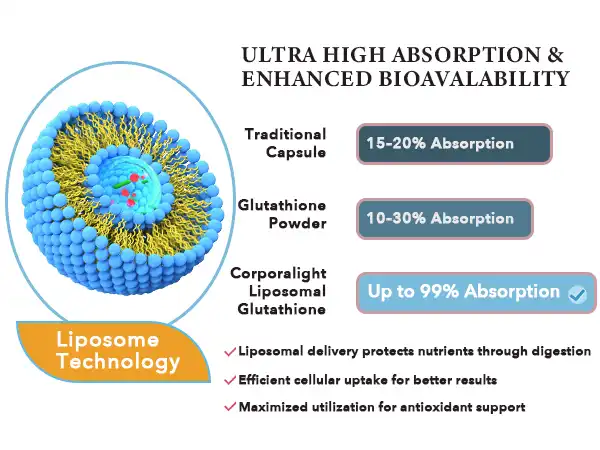
Most glutathione pills don't work as well when taken by mouth because stomach acid and enzymes break down the molecule quickly, making it less useful. This can be fixed with Liposomal Glutathione Powder. Around the active chemical are phospholipid bilayers that look like cell walls. This way, it gets into the bloodstream without being broken down by the stomach or circulation system. [1][2][3] There are, however, different steps that must be taken in order to make a building safe. This is why a well-thought-out plan won't work if it's made wrong.
What Sets a Controlled Production Process Apart?
A well-run Liposomal Glutathione Powder production line can control the quality of the raw materials, the choice of phospholipids, the packing pressure, the temperature exposure, and the wetness content at the end. All of these things have an impact on each other. If you don't do these checks, liposomes might not always be the same size. They might also lose their useful part or become unstable while being stored or sent. Because of this, the field of production, not just the recipe itself, shows us if Liposomal Glutathione Powder really does what it says it will do for our bodies.[2][4]
Hongda's Manufacturing Philosophy for Liposomal Glutathione Powder
A business called Shaanxi Hongda Phytochemistry Co., Ltd. sees the process of making liposomal glutathione powder as a whole, not just one specific step. A tech called high-pressure blending is used to make nanoparticles that are all the same size. Each group is checked with unique tools to make sure the bits are the right size and clean before they are packed. In this way, the business can offer a written product that is made over and over instead of a one-time plan that might be different from batch to batch.
Raw Material and Phospholipid Selection Controls
Glutathione Purity Before Encapsulation
Before the raw glutathione is put into pills, each batch of Liposomal Glutathione Powder is checked to make sure it is clean. They need proof that the raw material was checked for quality before it was used so that mistakes don't happen that could ruin the whole production run. The claims made about how well the finished product works rest on the raw material. It's possible for a well-planned process to go wrong if you skip this step or only use the paperwork from the provider without checking it yourself.
Choosing Sunflower Phospholipids Over Soy Lecithin
One of the most important things to remember when making Liposomal Glutathione Powder is to get the phospholipids. Soy lecithin is cheap, so they use it. Sunflower phospholipids, on the other hand, are cheaper, don't come from soy, and aren't GMO. They work better for brands that want to sell their goods in stores that only carry clean names. As you can see, Shaanxi Hongda chose to use sunflower phospholipids because they thought it would help the product sell better, not just because it would save them money.
Cholesterol and Membrane Reinforcement Decisions
There are small amounts of cholesterol in some types of Liposomal Glutathione Powder that help keep the structure of the phospholipid membrane. This keeps the powder fixed even if the temperature changes while it's being shipped. It is possible for the membrane to leak if there isn't enough support, and if there is too much, it can change how the powder melts and feels in the mouth. End brands care a lot about clarity and spread when it comes to drinks, so this is very important.
Supplier Traceability for Wholesale Pure Glutathione Powder
People who buy a lot of pure glutathione powder need to be sure that the ingredients come from a well-known place. It is the same for all of Shaanxi Hongda's ingredient types when it comes to traceability. All of its source infrastructure is based on a laboratory that meets SGS standards and growing bases that are watched over by agronomists. People from other countries don't have to rely on a trading relationship that hasn't been tested and doesn't give them many options if quality problems happen later in the supply chain. Instead, they have proof of the chain of custody.
Encapsulation Process Parameters That Must Be Controlled
High-Pressure Homogenization and Particle Size Control
When you seal something, you need to pay close attention to the time and pressure so that the particle sizes are spread out in a narrow, even way. Hongda wants the liposome particles in its Liposomal Glutathione Powder to be about 50 to 150 nanometers wide most of the time. People who make powder need to keep an eye on this range because bits outside of it can make it less solid or less effective at absorbing.
Temperature Management to Prevent Oxidation
When you process glutathione with too much heat, it can change into a form that isn't useful. This is because it is chemically sensitive to heat. When making Liposomal Glutathione Powder, the people who do the work have to follow very strict low-temperature rules so that the molecules stay in their active reduced form.[1][5] There is no way to stop the rusting at this point in the production line, no matter how well the goods are stored or packed.
Low-Temperature Freeze-Drying for Powder Stability
It is very important to keep an eye on how the liquid liposomal solution is changed into a stable powder. The water in the phospholipid membrane structure can't break down or stick together when it's frozen at a low temperature. This helps it stay together. Care must be taken in this step so that the liposomal shells don't break as they dry.
The table below summarizes key production parameters manufacturers should actively monitor.
|
Process Stage
|
Control Parameter
|
Target Range
|
|---|---|---|
|
Encapsulation
|
Liposome particle size
|
50–150 nm
|
|
Processing
|
Temperature exposure
|
Low-temperature, tightly controlled
|
|
Drying
|
Moisture removal method
|
Low-temperature freeze-drying
|
|
Formulation
|
Phospholipid source
|
Sunflower-derived, soy-free
|
|
Packaging
|
Storage atmosphere
|
Nitrogen-flushed, light-protected
|
Parameters summarized from Hongda Phytochemistry production documentation for Liposomal Glutathione Powder.
Packaging, Storage, and Quality Verification Controls
Nitrogen-Flushed Aluminum Foil Packaging
Since oxidation is very bad for liposomal Glutathione Powder, it is just as important to control the packing as it is to control the processing of wholesale pure glutathione powder. Packing made of three layers of metal foil filled with nitrogen keeps air and light from getting to the final powder. This helps manufacturers keep the amount of active ingredients that break down to a minimum over the two years that goods that are stored properly are good for.
Laboratory Testing Before Release
Before it is released, every batch of Liposomal Glutathione Powder made by Shaanxi Hongda goes through an SGS-certified lab with more than twenty professor-level researchers using high-performance liquid chromatographs and laser particle size analyzers to check its purity, effectiveness, and particle size distribution. This testing point is what separates a recorded and proven product from a bulk powder that hasn't been checked and is sold without any supporting data. It also gives buyers a real way to compare sellers besides just marketing language.
Certifications That Validate the Control System
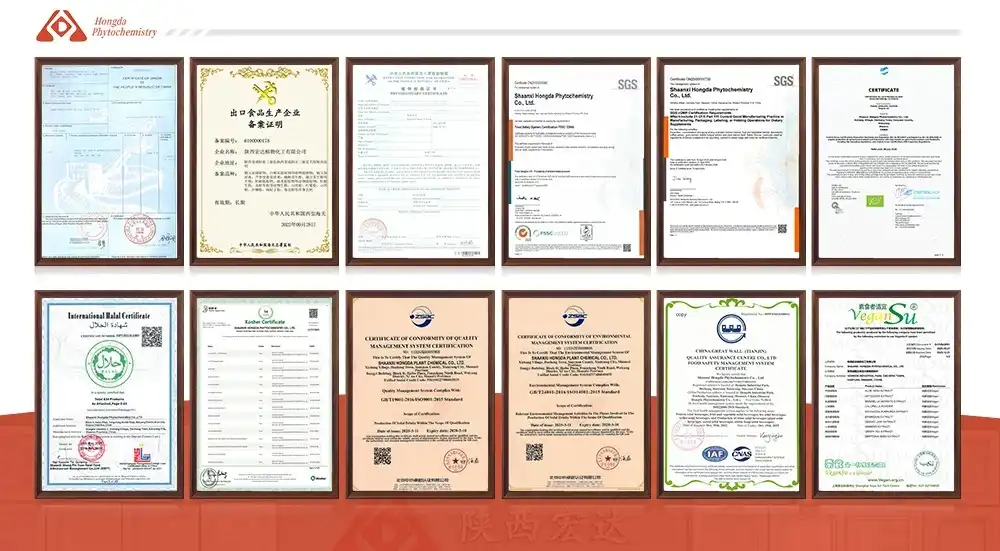
Manufacturing controls don't mean much if they aren't backed up by third-party verification. Shaanxi Hongda has ISO22000, FSSC22000, Halal, Kosher, and FDA facility registration, as well as more recent cGMP and ISO9001 certifications. This gives international buyers proof that the company's Liposomal Glutathione Powder production system meets global manufacturing standards, instead of relying on marketing claims that haven't been proven.
What Buyers Should Verify When Sourcing Liposomal Glutathione Powder?
Evaluating a Glutathione Scavenger Wholesaler in China
Buyers researching a glutathione scavenger wholesaler in China for bulk purchasing should look beyond price alone and request documented evidence of the specific production controls discussed above, including particle size testing data, phospholipid sourcing details, and third-party certification records, since these details reveal far more about long-term reliability than a simple product data sheet.
Documentation Every Wholesale Buyer Should Request
Before finalizing a purchase agreement, buyers should request a full certificate of analysis covering purity, particle size distribution, heavy metals, and microbial testing for any Liposomal Glutathione Powder shipment. Manufacturers with genuinely controlled processes will readily provide this documentation, while suppliers relying on unverified sourcing often struggle to produce consistent batch records on request, a warning sign buyers should not overlook during supplier evaluation.
Supply Capacity and Delivery Reliability
With an annual production capacity of roughly 3,000 tons and a 3,000-square-meter warehouse organized into six dedicated storage zones, Shaanxi Hongda Phytochemistry Co., Ltd. can support both trial orders and large recurring purchase agreements for Liposomal Glutathione Powder without the supply interruptions that smaller, less-controlled operations sometimes experience during periods of high demand, an important consideration for brands planning product launches on fixed timelines as a glutathione scavenger wholesaler in china.
Specification ranges for Hongda's Liposomal Glutathione Powder are summarized below for reference.
|
Item
|
Specification
|
|
Appearance
|
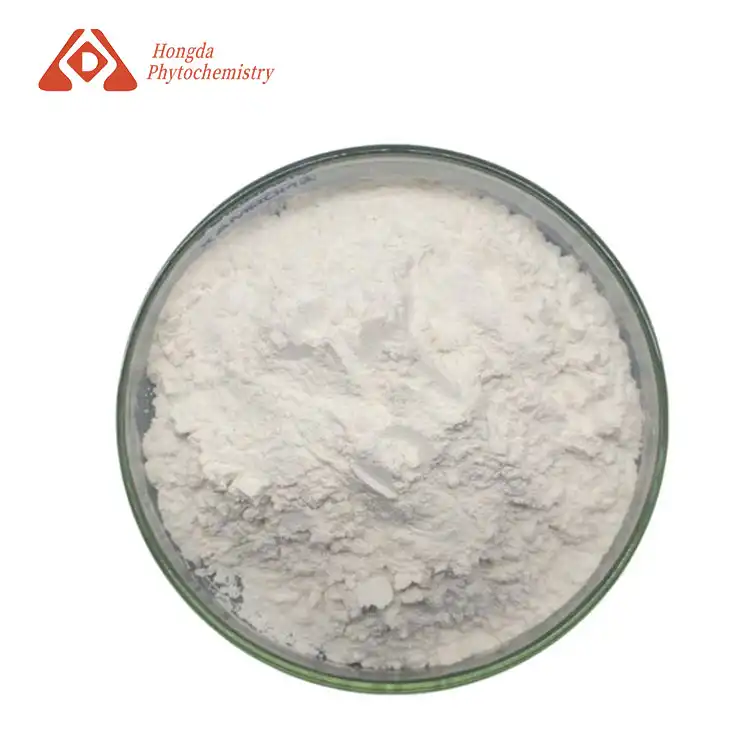
Off-white to light yellow powder
|
|
Loss on Drying
|
≤ 5.0%
|
|
Particle Size
|
≥ 90% through 20mesh
|
|
Bulk Density
|
Measured value
|
|
Tapped Bulk Density
|
Measured value
|
|
Lead
|
≤ 0.5ppm
|
|
Arsenic
|
≤ 2.0ppm
|
|
Cadmium
|
≤ 0.3ppm
|
|
Mercury
|
≤ 0.3ppm
|
|
Total Plate Count
|
≤ 10000cfu/g
|
|
Yeasts&Molds
|
≤ 1000cfu/g
|
|
Coliforms
|
≤ 10MPN/g
|
|
E.Coli
|
Negative/25g
|
|
Salmonella
|
Negative/25g
|
|
Staphylococcus Aureus
|
Negative/25g
|
|
Fatty Acids
|
10.0%-20.0%
|
|
Phospholipids (NON-GMO)
|
10.0%-20.0%
|
|
Glutathione
|
65.0%-75.0%
|
Conclusion
Producing a genuinely effective Liposomal Glutathione Powder requires disciplined control at every stage, from raw material purity through encapsulation, drying, and packaging. Shaanxi Hongda Phytochemistry Co., Ltd. applies documented process controls, laboratory verification, and internationally recognized certifications to every batch, giving formulators a dependable, traceable ingredient rather than an unverified bulk powder. For buyers evaluating suppliers, understanding these control points is the clearest way to separate genuine manufacturing discipline from marketing claims. Contact Hongda today to request specifications or samples.
FAQ
1. Why does particle size matter in Liposomal Glutathione Powder production?
Particle size, typically controlled between 50 and 150 nanometers, directly affects how well the liposomes are absorbed and how stable they remain in storage.
2. Does Hongda use soy lecithin in its Liposomal Glutathione Powder?
No, the company primarily uses sunflower phospholipids, offering a soy-free, non-GMO option for clean-label formulations.
3. How is Liposomal Glutathione Powder protected from oxidation?
Through low-temperature processing and nitrogen-flushed, triple-layer aluminum foil packaging that limits light and oxygen exposure.
4. What certifications support Hongda's manufacturing controls?
Shaanxi Hongda holds ISO22000, FSSC22000, cGMP, Halal, Kosher, and FDA facility registration, among others.
Source Controlled Liposomal Glutathione Powder | HONGDA
Ready to work with a manufacturer that documents every control point in Liposomal Glutathione Powder production? Shaanxi Hongda Phytochemistry Co., Ltd. combines high-pressure homogenization technology, rigorous laboratory testing, and internationally recognized certifications to deliver a consistent, high-bioavailability product batch after batch. Whether you need bulk wholesale supply or OEM development support, our technical team can walk you through full documentation and sample options. Contact us today at Email duke@hongdaherb.com to request specifications, and discover why formulators worldwide trust Hongda as a disciplined, transparent manufacturing partner.
References
1. Zeevalk, G. D., Bernard, L. P., & Guilford, F. T. (2010). Liposomal-glutathione provides maintenance of intracellular glutathione and neuroprotection in oxidative stress models. Neurochemical Research.
2. Allen, T. M., & Cullis, P. R. (2013). Liposomal drug delivery systems: from concept to clinical applications. Advanced Drug Delivery Reviews.
3. Richie, J. P., Nichenametla, S., Neidig, W., et al. (2015). Randomized controlled trial of oral glutathione supplementation on body stores of glutathione. European Journal of Nutrition.
4. Sercombe, L., Veerati, T., Moheimani, F., et al. (2015). Advances and challenges of liposome assisted drug delivery. Frontiers in Pharmacology.
5. Kidd, P. M. (1997). Glutathione: systemic protectant against oxidative and free radical damage. Alternative Medicine Review.