


_1745918362135.webp)

What Features Drive Demand for Liposomal Glutathione Powder?
Something significant has shifted in the glutathione supplement category. Buyers who once accepted plain reduced-form powder are now specifying liposomal delivery as a non-negotiable. The reasons are equal parts science, commerce, and consumer savviness—and they're accelerating. Shaanxi Hongda Phytochemistry Co., Ltd. has spent years refining its Liposomal Glutathione Powder to precisely meet this tightening demand, having been founded in 2001 and recognized as a National High-Tech Enterprise. Whether you're a brand manager, a procurement lead, or a formulation scientist, understanding what actually drives purchasing decisions for this ingredient is the difference between launching a product people repurchase and one they return. This article breaks it down systematically—starting with where the market is heading.
Market Momentum: Why Is Liposomal GSH Outpacing the Category?
The Numbers Telling the Real Story
The global liposomal glutathione market reached approximately USD 682 million in 2024 and is projected to grow at a CAGR of 7.8% through 2033, potentially exceeding USD 1.3 billion. What's more telling than the headline figure is the composition of new product launches: as of 2025, over 55% of newly introduced glutathione supplements globally use liposomal or nano-encapsulated delivery systems. That is a formulation technology that has crossed from premium niche to mainstream expectation in under a decade. For ingredient buyers evaluating a glutathione powder supplier, this context matters—sourcing a standard reduced-form powder for a new SKU is, in many channels, already a positioning disadvantage before the label is even designed.
Shifting Consumer Expectations and the "Bioavailability Premium"
The supplement label reading habits of today's consumers are distinct from those of even only five years ago. Marketing phrases such as "enhanced absorption," "liposomal delivery," and "clinically validated bioavailability" are now used as purchase criteria. In the Asia-Pacific region, where the demand for antioxidant supplements and nutraceuticals that brighten the skin is expected to soar at a 9.1% CAGR through 2033, intelligent consumers are able to tell the difference between regular GSH and its liposomal form. Instead of being an upgrade, Liposomal Glutathione Powder is the premium tier's entrance ticket for businesses expanding in these areas.
Regulatory and Retail Tailwinds
The growth story of liposomal glutathione has coincided unexpectedly well with clean-label campaigns in the US and EU. Both regulators and retailers who prioritize transparency find the ingredient's function, which uses phospholipid encapsulation with materials that are physically similar to human cell membranes, to be a natural and scientifically supported story. Roughly 45 percent of the world's liposomal glutathione supply is now housed in pharmacies, an industry that requires suppliers to provide extensive paperwork proving they are in line with cGMP regulations and have ISO-certified facilities. Because of the weight of regulations, a glutathione powder supplier's certification stack has become more than just a compliance exercise; it now serves as a real competitive differentiation.
Bioavailability: The Feature That Started the Whole Conversation
Why Standard GSH Fails in the Gut?
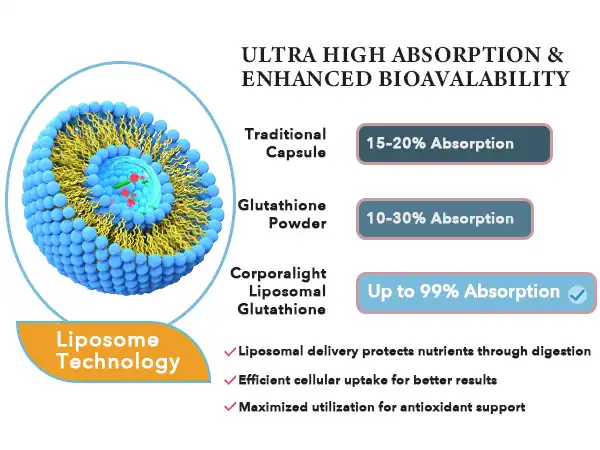
Reduced glutathione is a tripeptide that is structurally elegant, biologically essential, and remarkably fragile when introduced to the digestive tract. Proteolytic enzymes in the small intestine cleave the peptide bonds before the molecule can cross into circulation, and the resulting amino acids (glutamate, cysteine, glycine) reach cells as precursors rather than intact, active GSH. Clinical estimates of standard oral glutathione bioavailability range from 3% to 16% depending on formulation and individual gut health. For supplement brands, this means that a 500 mg dose on the label might deliver fewer than 80 mg of functional glutathione to the bloodstream—a gap that is becoming increasingly difficult to ignore as consumers grow more sophisticated. Liposomal glutathione powder was engineered precisely to close this gap. [3][5]
How Phospholipid Encapsulation Rewrites the absorption equation?
Encased in a phospholipid bilayer, which is the same lipid architecture that constitutes the outer membrane of each human cell, glutathione is able to traverse the digestive tract undamaged. The liposome evades digestion by stomach and small intestine enzymes, enters the bloodstream through lipid-mediated absorption routes, and discharges its cargo into the bloodstream without passing through the intestinal epithelium. Some liposomal glutathione formulations show absorption rates reaching 90%, and studies indicate that blood GSH levels are three to five times higher than equal oral doses of normal reduced-form granules. Significant clinical results at reduced claimed doses, smaller capsule sizes, and a product narrative that can withstand examination by both knowledgeable consumers and healthcare professionals are practical implications for formulators. [1][4]
Liposomal encapsulation doesn't just improve how much glutathione reaches the bloodstream—it changes what categories and claims are commercially available to the brands using it.
Powder vs. Liquid: Why Does Form Matter as Much as Technology?
Many problems arose in the past with cold-chain logistics, customer compliance, and the short shelf life of liposomal supplements after opening because they were supplied in liquid form. By spray-drying the encapsulated suspension onto a carrier matrix, liposomal glutathione powder locks the liposomal structure in a stable, room-temperature-safe form, thereby eliminating these restrictions. This powder doesn't need any special handling whatsoever; it dissolves easily in water, mixes well with capsule ingredients, and may be added to functional food matrices. The ability to use a single stock-keeping unit for many delivery formats is a major practical advantage for global brands and contract manufacturers dealing with wholesale pure glutathione powder, especially in terms of format variety.
Application Scope: Where Brands Are Putting Liposomal GSH to Work?
Skin Health and the Nutricosmetics Boom
The skin brightening application has arguably done more to mainstream liposomal glutathione than any other single use case. Glutathione inhibits tyrosinase, the enzyme responsible for melanin synthesis, and at sufficient intracellular concentrations, this translates into measurable skin tone effects. The critical word is "intracellular"—standard oral glutathione routinely fails to reach the melanocyte concentrations required for visible results, which is why brands that switched to liposomal glutathione powder in their skin-brightening nutraceuticals have generally reported stronger consumer retention and review scores. The Asia-Pacific market, where whitening and brightening supplements represent a multi-billion-dollar category, is particularly sensitive to this distinction. Japan alone is projected to grow GSH supplement demand at a 7.2% CAGR driven primarily by anti-aging and skin health applications.
Immune Support, Liver Health, and Clinical Nutrition
In addition to its aesthetic value, glutathione is an essential component of immune cells. Natural killer cells, macrophages, and lymphocytes contain significant concentrations of glutathione, which they use to regulate cytokine signaling and prevent oxidative damage during an immune response. With its scientifically sound delivery mechanism and engaging clinical tale, Liposomal Glutathione Powder offers clinical nutrition brands a leg up when it comes to producing products that boost immunological resilience, post-illness recovery, or liver cleansing. In oncology supportive care and chronic oxidative stress conditions, when proven bioavailability is not an option but a necessity, the pharmaceutical segment is likewise increasing its utilization of liposomal GSH. [1][6]
Sports Recovery and the Performance Nutrition Angle
Acute physical stress leads to oxidative stress, which temporarily reduces intracellular glutathione levels, resulting in muscle damage and a prolonged recovery time. Sports nutrition firms have increasingly included Liposomal Glutathione Powder in recovery stacks, along with other antioxidants, amino acids, and adaptogens. This powder is ideal for on-the-go performance nourishment, thanks to its single-serve sachet packaging that promotes minimal, clean-label ingredients. This market has real untapped growth opportunities for companies that work with a wholesale pure glutathione powder supplier who can consistently provide high-quality and efficient liposomal encapsulation on a commercial basis.
| Market Segment | Status | Key Growth Driver | Preferred Form |
|---|---|---|---|
| Dietary Supplements | Dominant segment (~60% of demand) | Anti-aging, antioxidant awareness | Capsule / Powder blend |
| Skin Brightening / Cosmeceuticals | Fastest-growing niche | Melanin inhibition, nutricosmetics trend | Liposomal Powder / Liquid |
| Pharmaceuticals | Clinical adoption expanding | Oxidative stress disorders, liver health | Liposomal—verified bioavailability |
| Functional Beverages | Emerging / high growth | On-the-go wellness formats | Water-dispersible Liposomal Powder |
| Sports Nutrition | Growing niche | Recovery, oxidative stress post-exercise | Liposomal Powder (single-s |
Liposomal Glutathione Powder Specification
|
Item
|
Specification
|
|
Appearance
|
Off-white to light yellow powder
|
|
Loss on Drying
|
≤ 5.0%
|
|
Particle Size
|
≥ 90% through 20mesh
|
|
Bulk Density
|
Measured value
|
|
Tapped Bulk Density
|
Measured value
|
|
Lead
|
≤ 0.5ppm
|
|
Arsenic
|
≤ 2.0ppm
|
|
Cadmium
|
≤ 0.3ppm
|
|
Mercury
|
≤ 0.3ppm
|
|
Total Plate Count
|
≤ 10000cfu/g
|
|
Yeasts&Molds
|
≤ 1000cfu/g
|
|
Coliforms
|
≤ 10MPN/g
|
|
E.Coli
|
Negative/25g
|
|
Salmonella
|
Negative/25g
|
|
Staphylococcus Aureus
|
Negative/25g
|
|
Fatty Acids
|
10.0%-20.0%
|
|
Phospholipids (NON-GMO)
|
10.0%-20.0%
|
|
Glutathione
|
65.0%-75.0%
|
Sourcing and Quality: What Separates a Good Ingredient from a Great One?
Manufacturing Infrastructure That Scales Without Compromising
Liposomal encapsulation at commercial scale is not a process that tolerates shortcuts. The phospholipid bilayer must be formed with consistent particle size, uniform distribution, and high entrapment efficiency—otherwise the "liposomal" claim on the label describes the intent of the formulation, not its actual composition. Shaanxi Hongda Phytochemistry Co., Ltd. operates a 20,000 m² facility with over 10 modern production lines and 100,000-level purification workshops, supported by more than 150 production technicians. Annual output capacity reaches 3,000 tons across all ingredient lines, giving customers genuine supply security rather than the uncertainty that comes with smaller, less-capitalized manufacturers. For global brands managing lean inventory strategies, this kind of production depth is a risk management tool, not just a procurement preference.
Laboratory Standards and the SGS-Certified Testing Commitment
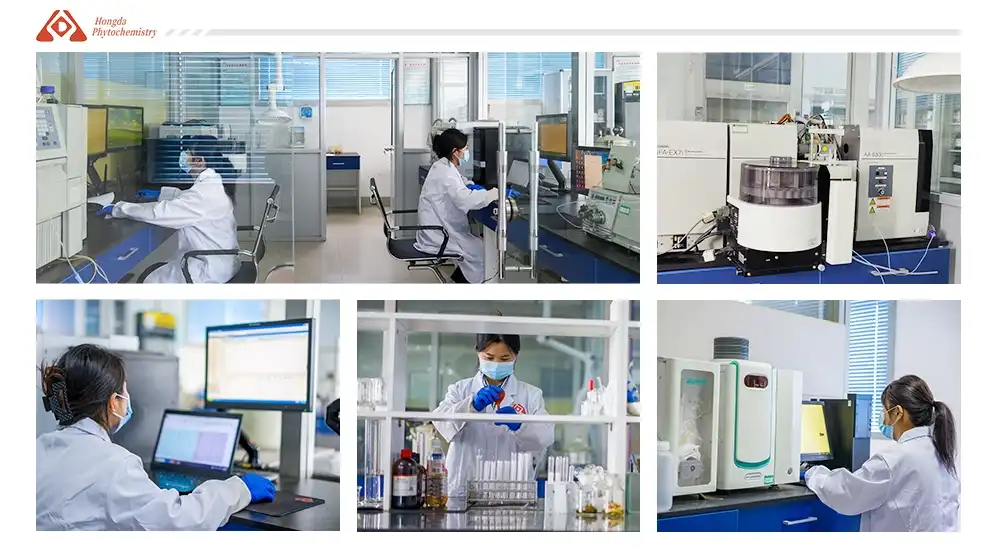
Hongda Phytochemistry's SGS-standardized laboratory—co-developed with university professors—houses more than 20 senior R&D and QC personnel alongside an instrument suite that includes high-performance liquid chromatographs, gas chromatographs, atomic absorption spectrophotometers, spectrophotometers, and automatic titrators. Every batch of liposomal glutathione powder is tested for HPLC assay purity, moisture content, heavy metals (Pb, As, Cd, Hg), pesticide residue multi-screen, and full microbiological panel before release. Full Certificates of Analysis accompany every shipment, with third-party verification available through accredited external laboratories. This is the kind of documentation infrastructure that pharmacy chains, EU retailers, and US supplement brands require — and that many ingredient suppliers cannot reliably deliver. [2][4][5]
Certifications That Open Regulated Markets
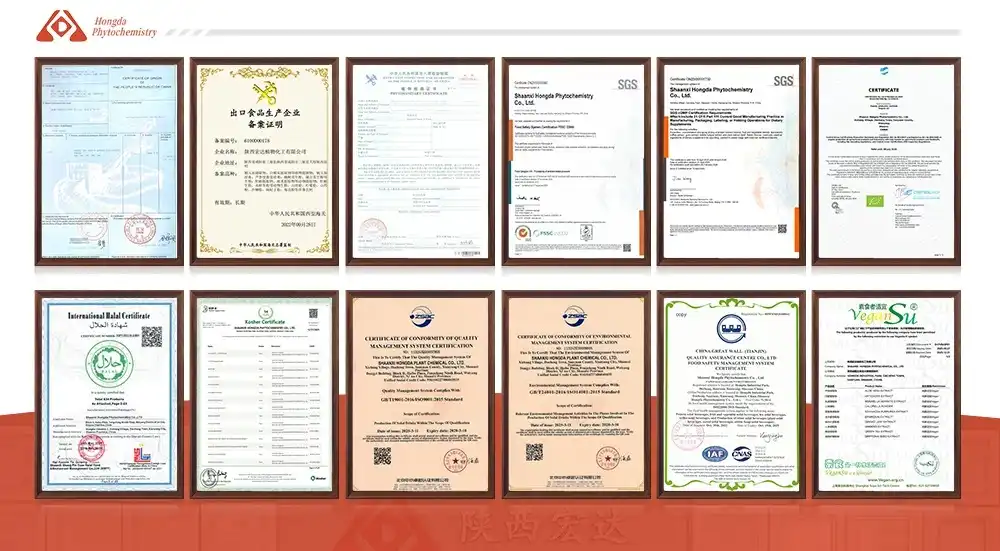
Hongda's certification portfolio has grown substantially in scope since 2001. Between establishment and 2024, the company secured its national high-tech enterprise designation, food production licenses, halal certification, kosher certification, BRC grade, FDA registration, and organic certification. In 2025 alone, Hongda added cGMP certification, FSSC 22000, ISO 22000, ISO 9001, and both EU Organic and NOP Organic certification. For buyers targeting US and European distribution — markets where regulatory documentation is increasingly scrutinized at the retail and e-commerce platform level — this certification stack is a meaningful commercial asset. It means that sourcing from Hongda does not require a second-stage compliance gap-fill; the paperwork that opens doors to Whole Foods, Amazon, Chemist Warehouse, and similar high-demand channels is already in place.
| Quality Attribute | Minimum Acceptable Standard | Hongda Delivery |
|---|---|---|
| GSH Assay Purity (HPLC) | ≥98% | ≥98% verified per batch |
| Heavy Metals | Meets USP <232> / EU limits | Tested: Pb, As, Cd, Hg per batch |
| Pesticide Residues | Multi-residue screen | Full screen before shipment |
| Microbiological Safety | TPC, Yeast/Mould, Pathogens | Full panel with COA |
| Encapsulation Efficiency | Documented per lot | SGS-lab validated |
| cGMP Certification | Required for pharma channels | Obtained 2026 |
| EU / NOP Organic | Required for organic-label SKUs | Both certifications held |
Conclusion
Demand for liposomal glutathione powder is not a trend—it is a structural shift in how the supplement industry thinks about bioavailability, efficacy claims, and the credibility of an antioxidant ingredient. Brands that understand the features driving this shift—absorption technology, application versatility, and supplier quality depth—are building products with durable competitive advantages. Shaanxi Hongda Phytochemistry Co., Ltd., with 24 years of manufacturing experience, a 2025-strengthened certification portfolio, and a laboratory infrastructure few competitors match, is positioned to be the long-term supply partner for brands serious about getting liposomal glutathione right.
FAQ
Q1: What specific features make liposomal glutathione powder more in demand than regular GSH?
A1: Primarily superior bioavailability (up to 5× higher blood levels), powder-format stability for capsule and functional food use, and the ability to support clinical efficacy claims that standard oral GSH cannot credibly make.
Q2: Which industries are growing demand for liposomal glutathione powder the fastest?
A2: As of 2025, the three fastest-expanding segments are skin-brightening nutraceuticals in the Asia-Pacific, immune-support supplements globally, and functional beverages.
Q3: Can Hongda supply wholesale pure glutathione powder as well as the liposomal form?
A3: Yes. Hongda supplies both standard reduced glutathione powder and the liposomal form, with an annual production capacity of 3,000 tons to reliably fulfill large-volume orders.
Q4: What certifications does Hongda hold that matter for US and EU distribution?
A4: FDA registration, cGMP (2025), FSSC 22000, ISO 9001, ISO 22000, BRC, Halal, Kosher, and both EU Organic and NOP Organic — covering the major compliance requirements for North American and European retail and pharmacy channels.
Q5: How is Hongda's liposomal glutathione powder tested before shipment?
A4 ;Every batch is tested in the SGS-standardized laboratory for HPLC purity, heavy metals, pesticide residues, moisture, microbiological safety, and encapsulation efficiency, with a Certificate of Analysis provided on delivery.
Source Smarter, Formulate Better | HONGDA
If you're evaluating ingredients for a new glutathione-based product—or rethinking an existing formulation—Hongda Phytochemistry offers the technical documentation, certified manufacturing infrastructure, and formulation support to move your project forward with confidence. From first sample to full-scale purchase order, the team is ready to work with you. Whether you're working with Liposomal Glutathione Powder or other advanced antioxidant systems, selecting the right delivery form early can significantly improve stability and absorption outcomes. Don't let a supplier gap become a product gap. Contact us today: duke@hongdaherb.com
References
1. Sinha, R., Sinha, I., Calcagnotto, A., Trushin, N., Haley, J. S., Schell, T. D., & Richie, J. P. (2018). Oral supplementation with liposomal glutathione elevates body stores of glutathione and markers of immune function. European Journal of Clinical Nutrition, 72(1), 105–111.
2. Schmitt, B., Vicenzi, M., Garrel, C., & Denis, F. M. (2015). Effects of N-acetylcysteine, oral glutathione (GSH), and a novel sublingual form of GSH on oxidative stress markers. Redox Biology, 6, 198–205.
3. Richie, J. P., Nichenametla, S., Neidig, W., Calcagnotto, A., Haley, J. S., Schell, T. D., & Muscat, J. E. (2015). Randomized controlled trial of oral glutathione supplementation on body stores of glutathione. European Journal of Nutrition, 54(2), 251–263.
4. Nguyen, H., & Torres, J. L. (2023). Advances in liposomal delivery systems for antioxidant nutraceuticals: encapsulation efficiency and clinical outcomes. Journal of Nutritional Biochemistry, 112, 109218.
5. Forman, H. J., Zhang, H., & Rinna, A. (2009). Glutathione: overview of its protective roles, measurement, and biosynthesis. Molecular Aspects of Medicine, 30(1–2), 1–12.
6. Allen, J., & Bradley, R. D. (2011). Effects of oral glutathione supplementation on systemic oxidative stress biomarkers in human volunteers. Journal of Alternative and Complementary Medicine, 17(9), 827–833.