




That’s the subtle concept of purity that every NMN product is founded on. It doesn't matter how beautifully the powder is packed or how brilliant the label is if there's manufacturing waste in it. So what contaminants do the vendors need to remove when they make liposomal NMN powder for supplement companies? The list is longer than most purchasers expect: related nucleotides and nicotinamide, residual proteins and endotoxin, reaction reagents and solvents, heavy metals, microorganisms, and products of lipid breakdown.[3][4][5][6] Shaanxi Hongda Phytochemistry Co., Ltd., also known to consumers as Hongda Phytochemistry, provides liposomal NMN powder. The firm features a 20,000 square meter plant, more than ten manufacturing lines, a purification workshop at 100,000 level, and an SGS-standard laboratory. This guide describes how to regulate each category of impurity, how to control it, and what evidence to ask for.
Why Purity Decides Whether a Liposomal NMN Powder Earns Its Place
Hongda's Purification Capacity Behind the Powder
The purification stage may make or break a clean substance. Hongda Phytochemistry has a 100,000-level cleaning workshop and more than 10 sophisticated manufacturing lines, and can handle over 3,000 tons of materials each year. More than 150 workshop staff assist in operating the facility. Every lot is tested for pesticides, dampness, heavy metals, additives, and microorganisms before being sent. At the SGS-certified lab, over twenty research and development (R&D) professionals work with high-performance liquid chromatographs and spectrophotometers, which are standard tools in nucleotide purity work. Certifications such as FSSC 22000, ISO 22000, cGMP, FDA, halal, and kosher assist US and European brands in tracing the source of their products. This architecture reveals that liposomal NMN powder is a method for a brand, not an accident.
What "Purity" Really Means for NMN
A single pure number may conceal several things. The purity of NMN is usually expressed as % area or % weight of the primary peak by HPLC. This doesn't tell you anything about the remainder of the compounds. Is it water, salts, comparable nicotinamide, nucleotides, or solvents that remain? It is much more difficult in the case of liposomal NMN powder. This is because the powder contains lipid and carrier as well; thus, the NMN is just a minor portion of the bulk. Buyers are therefore advised to ask for the NMN content of the final powder, the purity of the NMN raw material used in its manufacture, and a list of any impurities identified in each. This two-sided perspective lets you tell whether a number on the certificate actually implies "clean" or is merely a lovely way of saying the info.[4]
Reading the Landscape: NMN, NMNH, and Yellow Powders
Most purchasers don’t realize how many varieties of nicotinamide mononucleotides there are. The reduced version of NMNH is sometimes offered as a yellow powder. It is more susceptible to oxygen than normal NMN; hence, it has a distinct impurity profile and handling requirements. Sometimes, brands would consider both an NMN source and a China NMNH yellow powder for the formulation provider to evaluate which one matches their product concept better. Whatever you do, keep the data sets separate. Each molecule has a collection of related compounds, ways it breaks down, and constraints on how long it can remain stable. Regulatory status also varies from market to market, so verify the regulations in your region before you start. The language used in this impurity guide applies to both, although the figures and the limits of acceptability are element-specific. Clear directions for China NMN yellow powder for formulation suppliers will keep things clear for the future and help you communicate to suppliers about the proper chemical.
Process-Related Impurities: What Remains From Making NMN
Nicotinamide, Nicotinic Acid, and Related Nucleotides
The most prevalent impurities of NMN are highly similar compounds. Related compounds may include nicotinic acid and nicotinamide riboside. Enzyme pathways may pass through nucleotides such as NAD+, AMP, or ADP. Free nicotinamide may be a by-product of synthesis or of degradation of NMN. It is also vital to not use the incorrect anomer when manufacturing compounds, alpha NMN instead of beta NMN. Removal is done by chromatography, crystallization, and careful monitoring of the reaction. Verification is done by an HPLC approach, which allows the separation of each peak. For liposomal NMN powder, suppliers should declare these associated compounds as part of the raw material, and prove that they do not increase when liposomes are formed and dried. Nicotinamide is also a degradation product; therefore, the amount present is one of the first indications of how well the powder has been handled.[3][4]
Proteins, Enzymes, and Biological Residues
If NMN is produced by enzymes or fermentation, the residual proteins, enzymes, nucleic acids, and cell debris must be removed. These leftovers not only reduce purity but may also create quality issues such as endotoxin and bacterial growth. Common cleanup procedures include filtration, ultrafiltration, adsorption, ion exchange, and crystallization. Total protein and residual DNA, if necessary, are then assayed. While the actual procedure may be a secret, a responsible China nmnh yellow powder formulation manufacturer should be able to tell you about the path it follows and how each waste is treated. For liposomal NMN powder, you want to know whether the NMN raw material was produced by enzymatic, fermentation, or chemical method and request the impurity data associated with it. A provider that understands their process will offer you direct answers.
Reagents, Solvents, and Inorganic Salts
Some of the stuff that is employed in the chemical and biological procedures has a lengthy life. The decomposition products of phosphorylating agents are either phosphate or chloride. Crystallization may leave residues of organic solvents such as methanol or ethanol, and mineral salts might give the impression of a heavier powder. These are removed by the providers by washing, recrystallization, vacuum drying, and ion exchange. They verify the result by checking for residual solvents using gas chromatography and ion or conductivity tests. This kind of control may be done using gas chromatographs and automated titrators, which are in the lab at Hongda Phytochemistry. When you are looking at publications concerning liposomal NMN powder, you need to be looking for ICH Q3C type leftover solvent data and a list of all the solvents that go into the process. A clear liquid profile is beneficial for product safety, and it gets it past customs.[1]
|
Impurity Group
|
Typical Source
|
Removal Approach
|
Common Check
|
|---|---|---|---|
|
Nicotinamide, nicotinic acid, nicotinamide riboside
|
Synthesis by-products and degradation
|
Chromatography, crystallisation
|
HPLC related substances
|
|
Other nucleotides (NAD+, AMP, ADP)
|
Enzymatic route carry-over
|
Ion exchange, purification
|
HPLC
|
|
Proteins and nucleic acids
|
Enzymes and host cells
|
Filtration, adsorption
|
Protein assay, residual DNA
|
|
Reagent residues and salts
|
Phosphorylation and buffers
|
Washing, recrystallisation
|
Ion tests, conductivity
|
|
Organic solvents
|
Crystallisation and extraction
|
Vacuum drying
|
GC headspace
|
Want the impurity data behind a lot? Email duke@hongdaherb.com with your target specification, and ask the Hongda team what documentation is available for China NMNH yellow powder for the formulation manufacturer before you request samples.
Carrier-Related Impurities: What Comes From the Liposome
Residual Solvents From Liposome Preparation
Some ways of making liposomes dissolve lipids with ethanol or other organic solvents, which need to be removed before processing and drying. The limits for residual solvents are set by pharmacopeia, and results should be given for each lot. If a buyer wants to know which solvents are used in the carrier step and how they are removed, they should ask a China NMNH yellow powder formulation supplier. This is true whether the product is a standard NMN or an NMNH-based concept. Longer holding times, vacuum drying, and freeze-drying all help, and gas chromatography proves the result. For liposomal NMN powder, the solvent data should be on the certificate along with the NMN test and moisture, since a powder with high NMN content but no solvents reported is only half documented. It is also easier to get approvals in the US and Europe when reporting is clear.
Oxidised Lipids, Lysophospholipids, and Free Fatty Acids
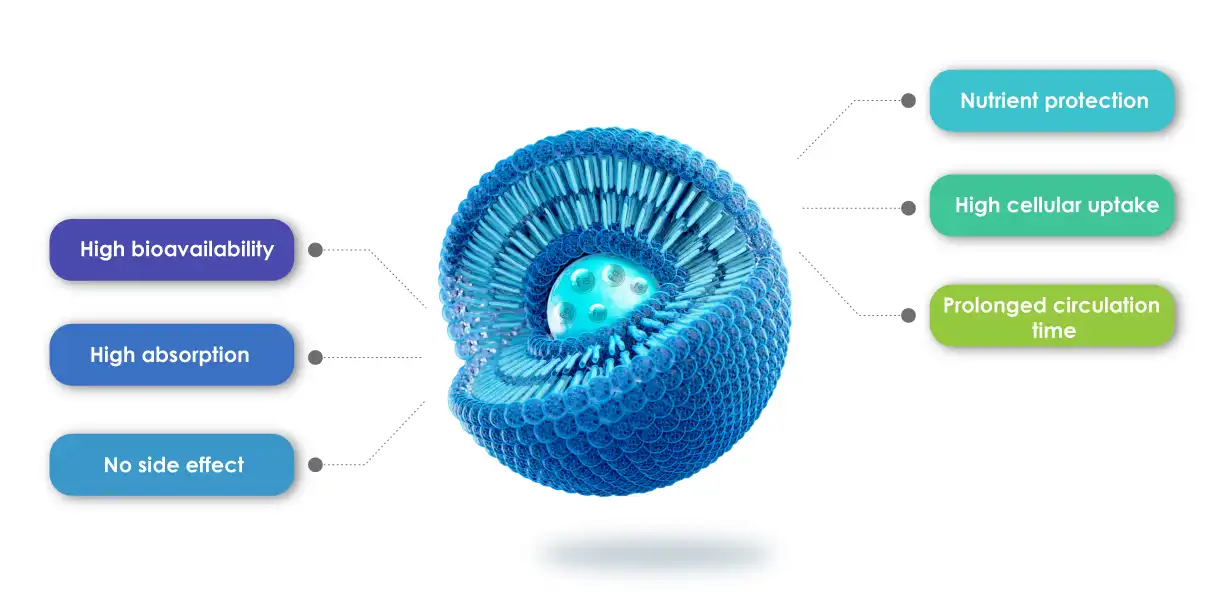
Lipids get old. Oxygen turns phospholipids into lysophospholipids and free fatty acids, and water turns them into peroxides and aldehydes. Each of these breaks down the vesicle and may change the smell or taste. Good suppliers start with high-quality phospholipids, keep them safe with antioxidants and low-oxygen handling, make sure there isn't a lot of moisture in the product, and keep an eye on the peroxide value, acid value, and lysophospholipid content. People who want to buy liposomal NMN powder can ask for these signs to be on it and then compare them between batches. Fresh, well-managed lipids help keep particles stable and at a better size, so lipid quality is more than just a matter of appearance. Hongda Phytochemistry can talk with technical teams about lipid specifications. This helps make sure that the carrier doesn't become the weak point of an otherwise well-purified ingredient.[5][6]
Lecithin Source, Allergens, and Agricultural Residues
Phospholipids come from plant-based materials, so where they come from is important. Soy lecithin is common, but it can cause problems when it comes to labeling allergens. Sunflower lecithin is a popular option for brands that don't use soy. Because contaminants in the carrier end up in the finished powder, you should ask for a source statement, a GMO statement, and pesticide residue data for the lipid. Before sending its goods out, Hongda Phytochemistry checks them for pesticide residues, heavy metals, and microorganisms. The company's three planting bases and agronomist oversight are part of a larger culture of being able to track products from the field. Clear allergen and origin documents for liposomal NMN powder going to the US and Europe keep things running smoothly at the border and reassure retailers who ask tough questions about where the ingredients come from. People rarely talk about these things in marketing writing, but they are what make or break an ad.
|
Impurity
|
Source
|
Control
|
Typical Test
|
|---|---|---|---|
|
Residual ethanol or solvents
|
Lipid dissolution step
|
Vacuum or freeze-drying
|
GC headspace
|
|
Peroxides and aldehydes
|
Lipid oxidation
|
Antioxidants, low-oxygen handling
|
Peroxide value
|
|
Lysophospholipids, free fatty acids
|
Hydrolysis
|
Low moisture, fresh lipids
|
Chromatography, acid value
|
|
Allergen and GMO status
|
Lecithin source
|
Source declaration
|
Documentation review
|
|
Pesticide residues
|
Agricultural lipid
|
Supplier qualification
|
Multi-residue screening
|
Contaminants and Proof: Metals, Microbes, and Documents
Heavy Metals and Elemental Impurities
Water, other materials, or catalysts may be the source of heavy metals such as mercury, arsenic, cadmium, and lead in a process. They are regulated by suppliers who ensure that inputs are certified, that the proper materials are utilized for the equipment, and that each batch is checked with ICP or atomic absorption. Hongda Phytochemistry’s lab tests for heavy metals before shipping using atomic absorption equipment. Buyers should compare the findings to what the target market can pay, and ask for statistics, not just a “pass” declaration. When searching for liposomal NMN powder, you need to examine whether metals are tested in the NMN source material, the lipid, and the final powder. Any contamination at any point matters. Trace metals can serve as oxidation catalysts; therefore, low quantities are desirable for stability and safety. This exam is crucial to read on all certifications since it offers two advantages.[2][6]
Microbes and Endotoxin Control
Moisture-sensitive powders are a great place for germs to develop if not handled carefully. Every certificate should include a total plate count, yeast and mold, and pathogen testing. There’s another safety check when they employ biological routes: testing for endotoxins. Hongda Phytochemistry claims sterilizing in every storage location is controlled by specialists. All of this—clean-room regulations, sterile storage, and sealed packaging—limits the danger. For liposomal NMN powder, bacterial data should be collected by established pharmaceutical techniques, and purchasers should make sure testing is performed on each lot, not just one time per year. In addition to these restrictions, low moisture and proper packing protect the powder throughout lengthy periods of storage and shipment. If a supplier can’t offer credible bacteria and endotoxin data, it is as critical as if they didn’t have a test.
The Specification and Documents That Prove Removal
But the removal of poisons is credible only if it can be shown. Request a sheet of acceptability limits for NMN assay, associated compounds, solvents, metals, microbiological, and, if applicable, endotoxin, with a certificate of analysis for each lot and technique descriptions. Try multiple suppliers of NMNH yellow powder for formulation. Ask each for the same sheets. Then place them side by side. Hongda Phytochemistry is a National High-tech Enterprise with a commercial history from 2001. It has BRC, FDA, organic, cGMP, and ISO 9001 certifications for brands in US and EU markets. Consider a separate test on the initial batch of liposomal NMN powder. Do this on a regular basis. The comparison will make a seller delighted when he is certain of his cleanliness.
|
Specification Section
|
What to Request
|
Why It Matters
|
|---|---|---|
|
NMN assay and purity
|
Numeric HPLC result with method name
|
Confirms content and main-peak purity
|
|
Related substances
|
Nicotinamide, riboside, nucleotides
|
Shows how well the process was cleaned up
|
|
Residual solvents
|
GC results for each solvent used
|
Safety and import clearance
|
|
Heavy metals
|
ICP or atomic absorption values
|
Safety and oxidation control
|
|
Microbiology and endotoxin
|
Per-lot results
|
Safety during storage and shipping
|
|
Lipid quality
|
Peroxide value, acid value, source declaration
|
Carrier integrity and labelling
|
Conclusion
To obtain clean liposomal NMN powder, three types of impurities need to be removed: process-related impurities (nicotinamide, related nucleotides, proteins, reagents and solvents), carrier-related impurities (allergens, heavy metals and microbes), and contaminants (heavy metals, microbes and endotoxin). Each household has its own test and means of getting rid of stuff, and each should have its own line on the standard form. Shaanxi Hongda Phytochemistry Co., Ltd. has a factory of 20,000 square meters. It has a purification workshop of 100,000 levels, an SGS-standard laboratory, complete testing before export, and worldwide certification. These facilities let businesses in the US and Europe ask better questions, compare actual facts, and launch NMN goods with a purity narrative they can stand behind.
FAQ
1. What is the most common impurity in NMN?
Nicotinamide, which can come from synthesis or from degradation.
2. Which solvents should be tested?
Any solvent used in NMN purification or liposome preparation, by gas chromatography.
3. Why do lipid quality indicators matter?
Oxidised or hydrolysed lipids weaken the vesicles and can affect odour and stability.
4. Is NMNH the same as NMN?
No. NMNH is the reduced form, with its own handling and impurity profile.
5. How can I request documents from Hongda?
Email your specification needs to duke@hongdaherb.com.
Request Purity Data | HONGDA
If purity is a priority for your next NMN product, start with a supplier that tests before it ships and explains its process openly. Shaanxi Hongda Phytochemistry Co., Ltd. offers liposomal NMN powder supported by a modern factory, an SGS-standardized laboratory, ample inventory, and certifications that open doors in the United States and Europe. Tell us your target specification, test methods, and packaging needs, and our specialists will reply with documentation, practical suggestions, and sample options. Whether you are a formulator, an OEM brand, or a distributor, begin today and compare real data before you commit. Write to duke@hongdaherb.com and let HONGDA support your next launch with transparent, well-documented quality.
References
1. International Council for Harmonisation. ICH Q3C(R8): Impurities: Guideline for Residual Solvents. 2021.
2. International Council for Harmonisation. ICH Q3D(R2): Guideline for Elemental Impurities. 2022.
3. Yoshino J, Baur JA, Imai SI. NAD+ Intermediates: The Biology and Therapeutic Potential of NMN and NR. Cell Metabolism. 2018;27(3):513-528.
4. Marinescu GC, Popescu RG, Stoian G, Dinischiotu A. Beta-Nicotinamide Mononucleotide (NMN) Production in Escherichia coli. Scientific Reports. 2018;8:12278.
5. Grit M, Zuidam NJ, Underberg WJM, Crommelin DJA. Hydrolysis of Partially Saturated Egg Phosphatidylcholine in Aqueous Liposome Dispersions and the Effect of Cholesterol Incorporation on Hydrolysis Kinetics. Journal of Pharmacy and Pharmacology. 1993;45(6):490-495.
6. Waraho T, McClements DJ, Decker EA. Mechanisms of Lipid Oxidation in Food Dispersions. Trends in Food Science & Technology. 2011;22(1):3-13.