


_1745918362135.webp)

What Makes Liposomal Vitamin C Bulk Popular Among Brands?
Liposomal vitamin C bulk has gone from being a niche interest to one of the most sought-after raw materials in the global nutraceutical, cosmetic, and functional food supply chain. Hongda Phytochemistry is becoming more and more popular among brand owners who need to buy large amounts of it to ensure a steady supply of high-quality product. Over the past twenty years, Shaanxi Hongda Phytochemistry Co., Ltd. has built a strong reputation by combining cutting-edge phospholipid encapsulation science with the manufacturing skills that serious buyers around the world look for in a long-term supplier. If sourcing teams want to know why this ingredient is used in so many new products, the answer lies in nutrition science, approved manufacturing, and being able to deliver on a large scale without losing stability from batch to batch. The reasons why liposomal vitamin C bulk from Hongda Phytochemistry is a popular choice for supplements, skin care, and drink brands around the world are explained in this piece.
The Science Behind Liposomal Vitamin C Bulk's Rising Demand
Phospholipid Encapsulation Technology Driving Results
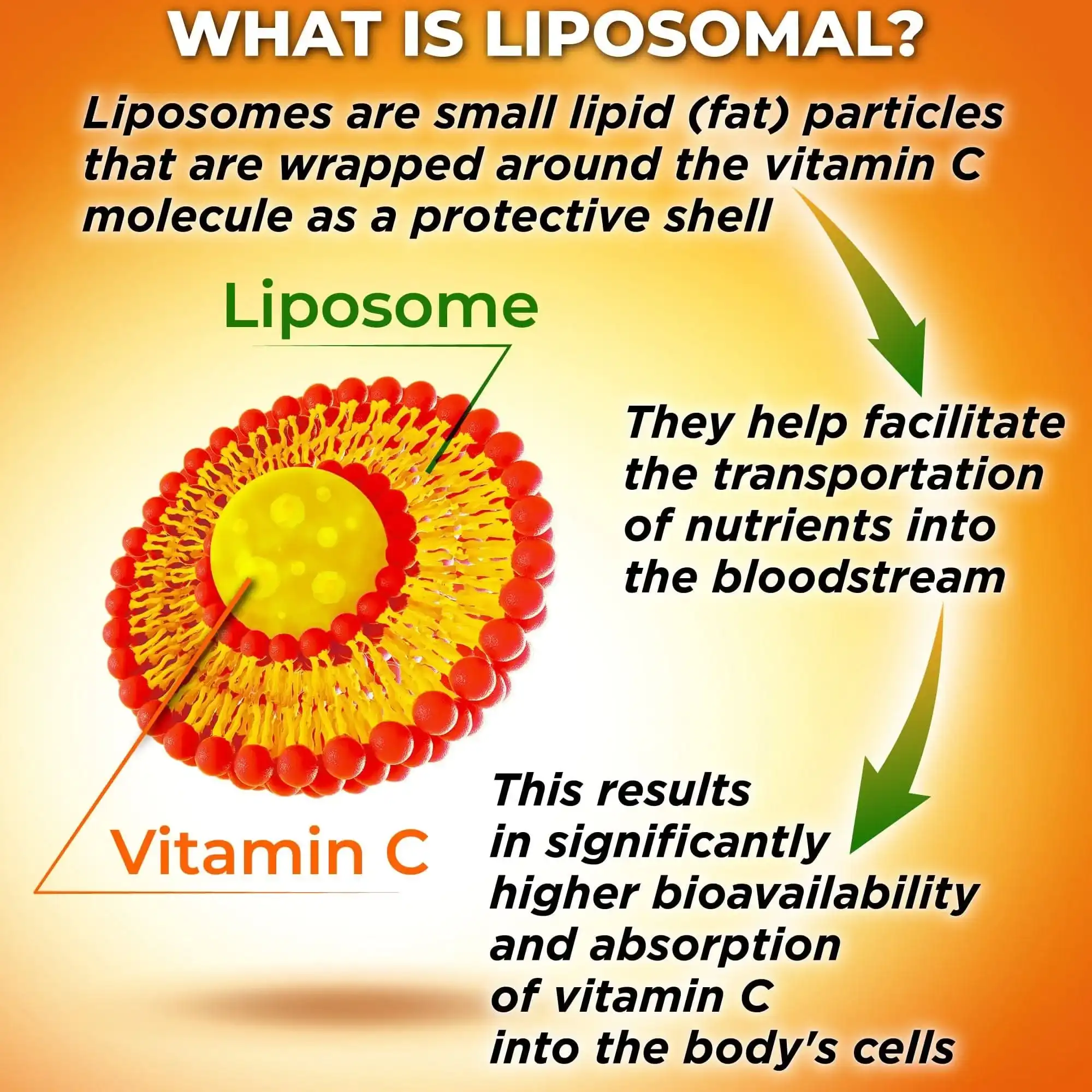
A phospholipid bilayer that looks like a natural cell membrane is at the heart of every batch of liposomal vitamin C bulk. Using a process that combines thin-film hydration and ultrasonic nano-shearing, ascorbic acid molecules are packed into these very small vesicles, which are usually between 100 and 250 nanometers across. The biomimetic shell is what makes liposomal vitamin C different from regular ascorbic acid or sodium ascorbate powders. It protects the active ingredient from the hard conditions it would otherwise face during digestion. Brands that make high-end products use this process to back up a better bioactivity claim than regular vitamin C can.[1][2]
Bioavailability Gains That Set Liposomal Vitamin C Bulk Apart
The main reason brands choose liposomal vitamin C bulk over regular powders is that it works better at absorption. Bioavailability can be six to ten times higher than with regular vitamin C forms because the phospholipid shell keeps ascorbic acid from breaking down in the stomach and takes it straight to the membranes of cells. That difference is important for business because it lets the finished product make a credible superiority claim on the label, supports lower effective dosing, and lowers the stomach pain that some customers associate with high-dose ascorbic acid supplementation. This absorption advantage is often the deciding factor for formulators who want to stand out in the vitamin C category, which is already very crowded.[1][5]
Nanoscale Particle Consistency Brands Can Rely On
A good ingredient can be made into something else by making sure the particles are all the same size. Hongda Phytochemistry uses microfluidization and high-pressure mixing to keep particle sizes between 100 and 250 nanometers. This way, every batch of liposomal vitamin C mass has the same encapsulation performance. Encapsulation rates are kept above 90%, which means that the vast majority of the ascorbic acid is safely contained within the liposome and not floating around in the powder. That certainty takes away a lot of the guessing that comes with getting a technically advanced item from a source that the brand's quality assurance team doesn't know.[2]
From Raw Material to Stable Powder: The Production Journey
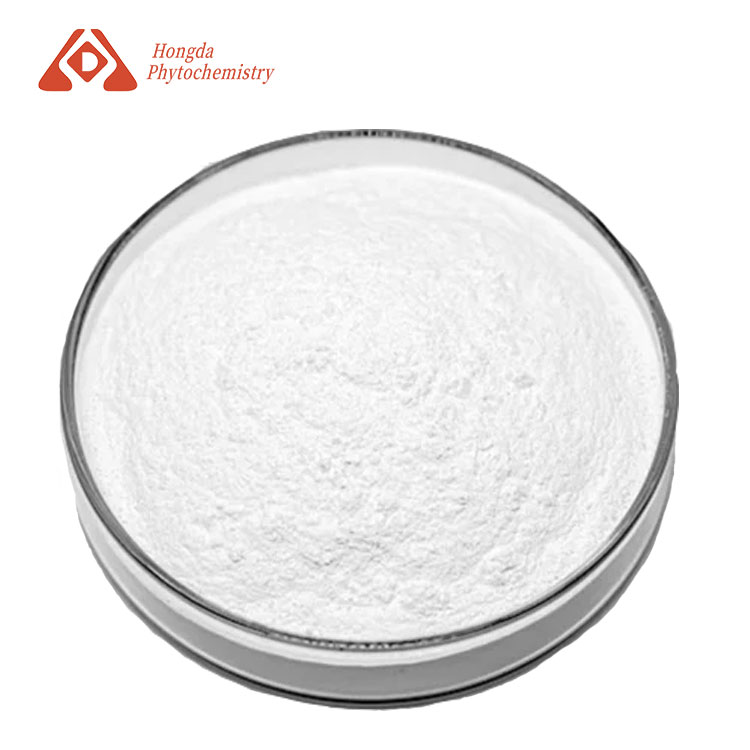
A delicate step is needed to turn a liposomal suspension into a powder that can be stored for a long time. This is where many smaller producers have trouble. Controlled low-temperature spray drying turns the liquid into a fine, light yellow to white powder. During this process, cryoprotectants keep the liposome structure whole while the temperature changes. This makes a liposomal vitamin C bulk product that can be kept at room temperature for up to three years without losing its capsule integrity. This gives brands the convenience of a regular powder while also giving them the performance of an advanced delivery system.[2][3]
Why Global Brands Choose Hongda Phytochemistry as a Liposomal Vitamin C Powder Manufacturer?Two Decades of Manufacturing Expertise
Shaanxi Hongda Phytochemistry Co., Ltd. has been around since 2001 and has spent more than twenty years improving the ways that liposomal vitamin C bulk and other plant extracts are made. The plant is about 20,000 square meters big and has more than ten modern production lines as well as 100,000-level cleaning workshops. This means that it can handle large orders without having to hire outside production companies. The company's product lines can make up to 3,000 tonnes of goods every year, and in 2010 it was named a National High-Tech Development Enterprise. Because of this scale, a lot of brands now say that Hongda is their favorite liposomal vitamin C powder maker.
Certifications That Open International Markets
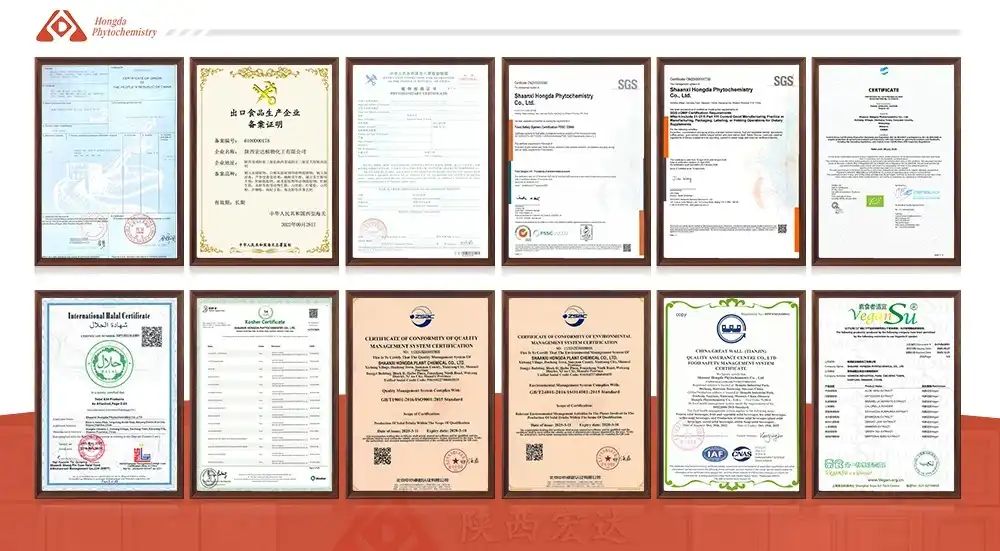
When a brand has to choose between providers, regulatory readiness is often the deciding factor. Hongda has put a lot of money into this area. The business has cGMP, FSSC22000, ISO9001, and ISO22000 certifications, as well as EU and NOP organic certifications, halal and kosher certifications, BRC certifications, and FDA certifications. These credentials are not just for show; they are what make it possible for liposomal vitamin C bulk made in Shaanxi to meet import requirements in North America and Europe without the delays that come with buying from suppliers who haven't been tested. This certification portfolio makes the due diligence process much faster for a compliance worker looking at new providers.
In-House Research and Testing Capabilities
Every shipment of liposomal vitamin C bulk is backed by a testing system that was built with the help of university researchers and an SGS-certified lab. High-performance liquid chromatographs, gas chromatographs, spectrophotometers, atomic absorption spectrophotometers, and automatic titrators are just some of the tools that more than twenty professor-level researchers and technicians use. Two specialized R&D centers are still working to improve the safety and efficiency of packaging. Ingredient purity, herbicide residues, moisture content, heavy metals, and microbe load are all checked against international standards before any product leaves the plant. This gives brands proof to back up their quality claims later on.
Reliable Supply Chain and Warehousing
When planning a launch calendar, it's just as important for a brand that products are always available as they are that the products are good. Hongda's warehouse is about 3,000 square meters and is divided into six separate storage areas. For example, liposomal vitamin C, bulk, and other vitamin and amino acid products are kept in a climate-controlled area separate from fruit and vegetable powders and plant extracts. This group helps ensure on-time shipping even when there is a lot of demand around the world. If a brand wants to talk about order amounts, secret recipe requests, or sample packages, they can email the technical sales team at duke@hongdaherb.com and start a sourcing conversation right away, without having to go back and forth.
Liposomal Vitamin C Specification
|
Item
|
Specification
|
Test result
|
Test Method
|
|
Vitamin C
|
50%-55%
|
53.38%
|
HPLC
|
|
Appearance
|
White to pink powder
|
Complies
|
Visual
|
|
Odor and Taste
|
Characteristic
|
Complies
|
Sensory
|
|
Loss on Drying
|
≤5%
|
1.60%
|
Ch.P2020
|
|
Residue Solvents
|
Ethanol ≤ 5000ppm
|
Complies
|
GC-HS
|
|
Heavy metal
|
Lead (Pb) ≤3ppm
|
Complies
|
ICP-MS
|
|
Arsenic (As) ≤3ppm
|
Complies
|
ICP-MS
|
|
|
Cadmium(Cd) ≤1ppm
|
Complies
|
ICP-MS
|
|
|
Mercury(Hg) ≤0.1ppm
|
Complies
|
ICP-MS
|
|
|
Total Plate Count
|
≤1000cfu/g
|
Complies
|
USP-NF 2022
|
|
Yeast&Mould
|
≤100cfu/g
|
Complies
|
USP-NF 2022
|
|
E.coli
|
Negative
|
Negative
|
USP-NF 2022
|
|
Salmonella/25g
|
Negative
|
Negative
|
USP-NF 2022
|
|
Staphylococcus Aureus
|
Negative
|
Negative
|
USP-NF 2022
|
|
Storage
|
Preserve in a well-closed, light-resistant, and protect from moisture.
|
||
|
Packing
|
20kg/drum.
|
||
|
Shelf life
|
2 years.
|
||
Application Versatility Across Nutraceutical, Cosmetic, and Functional Food SectorsSupplement Formulations Benefiting from Liposomal Vitamin C Bulk
Liposomal vitamin C bulk is good for supplement formulations.
Liposomal vitamin C bulk is still mostly used in immune support supplements because it works better than regular ascorbic acid at supporting the activity of white blood cells because it binds to lymphocytes and phagocytes. Companies make capsules, sachets, or fizzing forms like this ingredient because it lets them use a lot less material per dose while still making a strong functional claim. Formulators also like how the powder mixes easily with other active ingredients. This makes it easier to go from a bench formulation to a full production batch without any problems with stability that were not expected.
Cosmetic and Skincare Uses
Normal vitamin C breaks down quickly when it's not in the body, so skin care product makers have had a hard time keeping it stable for a long time. The liposomal structure of bulk liposomal vitamin C stops this oxidative breakdown. When added to serums, creams, or masks, it helps lighten color and make skin appearance better. The nanoscale delivery system also lets the active ingredient get through the skin barrier better than water-soluble vitamin C by itself. This is a feature that skincare brands are emphasizing more and more in their ads when this ingredient is in the formula.[4]
Functional Food and Beverage Integration
Functional food and drink companies have a constant problem: they have to figure out how to add vitamin C to a product without making it taste sour or metallic or losing its effectiveness during processing. Liposomal vitamin C bulk solves both issues because the phospholipid coating hides a lot of the acidity that is normally found in ascorbic acid and keeps the active ingredient safe during pasteurization and storage. This makes it a good choice for adding to ready-to-drink drinks, sweets, and powdered drink mixes where both taste and security are important for the success of the final product.[6]
Custom Formulation Support for Brand Differentiation
Private-label and contract-manufactured products from a liposomal vitamin C powder manufacturer are competing more on recipe detail than just price. Brands often ask for changes to particle size, capsule ratio, or blend fit so that the products can work with their unique needs. The R&D team at Hongda works with customers to make sure that the liposomal vitamin C bulk specs are right for the final product, whether that's a high-potency tablet, a beauty liquid, or a drink premix. Small- and medium-sized brands can get the kind of recipe customization that would normally require a much bigger minimum order from other providers because of this.

What Sets Hongda Apart as a Trusted Liposomal Ingredients Supplier?
Quality Control From Planting Base to Finished Powder
Traceability starts a long time before liposomes start to work. Hongda has three specific growing bases: a high-mountain green tea base, a Sophora japonica bean base, and a Chinese medicine material base. Each base is overseen by professional agronomists who make sure that the quality standards for the raw materials are always met. Hongda is seen by brands as a reliable source of liposomal ingredients rather than just a trade middleman because of this upstream control. In theory, each batch of finished liposomal vitamin C bulk can be tracked back through its buying chain. This backs up the claims of openness that many foreign brands now have to make for their own retail partners.
Packaging, Shelf Life, and Logistics Reliability
After being encapsulated and dried, liposomal vitamin C bulk is packed in 12 kg drums, with 27 drums per pallet. This is done so that international goods can be moved quickly. If you store the powder at -20°C, it will last for three years. This gives brands plenty of time to plan their production without having to rush through their stock. Standard delivery times for in-stock orders are three to seven working days. This means that brands that are growing a successful product line rarely have to deal with the longer lead times that can stop a launch or reorder cycle when they work with smaller regional suppliers.
Traceability and Transparency
Before a package leaves the building, Hongda tests it internally for sanitary safety, chemical residues, wetness, heavy metals, and the identity of the ingredients. These tests are compared to international standards. Buyers usually get this paperwork along with certificates of analysis. This gives brands the paperwork they need to please their own stores, distributors, or government bodies. For a company that sells liposomal ingredients in many foreign markets, this level of strict paperwork is what makes it possible for large orders of liposomal vitamin C to pass through customs and store checks without being held up or asked for more proof over and over again.
Long-Term Partnership Approach
Hongda's technical sales and R&D teams don't treat each order as a one-time deal. Instead, they work with brand partners over multiple product cycles, changing specs as the formulation needs of a brand change. Because Hongda builds relationships with its customers and keeps enough stock on hand to handle sudden demand spikes, many buyers refer to their relationship with the company as a long-term partnership rather than a simple purchase order. For companies that want to grow around a liposomal vitamin C bulk product line for a few years, this consistency is very important for making money.
|
Certification
|
Scope
|
|---|---|
|
cGMP
|
Current Good Manufacturing Practice
|
|
FSSC22000
|
Food Safety System Certification
|
|
ISO9001
|
Quality Management System
|
|
ISO22000
|
Food Safety Management System
|
|
Organic (EU)
|
European Union Organic Standard
|
|
Organic (NOP)
|
USDA National Organic Program
|
|
Halal
|
Halal Dietary Compliance
|
|
Kosher
|
Kosher Dietary Compliance
|
|
BRC
|
British Retail Consortium Global Standard
|
|
FDA
|
U.S. Food and Drug Administration Registration
|
Choosing the Right Liposomal Vitamin C Bulk Partner for Long-Term GrowthEvaluating Manufacturer Credentials
Brands new to sourcing liposomal ingredient supplier products, including liposomal vitamin C bulk, should start by verifying a manufacturer's certification portfolio against the target export market's regulatory requirements. A supplier holding cGMP, ISO22000, and FDA registration alongside organic and religious dietary certifications, as Hongda does, signals that the facility has already passed the scrutiny needed to serve the European and North American nutraceutical markets. This upfront verification saves considerable time compared to discovering a certification gap after a purchase order has already been placed.
Assessing Production Scale and Capacity
Not every supplier of bulk liposomal vitamin C can support a brand's growth from a small pilot order to a multi-ton annual contract. Reviewing a manufacturer's factory size, number of production lines, and annual output capacity gives a realistic picture of whether they can scale alongside a brand's sales trajectory. A facility with more than ten production lines and thousands of tons of annual capacity, such as Hongda's, is generally better positioned to absorb sudden demand increases without extending lead times.
Ensuring Consistent Quality Across Batches
Finally, brands should ask prospective suppliers how they control batch-to-batch consistency for a technically demanding product like liposomal vitamin C bulk. In-house laboratories, university research partnerships, and documented testing protocols for particle size, encapsulation rate, and vitamin C content are strong indicators that a manufacturer can reliably reproduce the same performance profile shipment after shipment, which ultimately protects a brand's own product claims and customer trust over time.
Conclusion
Liposomal vitamin C bulk has become popular among brands because it combines genuine bioavailability science with the practical realities of global sourcing: certified manufacturing, scalable capacity, and traceable quality control. Hongda Phytochemistry brings all three together, backed by more than two decades of experience, a wide certification portfolio, and dedicated R&D support. Brands looking to launch or expand a liposomal vitamin C line gain a partner capable of supporting that growth reliably and transparently.
FAQ1. What makes liposomal vitamin C bulk different from regular vitamin C powder?
The phospholipid bilayer encapsulation protects ascorbic acid from gastric degradation, giving it six to ten times higher bioavailability than conventional vitamin C.
2. What is the vitamin C content in Hongda's liposomal powder?
The product typically contains 50%–55% vitamin C content in a light yellow to white powder form.
3. Can liposomal vitamin C powder be used in cosmetics as well as supplements?
Yes, its oxidation resistance and skin penetration properties make it suitable for serums and creams as well as capsules and beverages.
4. How long can bulk liposomal vitamin C be stored?
When stored at -20°C, the powder carries a shelf life of up to three years without losing encapsulation integrity.
Partner With a Certified Liposomal Vitamin C Bulk Supplier | buy liposomal vitamin c
If your brand is ready to move forward with a dependable liposomal vitamin C bulk supply, Shaanxi Hongda Phytochemistry Co., Ltd. offers certified manufacturing, in-house R&D, and production scale to support supplements, cosmetics, and functional foods. With over twenty years of experience and flexible customization, Hongda can become a long-term extension of your supply chain rather than a one-time vendor. Reach out today at duke@hongdaherb.com to request specifications, certificates of analysis, or a sample shipment, and take the next step toward building your liposomal vitamin C line with a manufacturer trusted by brands worldwide.
References
1. Journal of Liposome Research – Studies on phospholipid bilayer encapsulation and bioavailability of ascorbic acid.
2. International Journal of Nanomedicine – Research on nanoscale particle stability in liposomal nutrient delivery systems.
3. Food Chemistry – Comparative analyses of vitamin C stability in encapsulated versus conventional powder formats.
4. Journal of Cosmetic Dermatology – Clinical observations on topical vitamin C delivery systems and skin pigmentation outcomes.
5. Nutrients (MDPI) – Reviews on vitamin C absorption mechanisms and comparative bioavailability studies.
6. Journal of Food Science and Technology – Research on fortification strategies for vitamin C in functional beverages.