


_1745918362135.webp)

What Production Factors Affect Liposomal Curcumin Powder Quality?
Curcumin, the active ingredient in turmeric, has long been praised for its ability to fight inflammation and free radicals. However, the body has a hard time absorbing plain curcumin. Manufacturers and brand owners are looking to new delivery forms to close the gap between what they say they will do and what they actually do. This is where Hongda Phytochemistry has built its name. Since it was founded in 2001, Shaanxi Hongda Phytochemistry Co., Ltd. has spent more than twenty years improving the science of phospholipid encapsulation. Its Liposomal Curcumin Powder is of high quality because it uses controlled raw materials, precise engineering, sterile manufacturing environments, and is getting more and more international certifications. This article breaks down the specific production factors that make a liposomal formula truly effective versus a regular curcumin extract. It also explains why sourcing teams from all over the world are coming to rely on Hongda's facility for reliable, bioavailable, and export-ready supply.
Raw Material Selection and Curcumin Purity Standards
As soon as the raw curcuminoids and the phospholipid carrier that will hold them are picked, the high-performance Liposomal Curcumin Powder is made. Hongda has special growing bases for different things, like a base for Chinese medicine materials that is watched over by professional agronomists. This way, turmeric sources can be tracked from the farm to the finished product. When combined with non-GMO sunflower phospholipids instead of soy lecithin, which can cause allergies, this method of getting gives formulators a cleaner label and a more consistent curcuminoid dose from batch to batch, which is what all the steps after this one depend on.[6]
Sourcing High-Curcuminoid Turmeric Rhizomes
To make sure the finished powder always has a high-purity active fraction and not a diluted or variable extract, only rhizomes with known curcuminoid content are used in production. These rhizomes are screened before they are extracted. Hongda carefully chooses turmeric raw materials that have stable plant properties and strong active chemical profiles to make sure that the quantity of curcumin stays the same during every production cycle. Before it is used in extraction, each batch of turmeric goes through a strict identification and quality check. This helps reduce natural differences that come from different growing conditions, harvest times, or geographical sources. Formulators can get Liposomal Curcumin Powder through a controlled selection process that guarantees its strength, better recipe accuracy, and reliable performance in finished supplement uses.[6]
Non-GMO Sunflower Phospholipid Carriers
If you choose sunflower phospholipids over soy phospholipids, you can avoid a frequent allergen worry, support clean-label placement in Europe and North America, and still get the bilayer structure you need for a curcumin capsule to work well. Hongda uses carefully chosen non-GMO sunflower phospholipids as the main carrier material because they naturally work well with cell membrane structures and help liposomes form. Sunflower-derived phospholipids have a cleaner ingredient profile than standard carriers. This meets the growing demand for clear and allergen-free formulas. This option also helps brands make high-end goods for people who want ingredients that are plant-based, non-GMO, and accepted around the world, all while keeping the structural stability needed for advanced liposomal delivery systems.

Raw Material Testing Before Production
Hongda's lab checks incoming ingredients for heavy metals, pesticide residue, and wetness before approving them for the production line. This keeps problems with contamination from ever making it to the final recipe. Before encapsulation starts, these first quality checks are a very important safety measure that makes sure that only good raw materials get into the manufacturing process. According to strict internal standards, lab analysis checks the quality, identity, and physical properties of materials that contain turmeric extract and phospholipids. Hongda controls the raw materials at the very beginning of the production process. This lowers the chance of quality changes and gives buyers more faith that every batch of Liposomal Curcumin Powder meets the same high standards for safety, clarity, and performance.
Traceability From Planting Base to Factory
Because farming is overseen directly instead of being outsourced, each output lot can be tracked back to where it was planted. This gives buyers proof of stability and authenticity. Hongda keeps easy-to-see records of the growing of crops, checking of raw materials, extraction, packing, and final wrapping of their products. This makes it easy for quality teams to quickly find the source of any possible problem and check the history of each batch during audits or reviews by regulators. This field-to-factory documentation is very helpful for international buyers who are trying to figure out how reliable a supplier is. This is especially true in markets where ingredient transparency, sustainability, and manufacturing accountability are becoming more and more important buying criteria.
Encapsulation Technology and Particle Engineering
What makes Liposomal Curcumin Powder unique is not the curcumin itself, but the way it is wrapped. Hongda uses phospholipid encapsulation and high-pressure microfluidic shearing to put very pure curcumin molecules into two-layer vesicles that look like the membrane of a human cell. This nanoscale structure is what makes the finished product more bioavailable than regular curcumin powder by more than 40 times. It depends on carefully controlling the shearing pressure, temperature, and vesicle size during every production run, not just one good batch.[1][2][3]
High-Pressure Microfluidic Shearing
Under very high pressure, this mechanical process pushes curcumin and phospholipids through microchannels. This makes regular vesicles that are much smaller and more solid than those made with simple mixing tools. Hongda can exactly control how the curcumin molecules and phospholipid layers interact in the controlled cutting environment. This makes the liposomal structure more consistent across all production batches. Microfluidic technology gives you more control over how particles are spread out, how well they are encapsulated, and how stable their dispersion is compared to traditional mixing methods. This advanced processing step is needed to maintain the health benefits of Liposomal Curcumin Powder. It also makes sure that the end ingredient works well when added to vitamins, functional foods, and other health-focused products.[4][6]
Nanoscale Particle Size Control (100-200nm)
Using dynamic light scattering to measure, the particle size stays steady between 100 and 200nm. This allows for even absorption and stops the problems that happen with lower-grade curcumin powders sticking together. To keep this nanoscale range, you need to carefully manage the formulation ratios, processing pressure, and manufacturing conditions during encapsulation. Hongda keeps an eye on the spread of particles during production to make sure that liposomes stay small and stable enough to have better diffusion properties. When formulators make pills, powders, drinks, and other delivery forms, consistent particle size also helps them get expected performance. Hongda helps make sure that every batch of Liposomal Curcumin Powder keeps the structural quality needed for modern high-performance supplement uses by using advanced testing methods and strict production parameters.[2][5]
Encapsulation Efficiency Benchmarks
More than 90% of the batch must be encapsulated for medicine use, and at least 80% must be encapsulated for food use. We can see this because the TEM and HPLC data show that the curcumin is inside the vesicle and not just moving around with it. High encapsulation efficiency is a key sign of a good liposome because it shows how well the curcumin stays inside the phospholipid body. For every batch, Hongda uses math to make sure that the packing method always works the same way. They don't depend on values for theory construction. Formulators can figure out the right amount of active ingredients to put in finished goods that are sold all over the world. Customers can really see how good the product is this way.[2][3]
Low-Temperature Vacuum Drying
To turn the liquid liposome solution into a solid powder, it needs to be vacuum-dried slowly and at a low temperature. This keeps the phospholipid membrane from breaking down when it gets too hot. Hongda uses controlled drying conditions to keep the liposomal system's original properties while reducing damage to the structure during powder conversion. During production, it is very important to keep an eye on the temperature. Too much heat can make the phospholipids less steady and the transport structure less safe. Hongda uses the best drying settings and constantly checks the quality to make sure that Liposomal Curcumin Powder keeps its good workability, ability to mix well, and ability to stay stable in storage after being processed, shipped, and stored for a long time.
Liposomal Curcumin Specification
|
No.
|
TEST ITEM
|
SPECIFICATION
|
RESULT
|
|||
|
1
|
Description
|
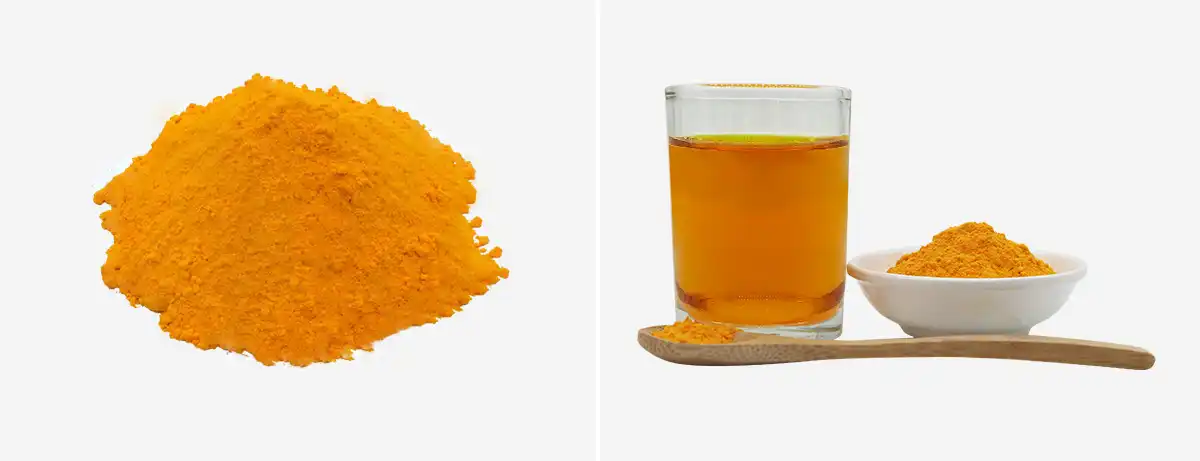
Yellow Powder
|
Conform
|
|||
|
2
|
Particle size (20 mesh)
|
≥90%
|
Conform
|
|||
|
3
|
Loss on drying
|
≤5.0%
|
2.33%
|
|||
|
4
|
Bulk Density
|
Measured value
|
368g/L
|
|||
|
5
|
Tapped Bulk Density
|
Measured value
|
721g/L
|
|||
|
6
|
Heavy Metals
|
Arsenic (As)
|
≤2.0ppm
|
Conform
|
||
|
Lead (Pb)
|
≤0.5ppm
|
Conform
|
||||
|
Mercury (Hg)
|
≤0.3ppm
|
Conform
|
||||
|
Cadmium (Cd)
|
≤0.3ppm
|
Conform
|
||||
|
7
|
Microbiological
|
Total plate count
|
≤10000cfu/g
|
10cu/g
|
||
|
Total molds and yeasts
|
≤1000cfu/g
|
10cfu/g
|
||||
|
Coliforms
|
≤10MPN/g
|
≤0.3MPN/g
|
||||
|
E.Coli
|
Negative/25g
|
Negative
|
||||
|
Salmonella
|
Negative/25g
|
Negative
|
||||
|
Staphylococcvs
|
Negative/25g
|
Negative
|
||||
|
8
|
Assay
|
Curcumin
|
70.0%±5%
|
71.6%
|
||
|
Phospholipids (NON-GMO)
|
15.0%±5%
|
12.9%
|
||||
|
Fatty Acids
|
15.0%±5%
|
13.8%
|
||||
|
Conclusion
|
Meet the in house standard.
|
|||||
Manufacturing Environment and Quality Control Systems
If the setting where the formula is made is not managed, it will not work, even if it is well thought out. Hongda's plant is about 20,000 square meters and has workshops for cleaning to a level of 100,000 as well as more than ten modern production lines. This makes a place to make Liposomal Curcumin Powder that is meant to keep pollution and particle breakdown to a minimum. A lab that meets SGS standards was set up with the help of college teachers to back this up. A team of more than twenty professors works on research and development and testing. They use powerful liquid chromatographs, gas chromatographs, and atomic absorption spectrophotometers to check each batch before it ships.
100,000-Level Purification Workshops
Cross-contamination and particles moving around during closing are less likely to happen when you clean at a cleanroom level. This step is very important for nanoscale liposomal goods because even small amounts of pollution can stop vesicles from forming. The cleaning areas at Hongda's 100,000-level are controlled so that the quality of the products stays high during important handling steps. People keep a close eye on the temperature, humidity, and cleanliness to cut down on outside factors that might make the elements less stable. Liposomes are always made the same way because of these strict rules. Each batch meets the quality standards of supplement makers all over the world. If someone wants to buy the best Liposomal Curcumin Powder, they can trust the process of production more than just lab tests.
SGS Standardized Laboratory Testing
Liposomal Curcumin Powder is closely checked by liposomal curcumin powder manufacturer for germs, heavy metals, pesticide leftovers, and wetness before it is sent out. In this way, every batch meets foreign standards instead of just a few that are checked here and there.
When teams are looking for sources, they often need information before they decide to place a big order. This is where having a straight conversation is very important. Send an email to duke@hongdaherb.com to talk to Hongda's scientific team about production needs that are specific to your product line. You can get customized curcumin loadings, certificates of analysis, or information on MOQ and prices for Liposomal Curcumin Powder.

Batch Consistency Controls
Hongda has tight control over the whole process of making Liposomal Curcumin Powder. They have more than 150 experts who run the workshops and can make 3,000 tons of Liposomal Curcumin Powder every year. You should still be careful even when making a lot of things at once. Every batch goes through quality checks and standard operating procedures to make sure that the particle size, capsule efficiency, curcumin content, and microbe safety are all the same from one production cycle to the next. Each finished batch goes through a number of advanced quality control tests, such as HPLC analysis and other quality checks, before it is sent out to the market. When the supply is this stable, buyers from other countries can be sure that their recipes will still work the same way from lab tests to mass production. This is because the ingredients will still work well and be dependable.
Storage and Warehouse Management
Natural plant preparations, like liposomal products, are kept separate and treated carefully at all stages of the supply chain. They are kept in a 3,000-square-meter building with six different storage areas. Because temperature, humidity, light, and the chance of cross-contamination can all change how stable the ingredients are and how long they last, Liposomal Curcumin Powder needs to be kept in a building that is easy to keep an eye on. Clear product zones, group marking systems, and strict inventory management are some of the organized storage methods that Hongda uses to keep raw materials and finished goods safe before they are shipped. With these steps, the standard of every order stays the same from the time it is made until it is sent anywhere in the world. Customers are less likely to lose money when they ship, clear customs, and plan for long-term inventory needs.
Certifications and International Compliance Standards
Providers of Liposomal Curcumin Powder should have a record of certifications that a third party can check. So, promises of quality don't mean much unless they are backed up by proof from a third party. Hongda has been a national high-tech company since 2001. It has since earned organic, Halal, and Kosher certifications, as well as BRC and FDA certifications. The company got cGMP, FSSC22000, SC, ISO22000, ISO9001, and both EU and NOP organic standards in 2025. They also got a number of new state patents. Now that this list of approvals keeps growing, the Liposomal Curcumin Powder made here can safely sell in controlled markets outside of the country.
People who buy medicines and supplements from all over the world know that the food safety management systems and production methods meet the standards set by cGMP compliance, ISO9001, and ISO22000.
The FSSC22000 standard makes it easier to trust that food is safe, and the dual EU and NOP organic certification lets you sell supplements in the European and American markets, which need very strict tracking of what goes into the products.
|
Certification
|
Status
|
|---|---|
|
National High-Tech Enterprise
|
Awarded 2010
|
|
Food Production License / Halal / Kosher / BRC / FDA / Organic
|
Obtained 2001–2026
|
|
cGMP
|
Newly obtained 2026
|
|
FSSC22000 / SC Certification
|
Newly obtained 2026
|
|
ISO22000 / ISO9001
|
Newly obtained 2026
|
|
Organic (EU) / Organic (NOP)
|
Newly obtained 2026
|
These certifications broaden accessibility for supplement brands targeting Muslim and Jewish consumer markets, confirming that no restricted ingredients or processing methods were used at any production stage.
FDA certification alongside multiple national patent technologies signals that the encapsulation methods behind this Liposomal Curcumin Powder from a liposomal curcumin powder supplier are both regulator-recognized and proprietary, not simply copied from generic industry processes.

Conclusion
Liposomal Curcumin Powder quality is shaped at every stage — raw material sourcing, microfluidic encapsulation, sterile manufacturing, and internationally recognized certification. Shaanxi Hongda Phytochemistry Co., Ltd. controls each of these factors directly, from planting base to shipment, giving supplement brands and formulators a dependable, science-backed ingredient. For companies ready to source a consistently high-bioavailability Liposomal Curcumin Powder, Hongda's combination of scale, R&D depth, and certification coverage makes it a partner worth contacting today.
FAQ
1. What makes Liposomal Curcumin Powder more bioavailable than regular curcumin?
The phospholipid bilayer encapsulation protects curcumin from breakdown and mimics cell membrane structure, improving absorption significantly over standard curcumin powder.
2. What particle size does Hongda's Liposomal Curcumin Powder maintain?
Production is controlled to a steady 100–200nm range, verified through dynamic light scattering for consistent, stable dispersion.
3. Is the phospholipid carrier soy-based or allergen-free?
Hongda uses non-GMO sunflower seed phospholipids instead of soy, supporting cleaner labeling and reduced allergen concerns.
4. Which certifications back this Liposomal Curcumin Powder for export markets?
Certifications include cGMP, ISO9001, ISO22000, FSSC22000, Halal, Kosher, FDA, and EU/NOP organic status, among others.
Partner With a Trusted Liposomal Curcumin Powder Source | HONGDA
If your brand needs a dependable, certified Liposomal Curcumin Powder source, now is the time to connect. Shaanxi Hongda Phytochemistry Co., Ltd. offers proven manufacturing scale, rigorous SGS-backed testing, and a growing library of international certifications to support your formulation goals in 2026 and beyond. Whether you need standard specifications or a customized curcumin loading, our technical team is ready to discuss MOQs, pricing, and documentation. Reach out directly at duke@hongdaherb.com to start the conversation and secure reliable supply for your next product launch.
References
1. Anand, P., Kunnumakkara, A. B., Newman, R. A., & Aggarwal, B. B. (2007). Bioavailability of curcumin: problems and promises. Molecular Pharmaceutics.
2. Cheng, C., Peng, S., Li, Z., Zou, L., Liu, W., & Liu, C. (2017). Improved bioavailability of curcumin via liposomal encapsulation. Food & Function.
3. Feng, T., Wei, Y., Lee, R. J., & Zhao, L. (2017). Liposomal curcumin and its application in cancer therapy. International Journal of Nanomedicine.
4. Takahashi, M., Uechi, S., Takara, K., Asikin, Y., & Wada, K. (2009). Evaluation of an oral carrier system in rats: liposomal curcumin. Journal of Agricultural and Food Chemistry.
5. Ipar, V. S., Dsouza, A., & Devarajan, P. V. (2019). Enhancing curcumin oral bioavailability through nanoformulations. European Journal of Drug Metabolism and Pharmacokinetics.
6. Zheng, B., & McClements, D. J. (2020). Formulation of more efficacious curcumin delivery systems using colloid science. Molecules.