


_1745918362135.webp)

A certificate that says "99% pure" doesn't prove anything until the buyer knows how that number was calculated. This is where a lot of mistakes happen when buying medicinal raw materials. Not just paperwork, but verifiable, batch-level testing is what Hongda Phytochemistry bases its progesterone powder on. Shaanxi Hongda Phytochemistry Co., Ltd. gives formulators the analytical transparency they need to make sure quality before a single kilogram ships. This piece explains the exact lab tests, paperwork checks, and due diligence steps buyers should take to make sure the quality of progesterone powder is good so they can make a purchase choice based on facts instead of what a seller says.[5]
Why Purity Verification Matters When Sourcing Progesterone Powder?
The Real Cost of Unverified Progesterone Powder
A lot of progesterone powder that isn't pure or is labelled wrong isn't just a quality issue on paper; it can stop a whole production run, lead to an investigation by the government, or put patient safety at risk once the material is in a finished dose form. If a buyer only looks at a supplier's summary certificate without asking for the full analysis data, they might not notice related steroid impurities, leftover processing solvents, or particles of different sizes. It costs pharmaceutical companies a lot more money and damage to their reputation to find out about a purity problem after the product has been made than it does to check the progesterone powder before the purchase order is signed.
What "High-Quality" Should Actually Mean?
In seller lists, the term "high-quality progesterone powder" is used in a broad way. But in the pharmaceutical field, it should refer to a specific set of factors that can be tested, not just a marketing claim. That means testing for potency at or above pharmacopoeial levels, closely monitoring related substances, making sure the identity is confirmed through spectroscopic methods, and making sure there are clear limits on heavy metals and solvents that are left over. When looking at progesterone powder, buyers should see each of these as a box that they need to check with data, not as a statement they can believe without proof. A provider that can walk you through each measure with chromatograms and spectra to back it up shows a much higher level of openness than one that only gives you a one-page summary sheet.[2][4][5][6]
How Hongda Builds Verification Into Every Batch?
The production site is where verification must begin, long before a buyer asks for paperwork. Before it is released, every batch of progesterone powder goes through high-performance liquid chromatography, gas chromatography, and other approved instruments in Hongda's SGS-standard laboratory, which is managed by more than twenty professor-level researchers and testing staff. The testing takes place in a 20,000-square-meter building with 100,000-level purification workshops. The results are put together in batch-specific documentation instead of general product literature. The company has been a national high-tech enterprise since 2010, and this internal proof step is seen as a must before shipping, not an extra that buyers can choose to add if they want to.[1][2]
Core Laboratory Methods Used to Verify Progesterone Powder Purity
HPLC Assay and Related Substances Testing
A technique called high-performance liquid chromatography is still the best way to check the purity and strength of progesterone powder. The main progesterone peak is separated from related steroid substances and degradation products by a properly validated HPLC assay. This lets the lab report both the overall purity percentage and a breakdown of any individual impurities that are above the reporting threshold. When buyers check the purity of progesterone powder, they should ask for the related substances chromatogram instead of just the summary test number. This is because two lots can both show "99% purity" but have very different impurity profiles below that headline number. When buyers validate a method according to ICH Q2(R1) guidelines for precision, accuracy, and specificity, they can be sure that the result they see is from the real sample and not just instrument noise.
Melting Point and Optical Rotation as Identity Checks
In addition to knowing how strong the substance is, buyers need to be sure that it is actually progesterone and not a closely related steroid with a similar structure. One of the easiest ways to tell if something is real is to check its melting point. Real progesterone powder always melts within a narrow, well-documented range; a finding outside that range is a red flag right away. Optical rotation measurement is a second, separate way to identify progesterone because its specific rotation value is well described in pharmaceutical literature. You can't tell for sure if progesterone powder is pure with just one test, but both can be done quickly and cheaply by a buyer or an outside lab to find obvious identifying problems before more expensive spectral or chromatographic testing starts.[5][6]
Infrared Spectroscopy for Structural Confirmation
By comparing the sample's absorption spectrum to a reference spectrum for real progesterone, infrared spectroscopy adds another level of identity confirmation. The method finds unique functional group vibrations connected to the steroid's specific molecular structure. This lets it tell progesterone powder apart from physically similar molecules that a simple strength test might miss. As part of their normal identity testing package, reputable companies often include an IR spectrum comparison. Buyers who want to do their own research can ask for this spectrum along with the proof of analysis. If a seller doesn't want to give you spectral data for progesterone powder, that should be taken as a sign that you need to do more research before placing a big order.
Residual Solvent and Heavy Metal Screening
Checking the purity of something includes more than just the active ingredient; it also includes anything that was left over from the extraction and cleansing process. Residual solvent testing, which is usually done by gas chromatography following ICH Q3C guidelines, makes sure that any solvents used to crystallize or clean progesterone powder are safe enough to be used in medicine. Heavy metal screening, which is normally done with inductively coupled plasma mass spectrometry following ICH Q3D elemental impurity guidelines, looks for small amounts of contamination that would not show up in a normal strength test. Both tests are important because they find pollution caused by the process that has nothing to do with the chemical identity of the molecule but everything to do with whether it is safe for humans to use.[3][4]
|
Test Method
|
What It Verifies
|
|---|---|
|
HPLC Assay
|
Potency and related substances profile
|
|
Melting Point
|
Basic identity confirmation
|
|
Optical Rotation
|
Stereochemical identity confirmation
|
|
Infrared Spectroscopy
|
Structural/functional group confirmation
|
|
Gas Chromatography
|
Residual solvent levels
|
|
ICP-MS
|
Heavy metal and elemental impurity levels
|

Reading and Verifying a Certificate of Analysis
Key Fields Every CoA Should Include
There is only value in a certificate of analysis if it has enough information to be compared to a separate standard. For progesterone powder, a full COA should include the batch number, the dates it was made and when it expires, the assay result with the test method listed, the results for any related substances, the melting point, the optical rotation, the residual solvent levels, the heavy metal results, and any microbial limits that apply. Customers should be wary of any COA that only gives one "purity" number and doesn't say which analysis method was used to get that number. This is because buyers can't tell if the result meets the standard that applies to their market. If a supplier is sure about the quality of their progesterone powder, they will usually give you this much information without any problems.
Cross-Checking CoA Data Against Pharmacopeial Limits
After getting a certificate of analysis, the next step in making sure the results are correct is to compare them to the relevant pharmacopeial monograph, which could be USP, EP, or BP, depending on the market they are going to. The table below shows normal acceptance ranges that buyers can use as a starting point when looking at a CoA for progesterone powder. However, the exact limits should always be checked against the most recent edition of the appropriate pharmacopoeia.
|
Parameter
|
Typical Pharmacopeial Reference Range
|
|---|---|
|
Assay (HPLC)
|
97.0%–103.0% on a dried basis
|
|
Melting Point
|
Approximately 126°C–131°C
|
|
Loss on Drying
|
Not more than 0.5%
|
|
Residual Solvents
|
Within ICH Q3C class-specific limits
|
|
Heavy Metals
|
Within ICH Q3D elemental impurity limits
|
Red Flags That Signal an Unreliable Supplier
Anyone who wants to buy progesterone powder should take a moment to look over their supplier's paperwork for certain patterns that should make them reconsider their plans. Some of these are certificates that look the same across multiple batches with no changes in retention times or minor impurity peaks, refusing to provide raw chromatograms or spectra when asked, making vague claims about where the material comes from without a traceable manufacturing location, or charging a lot less than the market price for pharmaceutical-grade material. While none of these signs by themselves proves there is a problem, all of them point to a supplier who might be reselling materials from unknown sources instead of making and testing progesterone powder in a controlled environment. If a buyer sees more than one of these trends, they should get independent confirmation before moving forward.
Third-Party Verification and Supplier Due Diligence
Requesting Independent Laboratory Retesting
Sending a sample of progesterone powder to a separate, accredited laboratory for testing again is one of the safest ways for a buyer to make sure they are getting a real product, especially for large or first-time orders. Retesting by a third party makes sure that the supplier's own results can be repeated outside of their own building. This is especially important when a buyer has never bought anything from that maker before. It takes more time and costs more money up front, but this step makes it much less likely that a production plan will be built around a raw material that fails an internal or external check later on. Many drug companies require independent retesting as a standard way to check out a new progesterone powder supplier before they can buy large amounts of it.
Facility Audits and Certification Checks
It is important to check both the documentation and the facility itself. This can be done either directly through an audit or by calling the issuing body to confirm the current status of the certification. Hongda has a collection of 2025 certifications that includes cGMP, ISO9001, and ISO22000, as well as older FDA-related certifications. Buyers should ask for current certificates directly instead of depending on claims on an out-of-date website. Buyers can see how progesterone powder is made and tested through a facility audit, which can be done in person or through a recorded virtual review. This is better than just depending on the paperwork that comes with a package.
Building a Verification Checklist Before You Order
By putting these steps into a simple plan, you can do purity verification more than once, instead of having to start from scratch every time you make a buy. For progesterone powder, a good list of things to do includes asking for a full COA with method references, comparing results to the relevant pharmacopeial monograph, looking at raw chromatograms or spectra if possible, making sure the facility has the right certifications, and thinking about getting the powder tested again by a third party for new supplier relationships. If your team is making this kind of verification process and needs batch-specific paperwork or samples to test against, you can email Hongda's technical team at duke@hongdaherb.com, and they will get you the paperwork and samples you need to do a full evaluation.
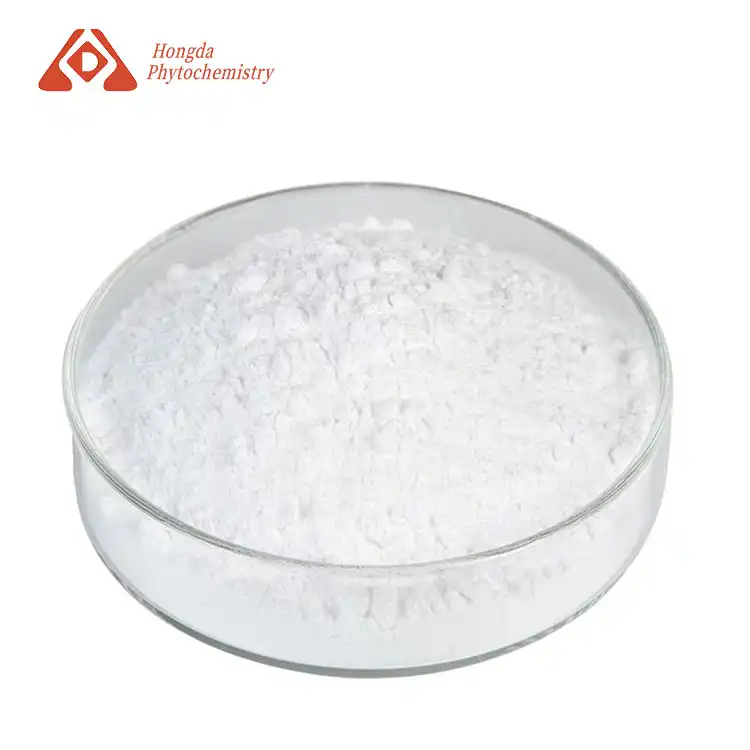
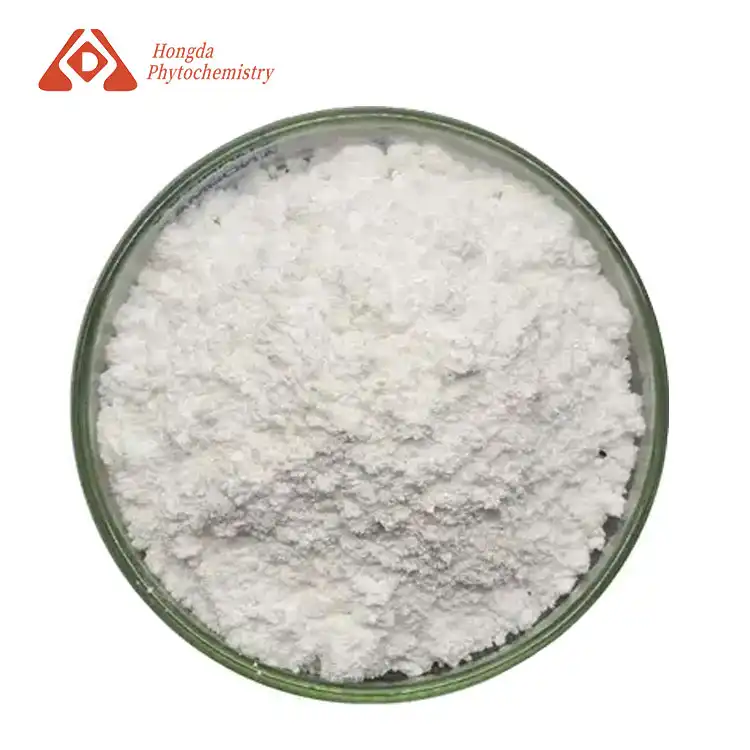
Progesterone Powder Specification
|
Items
|
Standard
|
Test Result
|
|
Appearance
|
White crystalline powder
|
Conform
|
|
Assay
|
98.0%~103.0%
|
99.1%
|
|
Melting Point
|
126~131℃
|
127.5~129.5℃
|
|
Loss On Drying
|
≤0.5%
|
0.19%
|
|
Specific Rotation
|
+175°~+183°
|
+180°
|
|
Total Impurity
|
≤0.8%
|
0.5%
|
|
Water Content
|
≤0.15%
|
0.14%
|
|
Lead(mg/kg)
|
≤2.0
|
Conform
|
|
Arsenic(mg/kg)
|
≤1.0
|
Conform
|
|
Cadmium(mg/kg)
|
≤1.0
|
Conform
|
|
Mercury (mg/kg)
|
≤0.1
|
Conform
|
|
Total Plate Count
|
≤1000cfu/g
|
Conform
|
|
Mold & Yeast
|
≤100cfu/g
|
Conform
|
|
E.Coli
|
Negative
|
Conform
|
|
Salmonella
|
Negative
|
Conform
|
|
Conclusion: Each Item meet with the USP42 standard. |
||
Maintaining Purity After Verification
Storage Conditions That Preserve Verified Purity
It's only useful to check for purity at the time of purchase if that purity stays the same during storage and handling. Progesterone powder should be kept in a cool, dry, tightly covered container that doesn't get direct light for long periods of time. This is because heat and humidity can change the powder's physical stability and, in some cases, the amount of a related substance that is present over time. When manufacturers package finished dosage forms, they should also make sure that moisture doesn't get to them during encapsulation or compounding. This is because processing conditions can cause degradation that a pre-purchase verification step would not have found. Setting up rules for internal storage is what makes sure that a batch of progesterone powder is reliable from the time it is checked to the time it is made.
Documentation Practices for Ongoing Batches
It shouldn't just be done on the first order from a new source for purity proof. It should be done on all orders. People who buy progesterone powder on a regular basis should ask for and keep a proof of analysis for each batch they receive. They should also compare the results over time to find any small changes in strength or impurity levels before they become a bigger problem. Investigators often want batch-by-batch tracking instead of a single history certificate, so keeping this paperwork trail helps with both internal quality checks and regulatory inspections. If a provider makes this ongoing paperwork easy to find, it's a big plus for long-term business ties.
Working With a Supplier Who Supports Long-Term Verification
Long-term ties work best when providers see proof as a shared duty that they all have to do, not just a one-time thing that needs to be done. Hongda helps with this by keeping testing procedures the same in all of its 3,000-square-meter warehouses and production lines. This way, repeat orders of progesterone powder can be checked against a stable baseline instead of changing specifications from batch to batch. Over time, this uniformity makes it easier for pharmaceutical buyers to check the paperwork, but they can still check the paperwork on the spot whenever a new production run starts.
Conclusion
To be sure that progesterone powder is pure, you need to do more than just look at the certificate. You need to compare the HPLC data, identity tests, and impurity limits to real pharmacopeial standards. This process, along with facility checks and ongoing paperwork, keeps both product quality and patient safety safe. With clear, batch-level testing, Hongda Phytochemistry backs up that verification that buyers can trust.
FAQ
1. What is the most reliable method to verify progesterone powder purity?
HPLC assay combined with related substances testing provides the most complete purity picture.
2. What should a complete certificate of analysis include?
Batch number, assay method, related substances, melting point, optical rotation, and impurity limits.
3. Should buyers request independent retesting?
Yes, especially for first-time orders or high-volume purchases from a new supplier.
4. How does storage affect verified purity?
Heat, humidity, and light exposure can degrade progesterone powder even after initial verification.
Verify and Source Certified Progesterone Powder | HONGDA
Ready to see the analytical data behind a batch of progesterone powder before you commit to an order? Shaanxi Hongda Phytochemistry Co., Ltd. provides full certificates of analysis, supporting chromatograms, and current facility certifications so pharmaceutical buyers can verify quality with confidence rather than assumption. Our technical team is available to walk through testing methods, pharmacopeial compliance, and sample requests tailored to your formulation needs. Reach out today at duke@hongdaherb.com to start your verification process and build your supply chain on documented, testable quality.
References
1. Konduru NK, et al. Determination of progesterone (steroid drug) in the semi-solid dosage form (vaginal gel) using a stability-indicating method by RP-HPLC/PDA detector. Biomedical Chromatography. 2022;36(4):e5246.
2. International Council for Harmonisation (ICH). Q2(R1): Validation of Analytical Procedures — Text and Methodology. 2005.
3. International Council for Harmonisation (ICH). Q3C(R8): Impurities — Guideline for Residual Solvents. 2021.
4. International Council for Harmonisation (ICH). Q3D(R2): Guideline for Elemental Impurities. 2022.
5. United States Pharmacopeial Convention. Progesterone: Official Monograph. USP-NF.
6. European Directorate for the Quality of Medicines & HealthCare (EDQM). Progesterone Monograph 0429. European Pharmacopoeia.