

_1745918362135.webp)

Why Choose Silymarin Powder Over Milk Thistle Extract Standard Forms?
Formulators looking for ingredients that are good for the liver often think that any milk thistle extract will do. However, the raw material behind the name makes a real difference in how well it works, how consistent it is, and how efficiently it can be made. When silymarin powder is handled with formulation-level accuracy, it has benefits that common extracts that aren't standardised just can't match. Hongda Phytochemistry, which is part of Shaanxi Hongda Phytochemistry Co., Ltd., has created a silymarin powder using a special particle recycling method and multiple stages of membrane separation. This gives brands a raw material that is correct to USP/EP standards for purity and has better bioactivity. [3][4] In this article, it is explained in detail why switching from a regular milk thistle extract to a properly standardised silymarin powder is a good idea for product quality, formulation efficiency, and the credibility of the brand in the long run. The following comparison should make it a lot easier for manufacturers to decide whether to switch suppliers or deal with ongoing production problems.
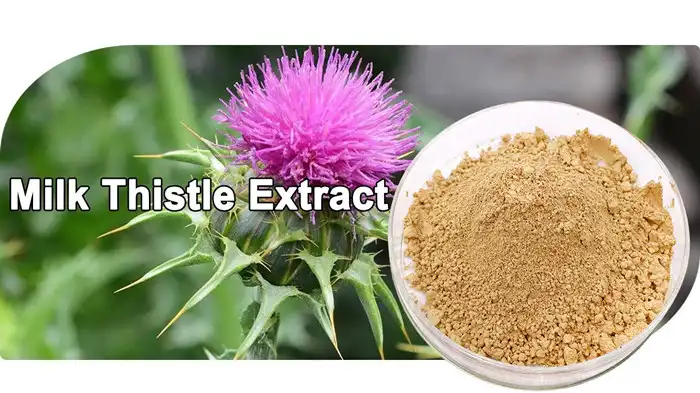
The Problem With Standard Milk Thistle Extract Forms
There aren't always clear labels on milk thistle products that you can buy in stores. The amount of silymarin in each batch can vary a lot based on where the seeds came from, when they were harvested, and how they were extracted. [1] This lack of stability is a real pain for makers who need to know exactly how much to put in pills, tablets, or liquids. Many of these problems can be fixed at their source with silymarin powder made with stricter process controls. But before you can use this powder, you should know where standard extracts usually fall short. It's because of these flaws that so many brands switch suppliers after their first few production runs. When quality teams deal with an unpredictable extract just once, they rarely go back. This is because changing the formula of a product in the middle of its launch is too expensive to justify the small price difference of a better raw material.
Inconsistent Silymarin Concentration
Generic extracts are often labelled with a broad range, like "30–80% silymarin", without batch-specific verification. This means that manufacturers don't know how effective the product really is until it is tested by a third party.
Poor Flowability and Clumping
When standard powders are filled and packaged, they often stick together. This slows down production lines and makes it hard to tell what the fill weight is inside each capsule, which is a problem that costs a lot when it's done on a large scale.
Limited Solubility in Liquid Formats
When mixed with drinks or liquid supplements, regular milk thistle pills tend to form flocculent sludge, which makes the product look bad and makes the user experience worse.
Variable Sourcing and Traceability Gaps
Without proof of where the seeds came from or records of how they were grown, people who buy regular extracts can't be sure about chemical exposure, non-GMO status, or whether the quality of the raw materials is the same from shipment to shipment and growing season to season.
What Makes Silymarin Powder a Smarter Formulation Choice?
Not only does formulation-grade silymarin powder fix these problems with marketing language on a spec sheet, but it also does so with engineering decisions made during the extraction and processing stages. Hongda's method uses a special particle recycling process along with multiple stages of membrane separation to make a raw material that works consistently in tableting, packaging, and drinking applications. Because this silymarin powder is made to formulation-grade standards from the start, brands don't have to spend as much time fixing production problems and can instead focus on marketing and making their products stand out. These engineering choices aren't just for looks; they have a direct effect on line speed, the accuracy of capsule filling, and the finished product's shelf life. The following comparison shows the useful changes that buyers experience when they switch from a regular extract to this better one.
|
Attribute
|
Standard Extract
|
Formulation-Grade Silymarin Powder
|
|---|---|---|
|
Silybin (A+B) content
|
Variable, often unverified
|
Consistently 30%-40%+ per batch
|
|
Flowability
|
Prone to clumping
|
Low-dust fluidized bed processing
|
|
Filling efficiency
|
Baseline
|
Improved by approximately 20%
|
|
Purity standard
|
Loosely defined
|
USP/EP accurate purity
|
|
Documentation
|
Minimal
|
Full HPLC isomer analysis, GC solvent residue reports
|
Standardized Silybin Fingerprinting
Each batch of Hongda's Silymarin Powder goes through tight silybin (silybin A and B) testing. This makes sure that the strength stays above the 30–40% level so that formulators can be sure of accurate dosing estimates.
Low-Dust Fluidised Bed Processing
This special processing method gets rid of the clumps and sticking problems that usually happen with regular silymarin extract powder. This makes the filler line about 20% more efficient and cuts down on production downtime.
Multi-Stage Membrane Separation Purity
The membrane separation process gets rid of unwanted plant residues and impurities better than solvent extraction alone. This makes the finished powder cleaner and better suited for pharmaceutical-grade uses.
Formulation-Grade Consistency Across Batches
Each shipment of silymarin powder works the same way in tabletting or capsule-filling equipment because the processing parameters are tightly controlled. This saves you the trouble of getting information from different sources that don't always do what they say they will do.
Health and Functional Benefits That Set Silymarin Powder Apart
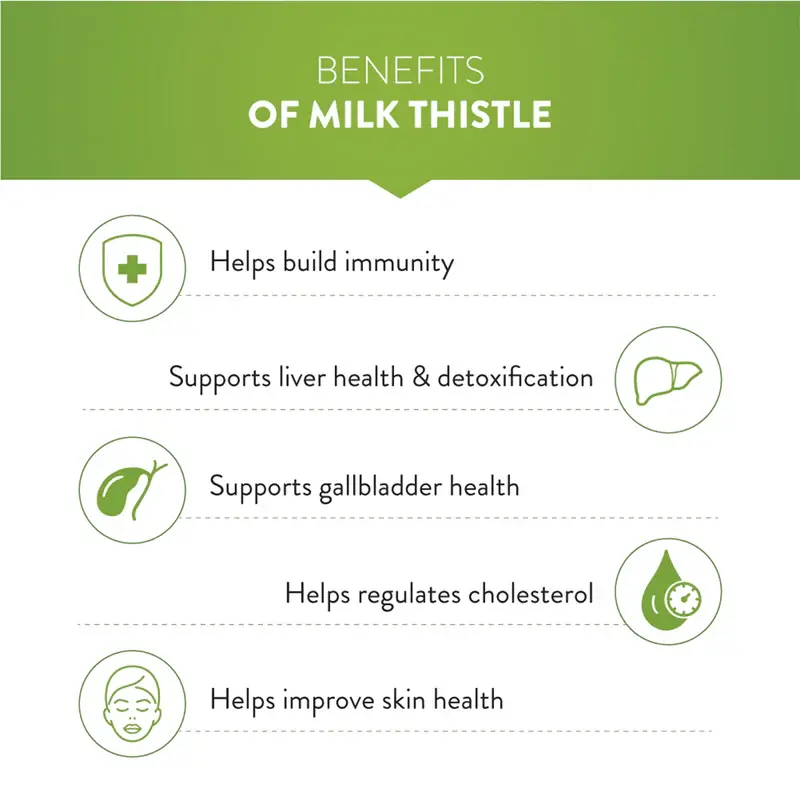
The functional profile of well-processed silymarin powder gives brands a stronger story to tell customers. This is in addition to the manufacturing benefits. Silymarin is best known for helping liver cells heal and protecting against oxidative stress. However, it also helps with skin health, metabolic balance, and general antioxidant support, which makes it a useful ingredient for many types of products. These health claims are based on decades of research into the plant Silybum marianum. This means that companies that use a properly standardised silymarin powder can market their products with a lot more confidence than companies that use extract blends that haven't been tested. [1][2]
Hepatoprotective Antioxidant Action
Silymarin helps liver cells get rid of free radicals, which lowers oxidative stress and supports the natural healing process that damaged hepatocytes depend on to get better over time. This effect has been studied in botanical liver health for decades.
Skin and Anti-Ageing Support
Silymarin powder is used in cosmetics to even out skin tone, fight oxidative damage, and slow down the signs of ageing because it lowers the production of melanin and fights oxidative damage.
Metabolic and Lipid Balance
A new study has found that silymarin can help keep your fat system healthy. Because of this, it is a good thing to put in formulas that are meant to protect your liver and speed up your metabolism.
Versatility Across Supplement Formats
High-purity silymarin powder works well in many forms, like pills, tablets, healthy drinks, and skin makeup, because it flows and dissolves better. This gives teams working on new products a lot more choices when they want to take a formula from the lab bench to full-scale production.
As more brands develop liver health supplements, functional beverages, and nutraceutical formulations, choosing the right silymarin powder supplier becomes just as important as selecting the ingredient itself. Beyond standardized silybin content, manufacturers should evaluate technical documentation, batch consistency, regulatory compliance, and production capacity before committing to large-scale sourcing. Reviewing product specifications and requesting representative samples early in the development process can reduce formulation risks and improve manufacturing efficiency. For detailed technical information, Certificates of Analysis, sample requests, or bulk purchasing inquiries, contact the Hongda technical team directly at duke@hongdaherb.com.
Verifying Quality: What a Trustworthy Silymarin Powder Manufacturer Provides?
It's not enough to just choose a raw material. Another thing to check is that the company that makes the silymarin powder must follow strict rules for testing. A real seller won't hide paperwork; they'll make it easy for customers to find. Before they place a big order, buyers should know that everything will be honest. If a buying team wants to find a new source for plant extract, they should ask for these papers before the first shipment, not after someone has complained about the quality. If you want to buy Silymarin powder, the types of paperwork you should ask for from different suppliers are shown in the table below.
| Document Type | What It Confirms |
|---|---|
| HPLC Isomer Analysis Chromatogram | Precise silybin A/B ratio and total silymarin content |
| Solvent Residue GC Report | Extraction solvents removed to safe compliance levels |
| Pesticide Residue Panel | Screening across 500+ pesticide compounds |
| Certificate of Analysis (COA) | Batch-specific heavy metal, moisture, and microbial data |
| International Certifications | cGMP, ISO9001, ISO22000, Organic (EU/NOP), Halal, Kosher |
HPLC Isomer Analysis and Certificates of Analysis
High-performance liquid chromatography confirms that each batch has the exact same amount of silybin, and a Certificate of Analysis links that information directly to the shipment a buyer receives.[3][4]
|
ITEMS
|
SPECIFICATION
|
RESULT
|
|
Silymarin Content
|
≥80% (UV)
|
80.60%
|
|
Odor & Taste
|
Characteristic
|
Complies
|
|
Moisture
|
≤5.0%
|
3.20%
|
|
Ash
|
≤5.0%
|
3.60%
|
|
Particle Size
|
100% pass 80 mesh
|
Complies
|
|
Heavy Metals
|
≤10 ppm
|
Complies
|
|
Lead (Pb)
|
≤2 ppm
|
<2 ppm
|
|
Arsenic (As)
|
≤2 ppm
|
<2 ppm
|
|
Cadmium (Cd)
|
≤1 ppm
|
<1 ppm
|
|
Mercury (Hg)
|
≤0.1 ppm
|
<0.1 ppm
|
|
Total Plate Count
|
≤1,000 cfu/g
|
<100 cfu/g
|
|
Yeast & Mold
|
≤100 cfu/g
|
<10 cfu/g
|
|
E. coli
|
Negative
|
Negative
|
|
Salmonella
|
Negative
|
Negative
|
Pesticide Residue and Solvent Testing
Screening for hundreds of pesticide chemicals and gas chromatography to remove any remaining extraction liquids, make sure that the finished silymarin powder from a silymarin powder manufacturer passes high international safety standards for use in food and medicine.[5]
International Certifications
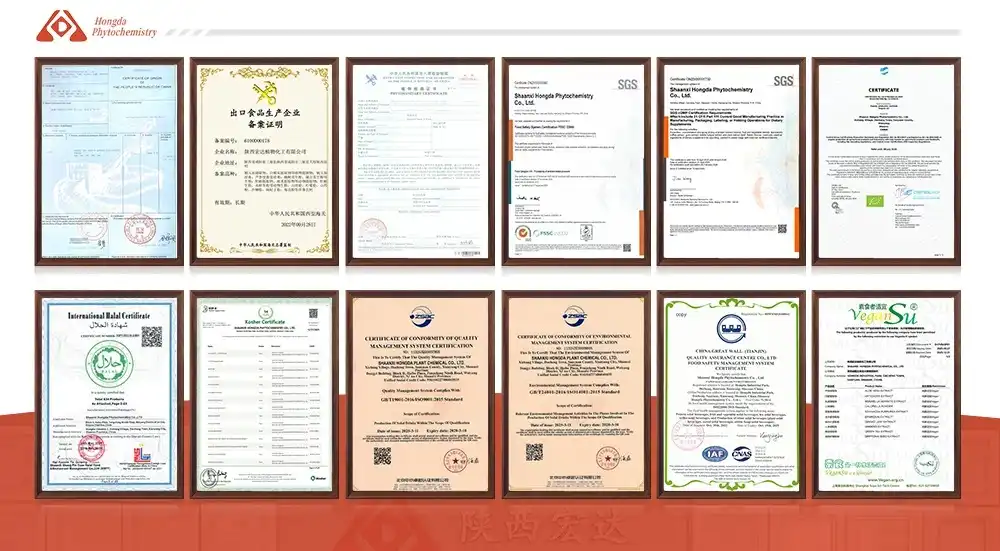
Certifications like cGMP, FSSC22000, ISO9001, ISO22000, and organic EU/NOP status show that a silymarin powder factory uses official quality management systems instead of just making things without following any rules. [6]
Transparent Technical Documentation
A reliable supplier gives buyers a full technical catalog package up front, instead of making them ask for each document separately after placing an order and waiting for unnecessary delays.
Why Hongda Phytochemistry Stands Out as a Silymarin Powder Factory?
Shaanxi Hongda Phytochemistry Co., Ltd. was founded in 2001 and has a 20,000-square-meter building with more than ten modern production lines and 100,000-level cleaning workshops. It also has an SGS-standard laboratory with more than 20 professor-level researchers working in it. Hongda is a factory that only makes silymarin powder. It has three planting bases, and agronomists watch over the growing process. This way, buyers can see the whole process from the raw seed to the finished powder. The company can handle both sample orders and long-term bulk contracts without sacrificing the uniformity that formulation-grade silymarin powder needs. Its yearly output capacity is up to 3,000 tonnes, and it has six specialized warehouse zones. This size, along with the fact that the company was named a national high-tech business in 2010, shows a level of institutional investment that smaller, less well-known extract providers just can't match.
Vertically Integrated Cultivation and Extraction
Hongda can control quality at every step because it owns the pipeline from cultivation to extraction. This way, it doesn't have to rely on outside suppliers of raw materials whose standards may change from one harvest season to the next.
Scalable Production Capacity
With a 3,000-ton yearly production capacity and enough stock on hand, customers who place regular bulk orders on tight production plans can be sure that their orders will be delivered on time.
R&D-Driven Innovation
Two research and development centers with more than 20 experienced researchers are always improving the methods used for extraction and processing. This makes sure that Hongda's Silymarin Powder keeps up with changing regulations and formulation needs in international markets.
Global Compliance and Market Reach
Hongda's clients easily pass regulatory review in both the US and EU with the help of certifications like cGMP, FSSC22000, ISO9001, ISO22000, and EU/NOP organic status, making Hongda a trusted silymarin powder factory with global market access. This cuts down on the time it takes for new products to go from paperwork filing to store shelf.
Conclusion
Standard milk thistle extract forms often fall short on consistency, flowability, and documentation, while formulation-grade silymarin powder solves these problems through engineered processing and rigorous testing. Hongda Phytochemistry backs its Silymarin Powder with full traceability, SGS-standard lab verification, and comprehensive international certifications spanning organic, food safety, and pharmaceutical-grade compliance. Reach out today to request a sample and see the measurable difference for your next formulation project.
FAQ1. How is silymarin powder different from standard milk thistle extract?
Silymarin powder undergoes standardized silybin verification and low-dust processing, giving it more consistent potency and better flowability than generic extracts.
2. What silibin concentration does Hongda's Silymarin Powder contain?
Each batch is controlled to maintain a silybin (A+B) content above 30%-40%, verified through HPLC analysis.
3. Is Hongda a certified silymarin powder manufacturer?
Yes, Hongda holds cGMP, FSSC22000, ISO9001, ISO22000, and EU/NOP organic certifications, among others.
4. Can silymarin powder be used in liquid formulations?
Yes, its improved solubility reduces sediment formation, making it suitable for functional beverages and liquid supplements.
Upgrade Your Formulation With Verified Silymarin Powder | HONGDA
Stop settling for inconsistent milk thistle extracts. Hongda Phytochemistry, a trusted silymarin powder manufacturer and factory, delivers formulation-grade Silymarin Powder backed by full HPLC documentation, pesticide screening, and international certifications. Whether you need standard 30% specifications or high-purity 80% silymarin for pharmaceutical-grade applications, our technical team is ready to support your project. Contact us today at duke@hongdaherb.com to request your sample and take the next step toward a more reliable liver health ingredient supply.
References
1. Journal of Ethnopharmacology — research on Silybum marianum flavonolignan composition and standardization methods.
2. Phytotherapy Research — clinical studies examining silymarin's hepatoprotective mechanisms.
3. United States Pharmacopeia (USP) monograph standards for milk thistle extract identity and purity testing.
4. European Pharmacopoeia (EP) reference standards for silymarin content verification.
5. International Council for Harmonisation (ICH) Q3C guideline on residual solvent limits in botanical extracts.
6. Global Food Safety Initiative (GFSI) benchmarking documentation referenced in cGMP and FSSC22000 certification.