




There are few things that give a purchaser greater qualms than opening a drum after six weeks at sea and discovering the powder a shade darker than the sample. Why do certain batches of liposomal iron change color when sent across the sea? The quick answer is a combination of heat, humidity, oxygen, and time on a sensitive mineral and lipid system, and each aspect may be controlled with the appropriate planning. Hongda Phytochemistry, also known as Shaanxi Hongda Phytochemistry Co., Ltd., provides liposomal iron powder. Our plant covers 20,000 square meters and has more than ten manufacturing lines, with its own SGS-standardized laboratory for testing, serving foreign clients. This article tracks the path of a cargo, leg by leg, to explain what causes shadow drift and how to manage it.
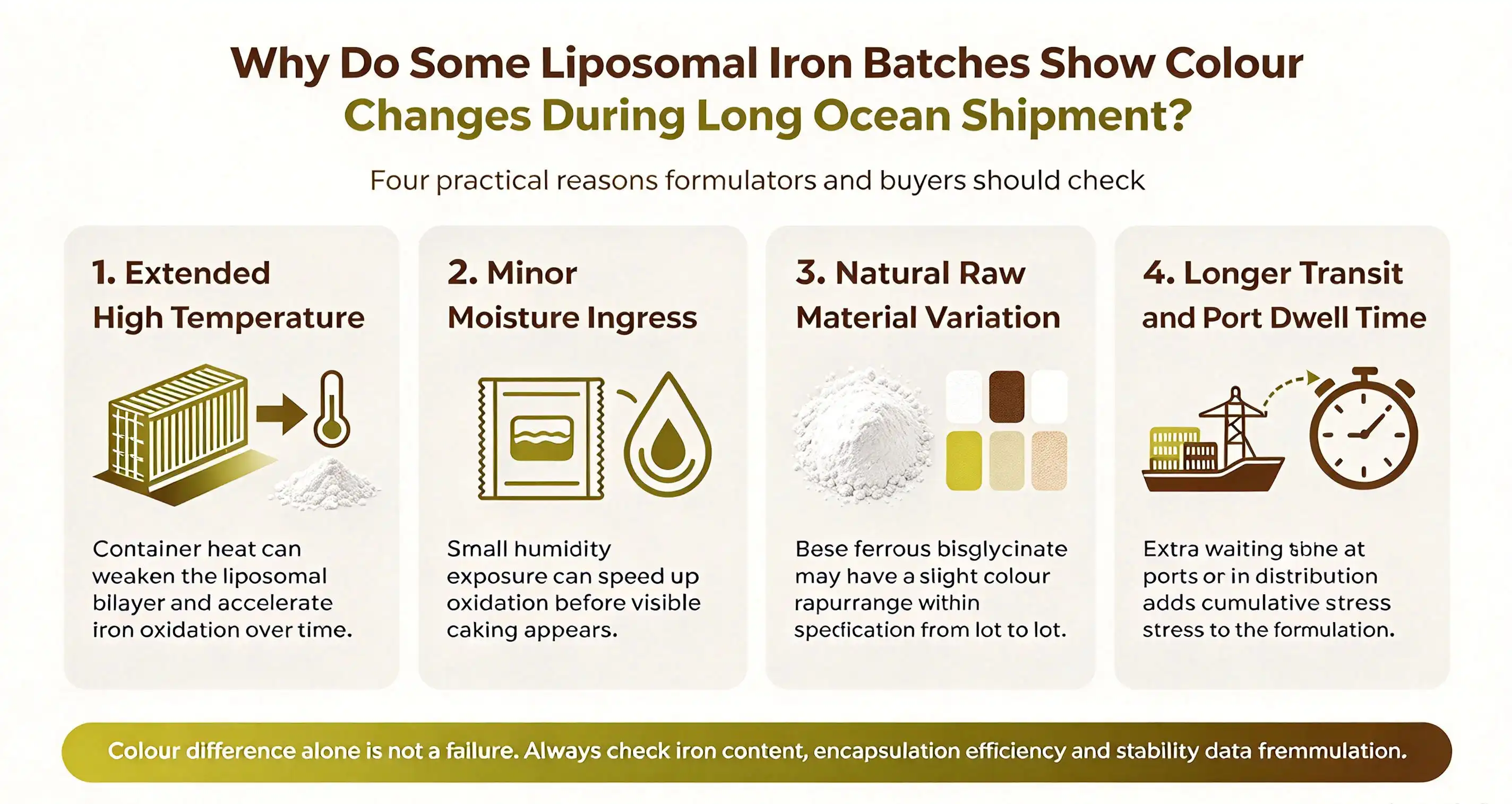
The Colour You Ship Is Not Always the Colour That Lands
Hongda's Liposomal Iron Powder, Prepared for the Voyage
Well-haul logistics start well before the container is sealed. Hongda Phytochemistry manages the liposomal iron powder from raw-material selection to purification, drying, and packaging. With an annual capacity of 3,000 tons so that big export orders can be satisfied from constant production. Each lot is checked for components, pesticide residues, moisture, heavy metals, and microbes before being sent out for shipping. Moisture management is particularly crucial for ocean freight since water is the silent instigator of most color issues. Finished items are organized and sterilized in a 3,000-square-meter warehouse, split into six storage rooms, until the day of shipment. Followed by worldwide systems like FSSC 22000, ISO 22000, BRC, FDA, halal, and kosher certifications. This openness makes it easy for customers who are comparing liposomal iron powder suppliers to ask specific inquiries regarding batch data.
What a Colour Shift Usually Means
A shade shift isn’t always a lost batch, and this helps to isolate cosmetic movement from actual quality issues. Liposomal iron powder may be a light tan to a darker brown depending on iron source, lipid carrier, and lot; therefore, a little change between a retained sample and an arriving sample may simply be due to natural fluctuation or mild surface oxidation. What is important is whether the shift is accompanied by lumps, odor, or a change in measurable variables like moisture and iron content. Use color as a first alarm, not a judgment. Take a picture of the powder in the same light and compare it with the sample you have kept from the same batch. Then ask for analytical data. This quiet, data-driven process protects your goods and your supplier connection.
Why Overseas Buyers Notice First
Color has greater commercial clout than its chemistry alone would imply, since importers, contract packers and brand owners assess a lot by sight before any test result comes. A darker powder might raise suspicions on a warehouse receiving report, prompt a hold from quality, or delay a manufacturing slot arranged weeks earlier. Another consideration is finished-product color. Capsules, sachets, and beverage mixes containing liposomal iron powder should have a consistent appearance from one batch to another. This is especially important in retail packaging where customers make visual comparisons of items. Causes of color drift need to be understood, as much to safeguard schedules as to maintain quality. When customers and their supplier agree ahead of time on an acceptable range of shades, disagreements are few and approvals swift.[1][2]
What Happens Inside a Container at Sea
Heat Builds Quietly Inside the Steel Box
A sealed steel box plowing its way across the tropics is like a slow oven. Sun on the roof, engine rooms, and stacked decks may send inside temps much over normal warehouse levels for days, while the day-night fluctuations continue to work on the packing. The prolonged heat helps chemical processes that usually happen at a snail's pace, including the oxidation of the iron and the lipid shell surrounding it, to go faster for liposomal ferrous glycinate manufacturers. The impact is gradual; thus, a package that travels by sea for five or six weeks may seem different than an air shipment in three days. Later, when they assess an arrival, purchasers get true data, not estimates, by placing merchandise away from heat sources and, where feasible, selecting shady places and asking temperature recorders within the container.
Humidity and the Problem of Container Rain
Moisture in warm, humid air within a container condenses on a cooler wall at night and may drip or seep into cartons. The logistics people call this container rain. If the cartons are wet and the headspace is humid, there is a possibility of moisture leaking through weak closures even after the drums are sealed. Moisture is the single worst adversary of liposomal iron powder, since it speeds up caking, weakens the lipid coating, and offers iron a watery road to oxidation. Moisture-barrier liners, inner bags that are well sealed, desiccant, and dry pallets are the solution to a well-built package. A conscientious liposomal ferrous glycinate maker would also note the moisture result before packaging so purchasers may compare the departure figure with the arrival figure and determine whether it was the voyage, not the batch, that produced the difference.[1][2][3]
Oxygen, Light, and the Air Trapped Inside the Bag
Each pack has a pocket of air. That air has got oxygen in it. Oxygen will progressively react with the iron and lipids over weeks at sea (especially if the bag was not packed adequately or the seal is not flawless). Light is of little importance, primarily when surface layers of powder are subject to photo-oxidation, such as when thin or transparent packaging is used. The foil-laminate inner bag is significantly better at blocking light and gas than plain polyethylene. Squeezing out extra air before closing reduces the oxygen accessible for reactions. Some manufacturers go so far as to flush with nitrogen before shutting. These basic packaging options are cheap compared with the commercial cost of a rejected pallet, for a liposomal iron powder that should seem consistent upon arrival.”
|
Driver
|
What Happens in Transit
|
What to Ask or Check
|
|---|---|---|
|
Heat
|
Faster oxidation of iron and lipids
|
Container temperature logger data
|
|
Humidity
|
Moisture uptake and caking
|
Moisture at departure versus arrival
|
|
Oxygen
|
Gradual surface darkening
|
Foil liner and headspace practice
|
|
Light
|
Surface photo-oxidation
|
Opaque inner bag and closed drum
|
Planning a long ocean route? Send your destination port, expected transit time, and packing preferences to duke@hongdaherb.com, and the Hongda team will discuss suitable packaging and documentation for your liposomal iron powder order.
The Chemistry Behind the Shade Change
Iron Shifts Its Oxidation State
Iron comes in two oxidation states mostly ferrous and ferric, and the two appear different. Ferrous forms tend to be lighter. Ferric forms tend to be yellow-brown and rust tones. If the powder is attacked by trace oxygen or moisture, a little of the ferrous iron may be converted to ferric iron, enough to darken the apparent tint but not to alter the overall iron content. This is fundamental mineral chemistry and why the color might change while the test is near the label value. In liposomal iron powder, the lipid layer is meant to inhibit this interaction, although no encapsulation provides a perfect barrier over a long trip. Ask a liposomal iron powder supplier how they choose the lipid wall and iron supply, since this provides you a good indication of how ready the product is for the voyage.[4][5]
Lipid Oxidation and Browning
The phospholipid coating that makes a liposome protected is itself vulnerable to oxygen and heat. Oxidized lipids may also develop yellowish or brownish colors over time and can modify the powder scent. The processes of lipids may interact with iron. Mineral ions are known to promote oxidation in fats. A lengthy heating process will influence both partners of the system at once. Antioxidant protection, good lipid selection, minimal residual moisture, and airtight packaging all impede the process. Besides looks, quality teams typically monitor peroxide value or other measures to put a figure on a subjective impression. If you are looking for liposomal iron powder, ask if those signs are part of the release or stability program. A manufacturer that is tracking those things is more likely to offer a product that looks like what you expect when it comes.
Moisture Pickup, Caking, and Surface Darkening
The influence of moisture is generally initially seen near the surface. A small layer of powder that absorbs humidity may clump when a drum is opened and darken somewhat and seem different from the dry material under it, which can cause an uneven appearance. Often, if you stir or sample from many depths, you'll find that the majority of the lot is still excellent. Nevertheless, caked or speckled powder is a nuisance for manufacturing processes, and prevention is better than cure. Hongda Phytochemistry regulates the moisture content before packaging. Hongda Phytochemistry has laboratory titrators and other tools to verify findings. Importers should develop a good practice of opening one drum in a dry room and sampling the top, middle, and bottom layers and recording the results. That record makes for a disquieting first impression in an organized discussion regarding the liposomal iron powder lot.
|
Packaging Choice
|
Protective Role
|
Practical Note
|
|---|---|---|
|
Foil-laminate inner bag
|
Blocks oxygen, light, and moisture
|
Preferred for long routes
|
|
Desiccant sachet
|
Absorbs residual humidity
|
Match quantity to bag volume
|
|
Nitrogen flush
|
Lowers oxygen in headspace
|
Useful for sensitive lots
|
|
Lined outer drum
|
Physical and moisture protection
|
Keep closed until use
|
|
Data logger
|
Records temperature and humidity
|
Review on arrival
|
Shipping Plans That Protect Colour on Arrival
Packaging Choices That Protect Shade
Good protection begins with layers. A defense against heat, moisture, oxygen, and light in combination is provided by a sealed foil-laminate inner bag, moisture-barrier liner, desiccant, and a robust outer drum. Wrap pallets and keep them off the floor, away from container doors and walls where moisture might condense. Buyers may also request tiny retained samples from each lot to take the guesswork out of color matching on delivery. A professional liposomal iron powder provider would not mind these requirements and will disclose its packaging procedure in writing. If your cargo is bound for a port in Europe, North America, or Southeast Asia, Hongda Phytochemistry can discuss the drum sizes, liners, and labeling that fit your route.[3]
Route Planning With a Liposomal Ferrous Glycinate Manufacturer
Route planning is a common activity. Tell your supplier the loading port, the destination, the season, and projected travel duration, as winter exports to northern Europe confront significantly different circumstances than summer shipments via the tropics. A solid documentation liposomal ferrous glycinate producer may match packaging, desiccant amount, and inspection procedures to that route. Hongda Phytochemistry has two R&D institutes and a laboratory of over twenty experts. This enables us to provide real assistance, not general replies. There are six well-organized storage rooms and enough inventory to help with scheduling pickups, holding products for a short period before loading, and avoiding pallets sitting in open yards. For liposomal iron powder, good communication before the booking will save a lot more time than examination after the container has arrived.
Arrival Inspection and a Calm Claims Process
The inspection is the last stage. Check seals of containers on arrival. Look for water stains on cartons. Open a sample drum in a dry place. Compare with the retained sample. Request moisture, iron content, and microbiological findings from an independent or in-house laboratory. Keep temperature logger data and pictures, and the certificate of analysis in one folder. If you notice anything unusual, please return this product to the supplier immediately so that we can trace the reason to batch, packaging, or route. Hongda Phytochemistry is cGMP, ISO 9001, and BRC certified, and their paperwork makes it easy to undertake this kind of assessment. Most color questions about a liposomal ferrous glycinate supplier are answered quickly and in a professional way with a clear proof trail.
|
Step
|
Action
|
Record to Keep
|
|---|---|---|
|
Seal and carton check
|
Look for damage and water marks
|
Dated photographs
|
|
Drum opening
|
Sample top, middle, and bottom
|
Notes on colour and lumps
|
|
Lab confirmation
|
Moisture and iron content
|
Laboratory report
|
|
Sample comparison
|
Match against retained sample
|
Shade note and image
|
|
Supplier feedback
|
Share the full evidence folder
|
Shipment file
|
Conclusion
Color variations in liposomal iron shipments are seldom caused by one single reason. Over weeks at sea, heat, humidity, air, light, and time conspire to push iron to its ferrous form and stress the lipid shell. The good news is that all of these factors may be mitigated using moisture management, foil-laminate packaging, desiccant, rational loading, and honest communication between customer and supplier. For each liposomal iron powder order, Shaanxi Hongda Phytochemistry Co., Ltd. provides a 20,000-square-meter plant, an SGS-standardized laboratory, complete pre-shipment testing, and globally recognized certificates. Prepare your route using data, check arrivals systematically, and think of color as an early warning worth chasing so your powder arrives like it left: consistent, reliable, and ready for your manufacturing line.
FAQ
1. Does a darker shade always mean the batch has failed?
No. Compare it with the retained sample and check moisture and iron content before deciding.
2. What is the biggest cause of colour drift at sea?
Moisture, combined with heat and oxygen, is usually the main driver.
3. Which packaging helps most?
A foil-laminate inner bag with desiccant, a moisture-barrier liner, and a closed outer drum.
4. What should I check on arrival?
Seals, water marks, sample colour at several depths, and laboratory moisture and iron results.
Plan Your Next Shipment | HONGDA
If colour consistency on arrival matters to your brand, partner with a team that plans for the whole voyage. Shaanxi Hongda Phytochemistry Co., Ltd. offers liposomal iron powder supported by a modern factory, an SGS-standardized laboratory, ample inventory, and certifications that open doors in the United States and Europe. Tell us your destination port, transit time, and packing preferences, and our specialists will respond with practical suggestions and sample options. Whether you are a formulator, an OEM brand, or a distributor, start the conversation today and protect your next order before it ever leaves port. Write to duke@hongdaherb.com and ship with confidence, knowing every detail of the journey has been considered by people who understand your market.
References
1. Waraho T, McClements DJ, Decker EA. Mechanisms of Lipid Oxidation in Food Dispersions. Trends in Food Science & Technology. 2011;22(1):3-13.
2. Frankel EN. Lipid Oxidation. 2nd ed. Bridgwater: The Oily Press; 2005.
3. International Council for Harmonisation. ICH Q1A(R2): Stability Testing of New Drug Substances and Products. 2003.
4. Gaucheron F. Iron Fortification in Dairy Industry. Trends in Food Science & Technology. 2000;11(11):403-409.
5. Zimmermann MB, Hurrell RF. Nutritional Iron Deficiency. The Lancet. 2007;370(9586):511-520.