

_1745918362135.webp)

Why Is Liposomal Silymarin Powder Superior in Nutraceuticals?
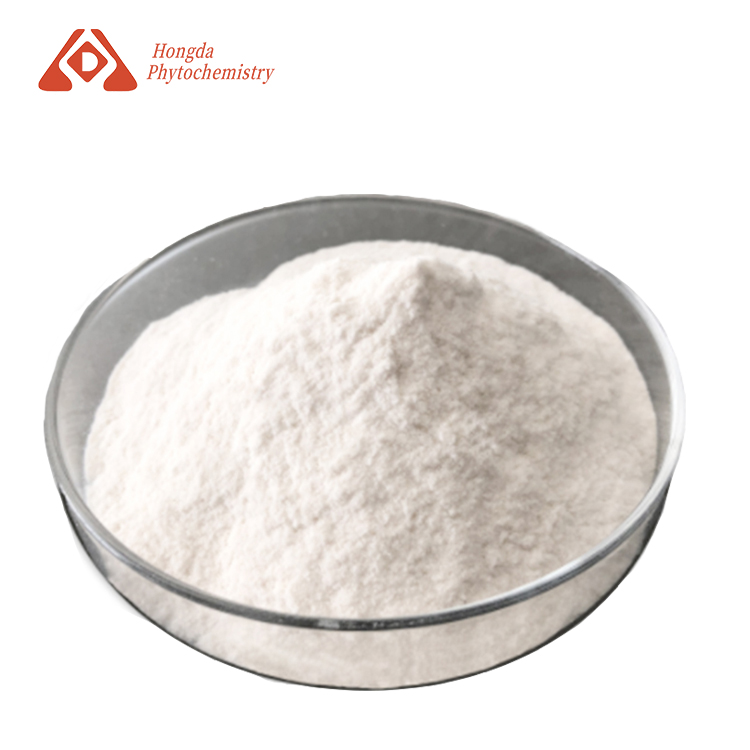
Milk thistle has been aiding liver function for generations, but standard silymarin preparations have one persistent drawback: They are poorly absorbed by the body. That's precisely what Hongda Phytochemistry set out to achieve by closing that gap. Shaanxi Hongda Phytochemistry Co., Ltd., a specialist ingredient maker, has developed a liposomal silymarin powder that traps the active flavonolignan complex within a phospholipid bilayer, so it acts less like a resistant plant extract and more like a nutrient the cell already knows. [1][2]The outcome is a powder with an encapsulation efficiency of more than 85% and a narrow 100-300 nm particle size window, and the manufacturing consistency formulators require scaling a liver support product from a pilot batch to a commercial run. In this post, we will discuss how it works, where it fits into a recipe, and why customers are choosing Hongda as their liposomal silymarin powder supplier more and more.

Why Hongda Phytochemistry's Liposomal Silymarin Powder Stands Apart?
Advanced Liposomal Encapsulation Technology
Hongda's approach involves two steps: first, a high-pressure homogenization to generate the liposomal vesicles, and second, a spray-drying process that transforms the liquid suspension into a stable, free-flowing powder without collapsing the phospholipid structure. This is important since many liposomal substances lose integrity the moment they’re dried. Hongda’s liposomal silymarin powder is designed to preserve its encapsulated format during that transition, using sunflower-derived phosphatidylcholine instead of soy lecithin to produce the bilayer, making the final ingredient suitable for allergen-sensitive formulations. Plain silymarin extract has the disadvantage of delayed and imperfect absorption, but the powder provided to the buyer is similar in structure to the natural cell membrane and may be taken directly into the cell.[1][2][4]

Pharmaceutical-Grade Manufacturing at Scale
The company has a 20,000-square-meter facility with more than ten sophisticated manufacturing lines and 100,000-level purification workshops—an environment usually reserved for pharmaceutical intermediates, not cheap botanical powders. The annual production capacity is over 3,000 tons throughout the Hongda product line, assuring formulators that a successful pilot order may expand into a recurrent commercial contract without sourcing interruption. The manufacturing process is supported by a number of national patent technologies and is the result of years of internal development, not a licensed third-party technique. If you’re a brand working on a liver-health line that uses liposomal silymarin powder, that size and technical ownership reduce a lot of the supply-chain risk that comes with procuring from smaller workshops.
SGS-Certified Quality Verification
All claims concerning encapsulation only matter if they can be validated, which is why Hongda passes each batch of liposomal silymarin powder through an SGS-standardized laboratory jointly established with university researchers. Transmission electron microscopy is used to determine that liposomal vesicles have really been created rather than just mixing silymarin with lipid material. Dynamic light scattering is used to assess particle size dispersion on reconstitution, often landing between 100 and 300 nanometers. HPLC, gas chromatographs, and atomic absorption devices are run by more than twenty professor-level workers. Such a level of testing means purchasers are not buying a supplier’s word; particle formation, purity, and active content are all confirmed before shipping.
Flexible MOQ for Global Buyers
Not many buyers are ready to purchase a whole container of a new ingredient, and Hongda’s minimum order amount of merely 1 kg acknowledges that fact. For small nutraceutical companies, it enables the testing of liposomal silymarin powder in a genuine formulation trial before scaling up. For experienced manufacturers, it allows going straight to bulk production after requirements are validated. All batches are well stored and have a shelf life of 24 months. They are accompanied by full regulatory paperwork, including Certificates of Analysis, specification sheets, and safety data. It’s this versatility that makes the ingredient so prevalent in a wide variety of end products, from small-batch startups to contract manufacturers with multi-ton yearly programs.
The Bioavailability Advantage: From Traditional Silymarin to Liposomal DeliveryWhy Conventional Silymarin Falls Short?
Standard silymarin extract is structurally large and weakly water-soluble; hence, a considerable proportion of an oral dosage never enters systemic circulation.[2][5] It breaks down in the GI tract or goes through mostly unabsorbed; therefore, formulators previously had to use huge milligram amounts only to have a moderate impact. A reliable silymarin powder manufacturer can help formulators address these challenges by providing standardized raw materials with consistent quality and specifications for further formulation. That increases capsule size, increases per-unit cost, and still leaves plasma concentrations lower than most liver-support treatments would ideally supply. That’s one reason the nutraceutical industry is always looking for a delivery strategy that addresses absorption at the constituent level, rather than shoving more raw extract into each dose. And why liposomal silymarin powder has garnered so much formulation attention in recent years.

How Does Phospholipid Encapsulation Change Absorption?
Liposomal silymarin powder is another solution to the same issue. The active silymarin complex is contained inside a phospholipid bilayer that resembles the cell's own membrane and may be absorbed via routes that avoid most of the destruction suffered by simple extract in the stomach. Industry estimates suggest that liposomal encapsulation increases bioavailability 4-6 times over unencapsulated silymarin, allowing formulators to frequently lower the active dosage and yet get a more robust physiological response. For businesses that are pitching a premium liver support product, that bioavailability narrative is a true differentiation, not just a marketing promise. It indicates a real mechanical shift in how the substance flows through the body.
Clinical and Research Evidence Behind the Technology
The science that underlies liposomal silymarin isn't new. For years, researchers have been studying silymarin proliposomes precisely because of their increased intestinal absorption and hepatoprotective effectiveness compared to regular tablets. Animal studies published on liposomal silymarin formulations have shown measurable protection against liver malfunction and associated oxidative stress.[3] This further supports the idea that the encapsulation strategy is based on true science and not just manufacturing convenience. Hongda's liposomal silymarin powder is based on this body of research, and in-house testing shows that the finished powder retains the particle characteristics associated with these absorption benefits after drying, storage, and reconstitution, giving formulators a documented, rather than purely theoretical, basis for their bioavailability claims.
Particle Size and Structural Stability
Bioavailability increases are only useful if the liposomal structure survives the route from the factory to the final product. That’s why particle size management is one of the fundamental specifications and not an afterthought. The low-temperature spray crystallization technology of Hongda can turn the liquid liposomal suspension into powder without damaging the lipid membrane, thereby solving the typical industrial problem of liposomal powders being sensitive to moisture and easy to oxidize after drying. Dynamic light scattering confirms that the reconstituted particle size is always in the 100-300 nm range. Formulators may count on a predictable liposomal silymarin powder that acts the same in the tenth manufacturing run, as it did in the first sample, batch after batch.
Liposomal Silymarin Specification
|
Analysis Item
|
Specification
|
Testing Method
|
|
Product Name
|
Liposomal Milk Thistle Extract
|
--
|
|
Active Ingredient
|
Silymarin (Total Flavonolignans)
|
HPLC
|
|
Standardized Assay
|
50%, 70%, 80% (Customizable)
|
USP / Internal Method
|
|
Appearance
|
Light Yellow to Yellow Fine Powder
|
Visual
|
|
Liposomal Diameter
|
50nm – 200nm (In aqueous state)
|
DLS/TEM
|
|
Solubility
|
Excellent Water Dispersibility
|
Gravimetric
|
|
Loss on Drying
|
≤ 5.0%
|
105℃, 2h
|
|
Heavy Metals
|
Meets stringent food safety standards
|
ICP-MS
|
|
Microbiological
|
Total Plate Count ≤ 1,000 cfu/g
|
USP Standard
|
Formulation Applications Across Nutraceutical Categories
Liver Health Supplements and Detox Formulas
The most natural home for liposomal silymarin powder continues to be liver-support capsules and tablets, where the improved bioavailability is most obvious in a category where absorption directly impacts perceived effectiveness.[6] Formulators looking to develop detox or “liver cleanse” positioning profit from asserting a considerably lower effective dosage than ordinary milk thistle extract, enabling smaller capsule sizes and improved manufacturing economics. The flowability of the powder also assists in handling on high-speed encapsulation equipment, resulting in reduced variability in dosage sometimes seen with less uniform botanical powders. For businesses competing in a crowded liver support category, that combination of a better absorption narrative and cleaner manufacturing performance is a substantial shelf distinction that is worth highlighting in product marketing.
Functional Beverages and Wellness Drinks
Liposomal silymarin powder is perfect for both, for ready-to-mix health drinks, hangover-relief shots, and detox beverages, which require ingredients that dissolve cleanly and remain suspended without clumping. Working with a reliable silymarin powder factory can also help beverage formulators maintain consistent ingredient quality and supply stability for these applications. It disperses in aqueous systems, enabling beverage formulators to include liver-support effects without the gritty mouthfeel or sediment frequently associated with simple plant extracts. The liposomal structure also protects the active compound from environmental degradation that affects unencapsulated extracts, making shelf-stable liquid formats a realistic category for silymarin-based positioning, opening the door to functional shots and RTD beverages that previously relied on far less bioavailable liver-support ingredients and delivered weaker perceived results to health-conscious consumers.
Capsule, Tablet, and Powder Blend Integration
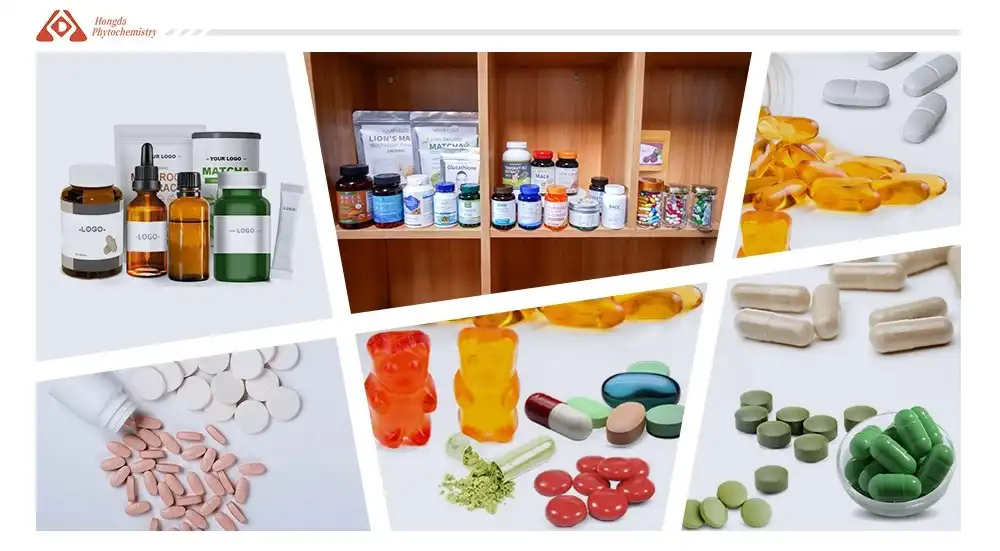
In addition to standalone liver solutions, liposomal silymarin powder combines nicely with multi-ingredient stacks for metabolic health, detox assistance, or overall well-being. Its uniform particle size and efficient flow minimize the segregation problems encountered when powders of various densities are used in a single tablet or capsule composition. Manufacturers operating high-speed tableting or encapsulating lines look for ingredients that perform reliably in big batch sizes, and Hongda's quality management is geared toward that batch-to-batch consistency. This is a feasible add for private-label businesses looking to add a distinctive liver-support claim without re-engineering their current manufacturing process, equipment, or standard operating procedures.
Topical and Cosmeceutical Applications
Some formulators are looking at liposomal silymarin powder for topical and cosmeceutical uses, since liposomal delivery technologies can promote skin penetration, where silymarin’s antioxidant benefits may assist skin-barrier and anti-aging positioning.[2][5] The same phospholipid bilayer that allows for oral bioavailability might also contribute to greater penetration in serums, creams, or masks, providing cosmeceutical manufacturers a chance to move a known liver-health ingredient into cosmetics. This still makes for a smaller chunk of current demand than oral supplement forms, but demonstrates how versatile the underlying encapsulation technology is for businesses wanting a single ingredient with dual wellness and beauty value across their larger product portfolio.
Thinking of a future project using liposomal silymarin powder? Our technical staff can provide you with specification papers, samples, and prices according to your batch quantity at duke@hongdaherb.com.

Sourcing Liposomal Silymarin Powder from a Trusted Manufacturer
Why Do Buyers Choose Hongda as Their Silymarin Powder Manufacturer?
The sourcing choice for a technically hard ingredient such as liposomal silymarin is often more about trusting the manufacturer’s technique than it is about pricing on a quotation sheet. Hongda is a proven silymarin powder maker with encapsulation data on file and relationships with third-party testers to verify each shipment, and a history of manufacturing since 2001. When buyers are considering different suppliers, they continually refer to the openness of Hongda’s quality documentation and the readiness of the technical staff to review specification issues before an order is made. That involvement is what counts most for businesses launching a new liver-health market for the first time, since the success of the formulation is highly dependent on correct technical information from the ingredient supplier itself.
Inside the Silymarin Powder Factory: Facilities and Capacity
Behind every order is a 20,000-square-meter silymarin powder facility designed for scale and accuracy with more than ten manufacturing lines and specialized 100,000-level purifying workshops. The 3,000-square-meter warehouse is divided into six different storage zones to keep raw botanical material, plant extracts, and final liposomal powders segregated and regulated, with experienced personnel supervising sanitation in each specialized section of the facility. Hongda has the infrastructure in place to have enough inventory on hand to ensure on-time order fulfillment, which is critical for overseas customers who don’t have the luxury of waiting after a liposomal silymarin powder recipe is confirmed and put into a set manufacturing schedule.
Wholesale Silymarin Powder Programs for OEM and Private Label
Hongda enables wholesale silymarin powder programs based on how nutraceutical firms really buy: sample amounts for formulation testing, mid-size orders for market testing, and full commercial volumes once a product is proven in the real world. The technical experts of Hongda work directly with OEM and private-label partners on formulation, ingredient compatibility, and packaging appropriate for their target market and customer base. Production capacity is in the thousands of tons yearly, so brands expanding from a regional launch to a multi-market rollout may stick with the same manufacturer instead of having to re-qualify a new supplier mid-growth, saving time and eliminating regulatory friction along the way.
Working with a Liposomal Silymarin Powder Supplier You Can Trust
Ultimately, the choice of a supplier for liposomal silymarin powder is a long-term partnership decision, since formulation, regulatory filing, and repeat manufacture rely significantly on consistent standards maintained over time, order after order. Hongda’s certifications, including cGMP, FSSC22000, ISO22000, and ISO9001, as well as EU and NOP organic certifications, provide foreign purchasers with paperwork to back their own regulatory filings throughout North America and Europe. The compliance foundation developed with halal, kosher, BRC, and FDA-related certifications since 2001 is one of the key reasons why worldwide nutraceutical companies trust Hongda as a reliable long-term supplier rather than a one-time transactional vendor for a single little purchase.
|
Attribute
|
Detail
|
|---|---|
|
Established
|
2001
|
|
Facility size
|
20,000 m², 10+ production lines
|
|
Warehouse
|
3,000 m², six dedicated storage zones
|
|
R&D staff
|
20+ professor-level researchers, 2 R&D institutions
|
|
Annual output capacity
|
Up to 3,000 tons
|
|
Key certifications
|
cGMP, FSSC22000, ISO22000, ISO9001, EU & NOP Organic, Halal, Kosher, BRC, FDA
|

Quality Assurance, Certifications, and Global Compliance
Testing Protocols and Documentation
To fulfill international nutraceutical standards, liposomal silymarin powder is tested for active ingredient content, pesticide residue, moisture, heavy metals, and microbiological load before delivery. At the SGS-standard laboratory, the quality team uses HPLC, spectrophotometers, polarimeters, and automated titrators to assess purity and liposomal structure development. Smaller companies exploring new export markets benefit from a Certificate of Analysis for each consignment, simplifying customs clearance and reducing overhead.

International market access certifications
Hongda acquired national high-tech firm status, food production and feed additive licenses, halal and kosher certification, BRC, FDA-related certification, and complete organic certification throughout its product line between 2001 and 2024. The firm added cGMP, FSSC22000, SC, ISO22000, ISO9001, EU, NOP organic, and patent technologies in 2025. The increasing certification portfolio simplifies regulatory submissions for US and EU liposomal silymarin powder formulations, reducing supplier-vetting delays that delay international product launches by months.
Tracking powder from raw material
Expert agronomists manage cultivation and harvest at three specialized planting bases in Hongda, including a Chinese medicinal material base. This raw-material-level monitoring allows the company to track liposomal silymarin powder to its agricultural source as regulators, merchants, and informed clientele demand supply-chain transparency. Traceability, stringent selection rules, and competent extraction ensure that a Certificate of Analysis's consistency comes from authorized inputs, not mixed or inconsistent material from unverified sources.
Logistics, Packaging, Shelf Life
Properly kept liposomal silymarin powder lasts 24 months. Packaging protects the moisture-sensitive liposomal structure during international shipment and customs. Buyers scheduling production across sites, nations, or contract manufacturing partners should consider Hongda's warehouse's standing inventory for on-time delivery. With storage, handling, and stability documentation, formulators may avoid moisture-sensitive liposomal ingredient degradation from inappropriate handling or transportation.
Conclusion
Liposomal silymarin powder solves the bioavailability problem that has limited traditional milk thistle extract for decades, and Hongda, as a reliable liposomal silymarin powder supplier, combines patented encapsulation technology, pharmaceutical-grade facilities, and international certification to provide a dependable source. From liver-support capsules to functional beverages, formulators gain a scientifically documented, consistently manufactured powder backed by real testing data. Brands ready for a formulation trial or bulk order are encouraged to contact Hongda's technical team to discuss specifications and timelines.
FAQ
1. What makes liposomal silymarin powder different from regular silymarin extract?
The active compound is encapsulated in a phospholipid bilayer, which improves absorption significantly compared with unencapsulated silymarin extract.
2. What is Hongda's minimum order quantity for liposomal silymarin powder?
The minimum order quantity is 1 kg, allowing smaller brands to trial the ingredient before committing to bulk volumes.
3. How is encapsulation efficiency verified?
Hongda uses transmission electron microscopy and dynamic light scattering to confirm liposomal structure and particle size after production.
4. Is Hongda's liposomal silymarin powder suitable for beverages as well as capsules?
Yes, its dispersibility and stability make it suitable for functional drinks, capsules, tablets, and multi-ingredient powder blends.
Partner With HONGDA for Liposomal Silymarin Powder
If your team is formulating a liver-support supplement, functional beverage, or private-label wellness product, Hongda Phytochemistry's liposomal silymarin powder offers the bioavailability, documentation, and manufacturing scale to support your launch. Request specification sheets, sample quantities, or a wholesale quote by emailing our technical team at duke@hongdaherb.com. We'll help match the right grade and packaging to your timeline, whether you're testing a first sample or planning a recurring multi-ton supply agreement.
References
1. Yanyu, X., Yunmei, S., Zhipeng, C., & Qineng, P. — Preparation of silymarin proliposomes and their pharmacokinetic behavior in rats.
2. El-Samaligy, M. S., Afifi, N. N., & Mahmoud, E. A. — Hybrid liposome-encapsulated silymarin for improved oral bioavailability.
3. Maryam, T., Rana, N. F., et al.—Silymarin-encapsulated liposomal formulation against copper toxicity-associated liver dysfunction.
4. Woo, J. S., Kim, T. S., Park, J. H., & Chi, S. C. — Formulation and evaluation of silymarin via SMEDDS and liposomal delivery.
5. Kidd, P. M. — Bioavailability of phytosome complexes from botanical polyphenols, including silymarin.
6. Federico, A., Dallio, M., & Loguercio, C. — Silymarin and hepatoprotection: hepatic disease and clinical progress.