




Why is magnesium bisglycinate known as one of the gentlest magnesium forms for sensitive digestive systems?
For supplement makers formulating for customers with a sensitive digestive system, the choice of magnesium source is more than just the elemental magnesium level. Digestive comfort, mineral availability, substance purity, and formulation stability all impact the end product experience. Magnesium bisglycinate chelate powder has become a popular alternative, since the magnesium is chemically bound to two glycine molecules, creating an amino acid chelate with a distinct nutritional and formulation profile to ordinary inorganic magnesium salts. Magnesium bisglycinate is generally chosen for its good tolerability profile, as opposed to certain magnesium forms that are sometimes linked with loose stools at larger supplemented doses. However, the digestive reaction still varies with the dose, formulation, and individual variances. Shaanxi Hongda Phytochemistry Co., Ltd. is a supplier of Magnesium Bisglycinate Chelate Powder to International Nutraceutical Manufacturers. Attention to the identification of the chelate, elemental magnesium standards, moisture control, and batch uniformity. It is important for customers looking for a reliable magnesium bisglycinate powder supplier to grasp these technical considerations prior to picking a long-term ingredient partner.
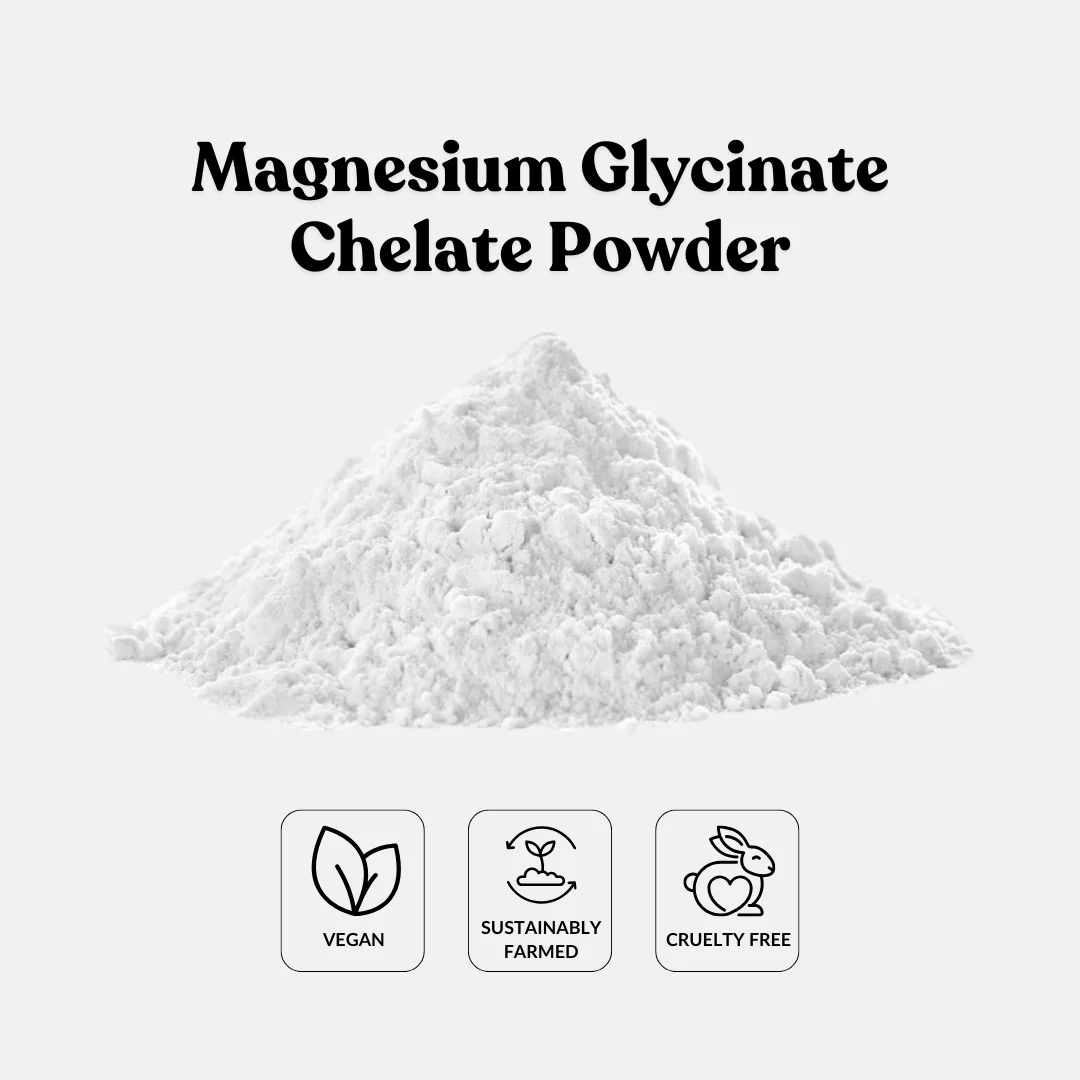
Why Magnesium Bisglycinate Is Often Preferred for Digestive Comfort
The Glycine Chelate Structure Makes a Difference
What makes magnesium bisglycinate unique is its chemical structure. The magnesium ions are bonded to two glycine molecules, so it’s an amino acid chelate, not simply magnesium combined with some other amino acid powder. This structural difference is significant for magnesium compounds in nutritional compositions. Magnesium oxide is an example of an inorganic magnesium source, while magnesium bisglycinate chelate contains magnesium coordinated to glycine via coordinate bonds. This manufactured product has distinctive physicochemical properties and might be a helpful choice for consumers who have difficulty digesting some of the typical magnesium supplements. Hence, in commercial manufacturing, magnesium bisglycinate chelate powder must be evaluated by its genuine chemical identity—not by the name of the product. Buyers should demand analytical evidence that confirms the product is a real chelate, not merely a physical blend of magnesium oxide and glycine.
Why Sensitive Digestive Systems May Respond Better
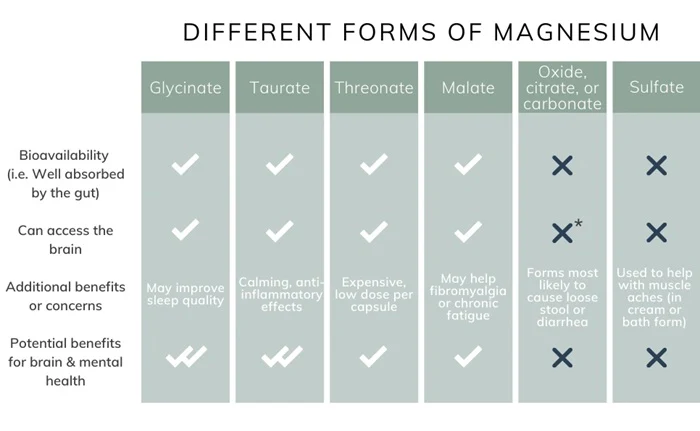
Magnesium supplements may be of modest benefit to digestive comfort because unabsorbed magnesium in the intestinal lumen may enhance osmotic activity and pull water into the colon. This is one of the reasons why taking supplemental magnesium may lead to loose stools, particularly in large amounts at once. Magnesium bisglycinate has been produced with the similar structure to glycine and has become a favored choice in formulations, as an alternative to the more common inorganic forms of magnesium salts, aimed at consumers who want digestive comfort. But it would be erroneous to believe that all tolerate this form equally well or that it reduces stomach issues. The NIH Office of Dietary Supplements advises that excess magnesium from supplements may result in diarrhea, nausea, and abdominal cramping.[1] Magnesium bisglycinate chelate powder is a product manufacturer formulation choice that should be evaluated via dosage optimization and completed product tolerance testing, not merely marketing claims.
Glycine Adds Another Dimension to Magnesium Formulation
Glycine is an endogenous amino acid involved in numerous physiological functions, such as protein synthesis and neurotransmitter activation.[2] This is notably the case with magnesium bisglycinate, where the ligand is the one that coordinates the magnesium ion. This combination allows companies to create mineral supplements with an amino acid-based ingredient profile rather than only inorganic mineral salts. A combination of magnesium supplements with a type that is often linked to easy digestion could be an enticing mix for consumers. The challenge for manufacturers is to ensure the glycine is chemically bonded, not just present as an unbound element. Therefore, the criteria for a quality magnesium bisglycinate powder supplier should include free glycine, magnesium content, chemical identity, and purity. Such measurements help R&D teams to assess if the ingredient is in conformity with the intended formulation design and encourage consistent labeling of the finished product.
Comparing Magnesium Bisglycinate With Other Common Forms
Varied magnesium compounds have varied amounts of elemental magnesium, manufacturing properties, and formulation issues. Magnesium oxide is of interest when a substantial amount of elemental magnesium is required, yet magnesium citrate is a frequent constituent of standard supplements and soluble formulations. Brands tend to choose magnesium bisglycinate when they desire an amino acid chelate formulation and digestive comfort positioning. No form is fundamentally better for all applications. Comparisons must be made on the basis of the actual elemental magnesium delivered, not the overall weight of the material. Research also shows that magnesium bioavailability and gastrointestinal tolerance depend on more than chemical name.[2] Ingredient selection is an excellent place to begin by doing the following comparison. Before comparison, producers should provide product-specific solubility, stability, and tolerability testing to substantiate performance claims on commercial packaging.
|
Magnesium form
|
Main formulation characteristic
|
Considerations for manufacturers
|
|---|---|---|
|
Magnesium bisglycinate
|
Amino acid chelate structure
|
Suitable for premium digestive-comfort positioning
|
|
Magnesium oxide
|
High elemental magnesium concentration
|
Requires attention to dissolution and formulation performance
|
|
Magnesium citrate
|
Organic magnesium salt
|
Commonly used in capsules, tablets, and powders
|
|
Magnesium chloride
|
Highly water-soluble magnesium salt
|
Hygroscopicity and taste require consideration
|
|
Magnesium malate
|
Magnesium associated with malic acid
|
Suitable for specialized mineral formulations
|
How to Evaluate Magnesium Bisglycinate Quality Before Purchasing
Chelation Rate Must Be Supported by Chemical Evidence
One of the most essential buying factors is whether the material offered is indeed chelated. Magnesium bisglycinate is sold as a “magnesium amino acid complex”; however, it may not be a completely reacted product. Some materials may have magnesium oxide mixed with glycine, giving the appearance of a high-quality chelate. Hence the reason why purchasers should never depend on one single purity percentage or elemental magnesium test. A more complete study would be to combine FTIR spectroscopy to look for spectral changes due to coordination, elemental magnesium measurement using ICP-OES or atomic absorption, and amino acid analysis to determine the glycine-to-magnesium connection. HPLC may also be used to measure free glycine, provided the procedure is properly validated. For magnesium bisglycinate chelate powder, these data should be considered in conjunction with the accepted chemical specification. Product quality strategy of Hongda Phytochemistry focuses on chelation verification by FTIR and regulated free glycine levels.
Elemental Magnesium Content Helps Prevent Labeling Errors
Elemental magnesium concentration is especially significant for estimating component amounts for capsules, pills, gummies, and powdered supplements. Pure anhydrous magnesium bisglycinate is calculated to have ~14.1% elemental magnesium on the basis of the molecular formula. Commercial goods may have larger percentages due to varying compositions, hydration conditions, or the presence of other sources of magnesium. The assumption should not be made that a product containing 20% elemental magnesium is the same as a completely chelated, unbuffered product. Buyers should inquire whether the specification is for a pure chelate or a buffered formulation. According to Hongda’s product literature, it has a specification of 98% and a magnesium content of 20%. The analytical table given by Hongda likewise shows an assay result of 99.5%. These numbers should be compared to the particular commercial grade and lot COA before purchase. A transparent magnesium bisglycinate powder provider should clearly describe the link between assay, elemental magnesium, and chemical composition.
|
Quality parameter
|
Published product specification or result
|
Procurement significance
|
|---|---|---|
|
Appearance
|
White powder
|
Supports visual identification
|
|
Assay
|
99% specification; 99.5% reported result
|
Requires confirmation of analytical basis
|
|
Elemental magnesium
|
20% listed product specification
|
Essential for dosage and label calculations
|
|
Particle size
|
100% passing 80 mesh in reported result
|
Supports powder-processing consistency
|
|
Loss on drying
|
3.20% reported; maximum 5.0%
|
Helps assess moisture-related stability
|
|
Heavy metals
|
0.68 ppm reported for As and Pb
|
Requires individual elemental results
|
|
Total plate count
|
Below 1,000 CFU/g
|
Supports microbiological quality assessment
|
|
Yeast and mold
|
Below 100 CFU/g
|
Helps evaluate microbial cleanliness
|
|
E. coli and Salmonella
|
Negative
|
Supports finished ingredient release
|
How to Identify Adulteration and Incomplete Chelation
When acquiring magnesium bisglycinate in bulk from China, adulteration is a major problem, as two items that seem identical might have quite different chemical compositions. Just because you have a white powder that has a lot of magnesium in it doesn’t mean that the substance is a true bisglycinate chelate. An elemental magnesium test that does not match the specified composition is a practical warning indicator. Another is the presence of a high concentration of free glycine. FTIR comparison to appropriate reference materials may give further proof of chemical coordination, and elemental analysis and amino acid testing can verify compositional consistency. Buyers should additionally look at ash content, moisture, residual solvents when appropriate, and the overall impurity profile. There is no one test that always proves genuineness without a doubt. A good evaluation is based on a combination of proven methodologies, documented sample processes, and traceable reference standards. This strategy minimizes the danger of buying a cheap physical mix that does not provide the necessary formulation properties.
Moisture Absorption and Caking Need Practical Testing
Once magnesium bisglycinate leaves the facility, it may have significant difficulty with powder stability. Exposure to humidity during shipment, storage, and repetitive opening of bulk containers may affect powder flowability, particle agglomeration, and production efficiency. Caking may lead to irregular feeding, improper weighing, and problems during capsule filling or tableting. It is therefore important for buyers to further consider loss on drying, water activity where relevant, particle-size distribution, and moisture absorption at regulated relative humidity. A good exercise for supplier certification is to compare sealed and opened samples stored under specific storage conditions, rather than just accepting a broad assertion that a powder is of low hygroscopicity. Hongda’s product literature states the product is characterized by optimum particle shape and low-hygroscopicity performance, including flowability at 60% relative humidity. Manufacturers should have the appropriate test conditions and accompanying documents before making these claims on their own packaging or manufacturing environment.
How Manufacturing Controls Influence Ingredient PerformanceControlled Production Helps Maintain Chelation Consistency
Controlled raw materials, exact reaction conditions, and repeatable production techniques are the foundation of a reliable magnesium ingredient. The quality of the magnesium bisglycinate product may be affected by the quality of the magnesium source and glycine, reaction ratios, pH, temperature, and processing conditions during the manufacturing of magnesium bisglycinate. Poor control of the procedure may lead to uneven chemical composition or excess unreacted glycine. Therefore, producers should record process parameters and evaluate the finished product against predefined analytical criteria. Shaanxi Hongda Phytochemistry Co., Ltd. Hongda Phytochemistry has almost 20,000 square meters of industrial facilities, with 10 advanced production lines and 100,000-class purifying workshops. It has the industrial capability and technical personnel to manufacture bulk ingredients. For customers looking for a pure magnesium bisglycinate manufacturer in China, production size is important, but it should always be assessed in conjunction with process validation, laboratory capabilities, and traceable batch documentation.
Batch-by-Batch Quality Control Reduces Procurement Uncertainty
A supplier’s quality system is significant if it can verify that individual manufacturing batches regularly fulfill established requirements. Nor can a generic business certificate or historical test report substitute for a current COA that pertains to the specific shipment. Each batch of magnesium bisglycinate chelate should be tested by suitable tests for chemical identity, elemental magnesium, assay, moisture, heavy metals, and microbiological indications. Hongda Phytochemistry has an SGS-standardized laboratory jointly built with university professors, and has two R&D institutions with more than 20 experienced R&D and testing staff. Its laboratory instruments include high-performance liquid chromatographs, gas chromatographs, spectrophotometers, atomic absorption spectrophotometers, polarimeters, and automated titrators. These capabilities enable analytical assessment throughout ingredient development and manufacture. The batch-specific paperwork should also include lot of manufacture, date of testing, analytical procedures, results, and quality approval status prior to distribution of the goods for foreign customers.
What Buyers Should Request During a Factory Audit
A supplier audit should better show how quality criteria are applied in daily production instead of only showing certifications in a sales meeting. Buyers should begin their review by looking at raw material receipt records, specifications for glycine and magnesium sources, manufacturing process paperwork, laboratory calibration records, cleaning processes, and completed product release criteria. Factory-floor images and documentation of real manufacturing might be important supporting material, especially if buyers cannot organize an urgent site visit. Hongda's facility is equipped with more than 150 workshop operation experts, over 10 manufacturing lines, and a 3,000-square-meter warehouse with six storage sections. Areas E and F are very important for the preservation of vitamins, amino acids, and samples. Buyers may ask for current pictures of the magnesium manufacturing and packing locations, representative batch records, and sample COAs to check documented capabilities with actual shipping requirements. This results in a more objective certification of suppliers and a lesser dependency on advertising descriptions.
|
Magnesium Amino Acid
|
|||
|
Analysis
|
Specification
|
Result
|
Test method
|
|
Physical Description
|
|
||
|
Assay
|
99%
|
99.5%
|
HPLC
|
|
Appearance
|
White Powder
|
Confirm
|
Visual
|
|
Odor&Taste
|
Characteristic
|
Confirm
|
Organoleptic
|
|
Mesh
|
95% through 80 mesh
|
100% through 80 mesh
|
80 mesh screen
|
|
Loss on drying
|
≤5.0%
|
3.20%
|
5g / 105℃/2hrs
|
|
Ash Contents
|
≤5.0%
|
4.10%
|
5g / 700-800℃ /3hrs
|
|
Solvent Used
|
-
|
85% Ethanol
|
/
|
|
Impurity
|
Negative
|
Negative
|
Picking
|
|
Heavy metals(As Pb)
|
2ppm Max
|
0.68ppm
|
Atomic Absorption
|
|
Microbiology
|
|
|
|
|
Total plate count
|
1000cfu/g Max
|
<1000cfu/g
|
GB T 4789.2-2016
|
|
Yeast & Mold
|
100cfu/g Max
|
<100cfu/g
|
GB T 4789.15-2016
|
|
E. Coli
|
Negative
|
Negative
|
GB T 4789.3-2016
|
|
Salmonella
|
Negative
|
Negative
|
GB T 4789.4-2016
|
|
Conclusion
|
Complies with the standards.
|
||
|
General Status
|
Non-GMO, ISO Certificated.
|
||
Formulation Compatibility, International Compliance, and Supply ReliabilityCompatibility Testing Determines Whether the Powder Works in Finished Products
Magnesium bisglycinate isn’t only about checking for chemical purity. Its interaction with other compounds may affect flavor, texture, dispersion, compression, and shelf stability. Particle size and flowability influence the filling consistency of capsule formulations. Hardness and disintegration of tablets may be affected by compressibility and contact with excipients. Gummies also need more attention to moisture, processing temperature, acidity, and flavor variations associated with minerals. Other minerals, sweeteners, and flavor systems must be assessed for dispersion, sedimentation, and behavior in powdered drink mixtures. Hongda offers an instant-dissolve grade to increase dissolving performance, and a particle-morphology optimization technique to prevent sticking during tableting. Useful development considerations, but performance should be verified under the buyer’s own formulation and production circumstances. R&D teams should seek representative samples of pure magnesium bisglycinate manufacturers in China and perform pilot testing prior to sanctioning commercial-scale manufacturing.
US and European Buyers Need More Than a Certificate Logo
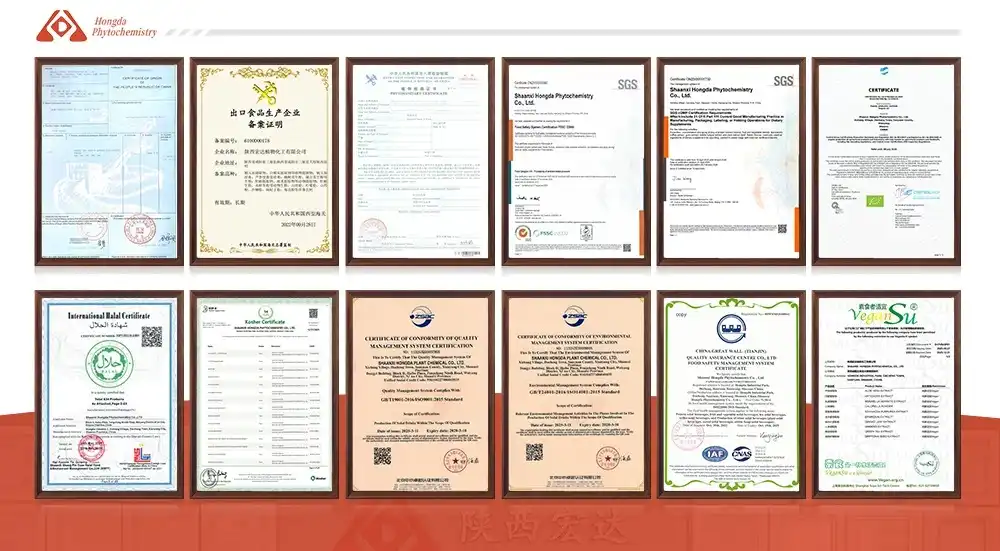
International compliance is a key aspect of ingredient sourcing, especially for firms selling supplements in many regions. For US customers, relevant FDA dietary supplement standards should be taken into account, including 21 CFR Part 111, which covers manufacture, packing, labeling, storage, specifications, and batch records.[3] European customers should verify Directive 2002/46/EC and relevant national legislation on food supplements, acceptable sources of minerals, labeling,[4] and safety. Depending on the completed product and target market, extra verification can be required for contaminant levels, food safety records, identification of ingredients, and claims compliance. Certifications and qualifications reported by Hongda include cGMP, FSSC 22000, ISO 22000, ISO 9001, BRC, Halal, Kosher, FDA-related registration, and organic certifications including EU Organic and USDA NOP. Buyers should be advised to ask for the latest certifications, check their scope and validity, and ask whether these certificates cover the real production location and relevant product category. Certification should complement, not replace, product-specific regulatory review.
Stable Inventory and Export Documentation Support Long-Term Supply
Supplement brands face disruptions to manufacturing schedules and delays in product launches due to ingredient shortages. A reliable supplier must thus show both production capability and effective inventory management. Shaanxi Hongda Phytochemistry Co., Ltd. has been in business since 2001 with an annual manufacturing production capacity of up to 3,000 tons of its products. Its six-area warehouse system provides storage and organization for various ingredient categories. Dedicated personnel are responsible for storage area and sterilization processes. The company’s published information on magnesium bisglycinate products states 25-kilogram drums, 27 drums per pallet, and a usual delivery duration of 3-7 working days, subject to order confirmation and stock availability. For foreign shipments, customers should additionally ask for a comprehensive package of export documents comprising COA, MSDS, origin documentation, certifications as applicable, and food safety documentation as appropriate. If you are comparing vendors or developing a novel formulation, please contact Hongda at duke@hongdaherb.com to discuss specs, samples, and batch documentation before making a bulk purchase.
What Makes Hongda Phytochemistry a Practical Manufacturing Partner?
Supplier selection should be based on product requirements, technical communication, production capability, and quality assurance. Hongda Phytochemistry was formed in 2001 and was awarded National High-tech Enterprise status in 2010. It was developed with the backing of two R&D institutes, more than 20 experienced research and testing workers, and in partnership with university academics. It also has three planting bases of high-mountain green tea, Sophora japonica, and Chinese medicinal materials to serve its larger botanical ingredient industry. The company's manufacturing and quality management credentials include food production license, BRC, Halal, Kosher, cGMP, FSSC 22000, ISO 22000, ISO 9001, and organic certifications. The real value for purchasers of magnesium ingredients is the combination of production capacity and product-specific technical assistance. Hongda’s magnesium bisglycinate chelate powder is suitable for bulk nutraceutical applications, and purchasers may discuss alternative specifications, particle-size requirements, and formulation compatibilities with its technical staff.
Conclusion
Magnesium bisglycinate is often regarded as a good magnesium alternative for supplement formulations focused on promoting digestive comfort due to its amino acid chelate structure and good tolerance profile. But true chelation, correct elemental magnesium concentration, regulated moisture, and rigorous analytical verification are the key to constant product quality. For supplement makers, these characteristics are directly related to formulation performance, label correctness, and customer trust. Partnering with an experienced provider of magnesium bisglycinate powder may make product development easier while reducing sourcing uncertainty. Established laboratory capabilities and international quality certifications, together with more than 20 years of production expertise, make Hongda Phytochemical the world’s leading manufacturer of bulk magnesium bisglycinate wholesale in China for use in nutraceuticals across the world. Get in touch with our technical staff to discuss requirements, request samples, and help assess an appropriate ingredient grade for your next product launch.
FAQ1. Why is magnesium bisglycinate considered gentle on the stomach?
Its amino acid chelate structure makes it a popular alternative to certain conventional magnesium salts. Individual tolerance still depends on dosage and formulation.
2. How can buyers verify whether magnesium bisglycinate is fully chelated?
Request FTIR analysis, elemental magnesium results, glycine-to-magnesium ratio data, and free-glycine testing. Evaluate these results together rather than relying on one test.
3. What elemental magnesium content does Hongda's product offer?
Hongda's published product information lists 20% elemental magnesium. Buyers should confirm the exact grade, composition, and batch-specific COA before calculating finished-product dosage.
4. How should magnesium bisglycinate powder be protected against moisture?
Use sealed moisture-resistant packaging, controlled warehouse humidity, and appropriate storage conditions. Evaluate caking and moisture uptake during stability testing.
5. Can magnesium bisglycinate be used in capsules, tablets, and gummies?
Yes. It can be considered for all three applications, although particle size, flowability, taste, compression, and finished-product stability should be evaluated separately.
Develop Better Magnesium Supplements With HONGDA
Choosing the right mineral ingredient can influence every stage of supplement development, from raw material inspection to finished-product quality. HONGDA combines manufacturing experience, laboratory testing resources, and international quality management qualifications to support customers seeking consistent magnesium bisglycinate chelate powder. Whether you are developing digestive-comfort-focused capsules, premium mineral tablets, functional gummies, or customized nutritional blends, our team can help evaluate ingredient specifications and application requirements. We welcome discussions with supplement manufacturers, private-label brands, distributors, and bulk ingredient purchasers in the United States and Europe. Request a representative sample, discuss your required elemental magnesium content, or obtain batch-specific quality documentation before making your purchasing decision. Contact Hongda Phytochemistry today at duke@hongdaherb.com to discuss wholesale cooperation, technical requirements, and your next magnesium supplement project.
References
1. National Institutes of Health, Office of Dietary Supplements. Magnesium: Fact Sheet for Health Professionals. NIH, updated 2024.
2. Dowley, A., Long-Smith, C. M., Demehin, O., et al. The Bioaccessibility and Tolerability of Marine-Derived Sources of Magnesium and Calcium. Methods, 2024, 226: 28–34.
3. U.S. Food and Drug Administration. 21 CFR Part 111: Current Good Manufacturing Practice in Manufacturing, Packaging, Labeling, or Holding Operations for Dietary Supplements. FDA, 2007.
4. European Parliament and Council. Directive 2002/46/EC on the Approximation of the Laws of the Member States Relating to Food Supplements. Official Journal of the European Communities, 2002.