




Benefits of Chlorella Supplements for Metabolic Health
Metabolic health has quietly become the organizing theme of the supplement aisle – blood sugar balance, lipid profiles, liver support, weight control, and the low-grade inflammation that connects them all. Chlorella fits particularly well into that discourse, and marketers are working quickly to own the sector.[4] Hongda Phytochemistry assists them from the raw material end. Shaanxi Hongda Phytochemistry Co., Ltd. was established in 2001 and produces at a factory of around 20,000 m², with more than ten manufacturing lines and 100,000-class purification workshops, and an SGS-standardised laboratory run in partnership with university academics. Documentation makes the benefits of chlorella supplements commercially usable. Hongda offers verified cell-wall cracking rates, chelation-capacity data, heavy-metal and pesticide panels, adulteration fingerprinting and a complete EU/NOP organic compliance pack — batch after batch, on time, from stocked inventory.
What Metabolic Health Research Actually Says About Chlorella?
Glycaemic Control and Insulin Sensitivity
Here, clinical interest is not speculation. Chlorella consumption has been studied in randomized, controlled human studies at dosages generally ranging from 1.5 g to 8 g per day for 8–12 weeks and has been associated with improvements in fasting glucose and insulin-sensitivity indicators in persons with impaired metabolic parameters.[2]
The postulated mechanisms include the high-quality protein and peptide portion of chlorella, its arginine content, and its antioxidant pigments, lowering oxidative load on insulin signaling pathways. In practical terms for brand owners, the advantages of chlorella supplements may be framed around daily metabolic support at realistic serving levels, which in turn drives raw material economics. At 3 g per day, that's around 1.1 kg of powder per user per year, so assay consistency and price stability are as important as the science itself. That batch calculation is reliable across manufacturing runs—thanks to Hongda's standardized lots.[2]
Lipid Profile and Liver Support
A second line of study examined the effects of chlorella on total cholesterol, LDL and triglycerides as well as on hepatic enzyme markers in patients with increased liver results. Dietary fiber from the algal cell wall, chlorophyll, carotenoids, and the Chlorella Growth Factor complex are all implicated, with fiber binding bile acids and pigments adding antioxidant capacity in hepatic tissue.[1]
Formulators looking to leverage the advantages of chlorella supplements for liver-and-lipid positioning should pay special attention to one processing feature above all: chlorophyll degrades to dull pheophytin under heat, and the chemicals involved with these actions are heat-sensitive. So Hongda dries and processes at a regulated low temperature. This is also why its material remains a vibrant green and not the olive brown tone that signifies thermal abuse.
Why the Cell Wall Determines Whether Any of It Works?
The cellulose wall of Chlorella is famously indigestible by us. If it is not physically broken, a lot of the nutrients just slip right through, and the claimed advantages of chlorella supplements are hard to replicate in a final product.[3] Hongda employs controlled mechanical disruption, foregoing the use of harsh heat or chemical treatments, and has achieved a cracking rate of over 95%, which is microscopically validated on each manufacturing lot and reported on the Certificate of Analysis. It's worth pushing any provider on the distinction: "broken cell wall" is a marketing term, while "95%+ cracking rate confirmed by microscopy, lot number X" is a specification. Ask the 2nd.
Core Specification Overview
|
|
Hongda Standard
|
Method
|
||
|---|---|---|---|---|
|
Species
|
Chlorella vulgaris / pyrenoidosa
|
Microscopy
|
||
|
Appearance
|
Fine deep-green powder
|
Visual
|
||
|
Cell-wall cracking rate
|
≥ 95%
|
Optical microscopy
|
||
|
Protein (dry basis)
|
≥ 55%
|
Kjeldahl
|
||
|
Chlorophyll
|
≥ 2.0%
|
Spectrophotometry
|
||
|
Dietary fibre
|
≥ 10%
|
AOAC
|
||
|
Loss on drying
|
≤ 7.0%
|
105°C / 3 h
|
||
|
Ash
|
≤ 8.0%
|
Gravimetric
|
||
|
Mesh
|
95% through 100 mesh (200 optional)
|
Sieve
|
||
|
Shelf life
|
24 months sealed
|
Stability study
|
From Cultivation Pond to Finished DrumControlled Cultivation and Raw-Material Traceability
All the stuff downstream gets the water the algae grew in. For the benefits of chlorella supplements to hold up, Hongda does not opportunistically source from open brokers but has specialized cultivation and planting bases overseen by in-house agronomists with water-source monitoring and fixed harvest times. Each lot has a traceability code connecting the cultivation batch, harvest date, drying conditions, cracking run, and warehousing zone – the type of chain-of-custody file that EU organic equivalence tests and NOP audits need in writing.
If you are a buyer looking at the advantages of chlorella supplements for a premium SKU, remember that organic certification only covers the growing system, not the processing discipline. You need proof for both. Hongda's storage room is 3,000 m 2, divided into six zones (A-F). Natural plant extracts are stored in zones C and D with humidity control, and sanitation workers are separately assigned to each zone.
Low-Temperature Drying and 100,000-Class Processing
Inside the factory, the material is processed in purifying workshops of 100,000 class. There are more than ten manufacturing lines with over 150 qualified specialists, which provide Hongda with an annual capacity of up to 3,000 tons. We map the temperature of the spray-drying settings to make sure the pigment and peptide fractions remain intact, with too high an inlet temperature being the most frequent reason a competitor's powder is pale and underperforming. So keeping the advantages of chlorella supplements through processing is a technical concern before it is a marketing one. The process parameters are covered by many national patent technologies, and the company obtained National High-tech Enterprise status in 2010, and batch records are kept and are available for customer audit.
Batch Release Through the SGS-Standardised Laboratory
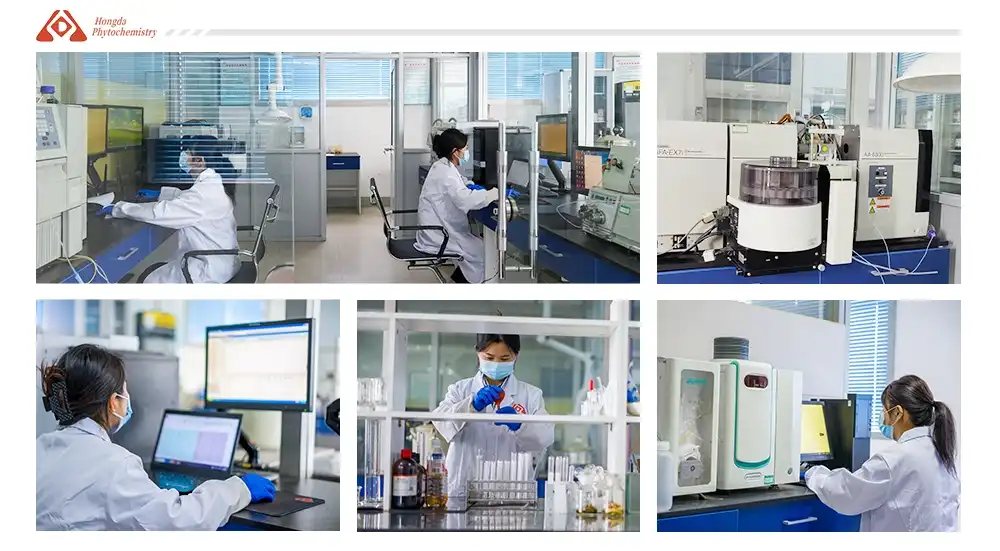
Nothing is sent on assumption. Hongda’s laboratory, established with partners from universities and manned by more than 20 researchers and analysts at the professor level, is equipped with HPLC, GC, UV-Vis and atomic absorption spectrophotometers, polarimeters, automated titrators, melting-point equipment and BOD/COD incubators. All lots are tested for active content, pesticide residues, moisture, heavy metals, and microbiological contamination against international limits before distribution. Results are collated into a batch COA, and raw chromatograms are available on request. Also, two internal R&D institutes do rapid stability and compatibility studies, so a client developing a new product around the advantages of chlorella supplements may get supporting evidence without having to pay for a six-month research project of their own.
The Three Technical Objections Buyers Raise
Chelation Rate: Quantifying the Binding Claim
One of the least proven claims in supplier literature and one of the greatest marketing hooks for chlorella is its reputation for binding environmental metals. Hongda also carries out in vitro chelation testing, where a known amount of powder is incubated with specified metal-ion solutions at simulated stomach and intestinal pH, and the leftover free ions are assessed by atomic absorption spectrophotometry to provide a % binding rate per metal. That offers brands a laboratory number to defend, rather than an adjective to hedge. Critically, the same instrumentation enforces incoming limits for lead, cadmium, arsenic, and mercury against EU Regulation 2023/915 and US state thresholds — because a binding ingredient that carries its own contamination load destroys the entire proposition behind the benefits of chlorella supplements.
Benchmarking suppliers today? Provide your desired specification to duke@hongdaherb.com and our technical team will provide you with a live batch COA, chelation-rate report, comprehensive heavy-metal and pesticide panel, and a free evaluation sample so your own laboratory can appraise the substance before you purchase.
Adulteration Screening: Proving It Is Really Chlorella
Green granules are an easy target. Typical substitutes include alfalfa, barley grass, and wheatgrass mixed in to lower cost, spirulina substituted where chlorella is requested, and nitrogen-rich additions to boost the Kjeldahl protein reading. Hongda uses a four-layer screen on each lot: microscopic cell-morphology identification to identify genus and detect alien plant material, UV-Vis and HPLC pigment fingerprinting against reference standards, amino-acid profile to reveal non-algal nitrogen, and synthetic-dye tests on request. Since the cultivation and processing are under one roof, there is no anonymous trade stage where substitution may creep in. For many purchasers whose whole claim is based on the advantages of chlorella supplements, that integrity of supply is worth more than a two percent price discount.
|
Procurement Risk
|
Hongda Control
|
Evidence Supplied
|
|---|---|---|
|
Uncracked cell wall
|
Mechanical cracking ≥95%
|
Microscopy result on COA
|
|
Species substitution
|
Cell-morphology identification
|
Micrograph on request
|
|
Green-plant fillers
|
Pigment ratio fingerprinting
|
HPLC / UV-Vis data
|
|
Protein spiking
|
Amino-acid profile cross-check
|
HPLC report
|
|
Heavy-metal load
|
Four-metal panel, every lot
|
AAS certificate
|
|
Pesticide residues
|
Multi-residue EU/NOP screen
|
GC-MS / LC-MS report
|
|
Microbial load
|
Full micro panel
|
Plate-count data
|
Moisture Uptake, Caking and a Real Shipment Case
Hygroscopic caking causes the most complaints of all the bulk green powder defects. Loss on drying more than around 8% tends to cause the material to lump in the drum, bridge in tablet hoppers, and lose color more quickly. Hongda chlorella is supplied at ≤7% moisture, double-lined in food-grade PE within fiber drums. Desiccant sachets and nitrogen flush may be provided for humid locations. One documented example: A Middle Eastern capsule manufacturer had been scrapping partial drums after summer storage with a previous vendor. Hongda supplied nitrogen-flushed packing with a 100-mesh grade tuned to their encapsulation line, and the client confirmed free-flowing material at month six before placing a repeat five-tonne order. Storage advice is simple – below 25°C, below 60% RH, resealed soon after sampling.
Turning the Raw Material Into a Sellable Product
Compatibility in Capsules, Tablets, Gummies and Drinks
Formulators need behavior data as well as dietary data to realize the benefits of chlorella supplements. Hongda's chlorella has a bulk density of ~0.45–0.60 g/mL, compresses well with MCC and the usual binders, and tolerates wet granulation as long as drying temperatures are kept reasonable. In liquids, it disperses with little stirring; in gummies, casting temperature and pigment stability are the factors to pilot. Many companies now blend chlorella supplements with the advantages of spirulina, inulin, probiotics, vitamin B12, or mineral premixes. Hongda's R&D teams perform binary compatibility holds under expedited settings and report assay and color change over time. It's common practice to have trial amounts for pilot runs, nothing exceptional.
Dosing Formats That Match the Metabolic Positioning
Metabolic-support dose is normally between 2g and 6g per day, which eliminates capsules as the only container at the upper end – taking between six and twelve capsules a day kills compliance. That relegates most significant products to tablets, stick packs, or scoop powders, and each form has its own needs in terms of particle size and flow. Hongda offers 80, 100 and 200 mesh grades with tableting-optimised and instantised choices available, so a brand may convey the same chlorella supplement benefits narrative across three SKUs without three distinct providers. Matching mesh to format at the quote stage eliminates the costly discovery of a flow issue during validation.
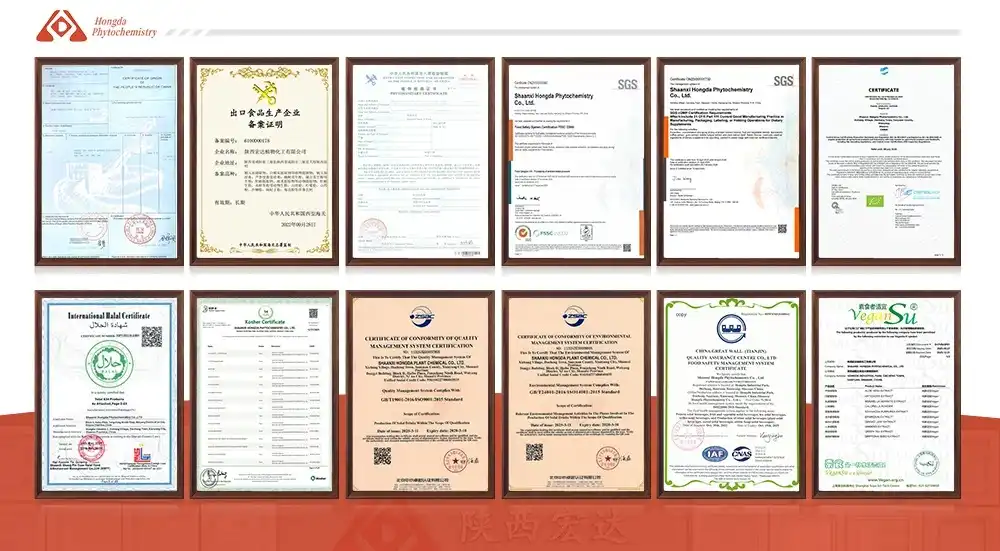
Certification and Documentation for Western Markets
|
Document
|
Hongda Status
|
|---|---|
|
Organic
|
EU Organic and USDA NOP certified
|
|
Food safety systems
|
FSSC 22000, ISO 22000, ISO 9001, BRC
|
|
Manufacturing
|
cGMP certified, SC production licence
|
|
Religious
|
Halal and Kosher
|
|
Regulatory
|
FDA-registered facility
|
|
Enterprise
|
National High-tech Enterprise, multiple patents
|
|
Per shipment
|
COA, MSDS, allergen/GMO/TSE statements, flow chart, spec sheet
|
Conclusion
The metabolic rationale for chlorella – glycemic indicators, lipid profile, liver support – and the benefits of chlorella supplements only stand up in a completed product if the raw material behind it is cracked correctly, dried softly, and tested honestly. Shaanxi Hongda Phytochemistry couples certified organic cultivation, proven cell-wall cracking ≥95%, 100,000-class workshops and an SGS-standardised laboratory with precisely the evidence procurement teams require: chelation-rate reports, adulteration fingerprints, moisture-stability records and a complete EU/NOP compliance dossier. Delivery is always on time thanks to 3,000 tons of yearly capacity and six filled storage zones. Order a sample now and let your own lab see the difference.
FAQQ1: What cell-wall cracking rate does Hongda guarantee?
A: At least 95%, verified by optical microscopy on every production lot and stated on the COA.
Q2: Can you supply chelation-rate test data?
A: Yes — in vitro binding rates measured by atomic absorption spectrophotometry are available on request.
Q3: How is caking prevented in humid markets?
A: Moisture held at ≤7%, double PE liners in fibre drums, plus desiccant and nitrogen flush on request.
Q4: How do you detect fillers such as alfalfa or barley grass?
A: Through cell-morphology microscopy, pigment fingerprinting by HPLC/UV-Vis and amino-acid profiling.
Q5: Which certifications cover EU and US imports?
A: EU Organic, USDA NOP, cGMP, FSSC 22000, ISO 22000, ISO 9001, BRC, FDA registration, Halal and Kosher.
Build Your Next Metabolic SKU With HONGDA
Every provider will tell you their chlorella is the best. Instead of asking Shaanxi Hongda Phytochemistry Co., Ltd. to prove the benefits of chlorella supplements, ask for a validated cracking-rate micrograph, a chelation-rate report, a four-metal AAS panel, a pesticide screen, and a moisture-stability record, and test a free sample in your own laboratory. Tell us your mesh need, dosage format, target market, and yearly volume, and our technical staff will price with the whole compliance dossier attached, encompassing EU Organic, NOP, cGMP, FSSC 22000, BRC, Halal and Kosher. We send container after container, on time, with stocked inventory throughout six storage zones and an annual capacity of 3,000 tons. Email duke@hongdaherb.com today and start your trial order.
References
1. Panahi, Y., Ghamarchehreh, M. E., Beiraghdar, F., et al. "Investigation of the effects of Chlorella vulgaris supplementation in patients with non-alcoholic fatty liver disease." Hepato-Gastroenterology, 2012.
2. Ebrahimi-Mameghani, M., Sadeghi, Z., Abbasalizad Farhangi, M., et al. "Glucose homeostasis, insulin resistance and inflammatory biomarkers in patients with non-alcoholic fatty liver disease: Beneficial effects of supplementation with Chlorella vulgaris." Clinical Nutrition, 2017.
3. Safi, C., Zebib, B., Merah, O., Pontalier, P.-Y., & Vaca-Garcia, C. "Morphology, composition, production, processing and applications of Chlorella vulgaris: A review." Renewable and Sustainable Energy Reviews, 2014.
4. Bito, T., Okumura, E., Fujishima, M., & Watanabe, F. "Potential of Chlorella as a dietary supplement to promote human health." Nutrients, 2020.