




Pine Pollen Benefits: Nutrients and Bioactive Compounds
Pine pollen benefits have had a unique path – from a traditional Chinese tonic documented centuries ago to a sought-after raw resource in North American and European ingredient lists. The composition drives that demand: one single golden grain contains free amino acids, B vitamins, trace minerals, polysaccharides, flavonoids, and plant sterols in a naturally balanced matrix. It's a discipline in itself to make that mixture a shippable, auditable ingredient, and that's where Hongda Phytochemistry earns its stripes. Shaanxi Hongda Phytochemistry Co., Ltd. was founded in 2001 and occupies 20,000 m², with more than ten manufacturing lines and 100,000-class purification workshops, and has an SGS-standardised laboratory established with university professors. For purchasers looking at pine pollen advantages, Hongda gives you what the marketing websites don't: verifiable wall-breaking rates, chelation and heavy-metal statistics, adulteration fingerprints, moisture-stability records, and a thorough EU/NOP compliance file.
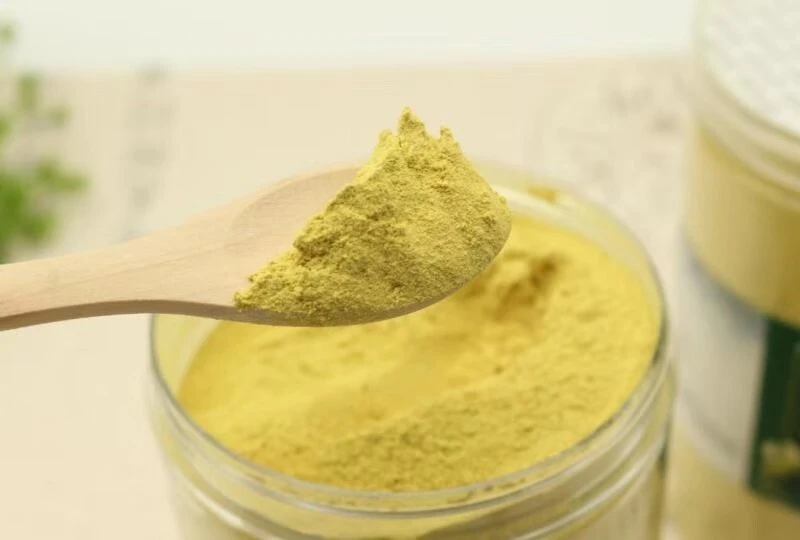
Inside the Grain — The Nutrient and Bioactive Architecture
Amino Acids, Vitamins and the Micronutrient Base
Pine pollen is a nutrient-rich bundle. Pinus massoniana and Pinus tabulaeformis pollen analyzes usually find some 20 or so amino acids including all necessities. They also include a range of B-group vitamins (B1, B2, B6, niacin, folate), vitamin E, and trace minerals such as zinc, magnesium, manganese, iron, and selenium. It is this breadth that explains why the story of pine pollen benefits can't be boiled down to one active ingredient – the substance works as a whole-food concentration, not a standardized isolation.[5]
That is an opportunity and a documentation issue for product makers. Quality must be proved using a larger analytical panel since there is no single marker chemical to test. Hongda solves this by providing protein, amino-acid profile, polysaccharide content, and flavonoid levels together, so the consumer sees a composition fingerprint, not a single handy figure.
Polysaccharides, Flavonoids and Phenolic Antioxidants
The bioactive layer is predominantly in the polysaccharide and polyphenol fractions. Pine pollen polysaccharides were evaluated for immune-modulating and antioxidant behavior in experimental models, while flavonoids and phenolic acids have been shown to have significant radical-scavenging activity in conventional tests.[3][4]
These are also the fractions most readily ruined by negligent processing – lengthy heating destroys polyphenols, and exposure to air during milling flattens antioxidant activity. So any provider claiming pine pollen advantages will need to be able to explain how the material was dried and processed, not just what it says on paper. Hongda monitors the drying temperature and the milling residence time for each batch of production and checks the polysaccharide and flavonoid content by spectrophotometry before release.
Plant Sterols and Naturally Occurring Growth Factors
Pine pollen has a reputation among male-wellness and sports-nutrition brands because of its sterol fraction, which includes brassinosteroids, and trace amounts of plant steroidal chemicals, nucleic acids, and enzymes involved in the grain's reproductive function. Marketing in this sector is red-hot; therefore, a dose of reality is useful: concentrations are low, and appropriate positioning puts pine pollen benefits into perspective with general vitality, antioxidant intake, and nutritional density rather than pharmaceutical promises. Hongda's regulatory team identifies claim wording that could raise eyebrows in the EU or with the FTC in the U.S., and gives purchasers supply composition data they can really back up. An assertive label is a poor protector of the brand, compared to honest specification.[1][2]
How Does Hongda Ensure Pine Pollen Quality and Traceability?
Harvest Window, Wild Collection and Traceability
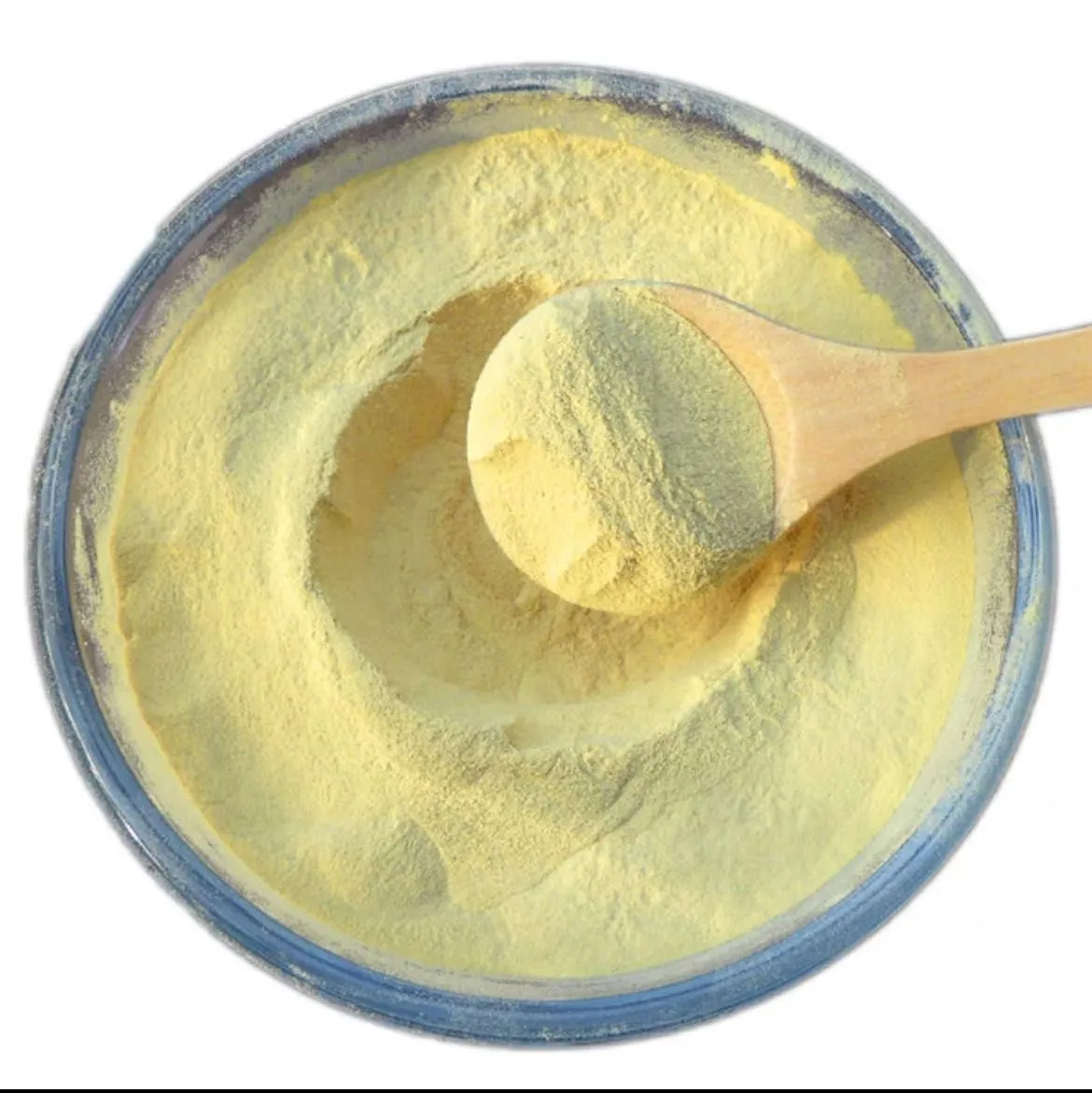
Pine pollen Powder is produced for around ten to fifteen days every spring, and material collected outside that peak has lower bioactive content and more detritus. Hongda operates with controlled collecting locations and agronomist-monitored procurement, with raw material examined on input for species authenticity, foreign plant matter, insect fragments, and moisture before it reaches the facility. Each lot is assigned a traceability number that links collecting location, harvest date, drying run, wall-breaking batch, and warehousing zone — the paper trail that EU organic equivalence evaluations and NOP audits want in writing. Pine pollen advantages is a file that customers creating a premium SKU should want. Once material is pooled by an anonymous merchant, origin claims become untraceable.
Sporoderm Wall-Breaking: The Single Most Important Step
An unbroken pollen particle is encased in sporopollenin, one of the most chemically resistant biopolymers in nature — basically indigestible. Mostly unbroken pollen goes wasted, therefore the pine pollen advantages claimed in the literature are virtually typically for broken-wall or extracted material. Hongda employs low-temperature physical wall breaking (using air movement, mechanical disruption rather than chemical and high-heat procedures), giving a sporoderm-breaking rate of 98% or higher, proven microscopically on every lot, and stated on the certificate of analysis. The low-temperature approach is a two-for-one: it preserves heat-sensitive vitamins and polyphenols, and avoids the burned note that makes badly processed pollen difficult to disguise in a drink or chewable.
100,000-Class Workshops and Batch Release Discipline
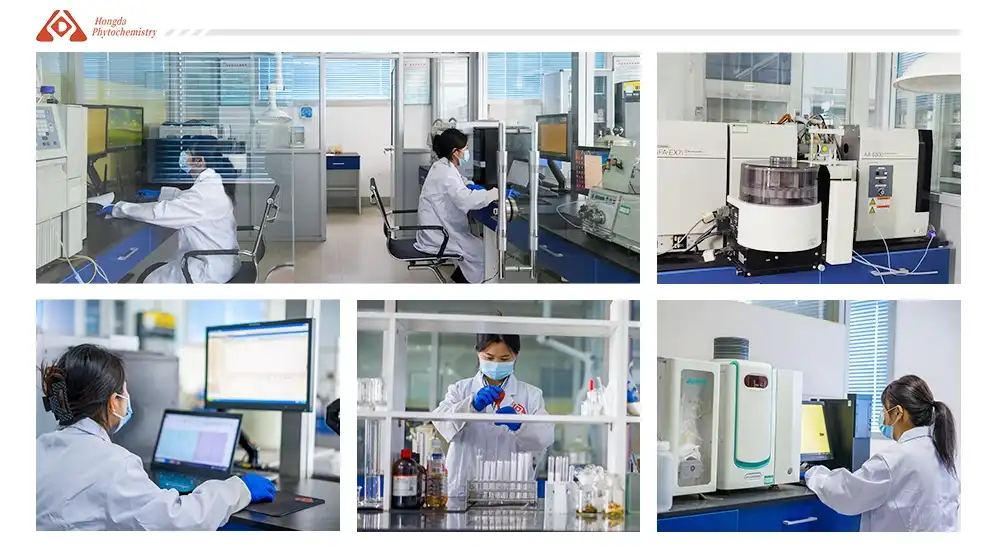
With over 150 qualified experts on ten-plus manufacturing lines, Hongda has an annual capacity of 3,000 tons and supports its processes with various national patent technologies. Processing takes place inside 100,000-classpurificationg workshops. Over 20 professors and analysts, working at the company's SGS-standardised laboratory, use HPLC, GC, UV-Vis and atomic absorption spectrophotometers, polarimeters, automated titrators and BOD/COD incubators to conduct the release testing.
We don't send any lots of pine pollen without active content, pesticide residue, moisture, heavy metal, and microbiological testing against international standards. Results are combined into a batch COA. Raw chromatograms are accessible upon request – the level of proof that allows a QA manager to sign off on pine pollen benefits claims without crossing their fingers.
|
Item
|
Limits of Test
|
Results
|
|
Appearance
|
Yellow powder
|
Complies
|
|
Odor
|
Characteristic
|
Complies
|
|
Protein
|
≥10%
|
11.4%
|
|
Wall-broken Rate
|
>98%
|
98.9%
|
|
Loss on Drying
|
≤ 5.0%
|
4.32%
|
|
Residue on Ignition
|
≤5.0%
|
4.58%
|
|
Sieve Analysis
|
100% pass 80 mesh
|
Complies
|
|
Heavy metals
|
≤ 10ppm
|
Complies
|
|
As
|
≤ 2ppm
|
Complies
|
|
Pb
|
≤ 2ppm
|
Complies
|
|
Hg
|
≤ 1ppm
|
Complies
|
|
Microbiology
|
||
|
Total bacterial count
|
≤ 1000CFU/g
|
Complies
|
|
Yeasts & mold
|
≤ 100CFU/g
|
Complies
|
|
E.coli
|
Negative
|
Complies
|
|
Salmonella
|
Negative
|
Complies
|
|
Shelf life
|
2 years when properly stored
|
|
|
Conclusion
|
Complies with the Enterprise Standards
|
|
The Procurement File — Three Questions Every Serious Buyer AsksChelation Rate and Heavy-Metal Verification
Trace-metal screening is not optional; it is mandatory. The pollen comes from trees that have been breathing local air for decades. Hongda conducts atomic absorption spectrophotometry for lead, cadmium, arsenic, and mercury on every batch, based on EU Regulation 2023/915 and corresponding US state criteria. In addition to simple limit testing, the laboratory performs a chelation-rate check: samples are digested with a chelating agent and spiked recovery is compared to direct digestion, verifying that reported metal values reflect true total content and not incomplete extraction from the resistant sporopollenin matrix.[6]
This is the difference between a real figure and a comfortable number — and for businesses whose whole narrative is constructed on natural pine pollen advantages, a contamination surprise after launch is the most costly result possible. Comparing suppliers right now? Send your target specification to duke@hongdaherb.com and our technical team will reply with a current batch COA, the wall-breaking micrograph, a four-metal AAS report, pesticide screen, and a free evaluation sample — so your own laboratory can judge the material before any purchase commitment.
Adulteration Identification: Confirming It Is Really Pine Pollen
Pine pollen fetches a premium price and, since it superficially resembles various cheaper yellow powders, suffers from a recognized market issue of dilution – rape (canola) pollen, maize pollen, bee pollen fractions, maltodextrin and rice flour have all been detected in grey-market material. Hongda uses a multi-tiered screen: microscopic examination of grain morphology, where the characteristic bisaccate (two air-bladder) structure of pine pollen is easily identified by the experienced analyst; UV-Vis and HPLC fingerprinting of the flavonoid profile against reference standards; protein and polysaccharide cross-checks for the presence of starch-based bulking agents; and starch/iodine testing as needed. Since Hongda controls collection and processing in-house, it doesn’t have to go through the anonymous blending stage at all. That’s why their substance offers the pine pollen advantages that its spec claims.
|
Procurement Risk
|
Hongda Control
|
Evidence Provided
|
|---|---|---|
|
Unbroken pollen grains
|
Low-temp physical wall-breaking ≥98%
|
Micrograph + COA figure
|
|
Species substitution
|
Grain-morphology microscopy
|
Identification report
|
|
Starch/maltodextrin bulking
|
Polysaccharide & starch screening
|
Lab data
|
|
Flavonoid shortfall
|
Spectrophotometric assay per lot
|
COA value
|
|
Heavy metals
|
Four-metal AAS with chelation recovery check
|
AAS certificate
|
|
Pesticide residues
|
Multi-residue EU/NOP screen
|
GC-MS / LC-MS report
|
|
Microbial load
|
Full micro panel per lot
|
Plate-count data
|
Moisture Uptake, Caking and a Real Shipment Case
Fine, lipid-containing pollen powder for pine pollen benefits is hygroscopic, and once loss on drying increases over around 7%, purchasers witness lumping in the drum, bridging in capsule fillers and increased oxidation of the lipid part. Hongda releases at ≤6% moisture in double food-grade PE liners in fiber drums, with desiccant sachets and nitrogen flush available for humid routes. One documented example: a North American sachet brand had been rejecting partial drums after monsoon-season transit with a previous vendor. Hongda supplied nitrogen-flushed packing at 100 mesh matched to their filling equipment, and the customer confirmed free-flowing powder and stable color at month six, then placed a repeat two-tonne order. Storage advice is still basic – below 25°C, below 60% RH, reseal soon after sampling.
Building the Product — Compatibility, Formats and Compliance
Blending Behaviour With Other Actives
Formulators almost seldom utilize pollen alone. It is often combined with maca, tongkat ali, cordyceps, zinc, vitamin D, or adaptogen mixes, and each partner asks its own compatibility inquiry. Hongda's pine pollen has a bulk density of around 0.40–0.55 g/mL, may be compressed acceptably using MCC and conventional binders, and can be dispersed in drinks with minimal agitation. However, the distinctive resinous note often requires masking in liquid forms. Hongda’s two in-house R&D institutes do expedited binary compatibility holds, monitoring assay, moisture, and color so that customers may build around pine pollen advantages without finding an interaction mid-validation. Pilot-scale amounts are the norm, not some exceptional privilege.
Dosage Formats and Mesh Selection
Typical serving sizes of 1-3 g per day put most products toward the lower end of capsules and the upper end of tablets, stick packs, or scoop powders. Each format has a particular need for particle size: coarser grades flow better in encapsulation, finer grades disperse better in beverages, and tableting grades require regulated bulk density ."Hongda offers 80, 100, and 200 mesh as standard, with custom options, so a brand can have a consistent pine pollen benefits platform across several SKUs from one validated supply chain. It's a lot cheaper to match mesh to format at quote stage than find a flow issue during a manufacturing run.
Documentation for EU and US Importers
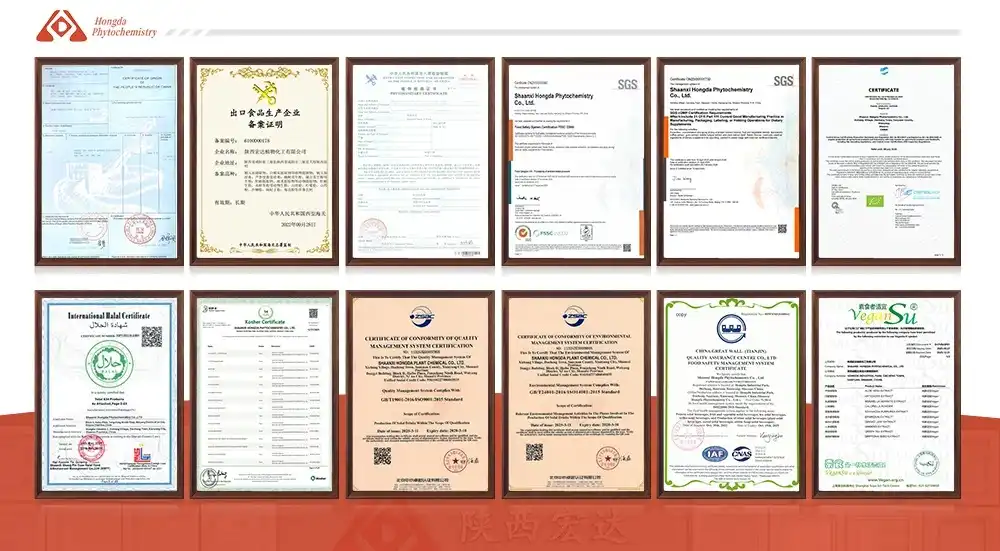
|
Document
|
Hongda Status
|
|---|---|
|
Food safety systems
|
FSSC 22000, ISO 22000, ISO 9001, BRC
|
|
Manufacturing standard
|
cGMP certified, SC production licence
|
|
Organic
|
EU Organic and USDA NOP certified lines available
|
|
Religious certification
|
Halal and Kosher
|
|
Regulatory
|
FDA-registered facility
|
|
Enterprise status
|
National High-tech Enterprise since 2010, multiple patents
|
|
Shipment-level files
|
COA, MSDS, allergen / GMO / irradiation statements, flow chart, spec sheet
|
Stock is held across six controlled warehouse zones within a 3,000 m² facility, each with dedicated sanitation staff, which is why standard grades usually ship in days rather than weeks.
Conclusion
Pine pollen benefits have earned their name because of the grain's makeup – amino acids, B vitamins, trace minerals, polysaccharides, flavonoids, and sterols functioning in concert, not one headlining activity. But that composition is finalized only after the grain is broken-walled at low temperature, dried slowly, inspected for metals and fillers, and packed to control moisture. Shaanxi Hongda Phytochemistry offers all four, supported by 100,000-class workshops, an SGS-standard laboratory, ≥98% certified sporoderm breaking, and a comprehensive EU/US compliance dossier. With more than twenty years of manufacturing and an annual capacity of 3,000 tons, dependability is a given. Order your sample now and see for yourself.
FAQQ1: What wall-breaking rate does Hongda guarantee?
A: At least 98%, achieved by low-temperature physical disruption and confirmed microscopically on every lot.
Q2: Which pine species is the powder sourced from?
A: Primarily Pinus massoniana and Pinus tabulaeformis, confirmed by grain-morphology microscopy.
Q3: Can you provide heavy-metal and chelation-recovery data?
A: Yes — four-metal AAS testing with chelating-digestion recovery verification is run per batch and reported on request.
Q4: How do you prevent caking during humid shipping?
A: Moisture is held at ≤6%, with double PE liners, fibre drums, desiccant, and optional nitrogen flush.
Q5: Is organic-certified material available?
A: Yes, EU Organic and USDA NOP certified production is available alongside conventional grades.
Source Your Pine Pollen From HONGDA — Request a Sample
All the specification papers for pine pollen benefits seem great until you want to see proof. Real file: wall-breaking micrograph, polysaccharide and flavonoid assay, four-metal AAS report with chelation recovery, pesticide screen, moisture-stability record. Challenge Shaanxi Hongda Phytochemistry Co., Ltd. Run a free sample on your own line. Tell us your mesh, dose format, target market, and yearly volume, and our technical staff will price with the entire compliance dossier attached, including cGMP, FSSC 22000, ISO 9001, BRC, FDA registration, Halal, Kosher, and organic certification. We deliver on time, with 3,000 tons of yearly capacity and six filled storage zones. Email duke@hongdaherb.com today.
References
1. Lee, K. H., & Choi, E. M. "Effect of pine pollen extract on experimental chronic arthritis." Phytotherapy Research, 2009.
2. Mao, G.-X., Zheng, L.-D., Cao, Y.-B., et al. "Antiaging effect of pine pollen in human diploid fibroblasts and in a mouse model induced by D-galactose." Oxidative Medicine and Cellular Longevity, 2012.
3. Geng, Y., Yang, J., Cheng, X., et al. "Structural characterization and immunomodulatory activity of polysaccharides from pine pollen." International Journal of Biological Macromolecules, 2019.
4. Choi, E. M. "Antinociceptive and antiinflammatory activities of pine (Pinus densiflora) pollen extract." Phytotherapy Research, 2007.
5. Campos, M. G. R., Bogdanov, S., de Almeida-Muradian, L. B., et al. "Pollen composition and standardisation of analytical methods." Journal of Apicultural Research, 2008.
6. European Commission. Commission Regulation (EU) 2023/915 on maximum levels for certain contaminants in food.