




Bulk ferrous bisglycinate powder: critical solubility data for tablet and capsule formulation
Every formulator who has ever dealt with iron knows the moment: the mix looks fine on Friday, and by Monday the granulation has morphed from light grey-green to rust-brown. Solubility, chelation integrity, and moisture behavior aren't just academic requirements for this constituent – they determine whether your tablet passes dissolution, keeps its color, and survives eighteen months on a shelf in Houston or Jakarta.[1] Hongda Phytochemistry provides the data to build around such realities, rather than discovering them after validation. Shaanxi Hongda Phytochemistry Co., Ltd was founded in 2001. It has roughly 20,000 square meters of industrial area, more than ten production lines and 100,000-class purification workshops, as well as an SGS-standard laboratory jointly established with university academics. The ferrous bisglycinate powder is provided with validated chelation-rate statistics, iron analysis by AAS, pH-dependent solubility profiles, adulteration screens, moisture-stability records, and a comprehensive EU/US compliance file.
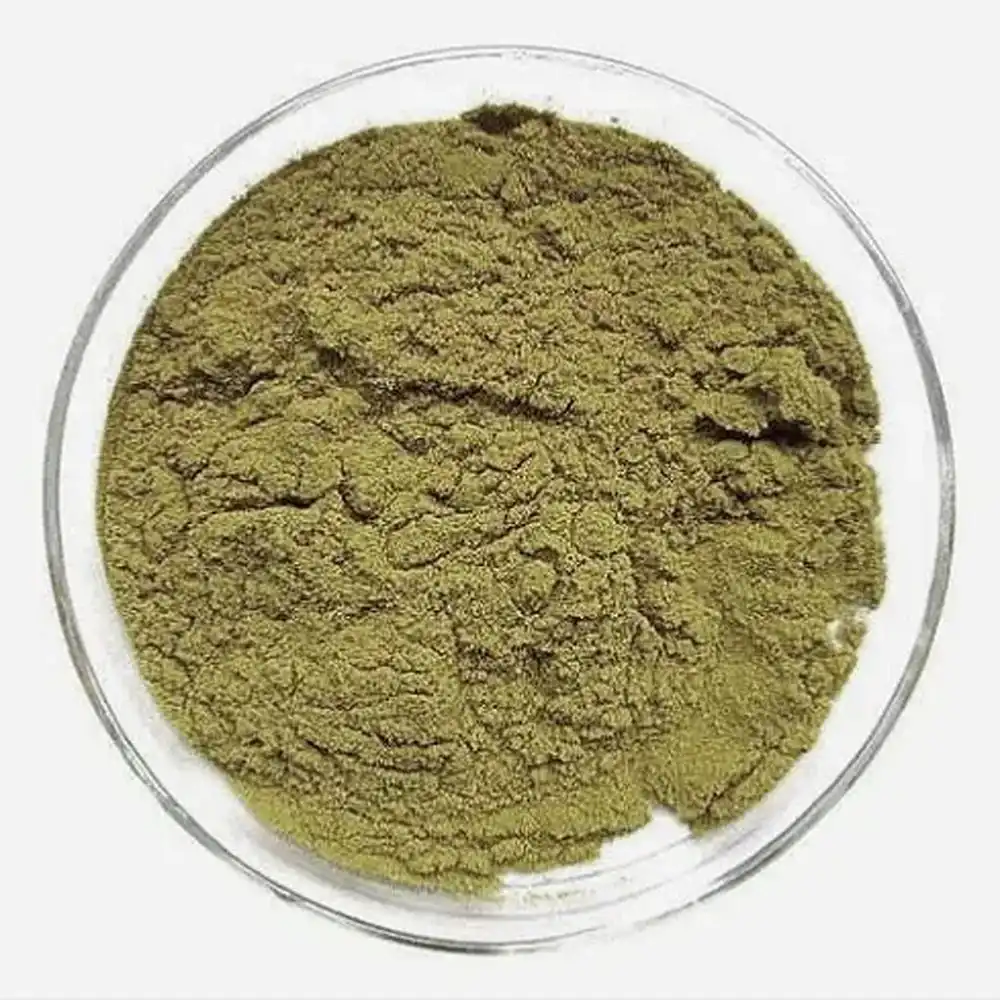
The Solubility Data Formulators Actually Need
Why Chelation Changes Solubility Behaviour Entirely?
Ferrous bisglycinate is iron (II) chelated with two molecules of glycine to produce two stable heterocyclic rings which protect the metal ion. That shielding is the whole marketing argument. The iron is no longer free to react with phytates, polyphenols, tannins, or fiber in the gut. Nor is it free to catalyze oxidation processes in the dose form. In function, ferrous bisglycinate powder resembles a tiny organic molecule more than a mineral salt, and this is why the solubility curve throughout physiological pH looks so different from ferrous sulfate.[2][5]
Ferrous sulfate readily dissolves in acid but precipitates as hydroxide as pH rises toward intestinal conditions; the chelate remains substantially soluble over a wider pH window, supporting more consistent absorption and, from a formulation standpoint, more predictable dissolution testing in both acid and buffer media.
Measured Solubility Across pH and Temperature
Numbers beat adjectives here. Bulk ferrous bisglycinate is easily soluble in water, and this solubility rises steeply with temperature. It has considerable solubility in neutral to slightly alkaline buffer where inorganic iron salts are not soluble. It is weakly soluble in ethanol and most organic solvents, which is of relevance to anybody intending alcoholic wet granulation. Practically, the advice for dissolution-method development is to run both the USP acid stage and a phosphate buffer; the flatter solubility profile of the chelate typically makes buffer the simpler medium, although inorganic iron formulations sometimes have difficulties there. Hongda may provide lot-specific dissolving behavior data on request, allowing clients to support media selection in their own method-validation report rather than textbook rationale.
|
Condition
|
Behaviour of Hongda Ferrous Bisglycinate
|
Formulation Implication
|
|---|---|---|
|
Water, 25°C
|
Freely soluble, clear to faintly green solution
|
Suitable for sachets and liquid pre-mixes
|
|
Water, 50°C
|
Solubility markedly increased
|
Supports hot-fill and syrup processes
|
|
pH 1.2 (gastric)
|
Fully soluble
|
Rapid acid-stage dissolution
|
|
pH 4.5 (buffer)
|
Substantially soluble
|
Stable mid-range release
|
|
pH 6.8 (intestinal)
|
Remains largely soluble
|
Key advantage over ferrous sulphate
|
|
Ethanol / organic solvents
|
Poorly soluble
|
Avoid alcoholic granulation fluids
|
|
Hygroscopicity
|
Moderate; absorbs moisture above ~60% RH
|
Controlled-humidity processing required
|
|
Taste profile
|
Low metallic note vs. inorganic salts
|
Enables chewables and direct powders
|
Particle Size, Flow and Direct Compression
Solubility is just half the story — the powder needs to make it to the die cavity first. Ferrous glycinate powder from Hongda is generally available in a bulk density of 0.45 to 0.70 g/mL, and in meshes of 40 to 200, since a coarse grade that flows nicely in a capsule filler may segregate adversely in a low-dose tablet mix. The fine grades dissolve more rapidly but bridge in hoppers under humid circumstances; the coarse grades flow smoothly but may impede dissolution in a thick tablet matrix. Rather than quoting a single nominal mesh, Hongda releases particle-size distribution, tapping density, and angle of repose every lot, enabling formulators to predict blend homogeneity and compression force before committing a trial batch. For tablet-making lines, there are granulated and direct compression grades.
Chelation Integrity: The Number That Separates Suppliers
What Chelation Rate Means and How It Is Measured?
And here is when the market softly diverges. A product might have the right amount of iron and the right amount of glycine, but instead be a physical mixture rather than a real chelate. A physical mixture does not provide any of the bioavailability or stability benefits that justify the price.[5][6] Hongda calculates chelation rate analytically by separating and quantifying the free (unchelated) ferrous ion, determining the total iron by atomic absorption spectrophotometry, and calculating and reporting the chelated fraction as a percentage. There is support from infrared spectroscopy, as the carboxylate and amine absorption bands typically change upon coordination. This number appears on the certificate of analysis for every lot of ferrous bisglycinate powder, not as a marketing claim but as a measured release characteristic.
Typical Analytical Specification
|
Parameter
|
Hongda Standard
|
Method
|
|---|---|---|
|
Appearance
|
Light grey to pale yellow-green free-flowing powder
|
Visual
|
|
Total iron (Fe)
|
18–20%
|
AAS / titration
|
|
Ferrous iron (Fe²⁺) proportion
|
≥ 95% of total iron
|
Redox titration
|
|
Chelation rate
|
≥ 95%
|
Free-ion separation + AAS
|
|
Glycine content
|
Conforms to 2:1 molar ratio
|
HPLC / titration
|
|
Loss on drying
|
≤ 5.0%
|
105°C / 2 h
|
|
pH (1% solution)
|
4.0–6.0
|
pH meter
|
|
Lead / Cadmium / Arsenic / Mercury
|
Within USP & EU limits
|
AAS / ICP
|
|
Microbial limits
|
TPC ≤1000 cfu/g; pathogens absent
|
Pharmacopoeial
|
|
Shelf life
|
24 months, sealed, cool, dry
|
Stability study
|
Adulteration Screening and Identity Confirmation
A good ferrous glycinate manufacturer should be able to show that his product is a chelate and not a mixture of ferrous sulfate and glycine simply sprinkled in to meet an assay. The Hongda screen has three tiers: IR fingerprinting to a reference chelate spectrum; sulfate ion testing (a positive sulfate result on a bisglycinate specification is an automatic fail); and the free-ion chelation assay mentioned above. Free glycine is examined for excess by HPLC and total iron is checked for dilution with carriers such as maltodextrin or dicalcium phosphate. This is a point that reassures auditors considerably more than a flashy brochure since Hongda synthesizes in its own factory and does not repackage traded material; thus there is no blind intermediate link where substituted bulk ferrous bisglycinate may enter the chain.
Comparing suppliers right now? Email your target specification — iron percentage, mesh, chelation-rate requirement, and certification needs — to duke@hongdaherb.com. Our technical team will return a live batch COA, the chelation-rate report, AAS heavy-metal data, and pH-solubility profile, along with a free evaluation sample for your own laboratory to verify before you commit.
Production Reality: Lessons From the Factory Floor
Humidity Is the Enemy, and Here Is Exactly Why
The most frequent issue from new consumers is color. Ferrous iron is thermodynamically eager to become ferric iron, and water is the willing partner in the process. Above around 60% relative humidity, the moisture adsorbed on the surface forms a thin aqueous layer on each particle, into which oxygen dissolves and Fe²⁺ oxidizes to Fe³⁺, initially apparent as subtle brown speckling, then as a general rust tone over the powder.
Hongda weighs, blends, and packs ferrous bisglycinate powder in humidity-controlled areas inside 100,000-class purification workshops, packs at ≤5% loss on drying into heat-sealed aluminum-foil bags with double PE liners, and offers nitrogen flush plus desiccant for tropical destinations. Practical Customer Guidance: Maintain your own blending room below 45% RH. Do not leave an unsealed drum standing overnight.
Excipient and Vitamin Compatibility — The Expensive Surprises
In fact, there are several combinations that speed up discolouration, and they seem to be seen all the time in multivitamin briefs. The classic example is vitamin C: ascorbic acid enhances iron absorption, but is also a redox-active species, and in a wet mixture the ascorbate/dehydroascorbate pair may cycle iron and promote browning, especially above 40°C — a consideration that matters when formulating with bulk ferrous bisglycinate.[3][4] Copper and manganese salts catalyze oxidation.
Both folic acid and vitamin B12 change color in the presence of free iron, and this is exactly where a high chelation rate pays off: sequestered iron is far less reactive than free ferrous ion.[3][4] Hongda’s two in-house R&D institutes perform binary accelerated holding of ferrous glycinate powder with each suggested excipient and vitamin, monitoring assay, color (L, a*, b*), and moisture. Common remedies include separate granulation of iron and vitamin C, coated iron premixes, lower-moisture excipients, and avoiding carbonate or phosphate buffers that boost local pH.
A Documented Customer Case
They had been turned down several times, until a Southeast Asian pill maker came to Hongda. Their prenatal tablets, with vitamin A, vitamin C, and folic acid, developed brown mottling within eight weeks of packaging. The investigation found two converging causes: incoming material at 7.8% moisture from a prior vendor, and blending room operating over 65% RH during monsoon season. Hongda also offered bulk ferrous bisglycinate, 3.9% moisture, nitrogen-flushed in foil, 100 mesh to match their feeder. Hongda suggested granulating the ascorbic acid portion and silica separately as a moisture scavenger. No noticeable mottling and an iron assay of 98–101% of label was seen; six-month accelerated stability. The customer has subsequently transitioned to quarterly contracted quantities.
Batch Release in the SGS-Standardised Laboratory
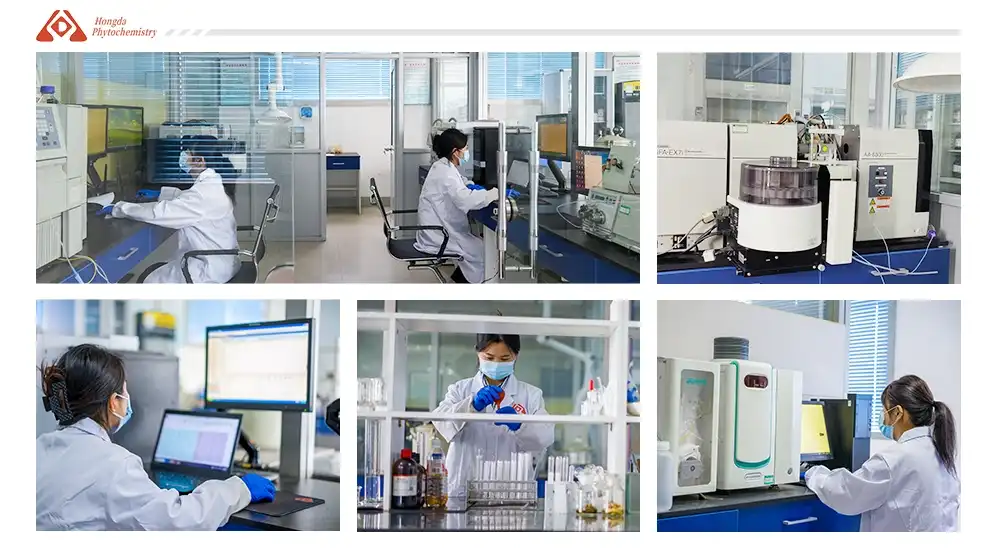
All of this rests underneath test capabilities. Hongda’s lab, constructed in partnership with universities, has over 20 professor-level researchers and analyzers running HPLC, GC, UV-Vis and atomic absorption spectrophotometers, automated titrators, polarimeters and incubators. Each batch of ferrous bisglycinate powder is not released until total and ferrous iron assay, chelation rate, glycine ratio, moisture, pH, heavy metals, and thorough microbiology are complete.
Batch records associate raw-material lots, equipment, operators, and in-process results with one batch; retention samples are retained for the complete shelf life, and chromatograms or raw data are available upon request. With more than 10 manufacturing lines, more than 150 specialists, and an annual capacity up to 3,000 tons, the scale-up from pilot to container does not require a new supplier.
Compliance, Supply and Getting to Launch
Documentation for EU and US Importers
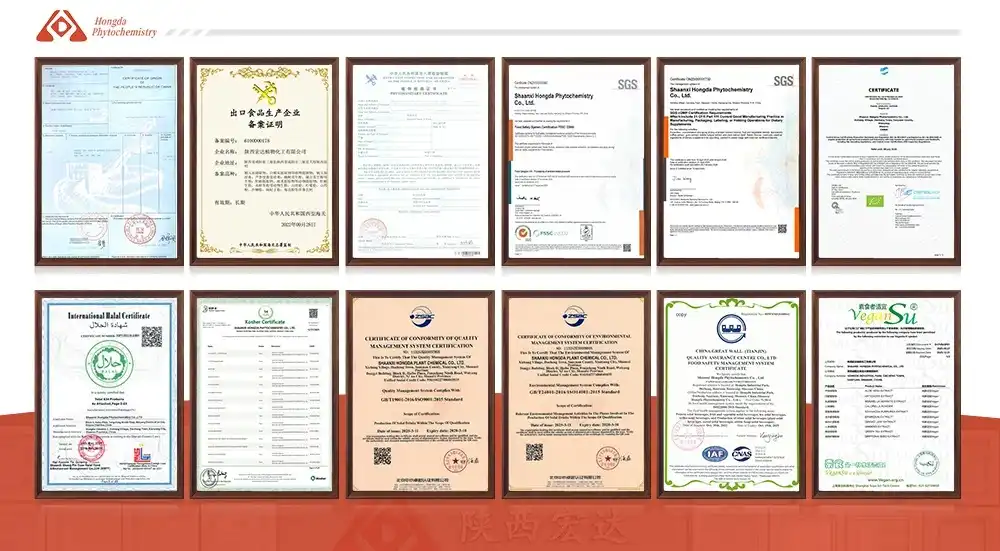
|
Document
|
Hongda Status
|
|---|---|
|
Manufacturing standard
|
cGMP certified, SC production licence
|
|
Quality & food safety systems
|
ISO 9001, ISO 22000, FSSC 22000, BRC
|
|
RegulFDA-registered
|
stered facility
|
|
Religious certification
|
Halal and Kosher
|
|
Organic
|
EU Organic and USDA NOP certified lines available
|
|
Enterprise status
|
National High-tech Enterprise (2010), multiple patents
|
|
Per shipment
|
COA, MSDS, specification sheet, flow chart, allergen / GMO / irradiation / TSE statements, stability data
|
EU buyers should note that ferrous bisglycinate is an authorised mineral source under Directive 2002/46/EC annexes, and Hongda's dossier is structured to support that filing. US customers receive documentation aligned with USP mineral monograph expectations and 21 CFR 111 supplier-qualification requirements.
Grades, Customisation and Sampling
Standard, granulated, direct-compression and taste-optimised grades are offered with customized mesh, bulk density and iron %. Free samples are standard, and Hongda is proactive about third-party verification before a first container – a supplier with confidence in its chelation rate has nothing to fear from an independent lab. Stock is held in six controlled zones in a 3,000 m² warehouse with its own sanitation crew, which is why conventional grades of ferrous glycinate powder normally ship within days, while special specs are run on planned production slots. On-site and remote audits are welcome.
Conclusion
Formulation with iron is a matter of three numbers: solubility at physiological pH, chelation rate, and moisture at the point of packing. Ferrous bisglycinate wins on the first two by design, but only if the chelate is real and the ferrous bisglycinate powder comes dry. Shaanxi Hongda Phytochemistry provides iron testing by AAS, validated chelation ≥95%, pH-solubility behavior recorded, IR and sulphate-based adulteration screening, nitrogen-flushed foil packaging tested in humid markets, all under cGMP, ISO 9001, FSSC 22000, BRC and FDA registration. Order your sample and entire data set now.
FAQQ1: What chelation rate does Hongda guarantee?
A: At least 95%, measured by free-ion separation with AAS quantification and confirmed by IR, reported on every COA.
Q2: Is it soluble at intestinal pH?
A: Yes — unlike ferrous sulphate, it remains substantially soluble around pH 6.8, giving more consistent dissolution results.
Q3: Why does my iron blend turn brown with vitamin C?
A: Redox cycling in the presence of moisture. Granulate the ascorbic acid separately, keep RH below 45%, and use low-moisture, high-chelation material.
Q4: What moisture level is shipped?
A: ≤5% loss on drying, in heat-sealed foil bags with double PE liners, plus optional nitrogen flush and desiccant.
Q5: How can I prove it is a true chelate, not a blend?
A: Request the IR fingerprint, chelation-rate report, and sulphate ion test — a positive sulphate result indicates an inorganic salt blend.
Source Your Iron Chelate From HONGDA — Request Data and Samples
Anyone may write down "ferrous bisglycinate" on a spec sheet. Ask Shaanxi Hongda Phytochemistry Co. Ltd for the evidence behind it – a measured chelation-rate report, IR fingerprint, AAS iron test, sulfate screening, pH-solubility profile and a six-month moisture-stability record – then run a free sample of our ferrous bisglycinate powder through your own laboratory and your own tablet press. Simply tell us your necessary iron %, mesh, bulk density, dosage format, destination market and yearly volume and our technical team will provide a quotation with a comprehensive compliance dossier attached including cGMP, ISO 9001, ISO 22000, FSSC 22000, BRC, FDA registration, Halal and Kosher. We produce 3,000 tons each year and have six filled storage zones, so we deliver on time. Email duke@hongdaherb.com today.
References
1. Allen, L., de Benoist, B., Dary, O., & Hurrell, R. (Eds.). Guidelines on Food Fortification with Micronutrients. World Health Organization & FAO, 2006.
2. Bovell-Benjamin, A. C., Viteri, F. E., & Allen, L. H. "Iron absorption from ferrous bisglycinate and ferric trisglycinate in whole maize is regulated by iron status." American Journal of Clinical Nutrition, 2000.
3. Name, J. J., Vasconcelos, A. R., & Valzachi Rocha Maluf, M. C. "Iron bisglycinate chelate and polymaltose iron for the treatment of iron deficiency anemia: A pilot randomized trial." Current Pediatric Reviews, 2018.
4. Ferrari, P., Nicolini, A., Manca, M. L., et al. "Treatment of mild non-chemotherapy-induced iron deficiency anemia in cancer patients: comparison between oral ferrous bisglycinate chelate and ferrous sulfate." Biomedicine & Pharmacotherapy, 2012.
5. European Food Safety Authority. "Ferrous bisglycinate as a source of iron for use in the manufacturing of foods and in food supplements — Scientific Opinion of the Panel on Food Additives." EFSA Journal, 2006.
6. United States Pharmacopeia–National Formulary. Food Chemicals Codex: Ferrous Bisglycinate monograph.