



What is the difference between milk thistle whole seed powder and standardized milk thistle extract powder?
This is the most prevalent misconception in the liver-health ingredient space. A customer wants "milk thistle' and gets two bids, one an order of magnitude more than the other. Someone's being ripped off, right? In fact, they are two very distinct things – one is a pulverized seed, the other is a concentrated, tested botanical extract. Hongda Phytochemistry provides both, and spends a lot of time enabling consumers to pick appropriately. Shaanxi Hongda Phytochemistry Co., Ltd. was founded in 2001 and has over 20,000 m² of plant area, more than ten production lines and 100,000-class purification workshops, and a laboratory that complies with SGS standards, which was created in collaboration with university academics. Its milk thistle extract powder delivers HPLC silymarin testing, silybin A+B breakdown, solvent-residue and heavy-metal data, adulteration fingerprinting, and a comprehensive EU/US compliance file—the documentation that converts a commodities quotation into a justified buy.
What exactly separates the two materials?
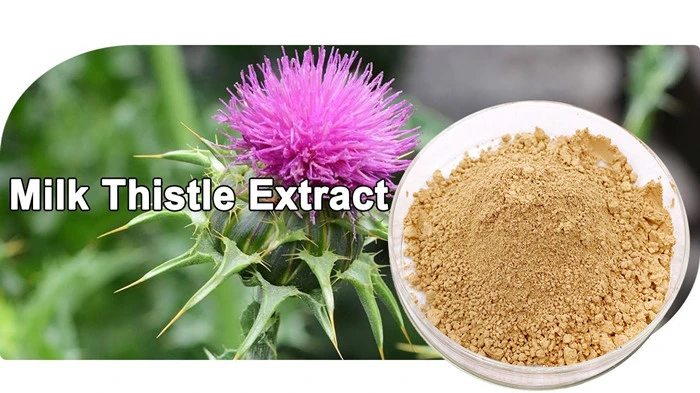
Whole seed powder — the plant, simply milled
Whole seed powder is just that: cleansed and dried seeds of Silybum marianum ground to a certain mesh, nothing taken out, nothing condensed. Naturally, silymarin content is around 1-3%, with the remainder being seed oil, fiber, protein, and minerals.[1] That low concentration is not a flaw; that is the goal. Brands offering bulk organic milk thistle seed powder are mainly in the whole-food, food-supplement, or herbal-tea sector, where "minimally processed" is the selling point.
The trade-off is dose: you need grams of powder (not milligrams) for a substantial silymarin consumption, which rules out capsules in most forms. Hongda’s seed powder is made from raw material that is overseen by agronomists and has organic certification accessible. Unlike a concentrated milk thistle extract powder, Hongda’s seed powder has the whole lipid fraction – something that will matter later when we address oxidation and caking.
Standardised extract — the active fraction, concentrated and assayed
This is achieved by solvent extraction of the milled seed, purification, concentration and drying, so as to provide a standardized extract. This standardization process enriches silymarin from a few percent to a guaranteed level — generally 80% by UV or a predetermined HPLC figure. [2]"Standardised" indicates a guarantee of a minimum and a defined analytical process, not just a powerful extract.
This is the methodology of practically every liver support research experiment, which is why regulated markets and serious supplement companies mention customized milk thistle extract powder instead of seed flour. The practical result for formulators is dosage economy; 200–400 mg of extract offers what many grams of seed powder cannot, enabling capsules and tablets. And it also puts the quality responsibility on analytics. Because concentration is not perceptible to the eye.
Silymarin, silybin, and why the assay method changes the number
Silymarin is not one substance, but a complex of flavonolignans, composed of silybin A and B, isosilybin A and B, silychristin, silydianin and taxifolin. Older UV-Vis techniques determine the complex as a whole and tend to be generous in their reporting. HPLC separates and sums the constituent flavonolignans and is usually a lower, more honest number. The same drum may lawfully be labeled “80% UV” and “around 35-45% HPLC”. Hongda includes both on its COA for every lot of milk thistle extract powder, since a consumer comparing a UV figure from one supplier against an HPLC number from another is not comparing anything at all. Silybin A+B content is presented separately, since this fraction contains most of the described bioactivity.
Side-by-side comparison
|
Attribute
|
Whole Seed Powder
|
Standardised Extract Powder
|
|---|---|---|
|
Processing
|
Cleaned, dried, milled only
|
Solvent extraction, purification, concentration, drying
|
|
Silymarin content
|
~1–3% (natural)
|
80% UV / ≥30–45% HPLC (specified)
|
|
Appearance
|
Light beige, slightly oily
|
Light yellow to yellow-brown, free-flowing
|
|
Typical serving
|
2–5 g
|
200–400 mg
|
|
Oil content
|
Full lipid fraction retained
|
Largely removed
|
|
Best formats
|
Teas, blends, scoop powders, food
|
Capsules, tablets, softgels, liquids
|
|
Dossier complexity
|
Basic food panel
|
Assay, solvent residues, ICH metals, fingerprint
|
|
Relative cost per kg
|
Low
|
Substantially higher
|
How does the factory actually make the difference?Raw material control before extraction begins
Poor seed is not saved by the extraction method. At a qualified milk thistle extract factory, Hongda uses seed only from controlled planting regions, under the supervision of an agronomist. All seed is tested by Hongda for species authenticity, foreign seed, insect damage, moisture, and baseline silymarin content before it is put on the line. The entering silymarin screen is too forgiving, and lots that fail it are discarded rather than being compensated by harder extraction — but increasing solvent and heat to chase yield is exactly what damages flavonolignans.
This upstream discipline is the reason why a competent milk thistle extract business will always quote somewhat over the lowest market price: the cheapest quotes almost usually represent either inferior raw material or an over-driven process. Each batch of finished milk thistle extract powder is labeled with a traceability number that connects back to the field, harvest window, extraction batch, and storage zone.
Extraction, purification and drying parameters
Hongda extracts using food-grade ethanol under regulated temperature, time, and solvent ratio, filters and concentrates, and then low-temperature drying. Flavonolignans are thermolabile and oxidize easily; therefore, inlet temperature and residence duration are mapped rather than guessed, and final milk thistle extract powder is handled under reduced-oxygen conditions during packaging. Residual ethanol is pushed down and confirmed by headspace GC against ICH Q3C Class 3 limits.[4] Within 100,000-class clean rooms, more than 150 technicians work on more than 10 lines with an annual capacity of 3,000 tons and several national patent technologies supporting the methods. This is the infrastructure that keeps lot-to-lot assay variation tight enough for a repeat tablet validation to pass.
Batch release in the SGS-standardised laboratory
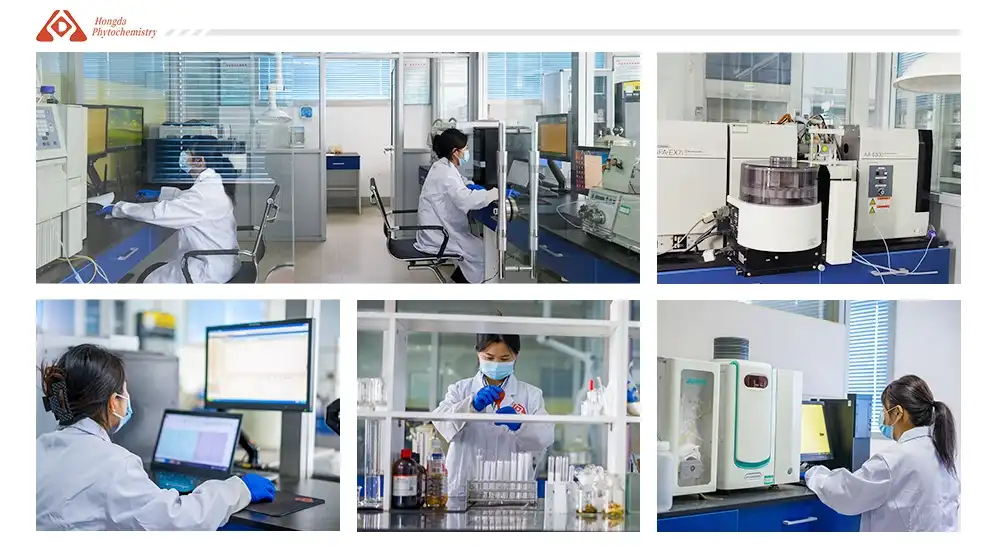
Hongda’s lab is a joint venture with university partners and has more than 20 professor-level academics on staff. Release testing is performed using HPLC, GC, UV-Vis, atomic absorption spectrophotometers, polarimeters, automated titrators, and melting-point gear. Each batch of milk thistle extract powder is tested for silymarin by UV and HPLC. Silybin A+B, loss on drying, ash, residual solvents, heavy metals, pesticide residues, microbiology. Raw chromatograms are available on request, and retention samples are retained for the whole shelf life. Results are incorporated into a batch COA. Milk thistle extract manufacturing plant cost buyers often find that establishing this analytical capacity in-house costs more than just purchasing it from a manufacturer that has it audited and operating.
|
Test Item
|
Practical Procurement & Manufacturing Meaning
|
Our Available Parameters
|
|---|---|---|
|
Botanical Source
|
Botanical identity traceability
|
Silybum Marianum dried seed
|
|
Appearance
|
Batch visual consistency for blending
|
Light‑yellow to yellow‑brown fine powder
|
|
Silymarin Content
|
Marker compound; two test modes available
|
UV:30%‑80%; HPLC:45%‑60%
|
|
Silybin + Isosilybin
|
Key sub‑fraction for high‑standard markets
|
30% /35% adjustable
|
|
Loss on Drying
|
Prevent caking during long‑haul ocean transit
|
≤5.0%
|
|
Residual Solvents
|
Compliance for EU / US import audit, ICH Q3C
|
Meets ICH Q3C thresholds
|
|
Heavy Metals & Microbes
|
Nutraceutical raw‑material safety
|
Compliant with food‑ingredient standards
|
|
Solubility Property
|
Critical for your finished‑product format
|
Standard fat‑soluble grade / water‑dispersible modified grade
|
|
Shelf‑life
|
Under sealed cool‑dark warehouse storage
|
24 months
|
|
Packing
|
Bulk shipping configuration
|
25 kg food‑grade fibre drum; double PE‑aluminum inner bag
|
|
MOQ
|
Order entry threshold
|
100 kg bulk; small lab trial samples available
|
Which technical risks decide the purchase?Adulteration identification — the category's open secret
Milk thistle extract is one of the most contaminated botanicals available. Documented techniques include dilution with maltodextrin, rice or starch; UV inflation with unrelated flavonoids like rutin, quercetin or dyes absorbing in the same location; and mixing low-grade extract with a small proportion of real material.[2][3] Hongda’s screen is layered: full HPLC fingerprinting that must display the correct seven-peak flavonolignan pattern in the proper proportions, UV-versus-HPLC ratio cross-checking (a wildly divergent ratio is an immediate red flag), starch and iodine testing, and TLC comparison against reference standards. The ingredient is manufactured in-house and is not sold; therefore, there is no anonymous mixing stage into which replaced milk thistle extract powder may enter the chain.
Evaluating suppliers at the moment? Send your target specification — UV or HPLC basis, mesh, solvent and certification requirements — to duke@hongdaherb.com, and our technical team will return a live batch COA, the HPLC fingerprint chromatogram, residual-solvent and heavy-metal reports, plus a free evaluation sample for your own laboratory to verify.
Heavy metals, chelation recovery and pesticide screening
Seeds concentrate what the earth has to provide; therefore, metal screening is not optional; it is required. Hongda checks each batch for lead, cadmium, arsenic, and mercury using atomic absorption spectrophotometry and compares the results to EU Regulation 2023/915 and equivalent US state standards. The laboratory also performs a chelation-recovery check—digestion with a chelating agent and comparison of spiking recovery to direct digestion—to make sure that the stated results are for real total content, not partial release from the plant matrix. The idea is simple: a pleasing metal result from an underperforming stomach serves nobody. The panel includes multi-residue pesticide screening with GC-MS and LC-MS. Organic certified milk thistle extract powder is available for EU and NOP programs.
|
Risk Area
|
Control at Hongda
|
Evidence on File
|
|---|---|---|
|
Assay inflation (UV vs HPLC)
|
Dual-method reporting per lot
|
COA with both figures
|
|
Starch / maltodextrin bulking
|
Iodine + polysaccharide screening
|
Lab report
|
|
Synthetic flavonoid spiking
|
Seven-peak HPLC fingerprint match
|
Chromatogram
|
|
Residual ethanol
|
Headspace GC, ICH Q3C Class 3
|
GC report
|
|
Heavy metals
|
AAS with chelation-recovery verification
|
AAS certificate
|
|
Pesticides
|
Multi-residue EU/NOP screen
|
GC-MS / LC-MS data
|
|
Microbiology
|
TPC, yeast/mould, pathogens
|
Plate-count data
|
Moisture uptake, caking and a documented shipment case
Both forms absorb moisture from the air but for different causes. The seed powder contains oil which oxidizes and clumps. The concentrated extract is finely split and hygroscopic. Loss on drying of an extract beyond about 5% is seen by customers as lumping, hopper bridging, and darkening. Hongda supplies milk thistle extract powder with moisture content ≤5% in heat-sealed aluminum foil bags with double PE liners inside fiber drums, with desiccant and nitrogen flush available for tropical routes.
A real case: a European softgel maker was throwing away partial drums after summer transit from a previous vendor. Hongda supplied nitrogen-flushed packing at an 80-mesh specification, matched to their dosing equipment, and the client confirmed free-flowing, colour-stable material at month six, before placing a repeat four-tonne order.
How do you choose, customise and comply?Matching format to your finished product
Dose and positioning typically dictate the choice, not desire. Capsules, pills & softgels require the concentration that an extract can offer. Wholefood powders, teas, animal nutrition and functional foods frequently do well with bulk organic milk thistle seed powder when a gram-level dose is suitable, and the "whole seed" concept has marketing appeal. Some manufacturers do both, a luxury capsule utilizing milk thistle extract powder and an everyday scoop powder using milled seed, sharing one supply chain and one compliance dossier. Hongda's commercial team will determine the appropriate format, market and claim language at the quote stage so that the proper grade and paperwork come together.
Customisation, compatibility and R&D support
Two in-house R&D institutions can handle customized milk thistle extract powder requests, such as specific HPLC silymarin ratios, enhanced silybin A+B fractions, phospholipid-complexed or water-dispersible grades, defined mesh and bulk density for tableting, and co-blends with dandelion, artichoke, turmeric or NAC. Compatibility is important here, since silymarin is light- and oxygen-sensitive and may discolor with some mineral salts; hence, Hongda runs binary accelerated holds, monitoring assay, moisture, and color over set intervals. Clients get data before validation and not a nasty surprise in validation. Pilot runs are conducted as trial amounts, and the same support applies to seed-powder mixtures.
Compliance documentation and supply reliability
Each shipment comes with a complete COA, MSDS, production flow chart, specification sheet, allergy, GMO, irradiation and TSE/BSE declarations, solvent and metal reports and stability data. Since 2010, Hongda has been a National High-tech Enterprise with cGMP, ISO 9001, ISO 22000, FSSC 22000, BRC, SC license, FDA registration, Halal, Kosher, EU Organic, and NOP. This qualification portfolio provides imported QA teams with a familiar audit framework. We have stock in 6 controlled zones in a 3,000 m2 warehouse with dedicated sanitation workers, so typical grades of milk thistle extract powder often ship within days. They accept on-site and remote audits; more than most merchants can boast.
Conclusion
Whole seed powder and standardized extract are not two classes of the same item. They are separate goods tackling different challenges. Seed powder is suitable for wholefood and gram-dose forms. Standardized milk thistle extract powder offers the concentrated, tested silymarin needed for capsules, tablets, and clinical placement. Evidence always wins: dual UV/HPLC test, a proper seven-peak fingerprint, checked solvent residues, chelation-checked metals, and moisture-proof packaging. All of it is sourced from Shaanxi Hongda Phytochemistry, which has the certification and patents to back up 3,000 tons of yearly manufacturing. Request your sample and batch data now.
FAQQ1: Why do suppliers quote 80% silymarin but only 35% by HPLC?
A: UV measures total flavonolignan complex; HPLC measures individual chemicals. Hongda reports on every COA.
Q2: Which format should a capsule brand buy?
A: Standardised extract — seed powder cannot deliver a meaningful silymarin dose within capsule volume.
Q3: How do you detect maltodextrin or rutin adulteration?
A: HPLC fingerprint pattern matching, UV-to-HPLC ratio checks, plus iodine and starch screening.
Q4: Is organic certified material available?
A: Yes — EU Organic and USDA NOP certified seed powder and extract are both offered.
Q5: How is caking avoided in humid markets?
A: Moisture ≤5%, foil bags with double PE liners, fibre drums, desiccant, and optional nitrogen flush.
Choose HONGDA as Your Milk Thistle Extract Partner
Price lists are simple to compare; chromatograms are not. Ask Shaanxi Hongda Phytochemistry Co., Ltd. what really is protecting your milk thistle extract powder. Dual UV/HPLC silymarin assay, silybin A+B breakdown, seven-peak fingerprint, residual-solvent GC, chelation-verified heavy-metal data, and moisture-stability record. Then take a free sample through your own laboratory before you commit. Tell us your necessary assay base, mesh, format, certification and yearly volume and our technical staff will price with the whole compliance dossier attached encompassing cGMP, ISO 9001, FSSC 22000, BRC, FDA registration, Halal, Kosher and organic certification. Email duke@hongdaherb.com today and secure consistent supply from a proven factory.
References
1. Abenavoli, L., Izzo, A. A., Milić, N., Cicala, C., Santini, A., & Capasso, R. "Milk thistle (Silybum marianum): A concise overview on its chemistry, pharmacological, and nutraceutical uses in liver diseases." Phytotherapy Research, 2018.
2. Lee, J. I., Narayan, M., & Barrett, J. S. "Analysis and comparison of active constituents in commercial standardized silymarin extracts by liquid chromatography–electrospray ionization mass spectrometry." Journal of Chromatography B, 2007.
3. United States Pharmacopeia. USP Monograph: Milk Thistle and Powdered Milk Thistle Extract.
4. European Commission. Commission Regulation (EU) 2023/915 on maximum levels for certain contaminants in food.