




Can citicoline powder blend smoothly with alpha-GPC or phosphatidylserine in brain health formulas?
Yes, citicoline powder can be mixed with alpha-GPC or phosphatidylserine, but you don’t get a smooth, uniform composition without some work. Each of them involves distinct inspections, from a consistent dry mix to accurate capsule filling to stable dispersion in a beverage. Hongda Phytochemistry (Shaanxi Hongda Phytochemistry Co., Ltd.) supplies citicoline powder for supplement formulation. The firm reports production capacity and quality-control resources to support supplier certification. The key is to evaluate the real grades together. Particle size, flow, moisture behavior, carrier ingredients, and processing may all affect the ultimate product. This book offers a brand’s practical pathway from the choice of ingredients to pilot testing and scale-up.
Begin with the ingredients, not the blend name
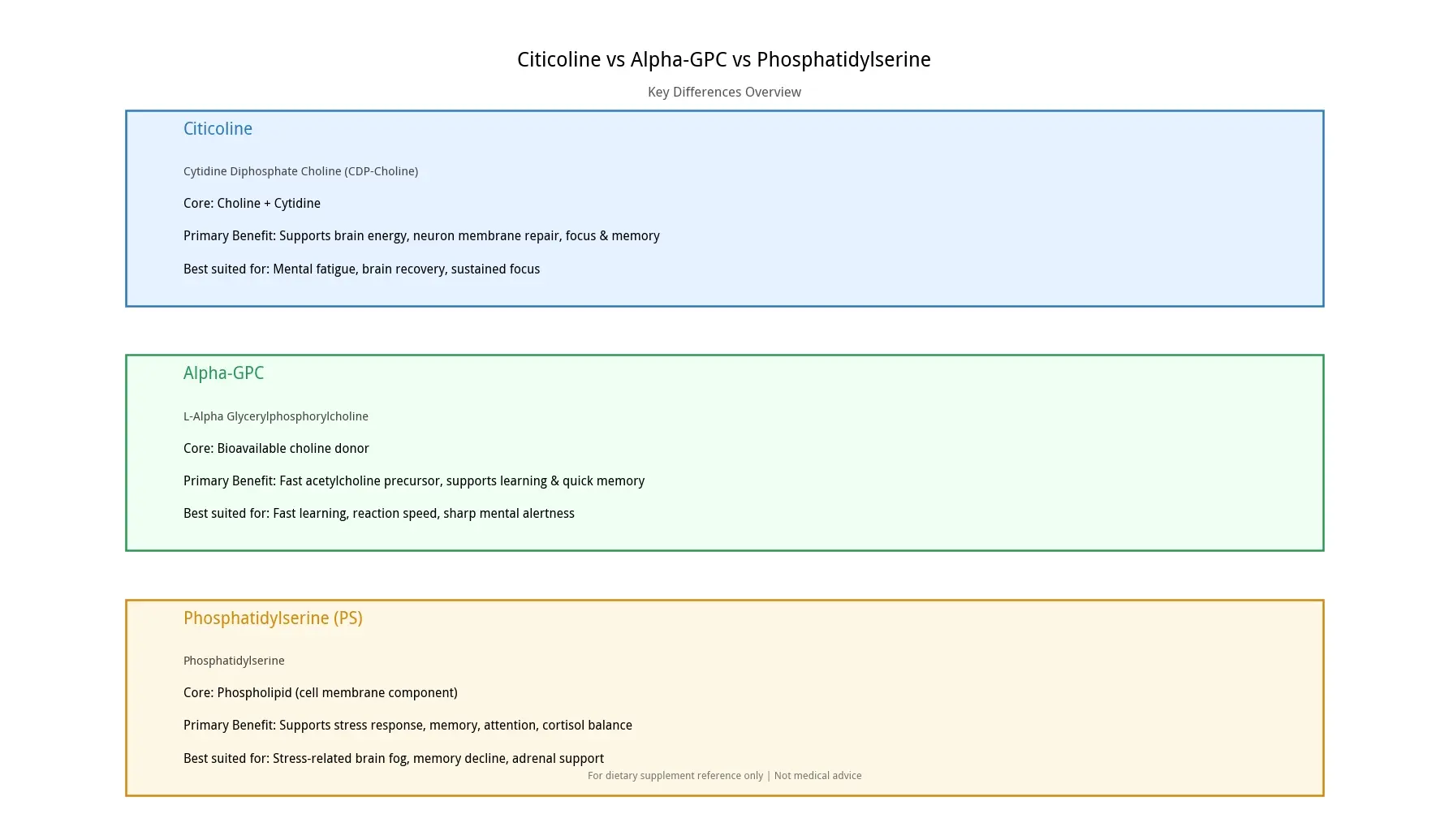
Citicoline, alpha-GPC, and phosphatidylserine are distinct materials
Citicoline (CDP-choline) is a distinct molecule from alpha-GPC and phosphatidylserine. Citicoline is involved in phospholipid formation, alpha-GPC is another choline-containing component, and phosphatidylserine is a phospholipid.[1] [4]You’ll see these elements combined in a brain health recipe, but it doesn’t mean they’re interchangeable, or that there’s evidence that combining them delivers a particular effect. The formulation team should identify the function of each component, desired quantity, and specification before deciding on a blend technique. For citicoline powder, examine the form and assay basis in the current product papers; then carefully check the alpha-GPC and phosphatidylserine grades. The attention paid to these substances may be explained by the biochemical backdrop, but the formulation choices still have to be made on the basis of the individual materials being acquired.
A physical blend is possible; a synergistic effect is a separate claim
There is no universal formulation guideline that forbids combining citicoline powder with alpha-GPC or phosphatidylserine. The more practical challenge is whether the selected grades can mix consistently and stay appropriate during the production and storage processes. Clinical synergy is not dependent on physical compatibility. A list of combined compounds does not prove that the chemicals have a larger impact together. Published studies of citicoline, alpha-GPC, or phosphatidylserine usually investigate specified constituents and study settings, not every marketed combination.[2][3][4] If you are a product creator, begin with a technical target such as a capsule mix, pill, sachet, or drink. Then question ingredient ratios, transporters, and process needs for that format instead of a blanket “brain stack” term.
Define what “smooth blending” means for your product
Smooth blending might indicate equal distribution of actives in a dry mix, predictable flow into capsules, homogeneous tablet feed, or a drink without apparent clumps. “These are different performance goals. A visually uniform powder may not be content uniform, and a mix that fills capsules well may not disperse well in water. Before you start a trial, you should set quantifiable metrics for the product you want, such as allowable deviation between blend samples, filling uniformity, or a specified reconstitution test. The look of china citicoline powder should be assessed according to those parameters and not determined by appearance alone, along with alpha-GPC or phosphatidylserine. Getting on the same page early about what “smooth” means prevents R&D, manufacturing, and quality from talking over each other during scale-up.
|
Ingredient
|
Key formulation question
|
What to check in the specific grade
|
|---|---|---|
|
Citicoline
|
Does it distribute evenly in the chosen blend?
|
Assay basis, particle characteristics, moisture guidance
|
|
Alpha-GPC
|
Does its grade handle and flow consistently?
|
Powder or granule format, carriers, handling instructions
|
|
Phosphatidylserine
|
Is it supplied with a carrier or in a lipid-rich format?
|
Composition, dispersibility, storage, and processing guidance
|
Design the blend for the equipment and process
Particle size and density influence uniformity
Ingredients with highly varied particle sizes, shapes, or bulk densities may separate during transport, vibration, or filling. Fine particles may move through a coarser mix while heavier particles can settle during handling. These are normal concerns with powder mixing, not exclusive to citicoline powder. Ask suppliers for particle size or flow data, and then test the blend at the proposed ratios. Small-scale experiments should follow the intended mixing sequence and transfer procedures, since a blend that seems homogeneous in a bowl may act differently in a hopper or filling line. In the literature on powder-mixing, the relevance of material qualities and handling circumstances in the development of a repeatable process is emphasized.[5][6] If the physical qualities of the ingredients are significantly different, negotiate a premix or staged addition with your formulator before you change the manufacturing equipment.
Moisture, static, and carriers can change handling
Caking or poor flow may result from moisture exposure. Static may cause tiny particles to adhere to equipment or packing. Alpha-GPC and phosphatidylserine products are available in numerous grades and forms, so do not presume their handling behavior from the component name alone. Review the supplier's storage directions, carrier information, and any moisture data available. Keep containers closed during dispensing, maintain room conditions according to your facility’s protocols, and reduce unwanted powder transfers. The one ingredient’s carrier or excipient might alter the behavior of the complete blend. Citicoline powder must be tested in the real composition. If a combination becomes lumpy or hard to feed, note the circumstances and verify that the change can be reproduced before changing the recipe.
Mixing order and scale-up deserve their own trials
The sequence of powders added to a blender may influence the distribution, particularly if one component is present at a low level. A regulated premix may assist disperse a little amount across a bigger mass, although the applicability relies on the constituent grades and equipment. Time is not a magic bullet. Too little mixing might lead to pockets of uneven material, while too much mixing can provide a greater chance of segregation.[5][6] When evaluating an offer for “factory price citicoline,” you should look at the price, grade stated, paperwork, packaging, and process support. It could not be economical to use an inexpensive material that requires a lot of rework. Pilot runs of citicoline powder: record lot numbers of the ingredients, the sequence of addition, blender load, mixing time, and locations of samples taken.
If you are developing a combined formula, share the target format, ingredient grades, and processing conditions with duke@hongdaherb.com. That information helps the Hongda team discuss the relevant factory price citicoline documents and sample options before you commit to a larger run.
Test the finished format, not just the dry mixA capsule blend and a beverage dispersion need different tests
Homogeneity of content, flow, fill performance, and stability in the final package are important factors for judging a capsule dry mix. A beverage has additional problems of wetness, dispersibility, flavor, appearance, and performance in the complete drink matrix. Even a citicoline powder combination that flows beautifully on a capsule line still has to be properly examined for reconstitution in a beverage. In the same manner, powder that dissolves in plain water may not do so in a beverage with minerals, acids, flavors, or other active ingredients. Select a test that matches the final application. Do not use a quick mixing demonstration to claim a powder is “water soluble” without appropriate method and product-specific facts.
Match excipients to the delivery format
Carriers, flow aids, binders, and other excipients may assist a formula to achieve its goals during manufacture, but every addition changes the mix. For a capsule or tablet, determine if the chosen excipients offer flow, compression, disintegration, and content uniformity. For sachet, check powder empties cleanly and can be processed as required. Dry-blend homogeneity is separate from dispersibility and wetness in a drink. The formulation records should identify the citicoline powder, and each excipient and active should be tied to its specification and lot. When troubleshooting, just one modification in formulation should be made at a time. Changing several ingredients at one time makes it harder to discover what is causing a processing issue. The experiment may be guided by supplier instructions that are product-specific, but the final formula is still subject to your evaluation.
Use a small pilot to establish measurable acceptance criteria
The pilot study enables the team to assess the performance of the mixture before scaling up to commercial levels. Take samples at different places in the mixer or at the start, middle, and end of a filling run and test according to your quality plan. Beverages: Note mixing procedure, water supply, temperature, appearance, and time after reconstitution. Note filling behavior, flow, and acceptable content-uniformity results for solid structures. The limits of acceptability should be based on your product specification and associated needs, not on the unverified supplier claim. Bulk citicoline powder could work in some given combination, but only a test with the exact grades and equipment can tell. Store samples and data for later batch comparison to the approved pilot.
|
Development stage
|
Practical check
|
Record for repeatability
|
|---|---|---|
|
Bench blend
|
Visual distribution and sampling from multiple locations
|
Ingredient lots, ratios, mixing order, time
|
|
Pilot manufacture
|
Flow, filling, or compression behavior
|
Equipment, settings, start/middle/end samples
|
|
Finished-product check
|
Agreed content, appearance, or reconstitution criteria
|
Method, result, package, and storage conditions
|
|
Stability review
|
Changes over planned storage intervals
|
Lot, time point, conditions, and observations
|
Qualify the supplier and the lot before scalingReview specifications and batch documents together
A product website is a nice start, but it's not a substitute for the current Technical Data Sheet and lot-specific Certificate of Analysis. Check lot number on COA matches the shipment. COA contains test protocols and units of measurement. Ask what tests are done on all batches, and if tests are periodic or external. Read citicoline powder papers together with the same documents for alpha-GPC and phosphatidylserine. The goal is a complete and trackable formulation file, not a bunch of marketing documents that don’t tie back to the actual materials used.
|
Item of Test
|
Limits of Test
|
Results of Test
|
|
Appearance
|
White crystalline or crystalline powder
|
Conform
|
|
Assay by HPLC
|
≥98%
|
99.85%
|
|
Identification
|
(1)A green colour is produced
(2)The retention time of the principal peak in the chromatogram obtained with the test solution is identical with that of the principal peak in the chromatogram obtained with the reference solution
(3)The infrared absorption spectrum is concordant with the standard spectrum.
(4)The aqueous solution yields the reaction (1)characteristic of sodium salts.
|
Complies
Complies
Complies
Complies
|
|
pH
|
6.0---7.5
|
6.9
|
|
Clarity, color of solution
|
Clear, colorless
|
Complies
|
|
Chloride
|
≤0.05%
|
Complies
|
|
Ammonium salt
|
≤0.05%
|
Complies
|
|
Iron salt
|
≤0.01%
|
Complies
|
|
Phosphate
|
≤0.1%
|
Complies
|
|
Related substances
|
5'-GMP≤0.3%
|
0.006%
|
|
Single impurity ≤0.2%
|
0.006%
|
|
|
Total Another Impurity≤0.7%
|
0.02%
|
|
|
Residual solvents
|
Limit of methanol≤0.3%
|
Undetected
|
|
Limit of ethanol≤0.5%
|
Undetected
|
|
|
Limit of acetone≤0.5%
|
Undetected
|
|
|
Loss on drying
|
≤6.0%
|
0.8%
|
|
Heavy Metals
|
≤5ppm
|
Complies
|
|
Arsenic salt
|
≤0.0001%
|
Complies
|
|
Endotoxin
|
<0.30EU/mg
|
Complies
|
|
Limit of microbe
|
Total bacterial count≤1000 CFU/g
Yeast & Mold≤100 CFU/g
E. Coli: Negative
|
< 10 CFU/g
< 10 CFU/g
Undetected
|
|
Conclusion
|
The product meets with the CP2020 standard.
|
|
Assess the manufacturing and batch-control system
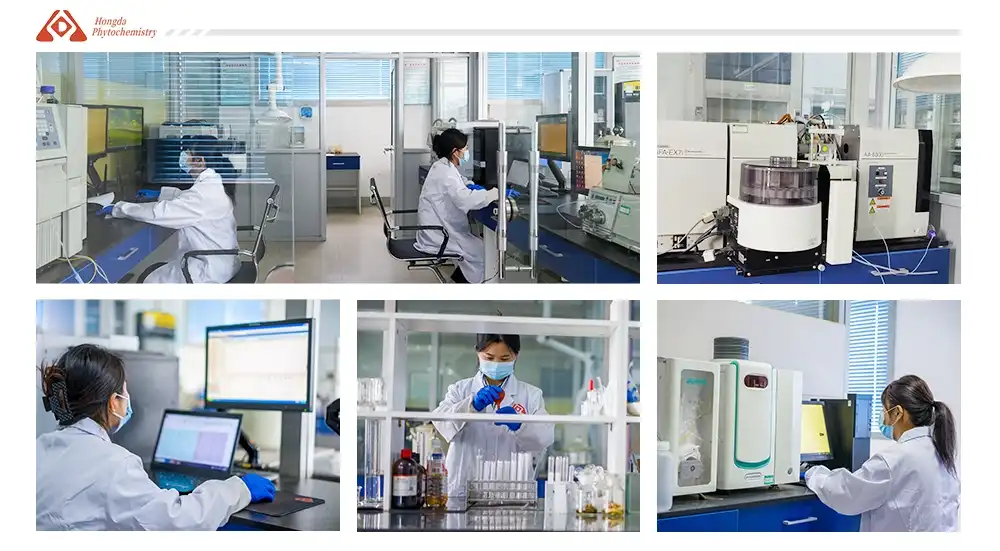
Shaanxi Hongda Phytochemistry Co., Ltd. was established in 2001, spanning an area of around 20,000 square meters, with more than ten modern production lines, 100,000-grade purification workshops, and more than 150 workshop experts. The company states it is capable of producing up to 3,000 tons of annual manufacturing output throughout its operations, which is not to be construed as citicoline-specific competence. Hongda also mentions an SGS-standardized laboratory, built with university academics, with over 20 R&D and testing professionals and equipment including HPLC, GC, spectrophotometers, and atomic absorption systems. The company says its goods are tested for content, moisture, heavy metals, pesticide residues, and germs before they are shipped out. Request the findings relevant to the grade of citicoline powder and the batch data.
Use real-photo documentation without turning it into a sales claim
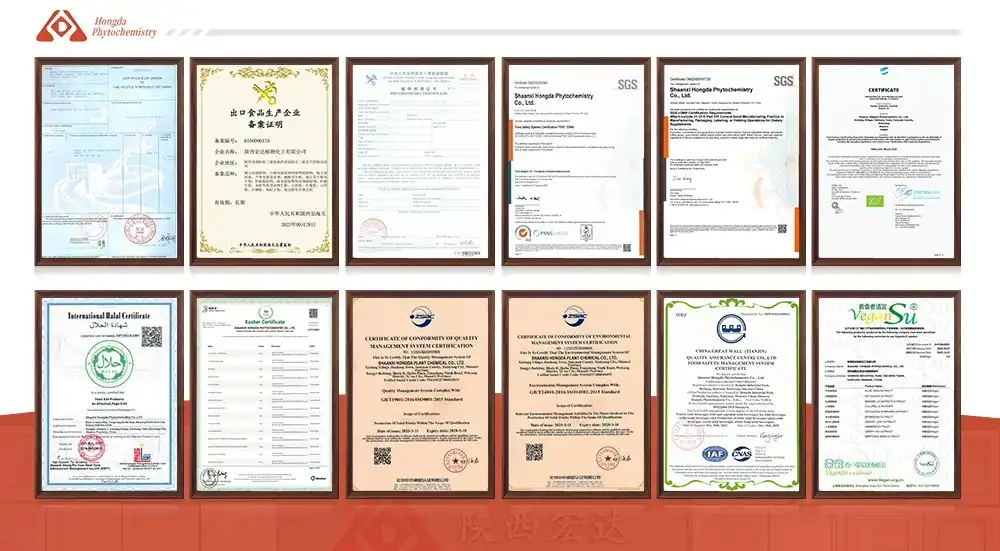
A true picture case is based upon a verified example, not a story that cannot be proven. Ask for dated images of actual manufacture, packing, or sample lot, if feasible. Make sure you can trace lot identification back to its documentation. Then, during the pilot, capture your own pictures of the receiving box, the powder before blending, the dry mix finished, and samples from different stages in filling. Lot and date codes should be recorded. R&D and quality teams may use these images to examine visual changes but cannot use them to establish identity, assay, or content consistency, and laboratory testing is still necessary. Buyers looking for China citicoline powder may use this to thoroughly review supplier proof. Verify that all certifications (cGMP, FSSC 22000, ISO 22000, ISO 9001, halal, kosher, BRC, organic, etc.) are up to date and are applicable to the correct site and product.
Conclusion
Citicoline powder may be layered with alpha-GPC or phosphatidylserine. A good recipe is dependent on the specific grades, the physical attributes, and the intended manner of administration. Quantify “smooth blending.” Look at how the particles behave, how they react to moisture. Then take the real formula and test on representative equipment. Evaluate product documentation and batch-specific COA’s before scale-up. Provide actual, traceable photos as backup records, not substitutes for analytical results. Hongda Phytochemistry provides manufacturing capacity, laboratory resources, and batch controls to support supplier certification. Check current standards and certifications for the grade you choose and make your final decision based on your own pilot data.
FAQQ1: Can citicoline powder be combined with alpha-GPC?
A: Yes, as a formulation option. Test the specific grades for blend uniformity and processability.
Q2: Can it be blended with phosphatidylserine?
A: Yes, but format, carriers, and handling properties can affect the result.
Q3: Does a smooth-looking blend prove uniform content?
A: No. Use a suitable sampling and analytical plan.
Q4: Will a dry blend automatically disperse in a drink?
A: No. Test dispersibility in the finished beverage and its full ingredient matrix.
Q5: What should I request before ordering?
A: A current specification, lot-specific COA, storage guidance, and sample availability.
Build Your Next Formula with HONGDA — Request a Citicoline Sample
Planning a combination formula? Start with the specifications and the format you want to manufacture. Share your target application, required documents, preferred pack size, and whether you plan to blend citicoline powder with alpha-GPC, phosphatidylserine, or both. Hongda’s team can discuss the current product information and sample options so your R&D team can evaluate the material in its own process. Before placing a commercial order, compare the supplier documents with your written specification and run a representative pilot using the intended equipment. This practical step helps you assess blending, filling, and finished-product performance without relying on a generic claim. For product details or a quotation, email duke@hongdaherb.com.
References
1. Kennedy EP, Weiss SB. The function of cytidine coenzymes in the biosynthesis of phospholipids. Journal of Biological Chemistry. 1956;222(1):193–214.
2. Wurtman RJ, Regan M, Ulus I, Yu L. Effect of oral CDP-choline on plasma choline and cytidine levels in humans. Biochemical Pharmacology. 2000;60(7):989–992.
3. Parnetti L, Mignini F, Tomassoni D, Traini E, Amenta F. Cholinergic precursors in the treatment of cognitive impairment of vascular origin: ineffective approaches or pharmacological basis for a new strategy? CNS Drugs. 2007;21(6):443–458.
4. Kato-Kataoka A, Sakai M, Ebina R, Nonaka C, Asano T, Miyamori T. Soybean-derived phosphatidylserine improves memory function of the elderly Japanese subjects with memory complaints. Journal of Clinical Biochemistry and Nutrition. 2010;47(3):246–255.
5. Muzzio FJ, Shinbrot T, Glasser BJ. Powder technology in the pharmaceutical industry: the need to catch up fast. Powder Technology. 2002;124(1–2):1–7.
6. Bridgwater J. Mixing of powders and granular materials by mechanical means—a perspective. Particuology. 2012;10(4):397–427.