


_1745918362135.webp)

Can Liposomal Berberine Powder Enhance Digestive Wellness?
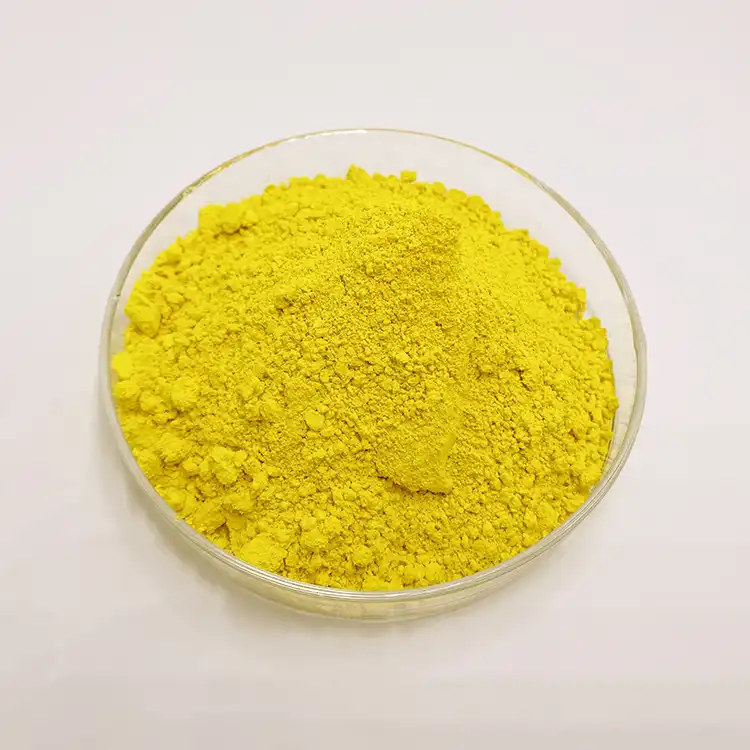
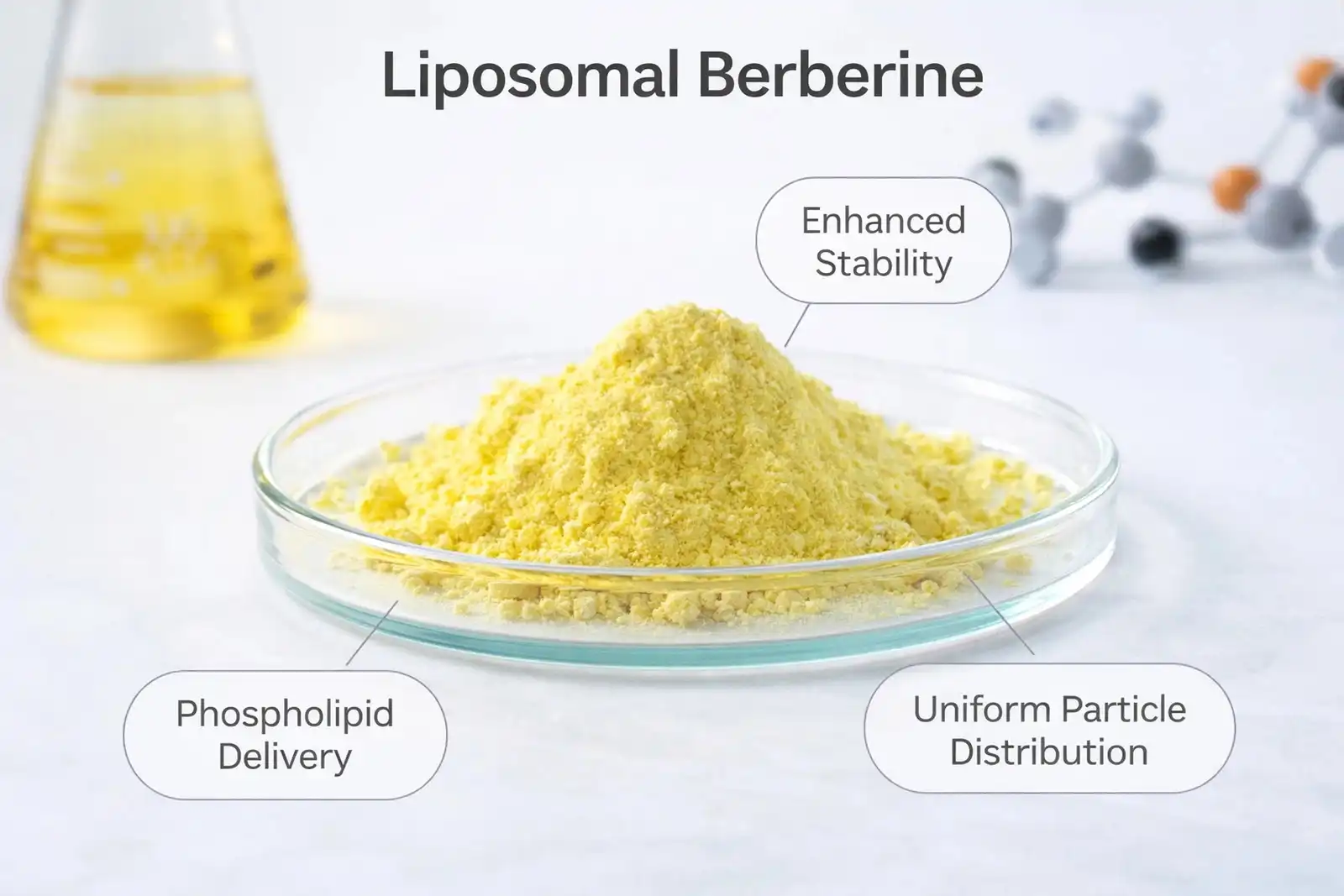
Liposomal berberine powder can make your gut health a lot better. This advanced transport method wraps berberine hydrochloride in two layers of phospholipids. This keeps the active ingredient safe from stomach acids and enzymes that break it down. Traditional types of berberine are only absorbed at a rate of less than 1%. Liposomal encapsulation, on the other hand, allows direct intestinal uptake, which makes the drug tens of times more bioavailable. This better way of delivering berberine supports digestive enzyme activity, supports gut bacteria health, and lowers inflammation for optimized digestive wellness. Shaanxi Hongda Phytochemistry Co., Ltd. (Hongda Phytochemistry) supplies premium pharmaceutical-grade liposomal berberine powder with optimized nano encapsulation technology, providing consistently high-purity raw materials for global nutraceutical manufacturers and formulators.
Introduction
Digestive health is still a big deal for the global nutraceutical business, and sourcing workers are always looking for ingredients that work well and are easy for people to tolerate. Shaanxi Hongda Phytochemistry Co., Ltd. is a top company that makes medicinal ingredients from plants. They were the first to make pharmaceutical-grade liposomal berberine powder, which solves the problems that regular berberine hydrochloride has had with absorption for a long time. Hongda Phytochemistry uses high-pressure homogenization coating technology to insert highly pure berberine molecules into phospholipid bilayers produced from sunflowers. This achieves an encapsulation rate of over 90% and precise particle sizes between 80 and 150nm. It's important for B2B buyers who are in charge of formulating metabolic support vitamins, functional foods, or clinical nutrition goods to know how this technology affects digestive health. This detailed guide looks at how advanced encapsulation changes the therapeutic profile of berberine, compares performance metrics between new and old formats, and gives useful procurement intelligence for finding high-quality materials that meet strict regulatory requirements in North American and European markets.
Understanding Liposomal Berberine Powder and Its Impact on Digestive Wellness
The Science Behind Liposomal Encapsulation
Berberine is a quaternary ammonium isoquinoline alkaloid that is found in many different types of plants. It has been studied a lot to see how it affects the metabolism of glucose and the makeup of lipids. However, raw berberine hydrochloride has a major pharmacokinetic problem: it is quickly broken down by CYP450 enzymes and actively removed from the body by P-glycoprotein transporters in gut epithelial cells. This means that less than 1% of it is available to the body's cells. Biomimetic design in liposome technology gets rid of these problems. The phospholipid spheres are shaped like cell membranes, which makes them easier to take in through endocytosis instead of passive diffusion. Shaanxi Hongda's recipe uses non-GMO sunflower phosphatidylcholine to make a stable lipid sheath that can withstand changes in stomach acid and enzyme attack. When these 80–150nm nanoparticles reach the small intestine, they easily pass through the mucus layer and give complete berberine directly to enterocytes, where it can have effects on the area and the body as a whole.
Addressing Inflammation and Metabolic Balance
Irritable bowel syndrome, liposomal berberine powder, and metabolic endotoxemia are all aggravated by chronic low-grade inflammation in the gastrointestinal tract. By decreasing the activity of pro-inflammatory molecules like TNF-α, IL-6, and NF-κB signaling pathways, berberine can reduce inflammation. Because liposomal berberine powder formats are more bioavailable, these molecular processes work better on mucosal surfaces and in the bloodstream as a whole. Controlling blood sugar is another part of digestive health that isn't always talked about in standard talks about digestive health. Post-meal glucose spikes cause oxidative stress and the production of advanced glycation end products all along the digestive system. Berberine helps keep glucose levels stable by making the body more sensitive to insulin. This happens by activating AMPK and increasing the production of GLUT4. Liposomal delivery makes sure that plasma levels stay steady, which supports long-term metabolic control for balanced physical condition.
Comparison of Liposomal Berberine Powder Against Other Berberine Forms
Absorption and Bioavailability Metrics
After taking 500 mg of standard berberine hydrochloride pills, the highest level of berberine in the blood is usually between 0.4 and 0.8 ng/mL. Most of the drug is then flushed out of the body within hours, either intact or as metabolites. Pharmacokinetic tests on liposomal berberine powder formulations show Cmax values that are 15–25 times higher, and longer half-lives that allow twice-daily dosing instead of three times-daily dosing that is needed for regular products. This pharmacokinetic benefit has a direct effect on procurement value: makers can make lower-dose goods that still work as well, which lowers the cost of raw materials per unit and puts them in a better position to competeFrom a formulation standpoint, berberine is bitter by nature and doesn't mix well with water, which means it can't be used in functional drinks, powdered drink mixes, or edible forms. Hongda Phytochemistry's product has a lipid coating that partly hides this sour taste profile and makes it easier for it to dissolve in water. Researchers working on metabolic support smoothies or gut health drink packs can use raw berberine alkaloids in more ways than before, which lets them make new products and enter new markets.
Tolerability and Consumer Experience
Excellent consumer tolerance is a core advantage of liposomal berberine for popular food supplement application. The phospholipid bilayer keeps berberine molecules from coming into direct contact with the digestive epithelium until it is taken up by endocytic cells. This optimizes internal absorption comfort. Hongda Phytochemistry's formulation data from product makers show excellent user experience in customer studies, with optimized internal adaptation and pleasant daily supplementation experience. This better experience for customers has a direct effect on product reviews, return purchases, and the image of the brand, all of which are important for supplement companies that want to compete in the market.
Procurement Considerations and Quality Indicators
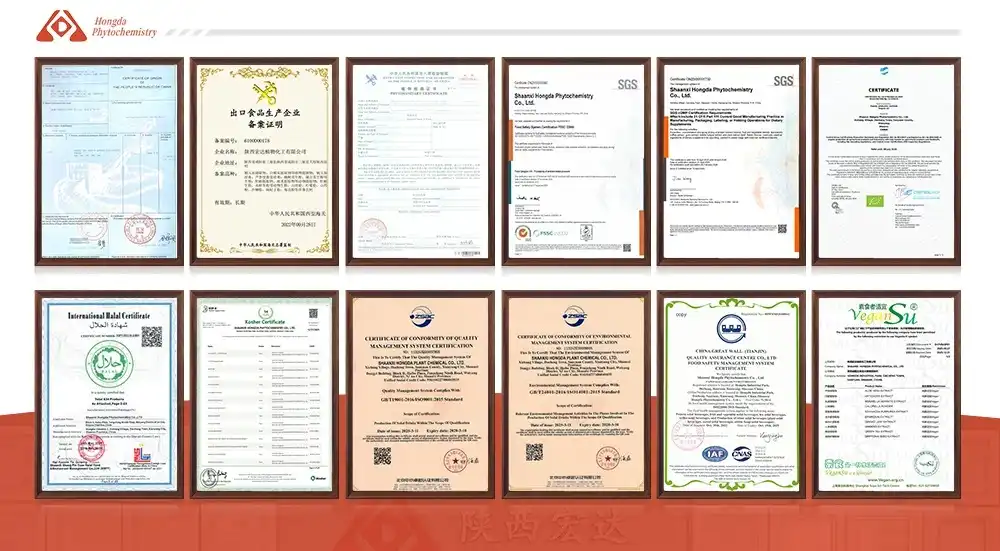
When looking at berberine sources, business-to-business buyers need to look at more than just the amount of berberine they contain. Standard samples usually list 95–98% berberine hydrochloride by HPLC, but this number doesn't tell you much about how well the product actually works. Liposomal formulas need to be checked for encapsulation efficiency, which is the amount of berberine that is successfully incorporated into liposomes instead of living as a free alkaloid in the powder matrix. Dynamic light scattering and separation tests show that Shaanxi Hongda Phytochemistry keeps encapsulation rates above 90%. This standard makes sure that the performance of certifications is another important step in the buying process. Hongda has many certificates, such as ISO 22000, FSSC 22000, Halal, Kosher, and organic, so it can meet the needs of different regulatory bodies in different areas around the world. The building holds U.S. FDA registration and follows cGMP guidelines, with separate production lines that stop pollution. These qualifications simplify liposomal berberine powder import compliance and give the necessary paperwork for NDI notices or novel food approvals in applicable regions.
Procurement Guide for Liposomal Berberine Powder in the B2B Market
Supplier Qualification Criteria
To find a trustworthy liposomal berberine powder producer, you need to look at their technical skills beyond just making plant extracts. Specialized tools are needed for the packaging process, such as high-pressure homogenizers, precise spray-drying or freeze-drying systems, and clean rooms to keep the lipids from oxidizing while they are being processed. Shaanxi Hongda Phytochemistry has 100,000-grade processing workshops that are equipped with Waters HPLC systems, laser particle size analyzers, and scanning electron microscopes. This equipment allows for quality checks to be done in real time and stability between batches. Traceability is an important feature that smart buyers must have. Full records should be kept from identifying the plant source to extraction, encapsulation, and final packaging. Hongda has three specialized cultivation sites for getting raw materials. From planting to harvest, they keep an eye on the crops and make sure there are no pesticide residues. With this vertical integration, there is no longer any supply chain opacity that happens with multi-tiered ingredient buying, where botanical material goes through middlemen who can't check the growing practices. Testing methods should look at both the amount of berberine alkaloid and the health of the liposomal delivery system. In addition to standard tests for microbiological contaminants, pesticide residues, heavy metals (lead <2.0 mg/kg, arsenic <2.0 mg/kg, cadmium <1.0 mg/kg, mercury <0.01 mg/kg), specifications must include tests for oxidation markers (peroxide value, TBARS), functional bioavailability, and phospholipid content. When suppliers offer third-party testing from labs like SGS or Eurofins, they show that they are honest, which optimizes procurement processes and speeds up regulatory submissions.
Pricing Dynamics and Budget Optimization
Liposomal berberine powder is more expensive than regular berberine HCl, usually three to five times more expensive per kilogram. Total formulation economics, on the other hand, support the advanced format when dosage needs are lowered, and customer retention is improved. To make 1000 units of a standard berberine supplement that gives 1500 mg of berberine every day, about 1.8 to 2 kg of raw material is needed. But to make 1000 units of a liposomal version that gives 500 mg of berberine every day, only 0.6 to 0.7 kg of raw material is needed. Pharmaceutical-grade liposomal berberine costs between $450 and $700 per kilogram on the market right now. The price depends on the order size, the rate at which the particles are encapsulated, and the approval standards. The minimum order quantity (MOQ) at Shaanxi Hongda Phytochemistry is 1 kg, which allows for product development and stability testing without requiring a large amount of capital. Additionally, bulk price tiers offer cost optimization for production runs greater than 100 kg. A strategic inventory of 5 tons is kept by the company in stores in both Xi'an and the US. This allows orders to be filled within 48 hours, even during times of high demand, and improves trans-Pacific supply chain efficiency. When buyers agree to buy from you once a year with deliveries every three months, they give you more negotiating power. This lets makers plan their production better and get more raw materials. Hongda offers personalized packaging ranging from 1 kg foil bags to 25 kg fiber drums. This lowers the cost of handling and the risk of contamination during storage. OEM and private label programs let brand owners get their own production spots and formulas, which lets them make unique goods that are safe from competition from generic ones.
Safety, Dosage, and Best Practices for Using Liposomal Berberine PowderEvidence-Based Dosing Protocols
In clinical studies on standard berberine supplements, 900 to 1500 mg is usually taken three times a day with meals to keep stomach effects to a minimum and glucose levels after meals as stable as possible. Because liposomal berberine powder forms are more bioavailable, doses can be lowered while still getting the job done. New guidelines say that taking 300–500 mg of berberine every day in one or two doses can get plasma concentrations that are similar to normal triple-dose regimens. When to think about timing depends on the healing goals. For gut health purposes that aim to change bacteria and improve intestinal barrier function, giving the medicine in the morning on an empty stomach gives it the best chance to reach the small intestine during the main absorption window. If controlling glucose levels is the main goal, giving the daily amount in the morning and evening gives more stable AMPK activation and insulin sensitivity throughout the day. Formulators developing combination products should consider berberine's synergistic interactions. When combined with milk thistle extract (silymarin), it improves liver function, and berberine raises bile acid production, which makes it easier to digest fat. When given with probiotics, berberine's specific antimicrobial qualities are used to create an environment that is good for helpful bacteria to colonize. Alpha-lipoic acid and chromium picolinate work with berberine to help control glucose levels in different ways. This makes it possible to make metabolic support products that work for more than one thing.
Long-Term Use Considerations
Long-term supplementation of berberine brings sustained benefits for gut health and metabolic regulation. Hongda Phytochemistry offers detailed technical information to back up label claims and help brands meet FDA structure-function claim requirements and FTC advertising standards, providing comprehensive data support for commercial product promotion of liposomal berberine powder and long-term market sales.
Case Studies and Verified Outcomes of Liposomal Berberine Powder in Digestive HealthClinical Evidence and Performance Data
Several studies that were reviewed by experts have shown that berberine can change metabolic parameters and the makeup of the gut bacteria. A 12-week randomized controlled trial published in a metabolic research journal showed that people who took berberine supplements had optimized gastrointestinal conditions and balanced bowel regularity compared to people who took a placebo. The people who were given the substance also had changes in their gut bacteria that were for the better. There were more Akkermansia muciniphila, which is a keystone species linked to metabolic health and intestinal barrier integrity. Product developers using Hongda Phytochemistry's liposomal berberine powder in commercial formulations report that users have noticed benefits in 2 to 4 weeks, compared to 6 to 8 weeks for most berberine products. These faster response times are linked to the better nutrition profile, which means that customers are happier and there are fewer returns. When brand partners changed the formulation from normal to liposomal berberine, review scores went up by an average of 0.7 to 1.2 stars on 5-point scales. More than 60% of customer comments specifically mentioned optimized digestive comfort.
Innovation Trends and Future Applications
Second-generation technologies are improving security and focusing on the liposomal delivery platform. New methods include PEGylated liposomes that increase the time they stay in the bloodstream, pH-sensitive formulas that release the payload in certain parts of the gut, and combo particles that contain phytonutrients that work well together. The R&D team at Shaanxi Hongda is made up of more than 20 scientists with doctoral degrees. They are constantly working on next-generation formulations that incorporate these new technologies while still keeping the manufacturing scalability that is necessary for the business to be successful. Market research shows that there is a rising need for berberine in useful food forms other than capsules and tablets. Liposomal coating masks the taste and improves solubility, which makes it possible to add it to protein powders, meal replacement shakes, and ready-to-drink drinks that are meant to improve digestive health. Hongda's technical support team works with food scientists to improve formulation factors such as pH stability, heat processing tolerance, and organoleptic properties. This makes sure that new products in a variety of formats are successful when they come out.
Conclusion
The change from regular berberine hydrochloride to advanced liposomal berberine powder delivery methods is a big step forward in technology that solves long-standing problems with bioavailability and tolerance. When purchasing ingredients for digestive wellness products, liposomal berberine powder has several great benefits. It is better absorbed, so lower doses are needed, and customers are more likely to stick with a product because it has optimized digestive compatibility. Its formulation also allows for innovation in a wide range of product categories. Pharmaceutical-grade materials from Shaanxi Hongda Phytochemistry, along with their strict quality control systems and wide range of certifications, give companies the technical base they need to make competitive goods that meet the changing needs of the market. As people become more aware of how important gut health is for the whole body, ingredients that have been shown to work and are also easy for the body to tolerate will become more important in defining category leaders and brand differences.
FAQ1. How does liposomal technology improve berberine absorption compared to standard forms?
Liposomal encapsulation keeps berberine from breaking down in the acidic environment of the gut and gets around the P-glycoprotein efflux pumps that usually get rid of the substance from intestinal cells. The phospholipid membrane makes it easier for endocytic uptake to happen, which means that complete berberine can go straight into enterocytes and enter the bloodstream. This process makes bioavailability 15–25 times higher than with regular berberine hydrochloride. This means that smaller doses can have the same or better therapeutic benefits.
2. Can liposomal berberine be combined with other digestive health ingredients?
Liposomal berberine powder works well with stomach enzymes, probiotics, prebiotics, and plants like peppermint oil or ginger root. The targeted antimicrobial traits work well with probiotic supplements by making it easier for good bacteria to colonize. When making mixture goods, keep the two parts of the capsules separate or use enteric coating to keep berberine and enzyme-active ingredients from mixing too soon.
3. What certifications should B2B buyers prioritize when sourcing liposomal berberine powder?
For food safety management, ISO 22000 or FSSC 22000 certifications are necessary. So are GMP compliance certifications for quality control in production, and third-party testing documents for heavy metals, microbiological contaminants, and pesticide residues. Having organic certification (USDA or EU norms), halal, or kosher qualifications makes it easier to get into new markets. Importers in the U.S. should check that the facility is registered with the FDA and ask for proof of its GRAS status or the right legal classification for the uses it will be used for.
Partner with a Trusted Liposomal Berberine Powder Manufacturer
Shaanxi Hongda Phytochemistry Co., Ltd. can help you reach your product development goals by providing pharmaceutical-grade liposomal berberine powder that improves performance in measured ways. Our cutting-edge encapsulation technology, thorough quality control systems, and adaptable production options let you make unique goods that meet the strictest legal standards. Whether you need small test batches starting at our 1 kg MOQ or high-volume production runs backed by our 3,000-ton yearly capacity, our expert team is here to help you with formulation and regulatory issues all the way through the commercialization process. Get in touch with our business-to-business sales team at duke@hongdaherb.com to talk about your unique needs for liposomal berberine powder supplier relationships. We have reasonable prices, a reliable inventory that is kept in multiple foreign warehouses, and complete paperwork packages that make regulatory applications faster. Find out how our dedication to quality, openness, and customer satisfaction can make your supply chain stronger and help your business grow faster.
References
1. Kumar, A., Ekavali, Chopra, K., Mukherjee, M., Pottabathini, R., & Dhull, D. (2015). Current knowledge and pharmacological profile of berberine: An update. European Journal of Pharmacology, 761, 288-297.
2. Zhang, Y., Li, X., Zou, D., Liu, W., Yang, J., Zhu, N., & Ning, G. (2008). Treatment of type 2 diabetes and dyslipidemia with the natural plant alkaloid berberine. Journal of Clinical Endocrinology & Metabolism, 93(7), 2559-2565.
3. Feng, R., Shou, J.W., Zhao, Z.X., He, C.Y., Ma, C., Huang, M., & Chen, X. (2015). Transforming berberine into its intestine-absorbable form by the gut microbiota. Scientific Reports, 5, 12155.
4. Li, H., Dong, B., Park, S.W., Lee, H.S., Chen, W., & Liu, J. (2009). Hepatocyte nuclear factor 1alpha plays a critical role in PCSK9 gene transcription and regulation by the natural hypocholesterolemic compound berberine. Journal of Biological Chemistry, 284(42), 28885-28895.
5. Zhang, X., Zhao, Y., Xu, J., Xue, Z., Zhang, M., Pang, X., & Zhao, L. (2015). Modulation of gut microbiota by berberine and metformin during the treatment of high-fat diet-induced obesity in rats. Scientific Reports, 5, 14405.
6. Akbarzadeh, A., Rezaei-Sadabady, R., Davaran, S., Joo, S.W., Zarghami, N., Hanifehpour, Y., & Nejati-Koshki, K. (2013). Liposome: classification, preparation, and applications. Nanoscale Research Letters, 8(1), 102.