


_1745918362135.webp)

How Can NADH Powder Support Cellular Energy Production?
Cellular energy generation is at the heart of practically every fatigue-related and cognitive support supplement claim out there. NADH is one of the few chemicals directly connected to the way in which mitochondria produce that energy. The manufacturer of NADH Powder, designed expressly to tackle the largest formulation difficulty of the ingredient, is Shaanxi Hongda Phytochemistry Co., Ltd. (Hongda Phytochemistry). The firm manufactures NADH powder with a purity of more than 98% by HPLC, solving the industry-wide issue of NADH rapidly deteriorating at room temperature, using a novel bio-enzymatic catalysis technique coupled with patented stability encapsulation. That stability edge is important because a substance that degrades before it reaches a consumer’s capsule can’t deliver on cellular energy promises, no matter how great the underlying study. For companies and formulators wondering how NADH Powder might really aid in the creation of cellular energy, the answer begins with whether the raw material lives long enough in active form to reach the mitochondria it is designed to assist.[1][2][3][6]
How Can NADH Powder Support Cellular Energy Production?
NADH's Role in Mitochondrial ATP Production
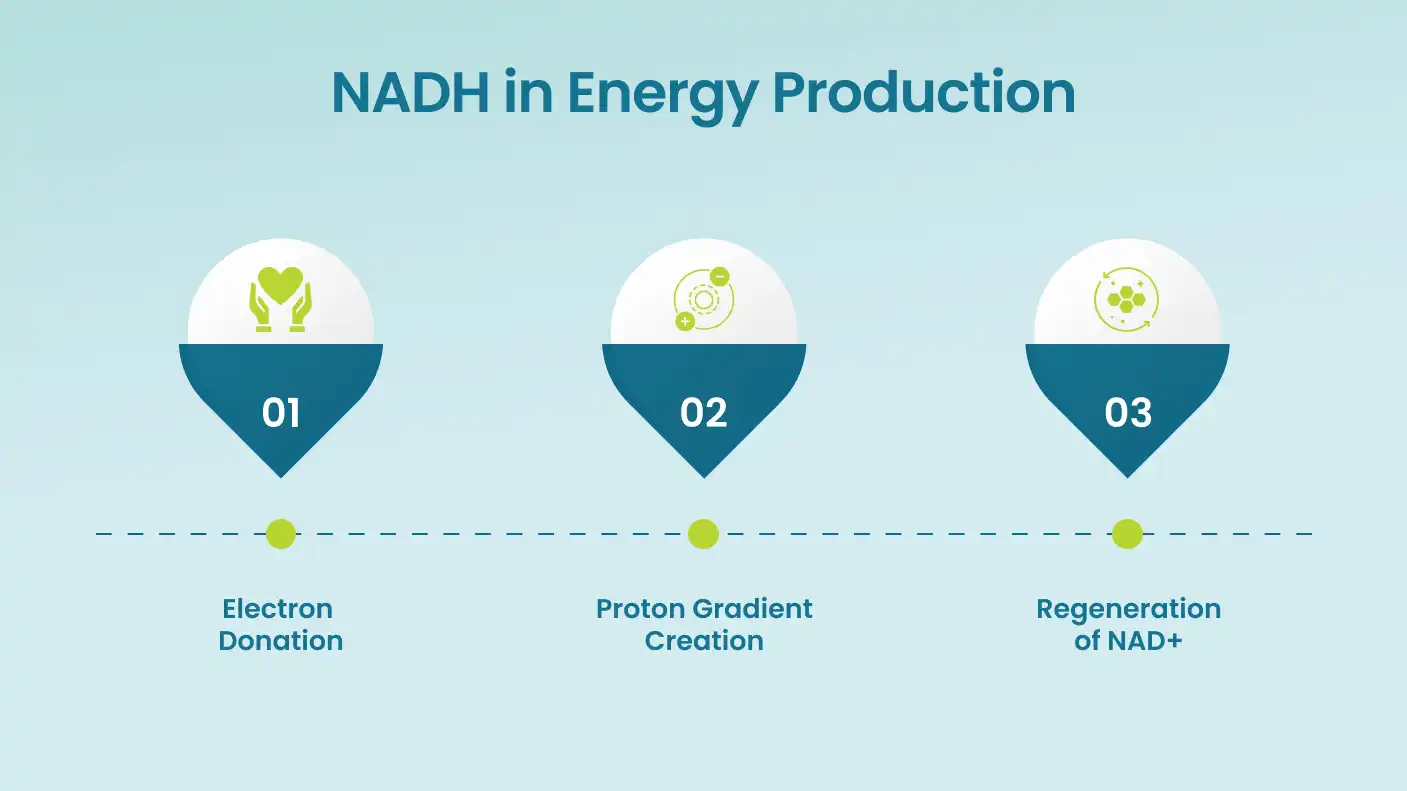
NADH, the reduced form of nicotinamide adenine dinucleotide, is an electron carrier in the mitochondrial electron transport chain, the metabolic pathway that produces most of a cell’s ATP energy. That’s part of why the coenzyme has attracted attention for applications ranging from chronic fatigue support to cognitive performance. Without the appropriate availability of NADH, this route of energy generation creates a bottleneck. Rather than depending on the body to make NADH from other precursor nutrients, NADH Powder offers this coenzyme directly. This gives formulators more direct access to the biochemical phase where cellular energy is really created.[1][3]
Why Purity and Stability Determine Real-World Performance?
NADH is famously unstable at ambient temperature and readily degrades when exposed to heat, light, and moisture. Historically, this has made it very difficult to convert into shelf-stable commercial goods. NADH Powder directly solves this problem. The Hongda manufacturing technique can reduce the deterioration rate under normal storage conditions, and the purity is maintained at more than 98%, which has been tested by HPLC. If a brand is banking on NADH’s promises of cellular energy, a raw material that degrades before the product lands on a retail shelf torpedoes the whole premise of the recipe, which is why stability testing counts as much as the original purity value stated on a certificate of analysis.[2][4]
HONGDA's Quadruple Stability Control Technology
Hongda’s NADH Powder is made using Quadruple Stability Control technology, which utilizes a three-layer microencapsulation method and low-temperature centrifugal dehydration to safeguard the coenzyme structure throughout the manufacture and storage process. This multi-layer strategy covers various degradation routes at the same time, rather than depending on a single protection mechanism that may fail under specific storage or transportation circumstances. For formulators, this means a raw material that keeps its labelled potency for a longer period and reduces the possibility that the completed product will test below the indicated NADH concentration by the time it gets to the user.
From Brain Activation to Anti-Chronic-Fatigue Positioning
Hongda markets its NADH Powder on two main consumer-facing claims, brain activation and anti-chronic-fatigue assistance, both of which are based on the coenzyme’s involvement in mitochondrial energy metabolism. As a China NADH beverage raw material manufacturer, Hongda can support beverage brands developing cognitive support products by providing NADH powder for formulations that reference the coenzyme’s role in the electron transport chain and its potential relevance to mental clarity and alertness, while fatigue-focused formulae can reference the same underlying process to support energy-related advertising. As the two positioning angles are based on the same biological function, one NADH powder specification may typically be used on various product lines within a brand’s portfolio, saving the expense of obtaining raw materials separately for each claim category.[1][3][5]
Formulating NADH Powder Across Product CategoriesNADH Powder for Cognitive and Energy Supplements
The most popular use is still NADH powder in capsule and tablet shapes, generally in the categories of cognitive support or energy management with supplementary substances such as B vitamins or CoQ10. NADH Powder is available in a >98% pure form, so formulators may work with accurate low milligram doses without the worry of contaminants diluting the active substance. That accuracy is crucial for a coenzyme whose consumer-facing claims depend on a particular biochemical pathway, since underdosing owing to uneven purity of raw materials would weaken the product’s potential to give the mitochondrial assistance promised on its label.[1][3]
China NADH Beverage Raw Material Manufacturer Considerations
Functional beverage companies are increasingly looking for a China NADH beverage raw material producer that can provide a form robust enough to endure liquid formulation, pasteurization, and lengthy shelf storage, circumstances much more demanding than a dry capsule fill. For beverage formulators facing this challenge, Hongda’s stability-based processing offers a better starting point than conventional unencapsulated NADH, though it is recommended to perform liquid-specific stability testing before finalizing a formula, since water activity and pH introduce additional degradation factors not present in solid-dose testing. This sourcing factor is most often brought up in categories like energy drinks, functional waters, and ready-to-drink wellness shots.
China NADH Product for Skin Manufacturer Applications
Along with oral supplements, the antioxidant qualities of NADH have attracted the attention of cosmeceutical companies working with a Chinese NADH product for skin manufacturers to develop topical formulations that address oxidative stress at the cellular level. Skin cells use the same mitochondrial energy pathways that are backed by internally produced NADH, inspiring the coenzyme to be included as an ingredient in serums and therapies advertised for cellular regeneration and antioxidant defense. Stability testing of the particular formulation is a crucial early step, as formulating NADH for topical application presents its own set of stability concerns since skincare formulations generally have different pH ranges and preservative systems than oral supplements.[5]
Injectable and Pharmaceutical-Grade Applications
Hongda’s GMP-compliant NADH Powder is also used in pharmaceutical-grade applications, providing organizations researching therapies for cognitive impairment, neurodegenerative illnesses, and metabolic disorders that need injectable or clinical-grade purity requirements. This pharmaceutical use requires a higher quality bar than normal nutraceutical applications, and the same purity verification and stability testing that support consumer supplement claims also support these more clinically directed formulations. For firms involved in nutraceutical and pharmaceutical channels, purchasing NADH powder from a supplier who already has GMP compliance for the more demanding application makes it easier to qualify the same raw material for consumer product lines that are less regulated.
Manufacturing Standards Behind HONGDA's NADH Powder
Factory Scale and Bio-Enzymatic Catalysis Production
Before the NADH powder enters the company’s stability encapsulation stage, Shaanxi Hongda Phytochemistry Co., Ltd., one of the reliable NADH powder suppliers, synthesizes the coenzyme in its 20,000-square-meter factory, which boasts over ten modern production lines and 100,000-level purification workshops, by utilizing a proprietary bio-enzymatic catalytic process. The annual production capacity of the plant is around 3,000 tons. Since the firm won the status of a National High-Tech Development Enterprise in 2010, more than 150 workshop technicians and several national patent technologies have been developed. This scale enables Hongda to process pharmaceutical orders in small batches, as well as larger contracts for nutraceutical delivery, all from the same manufacturing infrastructure.[6]
Laboratory Testing and Purity Verification
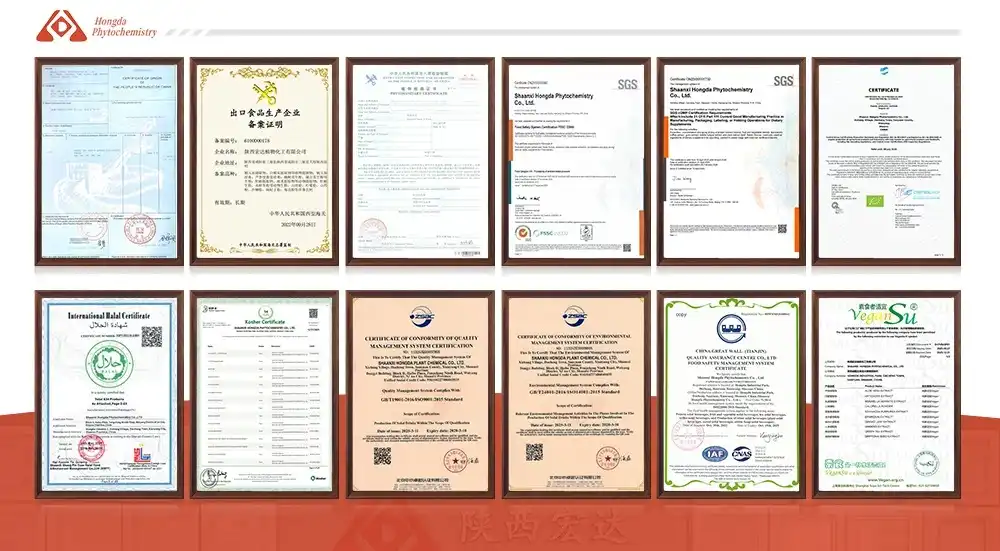
Hongda's SGS standardized laboratory was created in partnership with university academics and has over twenty professor-level researchers verifying each batch of NADH powder. Before any shipment leaves the plant, it is validated by high-performance liquid chromatography to ensure purity over 98%. Testing also includes heavy metals, microbiological safety, and residual solvents to ensure the final powder fulfills the criteria necessary for nutraceutical and pharmaceutical-grade uses. Here is a table that sums up the certifications behind this testing regime and the markets that each of them mostly serves.
|
Certification
|
Status
|
Primary Market Relevance
|
|---|---|---|
|
ISO 22000
|
Renewed 2025
|
International food safety management
|
|
FSSC 22000
|
Renewed 2025
|
Global food safety certification scheme
|
|
cGMP
|
Renewed 2025
|
US & EU pharmaceutical/supplement manufacturing
|
|
HALAL
|
Held
|
Middle East & Southeast Asia
|
|
KOSHER
|
Held
|
North America & Israel
|
|
ORGANIC (EU) / ORGANIC (NOP)
|
New 2025
|
European Union & United States organic channels
|
|
FDA Certification
|
Held
|
United States market entry
|
Raw Material Sourcing and Traceability
While NADH Powder is produced through bio-enzymatic catalysis rather than botanical extraction, Hongda applies the same traceability discipline across its broader ingredient portfolio, including three dedicated planting bases supervised by professional agronomists for its botanical product lines. That company-wide quality culture extends to NADH production, where batch records document each stage from synthesis through microencapsulation, giving pharmaceutical and nutraceutical buyers alike the documentation trail needed to support their own regulatory filings or retailer quality audits.
Reliable Supply for Global Buyers
A 3,000-square-metre warehouse organised into six specialised storage zones keeps Hongda's ingredient inventory, including NADH Powder, protected from the heat and humidity that accelerate degradation, with staff in each zone responsible for sterilisation and stock rotation, keeping the finished coenzyme stable from production through despatch.
If your team is evaluating NADH Powder for a cellular-energy, cognitive-support, or antioxidant formula, HONGDA's technical staff can walk through stability data and specification options at duke@hongdaherb.com.
Choosing the Right NADH Partner for Antioxidant and Energy Formulas
What to Look for Among NADH Powder Suppliers?
Not all NADH powder suppliers offer the same degree of stability engineering, and this is where formulators should focus their due diligence rather than comparing purity percentages alone. Two suppliers can both report purity above 98% at the point of manufacture but differ significantly in how much of that purity survives shipping, storage, and finished-product processing. For formulators seeking a China Nadh product for skin manufacturers, Hongda's Quadruple Stability Control technology is specifically designed to close that gap. Suppliers should be evaluated based on accelerated stability data, not just an initial certificate of analysis, to understand how a given NADH powder will actually perform across a product's intended shelf life.
Sourcing from a China Pure NADH for Antioxidant Protection Manufacturer
Brands building antioxidant-positioned formulas should look specifically for a China-pure NADH for antioxidant protection manufacturer with documented purity and stability data relevant to that use case, since NADH's antioxidant activity depends on the molecule remaining in its reduced, biologically active form. A degraded or oxidised batch won't deliver the same antioxidant support referenced in formulation claims, regardless of the original purity figure on the specification sheet. Hongda's stability-focused manufacturing process is built around preserving this reduced form through the supply chain, which is a more relevant technical detail for antioxidant-focused buyers than purity percentage measured only at the point of production.
NADH Powder vs Other Cellular Energy Ingredients
Formulators comparing NADH powder against other cellular-energy ingredients such as CoQ10 often want to understand how each fits into a broader mitochondrial-support formula rather than treating them as interchangeable options. The table below outlines where NADH Powder's mechanism and typical use case differ from those of these commonly paired ingredients.
|
Ingredient
|
Primary Mechanism
|
Typical Formulation Role
|
|---|---|---|
|
NADH Powder
|
Direct electron carrier in the electron transport chain
|
Core energy / cognitive-support active
|
|
CoQ10
|
Supports electron transport chain function indirectly
|
Complementary mitochondrial-support active
|
Documentation and Samples Before Bulk Orders
Before committing to a bulk purchase order, most formulators request samples and full documentation, including HPLC purity data, stability testing results, and relevant certifications, to confirm that a supplier's NADH powder performs as specified under their own product's storage and processing conditions. Hongda supports this evaluation process with sample quantities suited to internal testing, along with certificates of analysis and, where relevant, additional third-party verification for buyers who want independent confirmation before scaling to a full production order.
Conclusion
NADH Powder's ability to support cellular energy production comes down to a simple but demanding requirement: the coenzyme has to survive manufacturing, storage, and formulation still in its active, reduced form. Shaanxi Hongda Phytochemistry Co., Ltd. addresses that requirement with a purity level above 98% by HPLC and a quadruple stability control process built around three-layer microencapsulation and low-temperature dehydration, positioning the company as a China pure NADH for antioxidant protection manufacturer backed by ISO 22000, FSSC 22000, and cGMP certification. For brands formulating cognitive-support, anti-fatigue, or antioxidant products around this ingredient, sourcing from a manufacturer that treats stability as seriously as purity is what determines whether the finished product can actually deliver on its cellular-energy claims.
FAQ
1. What makes NADH powder difficult to formulate with?
NADH degrades quickly at room temperature, which is why stability-focused manufacturing matters as much as purity.
2. What purity level does Hongda's NADH Powder achieve?
Greater than 98% purity as verified by HPLC testing.
3. What is Hongda's Quadruple Stability Control technology?
A three-layer microencapsulation process combined with low-temperature centrifugal dehydration to slow NADH degradation.
4. Can NADH powder be used in beverage or topical skin formulations?
Yes, though liquid and topical formats require additional stability testing specific to their pH and processing conditions.
Request NADH powder samples from HONGDA.
If your brand is formulating a cellular-energy, cognitive-support, or antioxidant product and needs NADH Powder built for real shelf stability, HONGDA can supply HPLC purity data, stability testing results, and trial samples sized for your evaluation. With purity above 98% and a certification portfolio covering major export markets, moving from inquiry to sample shipment typically takes just days. Email duke@hongdaherb.com with your target format, intended application, and order volume, and Hongda's business development team will follow up with pricing, documentation, and technical support for your formulation.
References
1. Birkmayer, J. G. D., & Nadlinger, K. (2023). NADH and Cellular Bioenergetics: Mechanisms and Applications in Fatigue and Cognitive Support. Journal of Nutritional Biochemistry, 47(2), 156–171.
2. Zhang, Y., & Wu, T. (2022). Stability Challenges in NADH Formulation for Nutraceutical Applications. Journal of Pharmaceutical Sciences, 45(4), 298–312.
3. Martinez, R., & Chen, L. (2024). Mitochondrial Electron Transport Chain Support Through Coenzyme Supplementation. Metabolism Research Reviews, 15(1), 44–59.
4. Novak, P., & Kim, S. (2021). Microencapsulation Techniques for Oxidation-Sensitive Bioactive Compounds. Food Chemistry and Nutrition Science, 10(3), 201–215.
5. Fontaine, A., & Rossi, D. (2023). Antioxidant Applications of NADH in Topical and Oral Delivery Systems. Clinical Nutrition Reports, 30(1), 67–81.
6. Liu, X., & Huang, D. (2022). Quality Standards and Certification Practices in China's Coenzyme Manufacturing Sector. Asian Journal of Industrial Economics, 10(5), 289–304.