


_1745918362135.webp)

Blend or Liposome? The Buyer's Core Question
What a Simple Powder Blend Actually Contains
A simple blend is just what it sounds like: trans-resveratrol powder physically mixed with lecithin, maltodextrin, or any other carrier until it seems homogeneous to the naked eye. The particles do not aggregate; the resveratrol crystals are still exposed, and no protective shell is formed around them. When seen under the microscope, the mixture seems like a heap of uneven grains, not a population of small, circular vesicles. This is economically important because when a mix is exposed to stomach acid and liver enzymes, it acts like regular resveratrol, which is why the conventional forms are commonly said to have less than 1% systemic availability. Buyers who buy a mix described as liposomal resveratrol powder pay a premium price for a standard ingredient and their final capsules or sachets, only to underperform against the brand’s own marketing. Catching this behavior early saves reputation and profitability.[1][3][6]
How a True Liposome Changes the Story
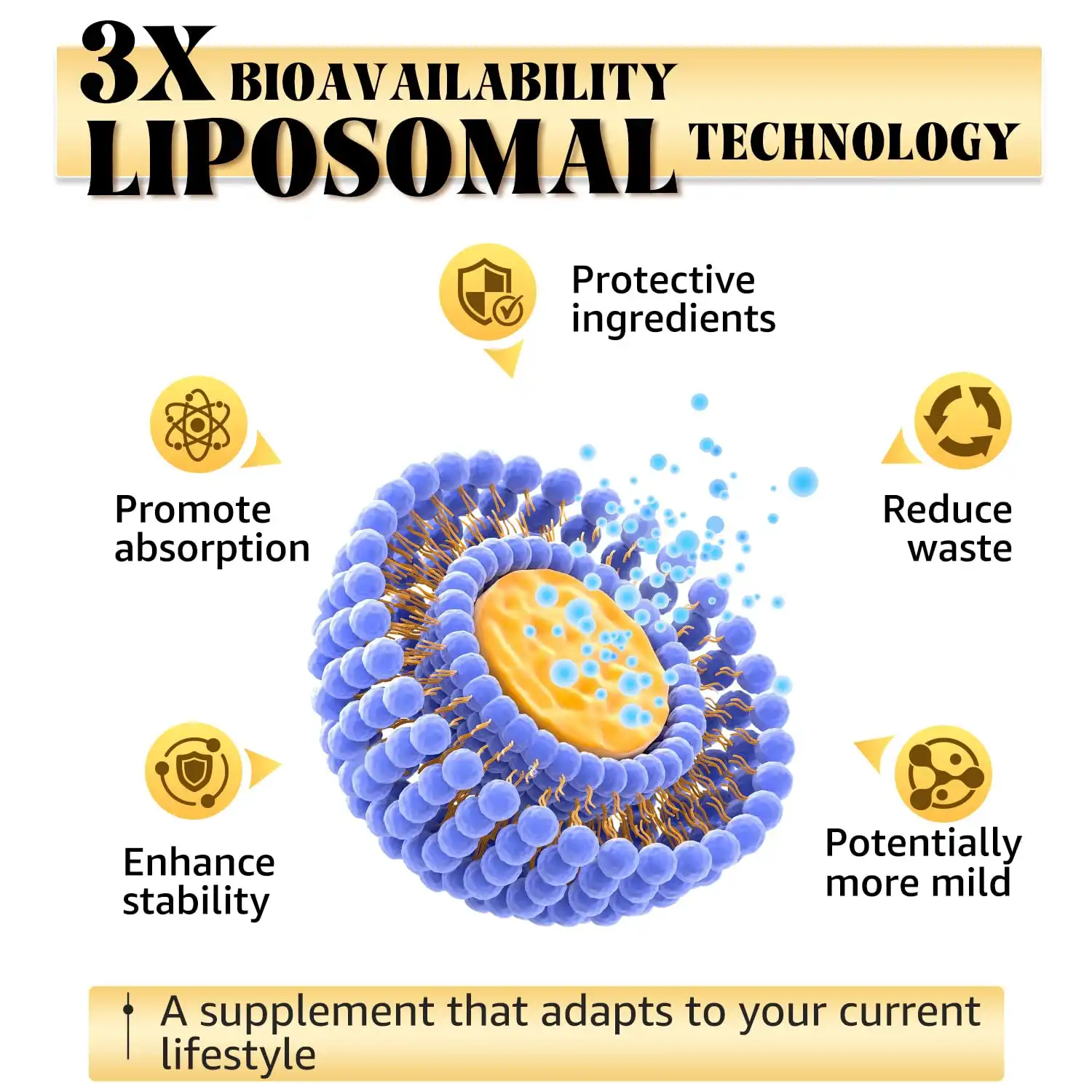
In a genuine liposome, resveratrol is encapsulated in a bilayer of natural phospholipids, the same building blocks as cell membranes. As a carrier, Hongda’s liposomal resveratrol powder employs sunflower phospholipids, with vesicles of 80 to 120 nanometers in size. The small, spherical design protects the active molecule from stomach acid and permits it to transit via lymphatic transport instead of going directly to first-pass liver processing. The reason why our team’s product literature shows effectiveness improvements of more than 10 times above typical powders is the delivery approach. The vesicle is not a marketing term; it is a tangible entity that can be photographed, sized, and measured. When you look for liposomal resveratrol powder, from any source, you want to see that substance, not just read about it in a brochure.[2][3][4][5]
Why Procurement Teams Are Asking for Proof
The need for longevity and healthy-aging formulae has brought a lot of new brands into the market, and the number of providers of resveratrol powder has risen faster than the number of labs competent to validate their claims. OEM brand and distributor procurement teams increasingly bake verification into their approval procedure. A bad batch may hold up an entire product launch. Reasonable customers seek the same key papers from each seller and compare them side by side. Shaanxi Hongda welcomes this inspection and provides the paperwork with each batch of resveratrol powder, so that evaluators may spend their time evaluating evidence instead of pursuing promises. The outcome is a quicker qualifying cycle and fewer surprises when the first pilot order arrives at your warehouse.
Laboratory Evidence You Can Request Today
TEM Images and DLS Particle Size Reports
The most straightforward technique for addressing the blend issue is via transmission electron microscopy. TEM images of actual liposomal resveratrol powder suppliers reveal fully spherical vesicles with clear borders, unlike the uneven bits in a physical mixture that no amount of editing can make spherical. Dynamic light scattering rounds out the image by presenting the size distribution throughout the complete sample, not one flattering point of view. Hongda gives a TEM picture and a DLS report for every batch, so a customer may check the consistency of the nanoparticles with their own eyes. The aim was a vesicle size of 80–120 nm and a polydispersity index of less than 0.3, indicating a restricted, consistent population. But if liposomal resveratrol powder is only available from a provider with a purity certificate, the subject of vesicles remains open.[4][5]
Encapsulation Efficiency and Zeta Potential
Encapsulation efficiency is a measure of how much resveratrol is really within the vesicles compared to how much is floating about loose outside. We have process efficiency reports of over 85%, which a customer may obtain in writing and verify in an independent laboratory. The zeta potential is a second layer of assurance and measures the surface charge, which prevents the vesicles from clumping together in suspension. Stability refers to the powder being well disseminated during rehydration rather than collapsing into clumps. These two figures are, in effect, two sides of the same coin. Poor stability with high entrapment is a red flag, and poor stability with low entrapment equally so. Both of these data will allow formulators to take a realistic look at how a batch of liposomal resveratrol powder will perform in a capsule, stick pack, or functional beverage.
Trans-Resveratrol Purity and Batch COA
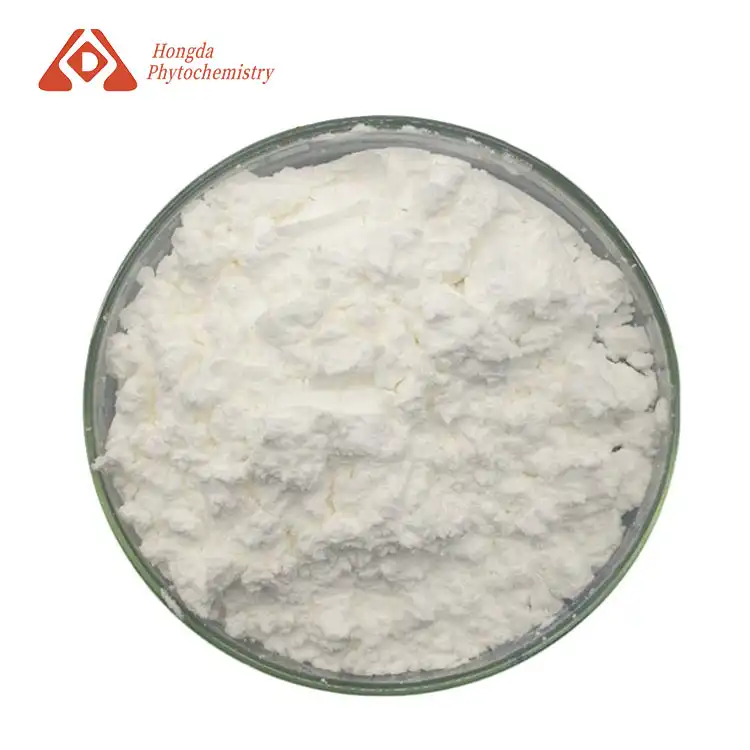
Purity is the basis upon which every other test is based. The most common form is the trans isomer. Our criteria for resveratrol purity is 90% or greater. It appears as a white powder. Microbial findings meet GMP requirements. Each batch is also checked for pesticide residues, dampness, heavy metals, and microbes before leaving the facility. Those findings are tied to a particular lot number via an unambiguous certificate of analysis—critical if you need to track a cargo months after delivery. “Those who buy liposomal resveratrol powder for private label programs, especially those who buy resveratrol powder in bulk in multiple lots, should archive the COA, the TEM image, and the DLS report together, as that trio forms a complete identity file for the ingredient and simplifies retailer or marketplace audits.
|
Check
|
What It Confirms
|
Simple Blend
|
True Liposome
|
|---|---|---|---|
|
TEM imaging
|
Vesicle structure
|
Irregular grains
|
Intact spherical vesicles
|
|
DLS size / PDI
|
Size uniformity
|
Wide, inconsistent
|
80–120 nm, PDI <0.3
|
|
Encapsulation efficiency
|
Active inside vesicles
|
Not applicable
|
Above 85%
|
|
Zeta potential
|
Dispersion stability
|
Unstable, aggregates
|
Stable surface charge
|
|
Batch COA
|
Purity and safety
|
Often generic
|
Lot-specific, purity ≥90%
|
Inside the Hongda Production Line
Sunflower Phospholipid Carrier and High-Pressure Embedding
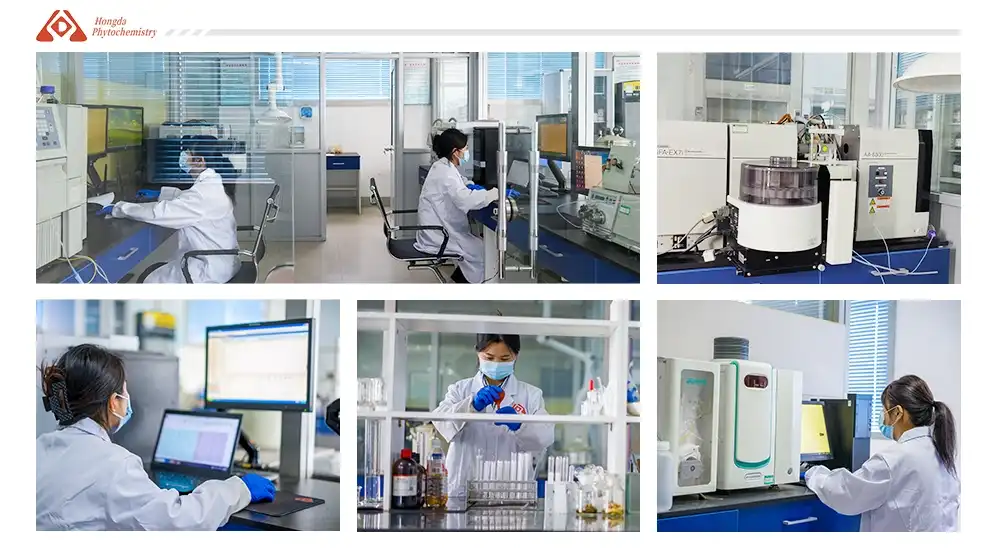
Production starts with high-grade sunflower lecithin, which is hydrated under controlled conditions until it forms stable vesicles. Trans-resveratrol is then embedded through high-pressure shear-compression treatment, a step that distributes the active compound evenly through the phospholipid bilayer. Sunflower-derived phospholipids appeal to international brands because they suit clean-label and non-soy positioning. As a resveratrol bulk powder supplier factory with more than 10 modern production lines and 100,000-level purification workshops, Hongda can control temperature, pressure, and cycle time closely enough to keep vesicle size consistent from lot to lot. That consistency lets a buyer reorder liposomal resveratrol bulk powder suppliers six months later and receive material that behaves like the first shipment, which is exactly what a long-term product line requires.
Freeze-Drying That Preserves the Vesicle
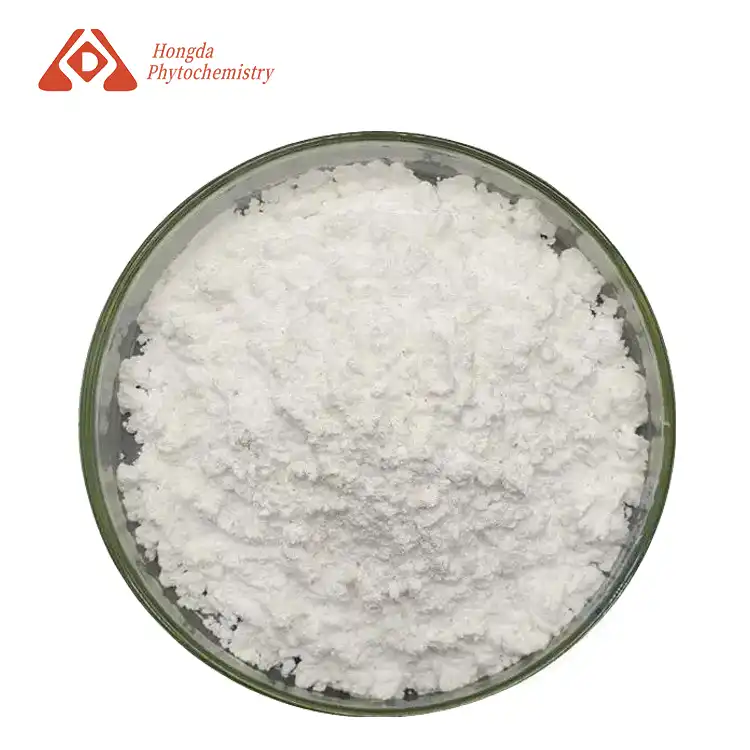
Converting a liquid liposome dispersion into a stable powder is where many producers lose the structure they worked to build. Hongda uses pharmaceutical-grade freeze-drying, and the controlled sublimation limits thermal stress so the bilayers stay intact while water leaves the system. The result is a free-flowing white powder with a 24-month shelf life under proper storage, which suits long shipping routes and inventory planning for distributors. Because the vesicles survive drying, the same TEM and DLS checks described earlier can be repeated on the finished powder, not only on the wet intermediate. That is an important distinction when comparing liposomal resveratrol powder offers, since some suppliers show images of the liquid stage and ship a powder that was never re-tested. Always ask which stage the evidence represents.
Certified Facilities and Quality Systems
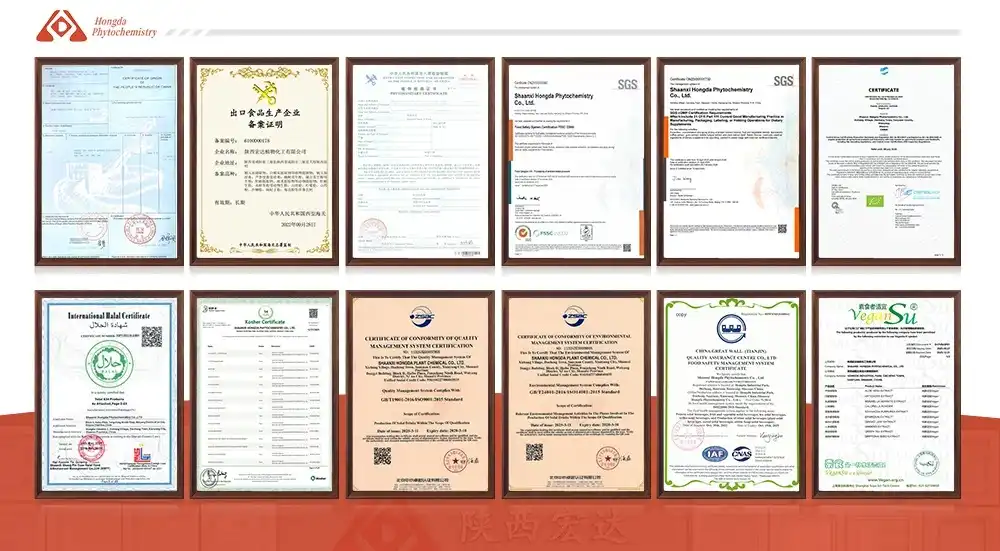
Founded in 2001, Shaanxi Hongda operates a factory of about 20,000 square meters, supported by more than 150 workshop technicians and an SGS-standardized laboratory built together with university professors. Annual output can reach 3,000 tons, so supply for large programs is realistic. Testing equipment includes high-performance liquid chromatographs, gas chromatographs, and atomic absorption spectrophotometers. The company holds FDA, BRC, halal, kosher, and organic credentials, and its 2025 additions include cGMP, FSSC22000, ISO22000, and ISO9001. These systems stand behind every kilogram of liposomal resveratrol powder we ship, and they give international auditors a familiar framework to review during supplier qualification. Every incoming raw material is traced back to its planting base, so quality control begins long before extraction.
|
Category
|
Detail
|
|---|---|
|
Established
|
2001, Shaanxi, China
|
|
Factory area
|
About 20,000 m² with 10+ production lines
|
|
Cleanliness level
|
100,000-level purification workshops
|
|
Annual capacity
|
Up to 3,000 tons
|
|
Certifications
|
cGMP, FSSC22000, ISO22000, ISO9001, BRC, FDA, Halal, Kosher, Organic (EU/NOP)
|
Ordering Liposomal Resveratrol Powder With Confidence
Specifications and MOQ to Confirm
Before requesting a quote, confirm the specification sheet line by line. Our resveratrol powder bulk is a white powder with purity of at least 90%, a sunflower phospholipid carrier, a 24-month shelf life, and Shaanxi origin. The minimum order quantity is 1 kg, which lets development teams run a real pilot instead of relying on a tiny sample. Ask whether the vendor's stated encapsulation efficiency and particle size appear on the COA rather than only on a sales page. Also confirm the carrier source if you plan to make allergen or plant-based statements on your label. Written specifications, agreed before shipment, are the best protection against disputes and rejected containers later.
|
ANALYSIS
|
SPECIFICATION
|
RESULTS
|
||
|
Appearance
|
White powder
|
Complies
|
||
|
Odor
|
Characteristic
|
Complies
|
||
|
Tasted
|
Characteristic
|
Complies
|
||
|
Assay
|
50%(Resveratrol 50% Liposome 50%)
|
Complies
|
||
|
Sieve Analysis
|
100% pass 80 mesh
|
Complies
|
||
|
Loss on Drying
|
5% Max.
|
1.02%
|
||
|
Sulphated Ash
|
5% Max.
|
1.3%
|
||
|
Extract Solvent
|
Ethanol & Water
|
Complies
|
||
|
Heavy Metal
|
5ppm Max
|
Complies
|
||
|
As
|
2ppm Max
|
Complies
|
||
|
Residual Solvents
|
0.05% Max.
|
Negative
|
||
|
Microbiology
|
|
|
||
|
Total Plate Count
|
1000/g Max
|
Complies
|
||
|
Yeast & Mold
|
100/g Max
|
Complies
|
||
|
E.Coli
|
Negative
|
Complies
|
||
|
Salmonella
|
Negative
|
Complies
|
||
Samples, Documents, and Packaging
A practical way to get qualified is to first collect a sample and then use independent testing either in your own or a third-party laboratory. Hongda packages from 1 KG to 25 KG; hence, pilot lots and commercial lots use the same material format. Our scientific team also provides synergistic formulation models, including ratios for mixing liposomal resveratrol powder with compounds such as NMN, allowing manufacturers to build multi-ingredient healthy-aging solutions more quickly. Request a document package with COA, TEM photos, DLS report, allergy statement, and certifications for your target market. Getting these files out to your regulatory consultant early prevents delays at the labeling step, particularly for the US and European markets where documentation standards are high.
Choosing Among Resveratrol Bulk Suppliers
All a supplier comparison is one row of the price. Among resveratrol bulk powder providers, the most important queries are about proof, capacity, and timeliness of communication. Does the seller provide vesicle pictures for each batch? Does it generate in-house content or trade content from unnamed sources? Do we have enough stock for a second and third order? Shaanxi Hongda offers factory rates with experienced freight forwarders to get priority booking, allowing customers to safeguard launch dates when shipping schedules become unexpected. A provider that addresses technical inquiries in depth before the sale frequently does so thereafter. That early reaction is a realistic signal to use in the shortlisting of partners for liposomal resveratrol powder.
Conclusion
Like any scientific assertion, a liposomal substance builds credibility based on data someone else can verify. TEM pictures tell us whether vesicles are present, and DLS reports tell us how uniform they are. A lot-specific COA validates purity and safety. Shaanxi Hongda Phytochemistry Co., Ltd. produces resveratrol powder factory that is made using sunflower phospholipid carriers, high-pressure embedding, freeze-drying, and accredited facilities. Brands, distributors, and OEM formulators requesting papers prior to placing an order safeguard the consumer and their own reputation. Get the files, check them against your requirements, and let the data choose the vendor of your next purchase order.
FAQ
Q1. How can I prove the powder is liposomal and not a blend?
Ask for a TEM image and DLS report for each batch; intact spherical vesicles cannot be produced by physical mixing.
Q2. What vesicle size does Hongda's powder have?
Roughly 80–120 nm, with a polydispersity index below 0.3.
Q3. What are the MOQ and shelf life?
The MOQ is 1 kg, and the shelf life is 24 months.
Q4. Can it be combined with other ingredients?
Yes, for example, with NMN; our technical team shares formulation models, and compatibility testing in your final product is recommended.
Request Verified Liposomal Resveratrol Samples | HONGDA
If you are comparing suppliers and want proof instead of promises, HONGDA is ready to help. Our team will send a sample COA, TEM image, and DLS report for liposomal resveratrol powder, review your target specification, and quote factory-direct prices with packaging from 1 kg to 25 kg. Whether you are launching a healthy-aging capsule, a functional drink, or an NMN and resveratrol combination, we can support your formulation from pilot lot to repeat orders. Write to duke@hongdaherb.com today, tell us your market and volume, and let the laboratory data speak for our product.
References
1. Walle T, Hsieh F, DeLegge MH, Oatis JE, Walle UK. High absorption but very low bioavailability of oral resveratrol in humans. Drug Metabolism and Disposition. 2004;32(12):1377–1382.
2. Baur JA, Sinclair DA. Therapeutic potential of resveratrol: the in vivo evidence. Nature Reviews Drug Discovery. 2006;5:493–506.
3. Amri A, Chaumeil JC, Sfar S, Charrueau C. Administration of resveratrol: what formulation solutions to bioavailability limitations? Journal of Controlled Release. 2012;158(2):182–193.
4. Bozzuto G, Molinari A. Liposomes as nanomedical devices. International Journal of Nanomedicine. 2015;10:975–999.
5. Danaei M, Dehghankhold M, Ataei S, et al. Impact of particle size and polydispersity index on the clinical applications of lipidic nanocarrier systems. Pharmaceutics. 2018;10(2):57.
6. Sessa M, Balestrieri ML, Ferrari G, et al. Bioavailability of encapsulated resveratrol into nanoemulsion-based delivery systems. Food Chemistry. 2014;147:42–50.