


_1745918362135.webp)

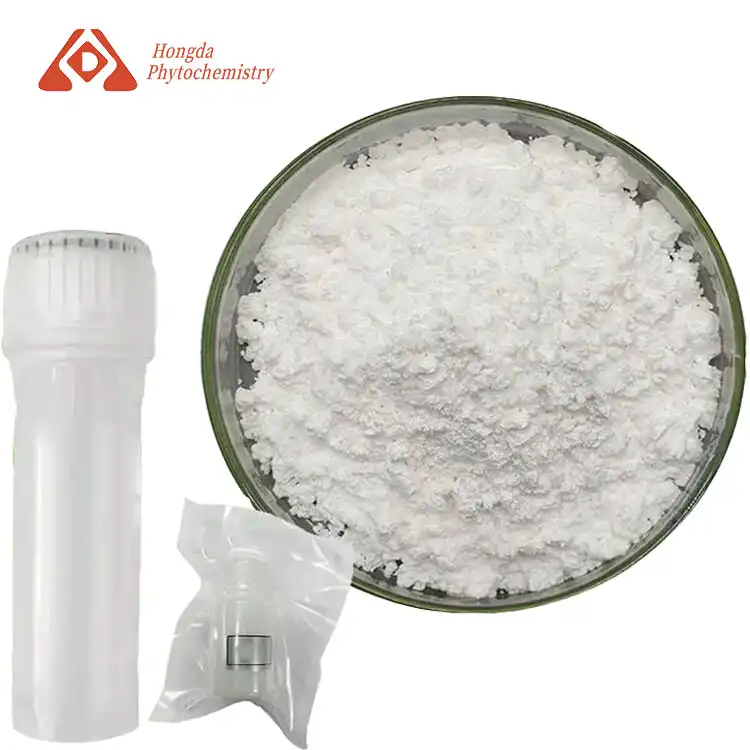
Uridine 5' - monophosphate disodium salt powder is an ingredient that crosses numerous sectors, appearing in savoury culinary spices, infant formula, and nutraceutical compositions for cellular and cognitive support. This is because of its versatility, as it may be a functional taste molecule and also a naturally occurring nucleotide that the body already uses in cellular metabolism, giving formulators a variety of acceptable reasons to employ it in a product. Shaanxi Hongda Phytochemistry Co., Ltd. supplies uridine 5’-monophosphate disodium salt powder, under strict purification-grade circumstances, to ensure that the customers will obtain a high-purity ingredient on a regular basis for usage in food, infant feeding, and supplement applications. With over 20 years of experience in assisting international food and nutraceutical companies, Hongda Phytochemistry’s manufacturing process emphasises quality first. In this post, we discuss the ingredient’s key applications, how it performed in each one, and what buyers should consider when sourcing from a supplier they can trust over the long term.
What Is Uridine 5'-Monophosphate Disodium Salt Powder Used For?
A Quick Overview of Its Core Functional Roles
Uridine 5'-monophosphate disodium salt powder has two primary functional roles, depending on the sector in which it is used. It is used as a flavour-enhancing food additive, and it is utilised as a nucleotide ingredient in nutrition-focused formulations. It is one of a class of ribonucleotide flavour enhancers used in culinary applications, which improve the perception of savouriness. As a component of nutrition and supplements, it is valued as a source of uridine, a chemical involved in RNA synthesis and cellular membrane building. The chemical’s dual functionality is one reason it shows up in so many different types of end goods — packaged soups, infant formula, and cognitive-support pills. To know what functional role a formulator is looking for is to know the grade, dosage, and accompanying papers that are suited for a given application.[1][2][6]
Why Is It Valued as a Flavour-Enhancing Uridine Powder?
Uridine 5'-monophosphate disodium salt powder is a uridine powder that is used mainly for taste enhancement. It increases the umami, the savoury flavour of glutamate-heavy dishes. And when combined with monosodium glutamate or other ribonucleotides, it has a synergistic flavour-enhancing impact and a considerably stronger effect than each ingredient alone. Food producers appreciate this synergy since it means they don’t need to employ as much of any one flavour enhancer to have a complete savoury flavour in the finished product. It is so efficient that it is a typical ingredient in many processed and convenience food formulations on the international market.[1]
Its Role in Nucleotide Supplementation
Uridine 5'-monophosphate disodium salt powder is now increasingly being used in formulas as a dietary nucleotide supply for cellular health and metabolic support, in addition to taste purposes. Nucleotides, the building blocks of RNA and DNA, may be synthesised in the body. But research shows that nutritional supplementation may aid in enhancing cellular turnover during periods of high metabolic demand, such as early infant development or recovery from illness. It has enabled the material to become a functional ingredient for specific nutrition products, not only a flavour-driven item. In this area, formulators would frequently use a food- or pharmaceutical-grade version that has been specifically confirmed for nutritional purposes as opposed to a wide industrial-grade material.[2][4]
How Does Purity Affect Its Functional Performance?
Regardless of the application a formulator is working on, the purity of uridine 5’-monophosphate disodium salt powder has a major influence on the performance of a final product. In food applications, the remaining processing contaminants in lower-purity material may slowly degrade taste clarity, whilst in nutraceutical formulations they may interfere with dose precision. For buyers sourcing China uridine powder, consistent quality and reliable testing are particularly important. Hongda’s SGS-standardised lab conducts HPLC-based assay testing, which gives customers written assurance that each individual batch meets the specification essential for the buyer’s purpose and thereby ensures the purity of its goods. Such a level of purity assurance is critical in infant feeding and pharmaceutical-related industries, where slight differences in quality may have a disproportionate influence on regulatory and safety results.[3]
|
Items
|
Requirements
|
Results
|
|
Description
|
White or almost white powder
|
Conformity
|
|
Identification
|
Have the largest absorption at 262+lnm wavelength
A250/A260 =0.70-0.78
A280/A260 =0 34-0.4
|
261.9nm
A250/A260 =0.74 A280/A260 =0.39
|
|
Potential of hydrogen
|
1.0-2.5
|
1.2
|
|
Water content
|
≤10.0%
|
4.1%
|
|
Clarity and color
|
Clear and Colorless
|
Conformity
|
|
Transmittance of solution
|
≥95.0 %
|
99.1%
|
|
Heavy metals
|
≤0.002%
|
<0.002%
|
|
Purity(HPLC)
|
≥98.0%
|
99.8%
|
|
Packing
|
25kgs/drum (standard packing)
|
|
|
Storage
|
Tight container, protect from light
|
|
Applications in the Food and Beverage Industry
Flavor Enhancement in Savory and Processed Foods
Uridine 5'-Monophosphate Disodium Salt Powder is most used in the food and beverage sector, where it is added to savoury foods to enhance and balance the overall flavour profile. China uridine powder is often supplied to manufacturers of instant noodles, snack spices, and packaged sauces since it adds the mouthfeel and the strength of the flavour without having a flavour of its own. Therefore, it is a versatile ingredient that may be used in a wide variety of cuisines and product types, rather than being restricted to a single flavour group. Another reason it remains a regular reference component in commercial flavour creation is its constant effectiveness across diverse food matrices.
Synergy With Other Ribonucleotide Flavour Enhancers
Uridine 5'-monophosphate disodium salt powder is seldom used alone in commercial flavour systems but is most often mixed with other ribonucleotides, such as disodium inosinate and disodium guanylate, to provide a combined flavour-enhancing effect. In this sort of nucleotide mix, often colloquially called an I+G-style system, the complementary taste-enhancing processes of each chemical are used to provide a more powerful umami effect than could be obtained by either single ingredient alone. Formulators modifying these mixes may modulate flavour strength across a range of product classes from mild broths to strongly seasoned snack coatings. Knowledge of these synergistic ratios is an important feature of successful flavour system formulation in current food production.
|
Flavor Enhancer
|
Typical Role in Blends
|
|---|---|
|
Disodium Inosinate
|
Meat-forward umami intensity
|
|
Disodium Guanylate
|
Broad umami enhancement
|
|
Uridine 5'-Monophosphate
|
Rounding and mouthfeel support
|
Use in Seasonings, Broths, and Convenience Foods
Uridine 5'-monophosphate disodium salt powder is also used in individual flavour blends but is most common in packaged spice mixes, bouillon products, and ready-to-eat convenience meals where uniform flavour presentation is critical throughout big production runs. Its water solubility even enables dispersion in liquid goods such as broths and instant soups, and its resistance to standard food processing temperatures allows it to undergo cooking and packing stages without considerable deterioration. The convenience food makers highly appreciate this stability, since variations in flavour performance between manufacturing runs may directly affect customer satisfaction and repeat buy rates. It has been a reliable reference ingredient in commercial seasoning formulations due to its consistent performance in a wide variety of food processing situations.
Regulatory Status as a Food Additive
Uridine 5'-monophosphate disodium salt powder is recognised as a food additive in many international markets, usually classed with other ribonucleotide flavour enhancers under food safety regulations that define acceptable use amounts for particular food types. If a manufacturer is exporting completed goods having this ingredient in them, the product must meet the unique labelling and consumption limits in each destination market. Regulations might vary widely based on the location. If you source from a supplier who already has the export documents and the required certifications in place, this process of compliance becomes a lot easier. Hongda’s certification portfolio enables just this kind of cross-market regulatory navigation for food firms sourcing abroad.[1][5]
Applications in Infant Nutrition and Nutraceutical Formulas
Nucleotide Supplementation in Infant Formula
Uridine 5'-monophosphate disodium salt powder has a more specialised use as a nucleotide supplement in baby formula, an application that has been backed by decades of study into the composition of human breast milk. Breast milk naturally includes a variety of nucleotides, including uridine monophosphate, and the disodium 5-uridylate UMP market reflects the growing commercial interest in these nucleotide ingredients as formula companies add similar nucleotide mixes to try to more accurately approximate their makeup. Supplier quality verification is extremely crucial in this application because of the fragile population being serviced and the very rigorous purity and safety norms. Those in this group often need complete documentation of microbiological testing, heavy metal screening, and batch traceability before certifying a raw material source.[2]
Supporting Early Immune and Gut Development
Part of the research interest in nucleotide-supplemented baby formula has been the potential to assist early immune system development and gastrointestinal maturation during a vital growth window. Uridine 5'-monophosphate disodium salt powder is one of the ingredients of a larger nucleotide mix and provides building blocks for fast cellular turnover of growing intestinal tissue at this time. Although research in this field continues, the use of nucleotide blends in baby formula is not a new trend but rather a reflection of years of formulation expertise. Brands in this category need to be cautious when communicating particular health claims and adhere to the relevant recommendations for baby feeding products that are regulated.[4]
Interest in Cognitive and Neurological Support
Beyond newborn feeding, uridine 5'-monophosphate disodium salt powder has also attracted considerable attention in the nutraceutical field due to its probable function in aiding the production of cellular membranes, which is pertinent to brain health and cognitive function. Uridine is a precursor in metabolic pathways involved in phospholipid synthesis, and several cognitive health formulators have experimented with its use as an adjunct ingredient to more recognised nootropic substances. This is an area of active research interest, not an established mainstream category; therefore, formulators should appropriately reflect the existing evidence base and not overstate particular cognitive claims. Nevertheless, the rising footprint of the element in this category is an indication of increasing interest in nucleotide-based methods for cellular health support.[6]
Formulation Considerations for Supplement Brands
For completed products featuring uridine 5'-monophosphate disodium salt powder, supplement companies should examine the right dose based on available research, its compatibility with additional ingredients that promote cognition or cellular health, and the best delivery method for their intended customer base. Forms include powder and pill, with capsules being the more typical option for a standardised daily dose in maintenance-style supplement regimens. Brands wishing to build a novel formula around this ingredient or needing a special spec sheet prior to finalising a manufacturing order may contact the Hongda technical team directly at duke@hongdaherb.com to discuss formulation help. Early technical input on compatibility, dosage, etc. prevents expensive reformulation later in the development phase.
Sourcing Uridine 5'-Monophosphate Disodium Salt Powder From a Trusted Manufacturer
Why does China's uridine powder production lead the global supply?
China has become a dominant global source for uridine powder production, supported by large-scale fermentation and purification infrastructure capable of meeting both food-grade and nutraceutical-grade demand at competitive cost. Manufacturing hubs with established biochemical production capabilities, including facilities like Hongda's, benefit from integrated supply chains that keep raw material costs manageable while still supporting rigorous quality control standards. This scale advantage has made Chinese-manufactured uridine 5'-monophosphate disodium salt powder, including uridine-5'-mp disodium, a standard reference point for buyers across the food, infant nutrition, and supplement industries worldwide. Buyers evaluating sourcing regions should weigh this manufacturing scale alongside a specific supplier's individual quality track record rather than treating country of origin as the only relevant factor.
Understanding the Disodium 5-uridylate UMP Market Landscape
The broader disodium 5-uridylate ump market has grown steadily alongside rising global demand for both processed food flavour enhancers and specialised nutrition products, creating a more complex sourcing landscape than a decade ago. Demand drivers span multiple sectors simultaneously, including convenience food manufacturing, infant formula production, and an expanding nutraceutical segment exploring nucleotide-based cellular health products. This diversified demand base has generally supported stable, well-established supply chains for buyers working with reputable manufacturers, though sourcing decisions still benefit from monitoring broader market conditions. Buyers planning long-term procurement strategies should factor in this multi-sector demand pattern when negotiating supply agreements and evaluating a manufacturer's production capacity.
What to Look for in a Verified Uridine-5'-MP Disodium Supplier?
Identifying a reliable uridine-5'-mp disodium supplier starts with reviewing documented manufacturing certifications, requesting a full certificate of analysis for the specific grade needed, and confirming production scale sufficient to support recurring orders without supply interruptions. Hongda's roughly 20,000-square-metre facility, equipped with more than ten modern production lines and an SGS-standardised laboratory, provides this kind of manufacturing depth alongside transparent batch documentation. Buyers should also confirm whether a supplier can differentiate between food-grade and higher-purity nutraceutical-grade material, since these applications carry different specification requirements. Working with a manufacturer capable of serving both grades from the same quality-controlled facility simplifies sourcing for brands operating across multiple product categories.
Certifications and Documentation for Global Buyers
International buyers sourcing uridine 5'-monophosphate disodium salt powder should confirm a supplier's certification portfolio aligns with the regulatory requirements of their target export markets before finalising a purchase agreement. Hongda's certifications, built up since 2001 and expanded significantly in 2025 to include cGMP, FSSC22000, ISO22000, ISO9001, and EU and NOP organic certifications, support market access across food, infant nutrition, and nutraceutical categories in both the US and European markets. This certification depth reduces the compliance burden on importing brands, which would otherwise need to independently verify manufacturing practices from scratch. Buyers should request current certification documentation directly rather than relying solely on outdated information from a supplier's marketing materials.
|
Certification
|
Relevance to Buyers
|
|---|---|
|
cGMP
|
Pharmaceutical-grade manufacturing discipline
|
|
FSSC22000 / ISO22000
|
Food safety management systems
|
|
ORGANIC
|
Access to organic-labeled product lines
|

Conclusion
From savory flavor systems to infant formula and emerging cognitive-support formulas, uridine powder and uridine 5'-monophosphate disodium salt powder serve a genuinely broad set of applications. Shaanxi Hongda Phytochemistry Co., Ltd., backed by an SGS-standardized laboratory, 3,000-ton annual capacity, and a growing international certification portfolio, gives buyers a dependable source across each of these categories. Brands ready to source this ingredient or request documentation are encouraged to connect with the Hongda team today.
FAQ
1. What is uridine 5'-monophosphate disodium salt powder primarily used for?
It is used as a flavor-enhancing food additive and as a nucleotide ingredient in infant formula and nutraceutical products.
2. How does it enhance flavor in food products?
It amplifies umami taste perception, especially when combined with other ribonucleotides or glutamate-based ingredients.
3. Why is it used in infant formula?
It helps replicate the nucleotide composition naturally found in breast milk, supporting formula manufacturers' nutritional goals.
4. Is there a difference between food-grade and nutraceutical-grade material?
Yes, purity and testing requirements differ by application, so buyers should confirm the grade matches their intended use.
Partner With HONGDA for Reliable Uridine 5'-Monophosphate Disodium Salt Powder
Sourcing a multi-application ingredient like this one calls for a manufacturer that understands both food and nutraceutical quality requirements. Shaanxi Hongda Phytochemistry Co., Ltd. supplies uridine 5' - monophosphate disodium salt powder backed by HPLC-verified purity, comprehensive documentation, and certifications spanning cGMP, ISO22000, and international organic standards. Whether you need samples for internal testing, a detailed specification sheet, or wholesale pricing for an upcoming production run, the Hongda team is ready to assist. Reach out directly at duke@hongdaherb.com to discuss your sourcing needs and start building a dependable supply relationship.
References
1. Codex Alimentarius Commission. General standards for food additives, including permitted ribonucleotide flavor enhancers.
2. Carver, J. D., & Walker, W. A. The role of nucleotides in human nutrition. The Journal of Nutritional Biochemistry, 1995.
3. United States Pharmacopeia. General chapters on nucleotide identification and assay testing methods. USP-NF Reference Standards.
4. Wang, L., et al. Effects of dietary nucleotides on immune function in early development. Nutrition Research Reviews.
5. European Food Safety Authority. Scientific opinion on the safety of ribonucleotide-based flavor enhancers in food.
6. Cansev, M. Uridine and cytidine in the brain: their transport and utilization. Brain Research Reviews, 2006.