


_1745918362135.webp)

Liposomal Glutathione Powder vs Nano Glutathione: Which Works Better?
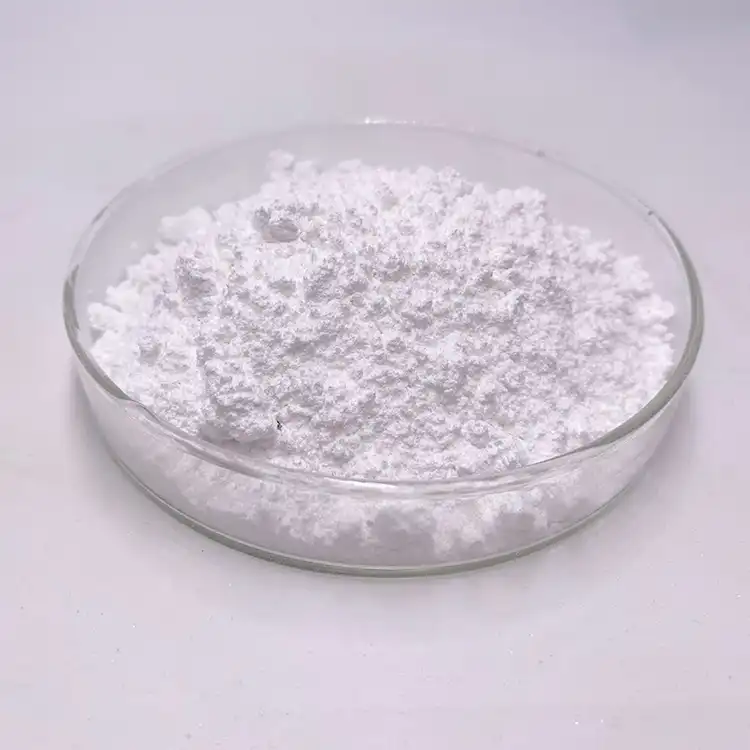
People who want to buy antioxidants and compare delivery technologies usually only look at two: Liposomal Glutathione Powder and nano glutathione. Hongda Phytochemistry has spent years improving liposomal delivery science, and Shaanxi Hongda Phytochemistry Co., Ltd. has set its Liposomal Glutathione Powder as a standard for how well it absorbs, how consistently it is made, and how easily it can be mixed with other ingredients. Both methods try to fix the same issue, which is that glutathione is extremely hard to absorb in the body through the mouth. However, they do so using various physical structures. Using Hongda's own manufacturing and testing data as a useful guide, this piece directly compares the two methods in terms of absorption, stability, and formulation performance. This way, buyers can choose which delivery format best meets their product goals.[1][2][3][4]
Liposomal Glutathione Powder vs Nano Glutathione: Two Delivery Technologies Compared
What Defines Liposomal Encapsulation?
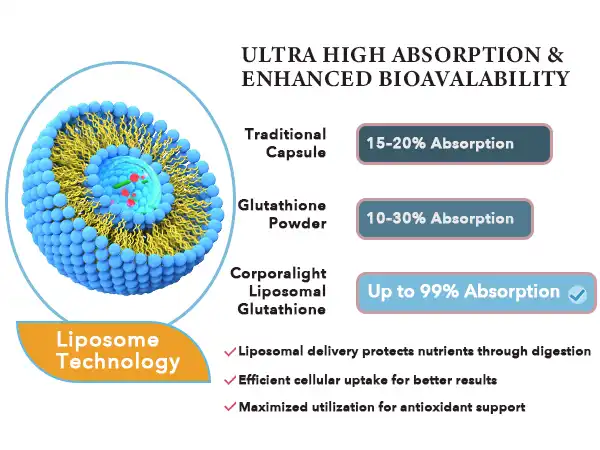
To make Liposomal Glutathione Powder work, it wraps glutathione molecules in phospholipid bilayers, which look a lot like cell walls. The active ingredient is safe from stomach gas and digestive enzymes because of this two-layer shell. So, glutathione doesn't have to be broken down first before it can get into the bloodstream through lymphatic routes. The structure of phospholipids is like the structure of cell walls in the body. So when the chemical inside it gets to its target tissue, it tends to combine more smoothly at the cellular level.[1][4]
What Defines Nano Glutathione?
Nano glutathione works in a different way by breaking down glutathione particles to the nanometer level without necessarily covering them with a protective lipid shell. The smaller particle size means more surface area, which can help with dissolving and making first contact with intestinal tissue. However, it doesn't provide the same barrier against breakdown that liposomal technology does. In real life, this means that nano glutathione formulas depend a lot on precise particle size control to have any effect at all on absorption.[5]
Why This Comparison Matters for Buyers?
Both nano glutathione and liposomal glutathione powder are good, but which is better? It's not just what the label says. It depends on how the active ingredient is given, how much of it is digested, how stable it is during production and storage, and how simple it is to mix into different types of produced goods. All of these things have a direct impact on how much a brand costs per effective amount and how well you see results. Formulators can save a lot of money by not having to redo the formula later on if they make this choice early on in the development process. This is especially true if the claims on the package and the words used in marketing are already based on a certain delivery technology.[1][4][5]
Bioavailability and Absorption: Round One
How Liposomal Delivery Bypasses Digestive Breakdown?
Liposomal Glutathione Powder protects the active molecule inside a phospholipid shell. This way, it can mostly avoid stomach acid and enzymes that break down oral glutathione doses before they are absorbed. This way lets the whole compound get into the lymphatic system. Shaanxi Hongda's high-pressure homogenization process is designed to support this pathway on a large scale, making sure that the quality of the encapsulation stays the same in large production batches as well as in small lab samples.[1][2][6]
How Nano Particles Achieve Absorption?
Nano glutathione works mostly by making particles smaller so that they can be absorbed better. This makes more surface area available for dissolving in the digestive system. This method might be better than regular powder in some ways, but because it doesn't have a lipid barrier, more of the compound is broken down by the digestive system than in a properly made Liposomal Glutathione Powder. This means that fewer of the possible absorption benefits actually get into the bloodstream.
Comparing Measured Bioavailability Gains
Using liposomes for delivery, like Hongda's Liposomal Glutathione Powder, has been linked to ten to fifteen times better bioavailability than taking glutathione by mouth. This is mostly because of the protective encapsulation mechanism, not just the particle size. Because reducing the particle size doesn't fully solve the digestive stability problem that liposomal encapsulation directly addresses, nano formulations tend to report smaller absorption gains. This is why direct side-by-side comparisons tend to favor the encapsulated format for measurable outcomes.
The table below summarizes the core differences between the two delivery technologies.
|
Factor
|
Liposomal Glutathione Powder
|
Nano Glutathione
|
|---|---|---|
|
Delivery Mechanism
|
Phospholipid encapsulation
|
Particle size reduction
|
|
Bioavailability Gain
|
10–15x standard oral form
|
Moderate improvement
|
|
Digestive Protection
|
Shielded by lipid bilayer
|
Limited, exposed to enzymes
|
|
Oxidation Resistance
|
Higher, shell-protected
|
Lower, more surface exposure
|
|
Typical Shelf Life
|
Up to 24 months
|
Generally shorter
|
Comparison compiled from Hongda Phytochemistry production and testing documentation for Liposomal Glutathione Powder.
Stability, Shelf Life, and Manufacturing Consistency
Liposomal Glutathione Powder's Packaging and Storage Advantage
Liposomal Glutathione Powder from Shaanxi Hongda is packed in triple-layer metal foil that has been filled with nitrogen. This keeps the sensitive substance safe from air and light. This method helps the finished powder keep its active reduced-glutathione content for a longer time, even when shipped internationally in climates that are different from one country to another. This is very important for brands that have to manage marketing across multiple continents.
Stability Challenges Facing Nano Glutathione
Nano glutathione particles may be more vulnerable to oxidation in the environment without a protected lipid shell. This is because decreasing the particle size increases the surface area that is exposed to oxygen and stomach fluids. This can make nanoformulations more sensitive to storage conditions and shorten their useful shelf life compared to Liposomal Glutathione Powder that is properly enclosed and kept in controlled packaging. This is something that brands that ship their products along long international supply chains that find it hard to keep temperature and humidity levels stable from beginning to end should think about.
Why Hongda's Process Controls Favor Liposomal Formats?
The SGS-certified lab at Shaanxi Hongda checks the purity and particle size distribution of every batch of Liposomal Glutathione Powder using dynamic light scattering and high-performance liquid chromatography. This gives buyers documented consistency that many nano glutathione suppliers can't match without the same testing infrastructure in place, especially smaller businesses that outsource formulation and don't have their own quality verification equipment.
Formulation Flexibility and Application Range
Where Liposomal Glutathione Powder Performs Best?
Liposomal Glutathione Powder mixes easily into capsules, functional drinks, and skin-brightening creams because its phospholipid shell makes it easier to dissolve and stay stable in liquids from a reliable glutathione powder manufacturer. Liposomal delivery is often used by brands that make detox pills, immune formulas, and high-end makeup that whiten teeth because it works well in all of these different product forms and lets one ingredient standard work for multiple product lines without having to be reformulated.
Where Nano Glutathione Is Typically Used?
Nano glutathione is usually found in simpler powder mixes or basic capsule forms, where the need for maximum absorption is less important than making the formula as complicated as possible or saving money. It might be a good option for brands that value a lower price over the better stability and bioavailability that liposomal encapsulation provides, but this tradeoff should be made clear instead of hidden behind marketing language that sounds similar.
OEM and Custom Concentration Options
Liposomal Glutathione Powder from Shaanxi Hongda Phytochemistry Co., Ltd. comes in different concentrations, such as 50 percent and 70 percent glutathione content. This lets formulators change the dose without having to rethink the whole product. This allows both high-end supplement lines and budget-friendly formulations to be made in the same facility. This means that buyers can grow their product lines without having to switch suppliers as their formulation needs change, whether they are launching their first product or entering new markets with different budget limits.

Choosing a Reliable Glutathione Powder Manufacturer
What to Look for in a Glutathione Powder Manufacturer?
People who want to buy glutathione powder should not only look at the delivery technology, but also at the testing infrastructure that goes along with it. If a manufacturer has their own lab equipment to check particle size, purity, and stability, that's much more reliable than a company that relies only on a formulation description without batch data. This is especially true for buyers who want to make specific claims about absorption on their own packaging.
Evaluating a Glutathione Free Radical Scavenger Wholesaler in China
Before signing a contract with a glutathione free radical scavenger wholesaler in China for large orders, buyers should ask for proof of the encapsulation method, particle size testing, and certification records. These details tell buyers a lot more about how the product will work in the long term than just price, and they keep buyers from making the common mistake of comparing suppliers based on price without knowing what technology is behind the price, which is usually found after the product has already been sold.
Certifications and Supply Capacity That Build Trust
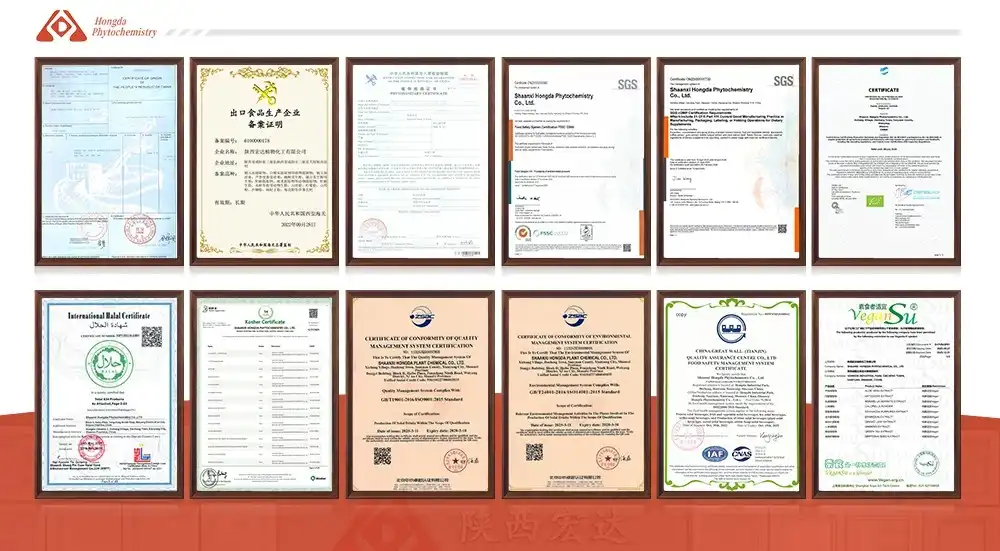
Shaanxi Hongda is registered as a cGMP, ISO9001, ISO22000, FSSC22000, Halal, Kosher, and FDA facility. It can produce about 3,000 tons of goods every year and has a 3,000-square-meter building with six separate storage areas. Because of its large production capacity and high level of certification, the company can handle both small trial orders and large recurring supply agreements for Liposomal Glutathione Powder as a glutathione free radical scavenger wholesaler in China. This is possible without the delivery delays that smaller, less-certified businesses sometimes have trouble avoiding, especially when demand for antioxidant supplements goes up during certain times of the year.
Specification details for Hongda's Liposomal Glutathione Powder are summarized below for quick reference.
|
Item
|
Specification
|
|
Appearance
|
Off-white to light yellow powder
|
|
Loss on Drying
|
≤ 5.0%
|
|
Particle Size
|
≥ 90% through 20mesh
|
|
Bulk Density
|
Measured value
|
|
Tapped Bulk Density
|
Measured value
|
|
Lead
|
≤ 0.5ppm
|
|
Arsenic
|
≤ 2.0ppm
|
|
Cadmium
|
≤ 0.3ppm
|
|
Mercury
|
≤ 0.3ppm
|
|
Total Plate Count
|
≤ 10000cfu/g
|
|
Yeasts&Molds
|
≤ 1000cfu/g
|
|
Coliforms
|
≤ 10MPN/g
|
|
E.Coli
|
Negative/25g
|
|
Salmonella
|
Negative/25g
|
|
Staphylococcus Aureus
|
Negative/25g
|
|
Fatty Acids
|
10.0%-20.0%
|
|
Phospholipids (NON-GMO)
|
10.0%-20.0%
|
|
Glutathione
|
65.0%-75.0%
|
Conclusion
Foods that are hard to get glutathione from are fixed by liposomal glutathione and nano glutathione. But in real life, they do it in various ways that lead to various outcomes. It keeps things fresh longer, stops them from breaking down in the gut better, and gives formulators more ways to make vitamins, drinks, and makeup. Shaanxi Hongda Phytochemistry Co., Ltd. is still a good place to buy from if you don't want to guess but want proof that something works. They have strict tests and approvals from other countries. Contact them right away to get a sample and check out their specs.
FAQ
1. What is the main difference between Liposomal Glutathione Powder and nano glutathione?
Liposomal powder encapsulates glutathione in a protective phospholipid shell, while nano glutathione relies mainly on particle size reduction without the same protective barrier.
2. Which format offers better bioavailability?
Liposomal Glutathione Powder generally shows greater bioavailability gains because encapsulation protects the compound from digestive breakdown.
3. Does Liposomal Glutathione Powder have a longer shelf life than nano glutathione?
Yes, its protective phospholipid shell and nitrogen-flushed packaging typically support a longer, more stable shelf life.
4. Is Hongda a certified glutathione powder manufacturer?
Yes, Shaanxi Hongda holds cGMP, ISO22000, FSSC22000, Halal, Kosher, and FDA facility registration.
Choose Proven Liposomal Glutathione Powder | HONGDA
Still weighing liposomal delivery against nano glutathione for your next formulation? Shaanxi Hongda Phytochemistry Co., Ltd. offers standardized, lab-verified Liposomal Glutathione Powder backed by internationally recognized certifications and dependable production capacity. Our technical team can help you compare absorption data, request a sample, or plan an OEM project suited to your dosing and application needs. Contact us today at duke@hongdaherb.com to start the conversation, and discover why formulators worldwide trust Hongda as a long-term, science-driven ingredient partner.
References
1. Allen, T. M., & Cullis, P. R. (2013). Liposomal drug delivery systems: from concept to clinical applications. Advanced Drug Delivery Reviews.
2. Zeevalk, G. D., Bernard, L. P., & Guilford, F. T. (2010). Liposomal-glutathione provides maintenance of intracellular glutathione and neuroprotection in oxidative stress models. Neurochemical Research.
3. Richie, J. P., Nichenametla, S., Neidig, W., et al. (2015). Randomized controlled trial of oral glutathione supplementation on body stores of glutathione. European Journal of Nutrition.
4. Sercombe, L., Veerati, T., Moheimani, F., et al. (2015). Advances and challenges of liposome assisted drug delivery. Frontiers in Pharmacology.
5. Mohanty, C., Das, M., & Sahoo, S. K. (2012). Emerging role of nanocarriers to increase the solubility and bioavailability of curcumin. Expert Opinion on Drug Delivery.
6. Kidd, P. M. (1997). Glutathione: systemic protectant against oxidative and free radical damage. Alternative Medicine Review.