


_1745918362135.webp)

Calcium is one of the most widely supplemented minerals in the world, but formulators are increasingly migrating to chelated forms that solve real formulation difficulties, rather than the usual carbonate and citrate forms. In response to this transformation, Hongda Phytochemistry has created a calcium bisglycinate powder with an emphasis on clean absorption, formulation flexibility, and established purity. The specialised producer of this ingredient is Shaanxi Hongda Phytochemistry Co., Ltd. The ingredient provides the consistency supplement brands need across bone health, prenatal, and general wellness product lines, offering formulators a reliable source of calcium that works across a truly broad range of applications.[1][3]
Why Calcium Bisglycinate Powder Is Gaining Ground in Supplement Formulation
What Makes This Chelated Calcium Form Different?
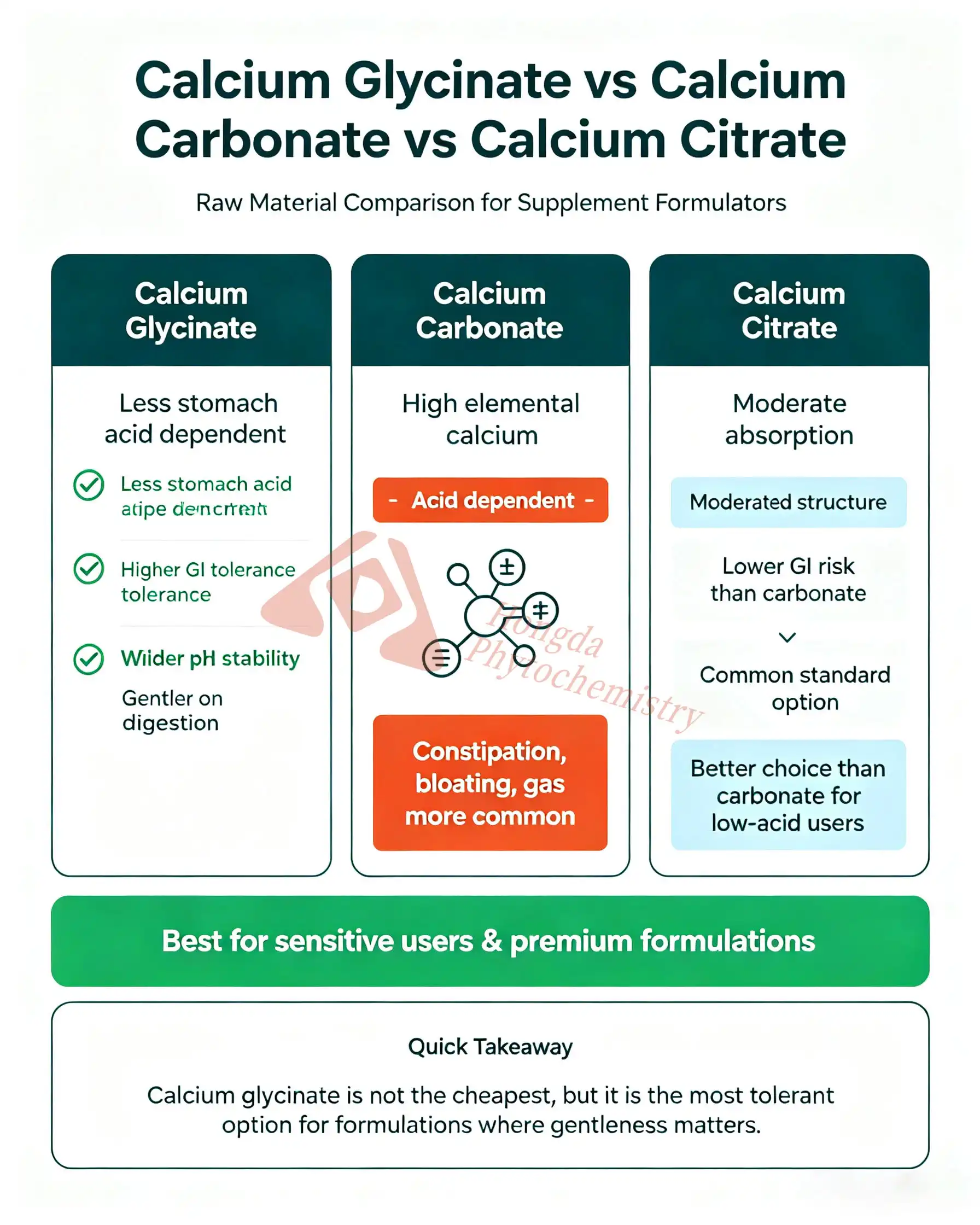
Calcium bisglycinate powder is calcium chelated to two molecules of the amino acid glycine in a stable chelated structure. It functions differently from inorganic calcium ions when it enters the digestive system. The chelation reduces the reactivity of the calcium ion with other chemicals in the stomach, and this is part of the reason formulators are increasingly utilising this form rather than carbonate forms that depend heavily on stomach acid to break down. Calcium bisglycinate powder is less reliant on this acid-driven process, and so is likely to be more consistent across consumers with different digestive conditions, including older adults, who typically produce less stomach acid as they age, and who represent a substantial and growing proportion of the overall calcium supplement market.[2][6]
Elemental Calcium Content and Label Claims
Formulators will usually look at the proportion of the element calcium as one of the first criteria for calcium bisglycinate powder, since chelated forms tend to have a lower elemental content than inorganic salts such as calcium carbonate. If the elemental percentage is lower, then the formulator generally has to use a larger serving size for an equivalent label claim, a trade-off often worth it when digestive tolerance and absorption consistency are priorities for the target consumer, especially on products marketed explicitly around gentleness versus maximum potency per serving. When formulating new products, always check the certificate of analysis for the current elemental calcium content, rather than using general published averages, when estimating the dose.[1][6]
Who Benefits Most From This Ingredient?
Calcium bisglycinate powder can be used to make products that may disproportionately benefit certain consumer groups, such as older adults who are managing a reduction in stomach acid production, older adults who have experienced digestive discomfort from calcium carbonate, and pregnant women whose calcium requirements increase exponentially at certain points of pregnancy. Formulators targeting these groups will often find that the gentler digestive profile of this chelated form of calcium encourages better long-term compliance, which ultimately matters more for bone health outcomes than any single dose, since calcium supplementation is a long-term commitment rather than a short-term intervention, and abandoning a supplement after only a few weeks provides little meaningful benefit to bone density.[4][5]
|
Calcium Form
|
Approx. Elemental Calcium
|
Acid Dependency
|
Typical Application
|
|---|---|---|---|
|
Calcium Carbonate
|
~40%
|
High
|
Basic tablets
|
|
Calcium Citrate
|
~21%
|
Low
|
General supplementation
|
|
Calcium Bisglycinate Powder
|
~18-20%
|
Very Low
|
Sensitive-stomach, prenatal formulas
|
|
Calcium Lactate
|
~13%
|
Moderate
|
Fortified beverages
|
Core Applications of Calcium Bisglycinate Powder in Supplements
Bone and Joint Health Formulas
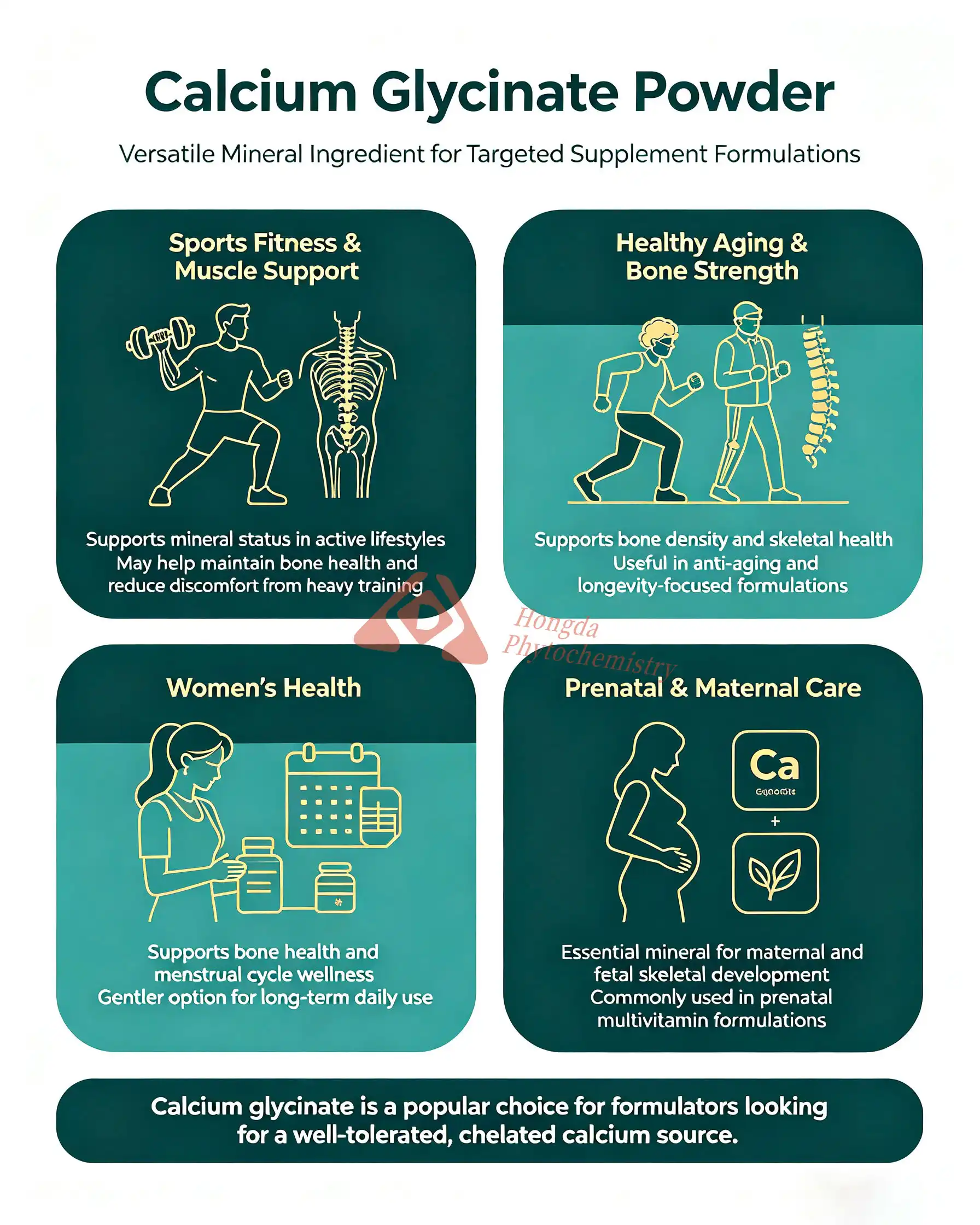
The most recognised use of calcium bisglycinate powder remains in bone health, since it’s constant daily calcium consumption over years, not weeks, that genuinely promotes skeletal maintenance and density. For formulators sourcing suitable raw materials, working with a food grade calcium bisglycinate supplier can help ensure the ingredient meets the required quality specifications for finished products. This substance is typically combined with vitamin D3, magnesium, and vitamin K2 to create long-term bone and joint support solutions that all perform complementary functions in calcium metabolism and bone mineralisation. The milder digestive profile of calcium bisglycinate powder makes it a great choice for the kind of sustained daily compliance bone health products rely on for meaningful long-term results, as bone remodelling responds to consistent nutrient availability measured over years, not weeks of high intake.
Prenatal and Women's Health Products
Calcium bisglycinate powder is used as a supplement in many prenatal vitamin brands. Pregnancy greatly increases the need for calcium, but many women also become more prone to gastric upset from regular supplementation. A gentler source of calcium eliminates one more variable that might deter consistent use at a time when nutrient intake is critically important for both maternal and foetal health outcomes. Many pregnant women are already navigating other dietary adjustments and sensitivities during this stage of life. This substance also appears in women’s health products that target bone density during and after menopause for similar tolerability reasons.[4]
Multivitamin and Mineral Combination Blends
The chelated structure of calcium bisglycinate powder may help to minimise some of the competition for absorption that takes place in complex multivitamin and mineral formulae when free calcium ions contact other minerals such as iron, zinc or magnesium in the same tablet or capsule. This is a huge point of compatibility and is why you see this ingredient so often in broad daily formulas that are trying to provide a wide array of nutrients without having one mineral inhibit the bioavailability of another that uses the same absorption pathway. The more actives you put into a product, the more pronounced this issue becomes.
Sports Nutrition and Recovery Products
Calcium bisglycinate powder is a helpful ingredient for the sports nutrition category in recovery and bone-support formulae. Athletes and highly active persons have increased calcium demands because of the stress placed on bones from repeated training loads. The easier-to-digest formula is also a consideration for athletes already managing gut sensitivity during periods of intense training, when digestive comfort becomes a more immediate day-to-day concern than it might be for a less active consumer taking the same supplement, as gastrointestinal discomfort can directly impact training performance and recovery.
Formulation Formats That Use Calcium Bisglycinate Powder
Capsules and Tablets
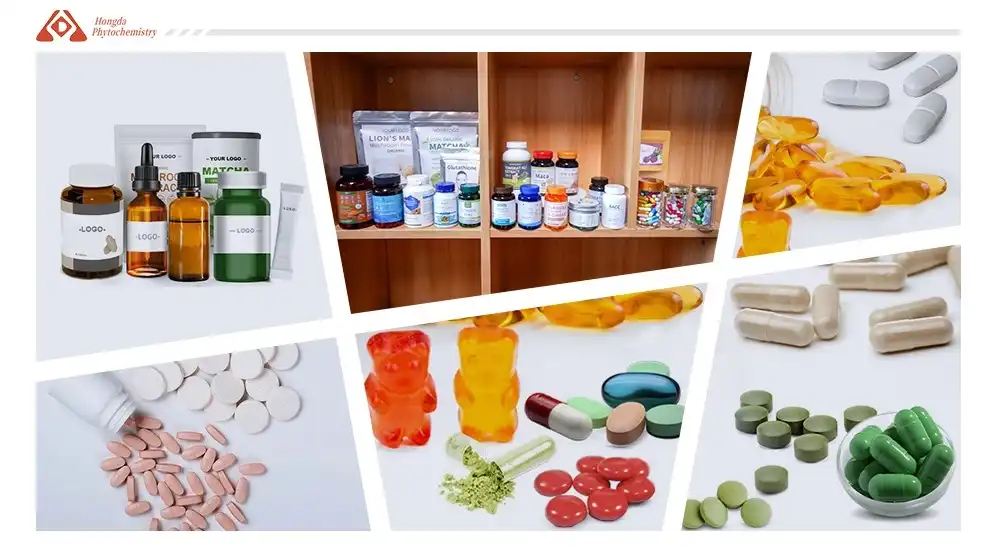
Calcium bisglycinate powder is a reliable product in both capsule and tablet formats and has high compatibility with conventional excipients and stability during normal shelf-life periods. Calcium bisglycinate powder is well-suited for this application because it has consistent particle characteristics and predictable flow behaviour during high-speed tableting, making it a suitable custom formulation ready powder calcium bisglycinate option for formulators with specific product requirements. Calcium supplements often require a relatively large serving size to get a meaningful elemental dose, so formulators sometimes divide the recommended daily intake into two or three smaller tablets or capsules rather than one large tablet.[1][6]
Powdered Drink Mixes and Sachets
Single-serve powder forms have gained popularity for delivering calcium supplements, especially for customers who prefer to mix a daily dosage in water or another beverage rather than taking numerous pills. Calcium bisglycinate powder has reasonable solubility in this format, and it provides a less chalky texture and metallic aftertaste than some inorganic calcium salts, for a better consumer experience that is conducive to the consistent daily use of bone health products that depend on this for long-term results, particularly among consumers who have previously given up on chalky tablet formats out of frustration.
Gummies and Chewables
There are significant hurdles in formulating calcium-containing gummies and chewables because the naturally substantial elemental need of calcium may be hard to integrate into a compact, appealing candy without an unpleasant texture or flavour. Calcium bisglycinate powder also has a more neutral flavour profile, giving formulators a more cooperative starting point than some inorganic alternatives. Brands still need multiple gummies per serving to deliver a meaningful calcium dose, but this trade-off should be clearly communicated on product labelling.[1][3]
Sourcing Calcium Bisglycinate Powder for Your Product Line
What to Confirm From a Food Grade Calcium Bisglycinate Supplier?
A good food-grade calcium bisglycinate supplier should also provide a certificate of elemental calcium content, particle size distribution, and testing procedure for each batch of manufacturing, since these parameters are directly related to the accuracy of dosing and formulation compatibility. Specifically, buyers should ask how the completeness of chelation is verified in quality control, because incomplete chelation leaves more free calcium in the finished powder and can undermine the digestive tolerance advantage that makes this ingredient attractive to formulators in the first place. This is a distinction that often only becomes apparent through careful testing rather than a visual inspection of the powder itself.
Specification Grades: Understanding 20 Percent Food Grade Calcium Bisglycinate
When buyers compare bids for bulk powder calcium bisglycinate, they will typically see a 20 percent food grade calcium bisglycinate specification, which is about the elemental calcium content guaranteed in that particular grade. This specification allows formulators to determine correct serving sizes and to avoid under-dosing a finished product relative to its label claim, particularly for products marketed with specific milligram-per-serving calcium claims that regulators may audit during a compliance audit. Reputable suppliers should be able to explain how this percentage is verified through testing and how it may vary slightly between production batches within an accepted tolerance range, and buyers should ask explicitly for this tolerance range rather than assume it matches industry norms without confirmation.
Requesting Custom Formulation Ready Powder Calcium Bisglycinate
Brands creating a particular final product, i.e., a batch pre-adjusted for particle size, flow properties or mix compatibility with a certain delivery method, may request a bespoke formulation ready powder calcium bisglycinate. While this level of customisation may mean fewer formulation iterations are needed on the path to commercial scale, it typically requires closer collaboration with the supplier’s technical team earlier in the development process, ideally before a brand has committed to packaging design or final label copy that might need to be changed based on serving size adjustments. If your team requires this kind of customised specification, the sourcing team at duke@hongdaherb.com can guide you through potential customisation possibilities in detail.
Why Shaanxi Hongda Phytochemistry Is a Dependable Source?
Production Scale Supporting Bulk Powder Calcium Bisglycinate Orders
With over ten modern production lines and 100,000-level purification workshops, covering an area of about 20,000 square meters, Shaanxi Hongda Phytochemistry Co., Ltd. has the scale to consistently handle bulk powder calcium bisglycinate orders, while maintaining chelation consistency. With an annual output capacity of approximately 3,000 tonnes of its full portfolio of amino acids and vitamins, the factory employs over 150 workshop operation technicians, able to service both formulation trials and established commercial volumes, without the extended lead times that smaller blending operations sometimes struggle to avoid during periods of high demand.
In-House SGS-Standardized Testing
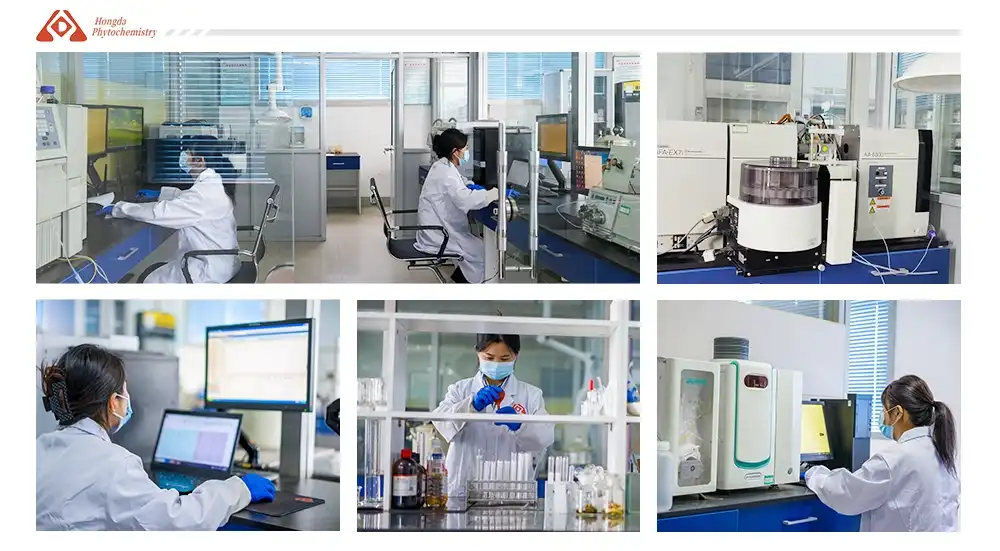
The calcium bisglycinate powder produced in each batch is tested in a laboratory co-founded with university academics and standardised to SGS norms, with the help of more than twenty professor-level research and testing specialists. Prior to release, high-performance liquid chromatographs, atomic absorption spectrophotometers, and automatic titrators are used to confirm elemental calcium content, moisture, heavy metals, and microbial counts, giving buyers documented evidence of quality, rather than a simple promise on a sales sheet. This documentation can be shared upon request to support internal quality reviews.
Certifications Supporting Global Distribution
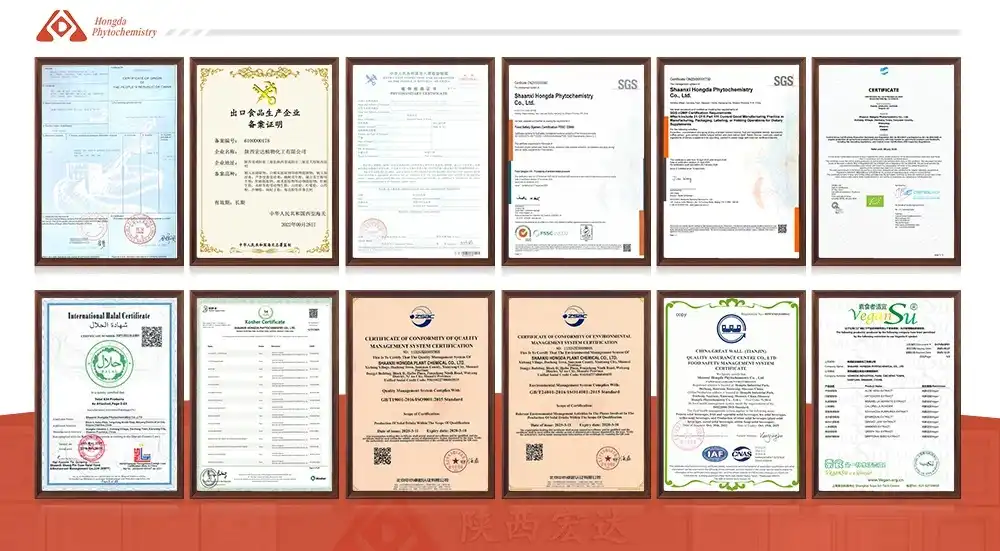
In the period 2001-2024, Shaanxi Hongda obtained the national high-tech enterprise, food production licence, feed additive licence, halal and kosher certification, BRC, FDA registration and organic certification. In 2026, the firm added cGMP, FSSC22000, SC certification, ISO22000, ISO9001, EU and NOP organic certification. The expanding certification portfolio makes it easier for brands that develop bone health, prenatal, or general wellness products around this ingredient to comply with import regulations and be reviewed by retailers in multiple international markets. It reduces the typical friction that comes with expanding into newly regulated markets.
|
Certification
|
Why It Matters for Buyers
|
|---|---|
|
ISO 9001 / ISO 22000
|
Documents consistent quality and food safety management
|
|
FDA Registration
|
Supports compliant import into the United States
|
|
Halal / Kosher
|
Expands access to dietary-restricted consumer markets
|
|
cGMP / FSSC22000
|
Confirms hygienic, controlled manufacturing conditions
|
Conclusion
Calcium bisglycinate powder supports a wide range of supplement applications, from bone and prenatal health to multivitamin blends and sports nutrition, thanks to its gentle digestive profile and formulation flexibility. For formulations requiring a specific mineral concentration, a 20 percent food grade calcium bisglycinate option can be evaluated alongside other calcium specifications to match the intended product requirements. Shaanxi Hongda Phytochemistry backs this ingredient with scaled production, in-house SGS-standardized testing, and an expanding global certification portfolio. Formulators exploring their next calcium product should request documentation and a sample batch before finalizing their sourcing decision, comparing dissolution behavior, taste, and consistency directly against whichever calcium source they are currently using in their existing product line.[1][2][5][6]
FAQ
1. What supplement categories commonly use calcium bisglycinate powder?
It is widely used in bone health, prenatal, multivitamin, and sports nutrition formulations.
2. How does calcium bisglycinate powder compare to calcium carbonate?
It generally offers gentler digestive tolerance, though with a lower elemental calcium percentage per gram.
3. What does a 20 percent food grade specification mean?
It refers to the approximate elemental calcium concentration guaranteed in that particular product grade.
4. Can calcium bisglycinate powder be customized for a specific formulation?
Yes, suppliers can often adjust particle size and flow characteristics for specific delivery formats upon request.
Formulate Your Next Calcium Product With HONGDA
If your brand is developing a supplement built around gentle, reliable calcium delivery, Shaanxi Hongda Phytochemistry can provide current specifications, certificates of analysis, and sample batches of calcium bisglycinate powder tailored to your formulation needs. With scaled production capacity, in-house SGS-standardized testing, and certifications supporting global compliance, HONGDA is positioned to be a dependable long-term partner. Reach out today at duke@hongdaherb.com to request documentation and discuss your bulk sourcing requirements.
References
1. National Institutes of Health, Office of Dietary Supplements — Calcium Fact Sheet for Health Professionals
2. Journal of Bone and Mineral Research — studies on calcium chelate bioavailability and bone density outcomes
3. Linus Pauling Institute, Oregon State University — Micronutrient Information Center, Calcium
4. American College of Obstetricians and Gynecologists — Nutrition During Pregnancy Guidance
5. International Osteoporosis Foundation — Calcium and Vitamin D Recommendations for Bone Health
6. U.S. Pharmacopeia — Dietary Supplement Compendium, Mineral Chelate Monographs