


_1745918362135.webp)

What Makes Liposomal Glutathione Powder Superior to Regular GSH?
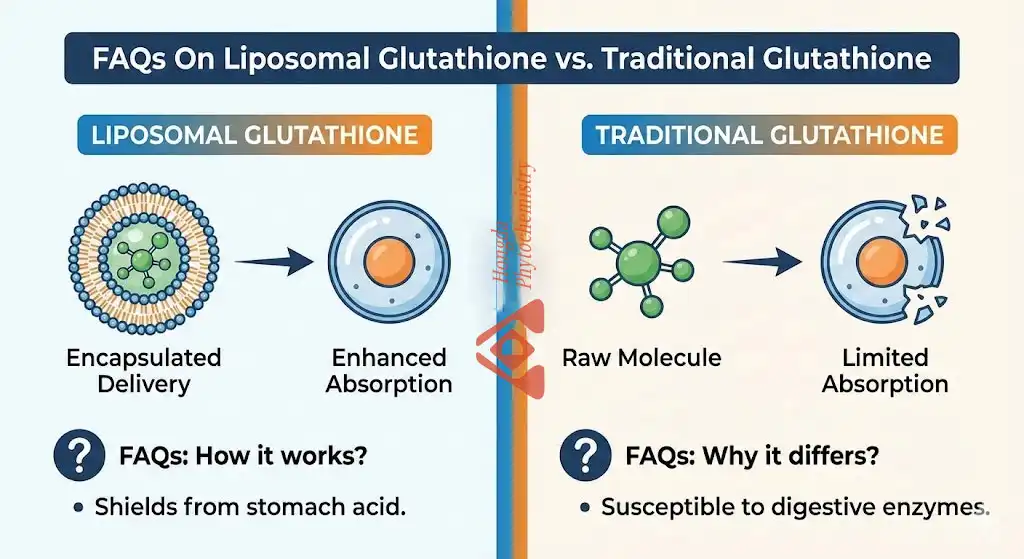
Liposomal Glutathione Powder delivers unmatched bioavailability compared to standard reduced glutathione through advanced phospholipid encapsulation technology by Hongda Phytochemistry. While conventional glutathione faces rapid degradation from gastric acid and digestive enzymes, resulting in less than 10% absorption, the liposomal formulation protects the active ingredient within a nano-sized phospholipid bilayer that mimics human cell membranes. This breakthrough design enables direct lymphatic absorption, bypassing first-pass metabolism and achieving 10-15 times greater systemic bioavailability—a transformative advantage for B2B manufacturers developing premium health products.
Understanding Glutathione and Its Importance
Glutathione is one of the most important antioxidants made by the body. It is made up of three amino acids: cysteine, glutamic acid, and glycine. This tripeptide coordinates important processes inside every cell, such as removing reactive oxygen species and helping phase II liver-detoxifying pathways. The chemical is very important for controlling the immune system, especially for making sure that lymphocytes and natural killer cells work at their best.
Traditional oral glutathione supplementation has let down both formulators and end users in the past, even though it is biologically important. An important problem is that GSH is naturally chemically unstable and easy for enzymes to break down. The enzyme gamma-glutamyl transferase (GGT) quickly breaks down peptide bonds in normal glutathione powder as it moves through the digestive system. This breaks up the molecule before it can be absorbed properly. Because of this biochemical bottleneck, scientists have spent decades researching ways to release glutathione while keeping its structure intact.
More and more, procurement workers are under pressure to find ingredients that have been shown to have real-world clinical effects. The glutathione category has had a hard time because of the difference between how well it works in vitro and how well it works in vivo. This has led to doubt among informed customers and regulatory review in markets that want proof. Shaanxi Hongda Phytochemistry Co., Ltd. saw these problems early on and invested in liposomal packaging technology to turn glutathione from an interesting ingredient into an active that can be used consistently. Understanding these basic limits helps explain why advanced delivery forms are now necessary for companies that want to reach high-end customers, since the success of their products is directly linked to their brand's image and the number of times people buy from them again.
The Science Behind Liposomal Glutathione PowderPhospholipid Encapsulation Technology
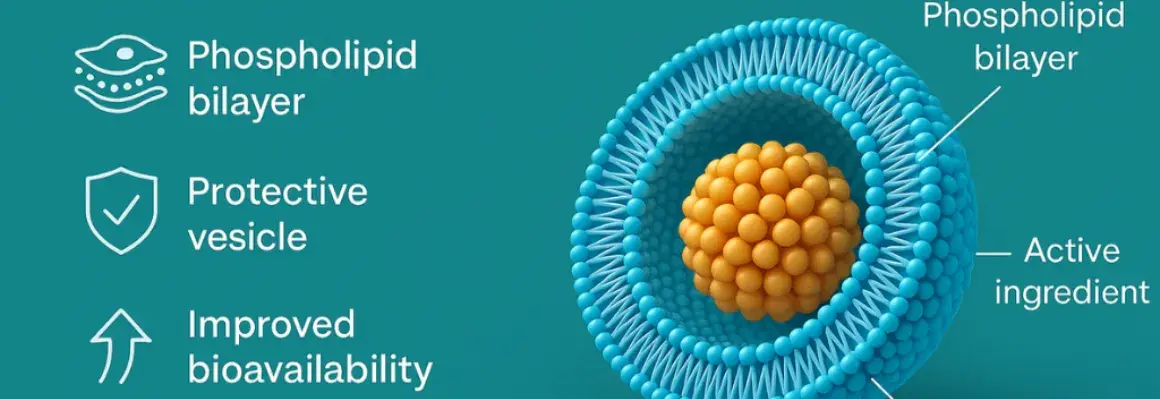
Liposomal glutathione powder delivery methods are based on a scientific concept that is similar to how human cell membranes are built. The phospholipids naturally form bilayer spheres when spread out in water, making the outside areas hydrophilic and the inside spaces hydrophobic. Our special high-pressure homogenisation process at Hongda Phytochemistry makes liposomes that are all the same size, 50 to 150 nanometres across. This can be seen using dynamic light scattering (DLS) research and transmission electron microscopy (TEM).
This exact range of particle sizes is very important for the best uptake rates. Vesicles smaller than 200 nm can easily pass through intestinal epithelial tight junctions by using transcytosis processes and still have enough space inside to carry glutathione. The phospholipid makeup, which in our recipes comes mostly from non-GMO sunflower lecithin, adds to the nutritional value while making sure that the product is clean-label compliant, which is needed by Whole Foods and other high-end retailers.
Enhanced Cellular Uptake Mechanisms
Standard glutathione molecules need certain peptide carriers to get into cells, which limits how fast they can be absorbed. By making membrane fusion and endocytosis routes easier, liposome encapsulation radically changes this dynamic. The phospholipid outside interacts directly with cell membranes, which lets the liposome stick to the cell surface and drop its glutathione cargo right into the cytoplasm. This method gets around the competitive blocking that comes from food proteins and gets rid of the need for saturable transport systems.
Comparative pharmacokinetic studies show that this new way of delivering drugs has a huge effect. Unlike regular reduced glutathione, which reaches its highest levels in the plasma within 30 to 60 minutes and then quickly disappears, our Liposomal Glutathione Powder keeps blood levels high for 6 to 8 hours after consumption. This longer circulation time means that antioxidants are protected for longer and more efficiently reach organs, especially those in the liver, brain, and skin, where glutathione does its most important work.
Stability and Shelf Life Advantages
Oxidative breakdown is a problem that keeps coming up in the production and storage of glutathione. Oxygen, water, and room temperature change reduced glutathione (GSH) to its oxidised form (GSSG), which takes away its healing properties. The phospholipid encapsulation in our liposomal glutathione powder protects against external stresses and greatly increases the stability ratings. Hongda Phytochemistry are able to keep their products at a controlled room temperature for 24 months with less than 3% degradation thanks to special freeze-drying methods and triple-layer aluminium foil packing filled with nitrogen. This is something that normal crystalline glutathione powders can't do.
Key Benefits of Liposomal Glutathione Powder over Regular GSHSuperior Bioavailability and Systemic Delivery
Bioavailability data make the difference in performance between liposomal and standard forms very clear right away. The area-under-the-curve (AUC) readings for liposomal preparations always go up by 10 to 15 times in published studies that compare these delivery methods. Because of this improvement, a 250mg dose of properly made liposomal glutathione powder may have the same effect on the body as 2,500 to 3,750mg of regular powder. This saves money and allows for lower ingredient loads per serve, which changes the economics of the product.
This bioavailability edge gives formulators more freedom than they could with traditional forms, which is important for companies making focused health solutions. Products meant to make the skin brighter work better when glutathione is delivered reliably to melanocytes, where it competes with and blocks the activity of the tyrosinase enzyme by chelating copper ions. Anti-ageing products use glutathione to keep the right balance of reduced and oxidised forms in mitochondria, which protects against signs of cellular senescence. For detoxification methods to work, there needs to be enough glutathione in the hepatocytes to bind external toxins, drug byproducts, and heavy metals. This can only be done with high-bioavailability delivery systems.
Clinical Applications Across Multiple Pathways
Glutathione that is supplied properly can be used to treat a wide range of health problems. In liver tissue, glutathione is the substrate that glutathione S-transferase enzymes use to stop xenobiotics from damaging the liver and to eliminate them. Hongda Phytochemistry's liposomal form makes sure that enough GSH gets to periportal hepatocytes to support phase II conjugation reactions. This makes it useful in formulas that aim to improve liver health, help the absorption of alcohol, and lower exposure to external toxins.
Neurological uses are another area where delivery technology decides how useful they are in the clinic. Molecules that are attracted to water can't get through the blood-brain barrier, but lipophilic transporters can get through this barrier. A new study shows that liposomal glutathione that is given throughout the body may help cognitive function by lowering neuronal oxidative stress and improving mitochondrial function in brain tissue. This is something that can't be done with regular oral glutathione because it doesn't get deep enough into the CNS.
Formulation Advantages for Product Development
In addition to helping with absorption, our Liposomal Glutathione Powder has clear production benefits for B2B clients. Unlike liquid liposomal preparations that need to be shipped in a cold chain and don't last long on the shelf, our lyophilised powder stays stable at room temperature, makes international shipping easier, and turns back into active liposomes when it comes in contact with water during consumption or beverage preparation. This style makes it possible to add it to capsules, tablets, stick packs, and healthy drink mixes without using special tools.
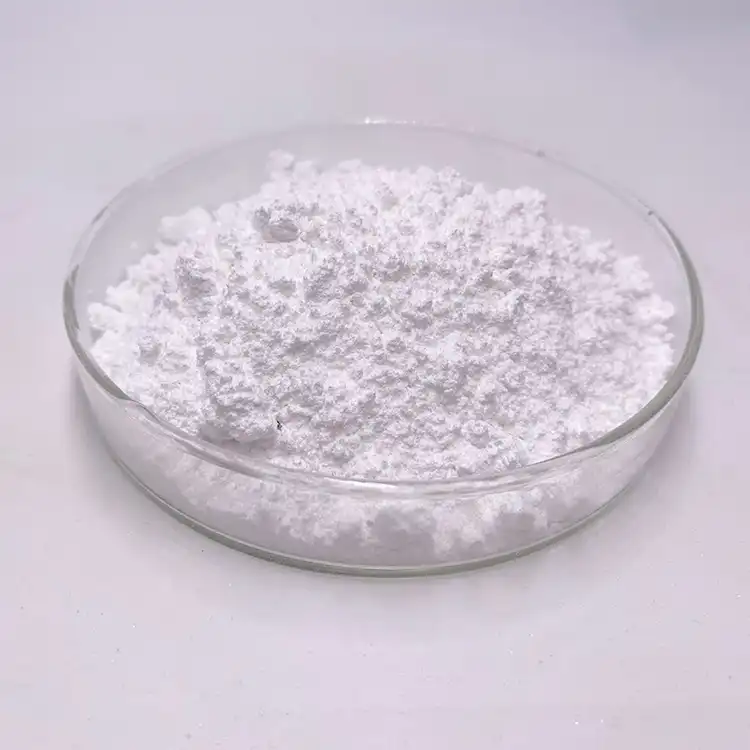
Compared to the sulphur-like smell of reduced glutathione, the white to yellowish powder of liposomal glutathione powder has no particular taste qualities. This organoleptic change is very important for consumer goods because smell and taste directly affect compliance and the desire to buy again. Our lab's studies on formulation compatibility show that it is safe to mix liposomal glutathione powder with additional antioxidants like vitamin C, alpha-lipoic acid, and N-acetylcysteine (NAC). This makes it possible for multi-ingredient formulations that work together to fight oxidative stress in many ways.
Liposomal Glutathione Powder in the Global B2B Market
Quality Assurance and Regulatory Compliance
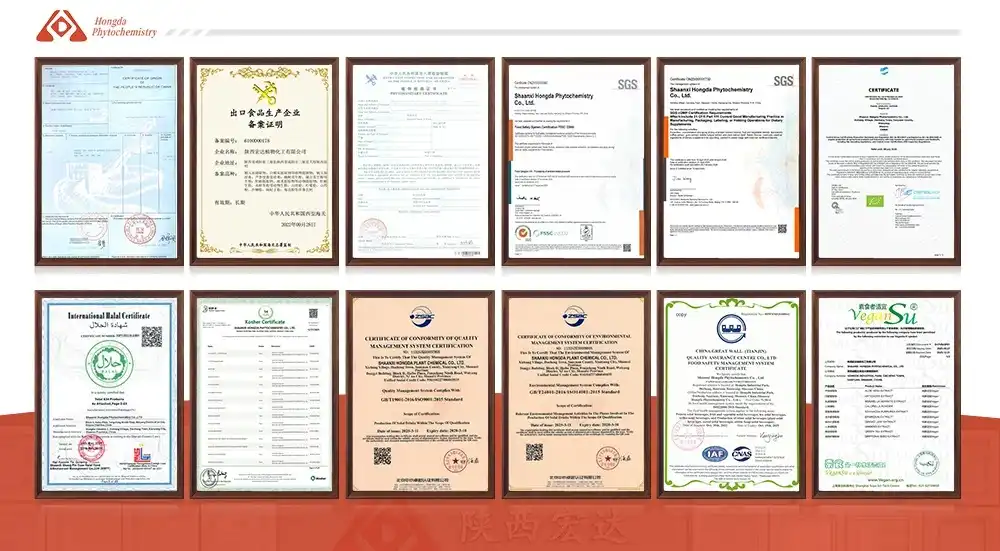
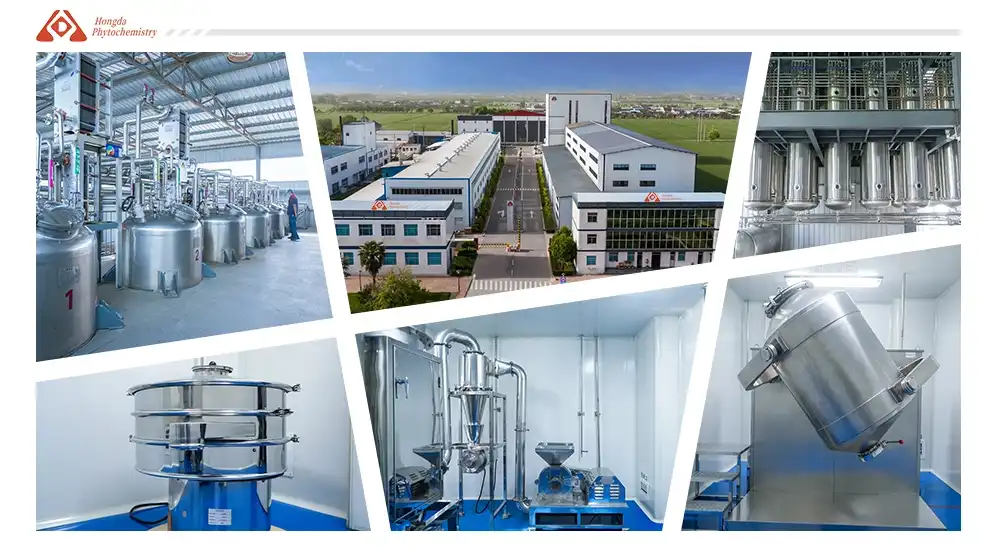
In controlled markets, people who make purchasing decisions have to compare sellers to strict quality standards. Hongda Phytochemistry has many certifications, such as ISO 22000, FSSC 22000, cGMP, HALAL, KOSHER, and organic certifications, which make it easier to register products in markets in North America, Europe, and the Asia-Pacific. Our 20,000-square-metre factory in Shaanxi, China, has air controls that are strong enough for pharmaceuticals. It also has 100,000-level cleaning workshops that keep things from getting contaminated while they're being made.
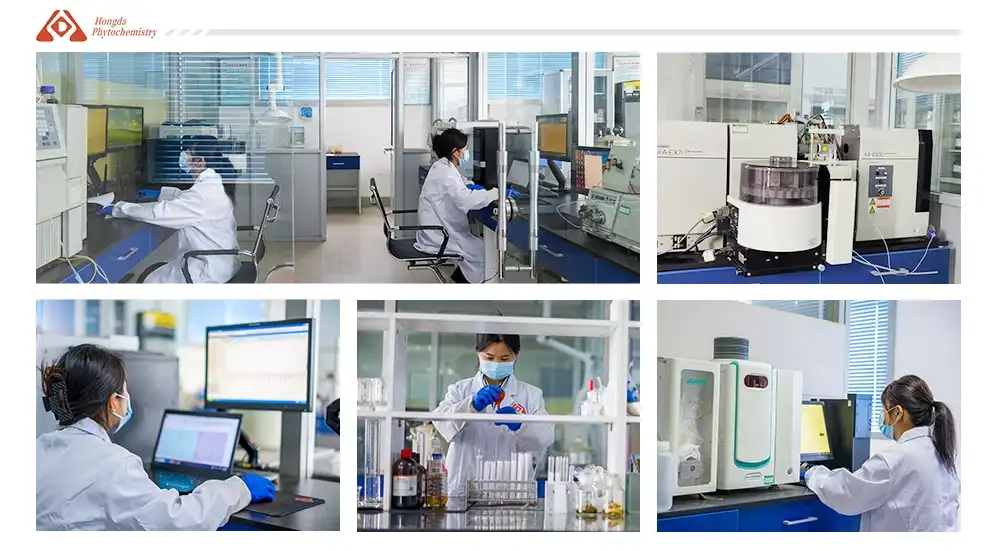
Each batch of products goes through strict analytical testing methods that go above and beyond what the market requires. Our Waters 2695 HPLC devices accurately measure glutathione levels in the range of 65.0 to 75.0 per cent concentrations that meet our standard requirements. For clients who need stronger formulations, we can also make unique concentrations up to 70%. Heavy metal research confirms that the amount of lead is less than 0.5ppm, the amount of arsenic is less than 2.0ppm, and the amount of mercury and cadmium is less than 0.3ppm. These levels are within the standards set by California Proposition 65 and the EU. Total plate count, yeast/mould, coliforms, E. coli, Salmonella, and Staphylococcus aureus microbiological tests are included according to the rules set by the USP.
Supply Chain Considerations and Sourcing Strategy
Total cost of ownership (TCO) factors are also a part of effective buying, in addition to unit price. Our building, which is 3,000 square metres, keeps an accurate inventory in six different storage areas. Areas C and D are specifically set aside for plant extracts, which include several production lots of Liposomal Glutathione Powder. We keep a lot of stock on hand, so we can quickly fill both small trial orders (starting at 1 kg) and large business orders up to several tonnes without having to extend the wait time.
The method for getting phospholipids is a key way that liposomal sources can be distinguished from each other. Soy-derived lecithin is still commonly used because it is cheaper, but worries about allergens and the need to name GMOs are pushing brand owners towards sunflower phospholipid alternatives. Hongda Phytochemistry provides both choices with full traceability paperwork, so clients can choose raw materials that match their brand's image and the tastes of their target customers. This adaptability includes changing the amount of cholesterol in the formulations. Depending on the need for stability and the formulation theory, the formulations can be made better with or without this extra stabilising component.
Competitive Pricing and Value Analysis
To figure out how much liposomal glutathione should cost, you need to know how the link between encapsulation efficiency and given value works. Our liposomal powder costs more than regular reduced glutathione, but a cost-per-effective-dose study shows that it has benefits over other products on the market. Giving the body 250 mg of 70% liposomal glutathione (175 mg active GSH) at 12–15x bioavailability is the same as giving the body 2,100–2,625 mg of standard glutathione, which is so much that it would be impossible to put into a capsule and would cost a lot more per serving if you used regular material.
Strategies for buying in bulk can help lower costs without lowering quality standards. Large producers can get better prices when they commit to buying a lot of containers at once, and our flexible packing choices for liposomal glutathione powder, ranging from 1 kg foil bags to 25 kg fibre drums, help them waste less packaging. OEM and ODM partnership models allow for deeper collaboration. Hongda Phytochemistry's formulation scientists provide technical knowledge along with raw materials, which lowers clients' development costs and speeds up the time it takes for new glutathione goods to hit the market.
Conclusion
Liposomal Glutathione Powder is better than regular reduced glutathione because it is more bioavailable and stable, and can be made in a variety of ways. These improvements directly address the problems that have been present with oral glutathione intake in the past. This new format has absorption rates 10-15 times higher than regular powders because it uses phospholipid encapsulation technology to protect the active ingredients during digestion and make delivery to cells easier. This turns glutathione from a compound that might be good for you into an intervention that can be used in real life.
B2B procurement professionals evaluating glutathione sources must look beyond simple unit pricing to assess delivered value through the lens of bioavailability, regulatory compliance, supply chain reliability, and technical support capabilities. Hongda Phytochemistry's comprehensive approach encompasses pharmaceutical-grade manufacturing facilities, extensive certification coverage, transparent quality documentation, and formulation expertise that extends beyond raw material supply to collaborative product development partnerships.
The growing consumer demand for evidence-based health solutions creates competitive pressure on brands to differentiate through ingredient innovation rather than marketing claims alone. Liposomal delivery technology represents one of the most scientifically validated approaches to overcoming absorption barriers, offering manufacturers a legitimate basis for premium positioning and superior product performance that translates to measurable consumer outcomes and sustainable market success.
FAQ1. What distinguishes liposomal glutathione from intravenous GSH administration?
Intravenous glutathione gets the substance straight into the body's circulation, skipping all the steps needed for absorption. However, because the solution is unstable, it needs to be given by a doctor and used right away. Liposomal oral delivery gets similar bioavailability through absorption in the GI system without the need for medical monitoring. It takes longer for liposomal products from Hongda Phytochemistry to reach peak plasma levels than IV treatment, but they are easier to use for daily dosing protocols and have more stable release rates. The difference in price also strongly benefits liposomal forms that are taken by mouth for long-term uses where cumulative exposure is more important than acute peak amounts.
2. How can procurement teams verify authentic liposomal encapsulation versus marketing claims?
Genuine liposomal goods can be checked by using transmission electron microscopy (TEM) to see the structures of the particles and dynamic light scattering (DLS) to see the sizes of the particles, which prove that they are in the nano-range, with sizes between 50 and 200 nm. With every production batch, Hongda Phytochemistry gives you both TEM images and DLS records. Additionally, testing for encapsulation efficiency measures the amount of glutathione that is actually contained within liposomal structures compared to the amount that is free in the powder matrix. Our standards require that the total glutathione content stay between 65 and 75 per cent, and the encapsulation efficiency is more than 90 per cent, as shown by validated HPLC methods and confirmed by independent labs such as SGS.
3. What certifications should B2B buyers prioritise when selecting a liposomal glutathione supplier?
GMP certification is still very important because it shows that industrial conditions are controlled and processes have been tested. Certifications like ISO 22000 and FSSC 22000 show that a company has a complete food safety management system that meets international standards. With HALAL and KOSHER certifications, you can reach more customers, and with organic certification (when it applies to where the ingredients come from), you can expect a higher price. Analytical skills are also checked by having a list of tools like HPLC, GC-MS, and ICP-MS systems, as well as third-party audit partnerships with well-known labs. Hongda Phytochemistry keeps all of these certifications up to date, along with its FDA facility registration and offers full paperwork to support regulatory applications around the world in a wide range of areas.
Partner with a Leading Liposomal Glutathione Powder Manufacturer
Hongda Phytochemistry wants nutrition companies, dietary supplement brands, and cosmetics businesses that are looking to the future to learn more about how our pharmaceutical-grade Liposomal Glutathione Powder can help your products. We are a reliable provider with more than 20 years of experience extracting plants. We use cutting-edge nano-encapsulation technology and strict quality control systems that have earned us the title of National High-tech Development Enterprise. Our technical team helps with every step of the process, from the first consultation about the formulation to the large-scale commercial production. They make sure that your goods meet all legal requirements and meet the performance standards of customers. Email our business-to-business sales team at duke@hongdaherb.com for more information on specifics, pricing for large orders, and customisation options, such as private labelling solutions that are made to fit your brand's needs. Our consistent inventory and global operations make sure that shipping times are met every time, so your production stays on track, whether you need 1 kg for pilot tests or multi-ton supply deals.
References
1. Schmitt B, Vicenzi M, Garrel C, Denis FM. Effects of N-acetylcysteine, oral glutathione (GSH) and a novel sublingual form of GSH on oxidative stress markers. PLoS One. 2015;10(6):e0126881.
2. Richie JP Jr, Nichenametla S, Neidig W, et al. Randomized controlled trial of oral glutathione supplementation on body stores of glutathione. European Journal of Nutrition. 2015;54(2):251-263.
3. Sinha R, Sinha I, Calcagnotto A, et al. Oral supplementation with liposomal glutathione elevates body stores of glutathione and markers of immune function. European Journal of Clinical Nutrition. 2018;72(1):105-111.
4. Allen J, Bradley RD. Effects of oral glutathione supplementation on systemic oxidative stress biomarkers in human volunteers. Journal of Alternative and Complementary Medicine. 2011;17(9):827-833.
5. Horowitz RI, Freeman PR. The role of glutathione in chronic disease: A clinical review of glutathione supplementation interventions. Antioxidants. 2019;8(9):349.
6. Witschi A, Reddy S, Stofer B, Lauterburg BH. The systemic availability of oral glutathione. European Journal of Clinical Pharmacology. 1992;43(6):667-669.