




What quality checks help brands confirm true chelation rate of bulk magnesium bisglycinate powder?
When supplement companies buy magnesium compounds in bulk, a high percentage of purity on a Certificate of Analysis (COA) does not always guarantee that the material is completely chelated. One of the biggest obstacles is distinguishing true magnesium bisglycinate from a physical combination of magnesium oxide and glycine. Both may seem like fine white powders but can be quite different in chemical composition, elemental magnesium concentration, and formulation behavior. Shaanxi Hongda Phytochemistry Co., Ltd. provides magnesium bisglycinate chelate powder with documented specifications, FTIR identification assistance, regulated free glycine, and batch quality testing. Confirming correct chelation needs multiple supplementary procedures for multinational procurement teams, including FTIR spectroscopy, elemental magnesium analysis, free glycine measurement, moisture testing, and impurity screening. Learning how these tests are conducted allows businesses to sidestep false specs, maintain formulation consistency, and choose a trusted bulk ingredient supplier.
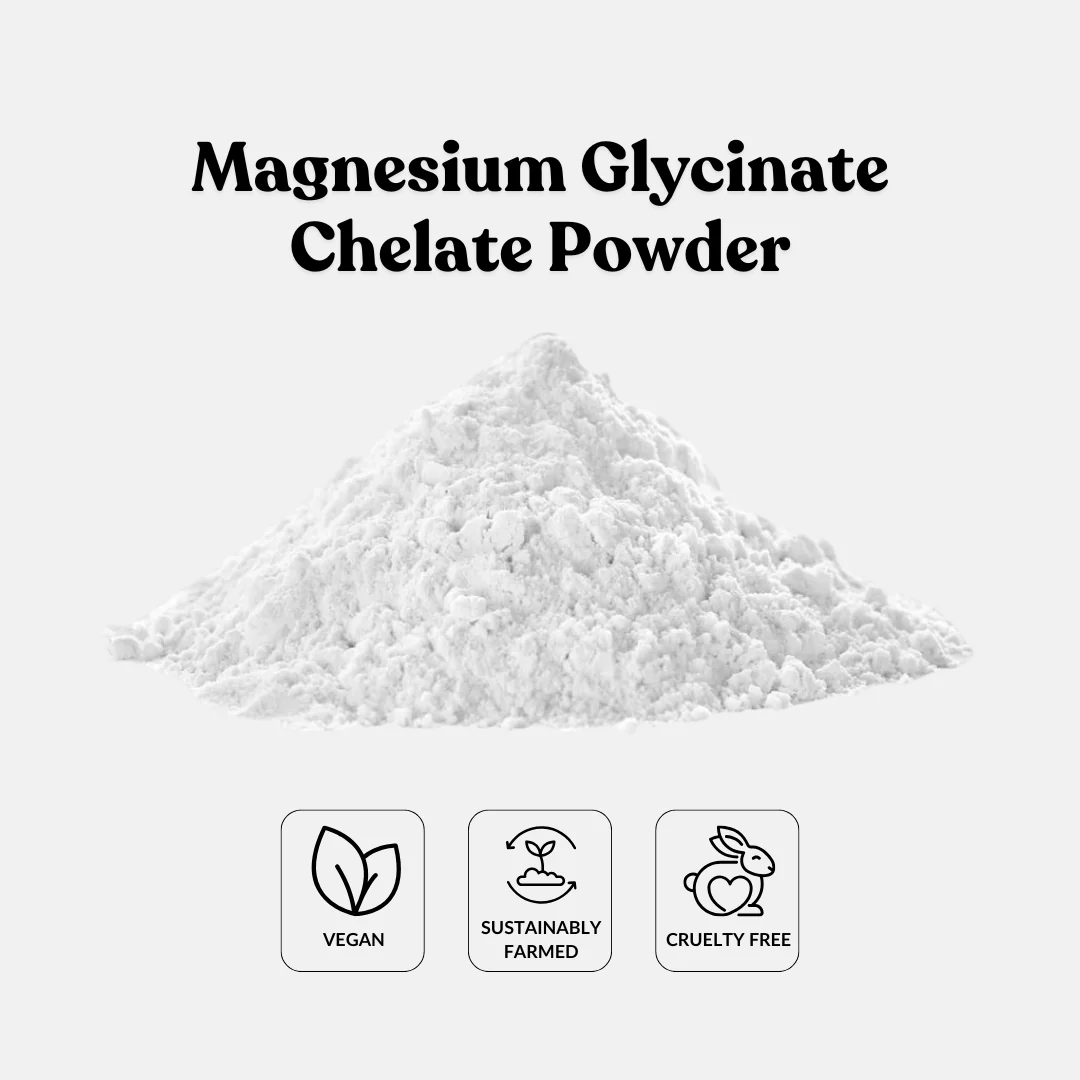
Start With Chemical Identity: Is the Magnesium Actually Chelated?
Why a High Purity Percentage Cannot Prove True Chelation
When analyzing a magnesium bisglycinate chelate powder, procurement teams need to first differentiate between chemical identity and general assay purity. A supplier could tell you that it’s 98% or 99% pure, but that figure alone won’t tell you whether the magnesium is coordinated with two glycine molecules. A physical combination of magnesium oxide and free glycine might potentially provide an apparently favorable analytical result depending on the technique utilized. The real magnesium bisglycinate has a chemical formula of C₄H₈MgN₂O₄ and a CAS number of 14783-68-7.[3] Its elemental magnesium concentration is, theoretically, around 14.1% (anhydrous basis). So it is recommended that a buyer ask for molecular identification, elemental magnesium result, analytical technique, and composition breakdown all together. Hongda Phytochemistry offers magnesium bisglycinate chelate powder with a specification of 98% as published, and is ready to have scientific conversations on the difference between real chelation and mere physical mixing.
FTIR Spectroscopy Provides Important Evidence of Chelate Formation
One of the useful analytical approaches for investigating the formation of an amino acid coordination complex between magnesium and glycine is Fourier Transform Infrared Spectroscopy (FTIR). The method evaluates how a substance absorbs infrared light at various wavelengths. This produces a distinctive spectrum related to the molecular bonding and chemical environment of the material. In the chelation process, the carboxylate groups of glycine are involved in the coordination of magnesium, which may alter the locations and properties of the relevant absorption bands.[4] A helpful assessment is to compare the sample spectrum with appropriate glycine, magnesium source, and genuine magnesium bisglycinate reference spectra. FTIR should not be used as a general numerical test of chelation rates. Its results should be corroborated by supplementary compositional and structural data. Hongda Phytochemistry says FTIR spectroscopy is a verification technique for its magnesium bisglycinate chelate powder, and customers may request relevant batch-specific analytical information.
Why Free Glycine Testing Should Accompany FTIR
A good chelation process does not indicate that all glycine molecules in the production system are coordinated with magnesium. Free glycine testing is an essential supplemental quality control since some glycine may remain unreacted in the final item. An excess of free glycine may suggest a wrong ratio of raw materials, inadequate control of the reaction, or a composition of the ingredients different from the planned specification. Free glycine may be quantified by HPLC using an appropriate validated derivatization and detection technique. The laboratory must be able to clearly discriminate between free amino acid and total glycine released after sample preparation. These values should be seen in conjunction with the magnesium content and FTIR data. Hongda describes a liquid-phase chelation control method to preserve free glycine at less than 2%. When considering wholesale magnesium bisglycinate, buyers should ask about the test technique, reporting basis, and representative batch results instead of accepting an unsubstantiated percentage claim.[6]
Understanding Elemental Magnesium Before Accepting a Chelation Claim
Elemental magnesium is one of the simplest numbers to compare across suppliers, but also one of the most misunderstood. The theoretical magnesium content of pure anhydrous magnesium bisglycinate is around 14.1%. A much greater proportion may suggest other sources of magnesium such as magnesium oxide or magnesium hydroxide, or a different composition or hydration state. This does not mean that a buffered product cannot be used, but the source of the buffer must be properly stated. For instance, a product that states 20% elemental magnesium should not be labeled as pure, unbuffered magnesium bisglycinate without a sufficient explanation of the composition. Hongda’s public product site states a 20% magnesium standard, which must be reconciled with the actual grade composition and batch paperwork prior to purchase. This clarity is especially crucial for companies determining serving sizes, elemental magnesium disclosures, and ingredient prices.
|
Analytical consideration
|
Genuine anhydrous bisglycinate reference
|
What buyers should investigate
|
|---|---|---|
|
Molecular formula
|
C₄H₈MgN₂O₄
|
Confirm chemical identity
|
|
CAS number
|
14783-68-7
|
Match specification and documents
|
|
Magnesium content
|
Approximately 14.1%
|
Investigate higher reported values
|
|
Glycine-to-magnesium molar ratio
|
2:1
|
Confirm composition
|
|
Free glycine
|
Separate analytical result
|
Check residual unbound glycine
|
|
Magnesium oxide
|
Not part of the pure compound
|
Investigate possible buffering
|
|
Hydration state
|
Anhydrous reference
|
Check moisture and composition basis
|
These are theoretical reference values for pure anhydrous magnesium bisglycinate, not a substitute for a commercial batch specification.
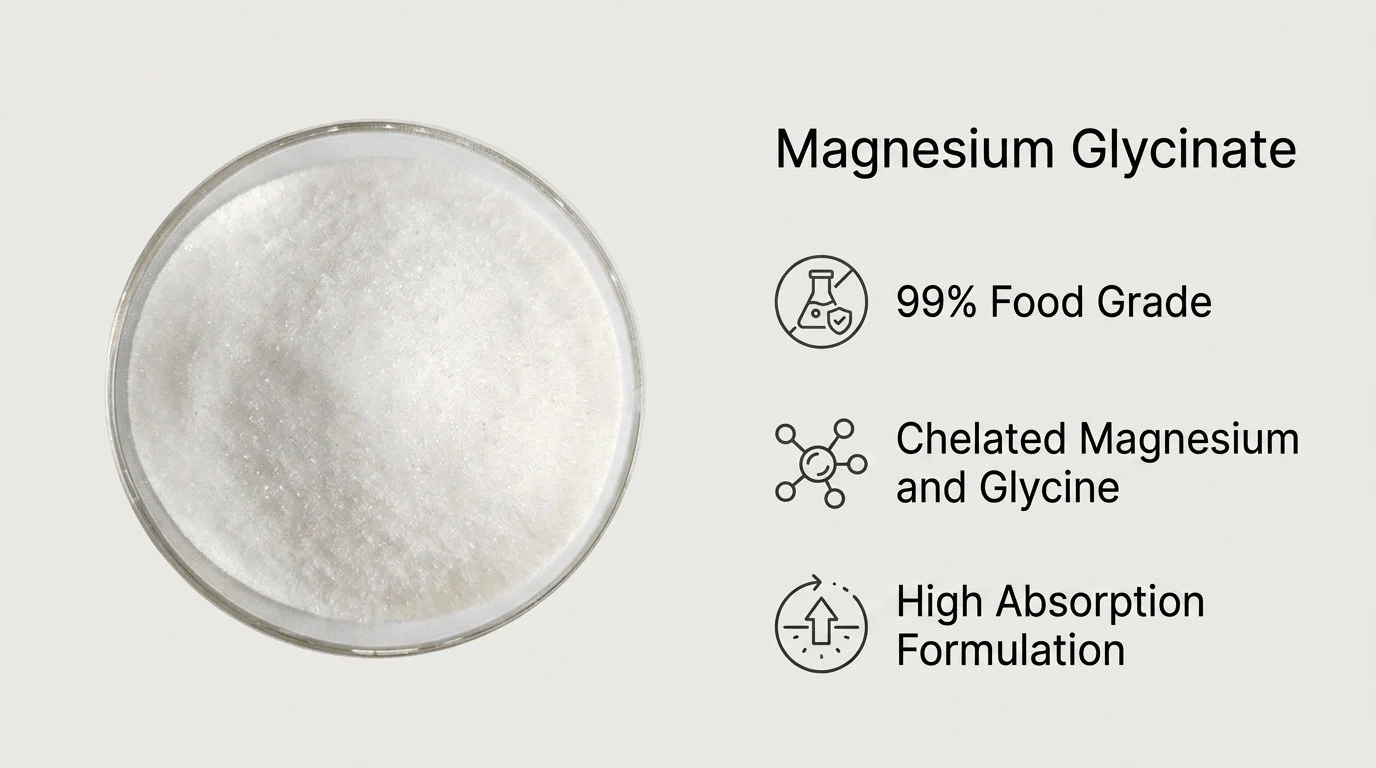
Build a Reliable Laboratory Verification Process
Combine ICP-OES and FTIR Instead of Relying on One Result
Inductively Coupled Plasma Optical Emission Spectrometry (ICP-OES) is effective for precise measurement of total elemental magnesium in a raw material. It may also help to assist the analysis of other aspects when properly validated processes are used by the laboratory. But the ICP-OES detects elemental concentrations, not the chemical compounds that contain those elements. A sample comprising magnesium bisglycinate and magnesium oxide may have the same total magnesium result as a different composition sample. This is why the magnesium bisglycinate chelate powder has to be studied using supplementary methodologies. FTIR gives evidence of chemical bonding, ICP-OES evaluates elemental magnesium, and free glycine may be quantified by HPLC using an appropriate technique. If further structural information is needed, X-ray diffraction or nuclear magnetic resonance may be used. A good supplier verification methodology looks at these outcomes together, rather than just one nice lab number to decide approval.[5]
Use XRD or NMR When the Supplier's Composition Is Unclear
Additional structural testing may assist in addressing problems that conventional COA measures cannot for high-value nutraceutical contracts. X-ray diffraction (XRD) is used to study crystalline structures and may be used to determine crystalline phases associated with certain inorganic materials. Nuclear Magnetic Resonance (NMR) gives information on molecular environments and might be used to study the coordination-related alterations in glycine. The strengths of these procedures vary, and their appropriateness relies on the physical properties of the sample and the analytical query. Neither is it an automated, isolated measurement of a universal proportion of chelation. For example, XRD may be less helpful if the sample comprises weakly crystalline or amorphous components. Proper reference data and experience are also needed for the interpretation of NMR. Buyers sourcing magnesium bisglycinate chelate powder may set up a tiered testing strategy with routine FTIR and elemental analysis for batch release, and more advanced structural testing when a new supplier, an unusual magnesium result, or suspected adulteration adds further uncertainty.
Review the COA for Method Suitability and Traceability
A professional COA should be more than just a set of pass results. It should specify the actual batch, sampling or testing date, analytical technique, specification limit, measured result, and laboratory approval status. The procedures also have to fit the parameters being examined. You cannot prove chemical identification by eye examination, for example, and an elemental magnesium test cannot independently demonstrate chelation. Hongda Phytochemistry’s stated specification for magnesium bisglycinate contains a 99% assay requirement, 99.5% reported, loss on drying of 3.20%, ash content of 4.10%, and heavy metals (arsenic and lead combined in the published table) reported as 0.68 ppm. These numbers provide a good basis for an evaluation of bulk magnesium bisglycinate powder, but purchasing teams should verify the correct commercial grade, contaminant findings for each particular contaminant, and the test techniques used on the COA of the specific shipment. A batch-specific document is preferable to an outdated sample report.[6]
|
Test category
|
Suggested analytical approach
|
Procurement purpose
|
|---|---|---|
|
Chemical identity
|
FTIR against reference spectra
|
Investigate chelate identity
|
|
Elemental magnesium
|
ICP-OES or AAS
|
Verify magnesium concentration
|
|
Free glycine
|
Validated HPLC method
|
Assess unbound glycine
|
|
Additional structure
|
XRD or NMR where justified
|
Investigate composition concerns
|
|
Moisture
|
Loss on drying or Karl Fischer
|
Assess moisture condition
|
|
Heavy metals
|
ICP-MS or validated AAS
|
Verify contaminant levels
|
|
Microbiology
|
Validated microbiological methods
|
Confirm microbial quality
|
|
Particle size
|
Standardized sieve analysis
|
Evaluate processing suitability
|
A Practical Incoming Inspection Case: From Factory Sample to Bulk Release
Imagine a supplement producer analyzing a fresh shipment of magnesium bisglycinate chelate powder before signing a long-term supply arrangement. The first step is to check the appearance of the sealed sample, the lot number, the condition of the packaging, and the COA against the purchase specification. The lab then tests for elemental magnesium and compares the FTIR spectrum to the permitted reference. If the magnesium percentage is too high, the buyer will ask for further compositional information and will research potential inorganic buffering. Before the material enters manufacturing, data for free glycine, moisture, and contaminants are examined. Meanwhile, on the product site at Hongda, factory and packaging photos are also included along with customer reviews, including one dated May 16, 2025, from a customer account detailing a factory tour and its amenities. Such images and testimonials give helpful background for supplier assessment, but they cannot replace independent analytical verification. Buyers should seek current, lot-specific manufacturing pictures, sample records, and test reports to do their own inbound examination.
Look Beyond Chelation: Powder Stability and Formulation PerformanceMoisture Absorption Can Undermine Bulk Powder Quality
Even a chemically acceptable magnesium component might cause complications in manufacturing if its moisture properties are not well regulated. The magnesium bisglycinate chelate powder may affect its flowability, particle aggregation, and handling behavior under humid storage conditions. This is especially essential for bulk buyers during international transit, as temperature variations and several exposures to humid air might impact the effectiveness of the packing. Loss on drying is a broad indicator of moisture and other volatile substances. Karl Fischer titration may provide a more precise indication of water, when necessary. Water activity may also be useful in assessing circumstances important to microbiological stability. The loss on drying result stated in the published specification of Hongda is 3.20%, against a maximum of 5.0%. Further, the product description indicates that it has improved particle shape and low-hygroscopicity performance at 60% RH. Buyers should seek supporting test conditions and do their own humidity challenge testing prior to developing warehouse acceptance criteria.
Packaging Protection Matters During International Transportation
Powder quality doesn’t end at the manufacturing gate. Insufficient protection during shipping might cause a product to pass the first inspection and arrive with caking, broken packaging, or moisture-related alterations. Brands acquiring fermented magnesium bisglycinate in China should look at the full packaging system. This covers internal liners, strength of the drums, sealing process, pallet organization, and storage directions. Hongda says it uses pressure-resistant fiber drums with double-layer polyethylene inner bags. For long-distance maritime shipping, the product description lists extra aluminum foil sealing and nitrogen flushing to reduce moisture exposure. Commercial packaging is conventional: 25 kg / drum, 27 drums/pallet. Buyers should request images of packing from real manufacturing and export shipments, together with sealing requirements and necessary stability data. A realistic receipt check should include recording drum condition, seal integrity, visible powder changes, and lot identification before moving the ingredient to controlled storage.
Particle Size and Flowability Influence Manufacturing Efficiency
Particle size is not only a decorative attribute. Powder mixing, capsule filling, tablet compression, segregation, and dissolving behavior may be affected. A fine powder might be beneficial in certain mixes but can also result in dust or poor flowability under some manufacturing settings. The coarser particles may provide enhanced handling in certain applications but might be a difficulty for uniform dispersion. Hongda’s stated specification requires 95 percent of the material to pass through an 80-mesh screen. The reported result was 100 percent. The product description also mentions improvement of particle shape to minimize sticking during tablet compression. For a magnesium bisglycinate chelate powder, customers should ask for particle-size distribution, not just one sieve result. Further information may be gained from bulk density, tapped density, angle of repose, and flow tests. These factors are very useful for moving a formulation from laboratory research to high-volume manufacture.
Compatibility Testing Prevents Problems in Multi-Ingredient Formulas
A magnesium compound is seldom used by itself as a commercial supplement. It may be coupled with vitamin B6, zinc, calcium, botanical extracts, sweeteners, taste systems, or other functional substances. These combinations may impact powder dispersion, moisture absorption, taste, color, and end product stability. Interactions with binders and lubricants in tablets may alter compression behavior. In gummies, special attention has to be given to acidity, processing temperature, and water content. For beverage powders, the clarity, sedimentation, and rate of dissolving should be evaluated under the anticipated circumstances of preparation. Hongda has an instant-dissolve grade that claims to dissolve 40% quicker than normal powder; however, consumers should obtain the comparison test technique and independently verify the outcome. If your R&D team is designing a new mineral recipe or comparing wholesale magnesium bisglycinate grades, please contact duke@hongdaherb.com to discuss samples, particle-size alternatives, and technical documentation before completing your ingredient decision.
Supplier Qualification, Factory Controls, and International ComplianceEvaluate the Manufacturing Process Behind Every Batch
Laboratory testing is merely one component of a sound system for ingredient quality. To produce a consistent magnesium bisglycinate chelate powder, procurement of the raw materials, reaction conditions, separation, drying, milling, and packaging must be managed. Important production factors are the magnesium-to-glycine ratio, reaction pH, temperature, processing duration, and ultimate moisture content. Variations in these settings may alter residual free glycine, product composition, and physical properties. Hongda Phytochemistry covers an area of around 20,000 square meters and has more than 10 contemporary production lines and 100,000-class purity workshops. The firm says it has more than 150 workshop operation experts and an annual plant production capability of up to 3,000 tons within its ingredient array. Production goes back to 2001. Buyers looking into fermented magnesium bisglycinate in China should know the difference between claims of fermentation-based manufacture vs. traditional amino acid chelation. Do not assume that the phrase fermented gives chemical identification. Ask suppliers to tell you the exact manufacturing path, raw material origins, and reaction technique.
Laboratory Infrastructure Supports More Consistent Quality Decisions
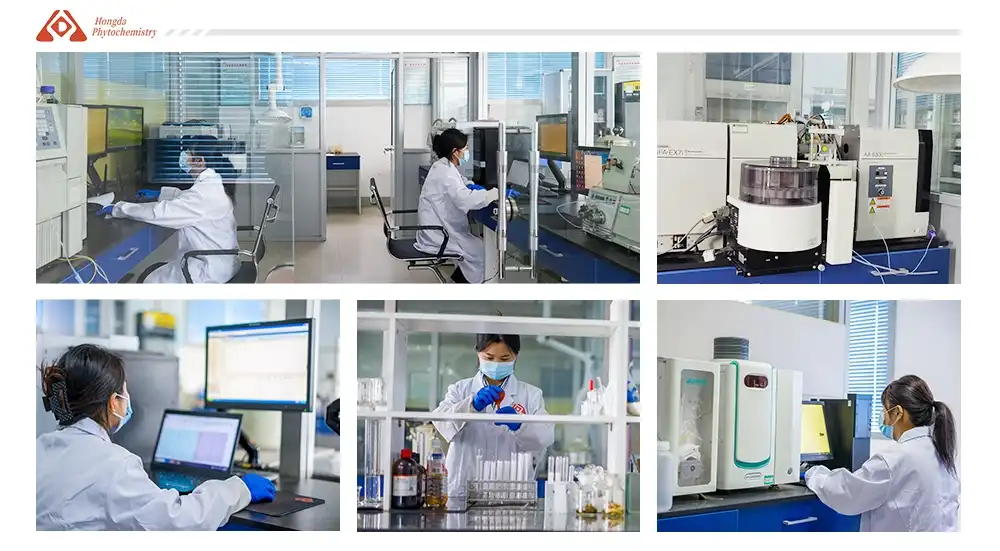
Manufacturer’s testing resources may evaluate the manufacturer’s ability to identify process deviations and explore odd batch outcomes. Shaanxi Hongda Phytochemistry Co., Ltd. says it runs an SGS-standardized laboratory built in partnership with university academics, with more than 20 experienced R&D and testing personnel. The equipment comprises high-performance liquid chromatographs, gas chromatographs, spectrophotometers, atomic absorption spectrophotometers, polarimeters, and automated titration systems. The firm additionally has two R&D institutes for product creation and analytical enhancement. These materials are useful for magnesium bisglycinate chelate powder since various quality problems require different analytical procedures. Atomic absorption may be used for elemental analysis, and chromatographic techniques can be used to study free glycine. Buyers should always check if a given test is conducted in-house or by an outside laboratory. Information during supplier qualification requests technique validation information, equipment calibration records, analyst duties, and representative test reports.[5][6]
What International Buyers Should Check in Regulatory Documentation
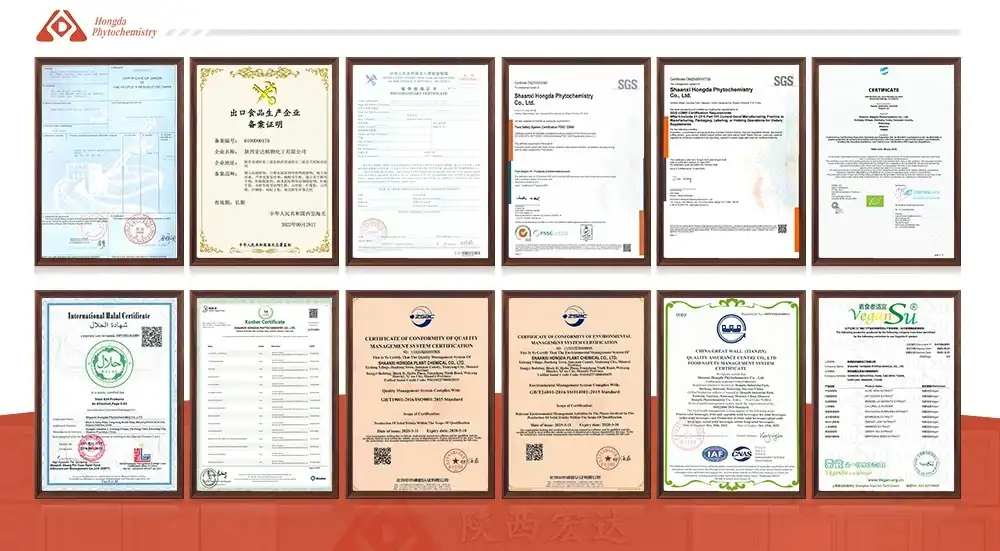
European and American supplement companies need to examine both chemical quality and regulatory appropriateness. In the U.S., dietary supplement makers must create adequate standards and quality control processes under 21 CFR Part 111. The identification, purity, strength, composition, and contaminant controls of ingredients should be substantiated by appropriate documents.[1] For European goods, Directive 2002/46/EC provides a framework for the allowed sources of vitamins and minerals in dietary supplements, including magnesium bisglycinate in Annex II.[2] Buyers should additionally look at appropriate contaminant standards, food safety documents, allergy information, and national market limits. Hongda states that it has the qualifications and certifications of cGMP, FSSC 22000, ISO 22000, ISO 9001, BRC, Halal, Kosher, and organic certifications such as EU Organic and USDA NOP. These credentials help with supplier certification, but it is important to check their current validity, coverage of products, and extent of production sites. A review of a regulatory dossier should be performed before commercial distribution, not after the substance is currently in production.
Batch Traceability and Warehouse Management: Minimize Supply Risks
A good supply chain should allow you to track a completed batch of an ingredient back to its raw material records, production history, laboratory findings, and packaging date. This is especially significant if the client detects an unexpected moisture content, particle size change, or a variance in elemental magnesium. Hongda’s plant has a 3,000-square-meter warehouse with six storage sections, including Area E for vitamins and amino acid products and Area F for samples. Specialized workers are in charge of warehouse management and sterilization. This setup guarantees product segregation and effective inventory management. If you are a customer seeking to purchase pure magnesium bisglycinate in bulk from China, your supplier audit should include photos of the warehouse, humidity controls in storage, lot segregation, inventory rotation, and shipping documents. Buyers should also develop protocols for retained samples, complaint investigation, and remedial action. Such data allow comparing incoming batches and finding out if a quality discrepancy stems from production, storage, transit, or the buyer’s own manufacturing process.
Conclusion
To determine the actual chelation rate of pure magnesium bisglycinate wholesale in China, it’s not enough to look at a purity % on a COA. Brands should use FTIR identification, elemental magnesium testing, free glycine measurement, and other structural tests as appropriate. Maintaining ingredient quality during manufacture and shipping requires equal attention to moisture management, particle-size uniformity, container integrity, and formulation compatibility. For overseas purchasers, batch traceability and regulatory paperwork give an additional level of procurement security. With the help of manufacturing expertise, laboratory resources, and established quality control systems, Hongda Phytochemistry is a key pillar of support for global nutraceutical businesses. By asking for representative samples, analyzing batch-specific analytical data and doing independent verification, businesses may make more confident sourcing selections and build credible magnesium supplement products.
FAQ
1. What is the most important test for confirming true magnesium bisglycinate chelation?
FTIR is an important identity test, but it should be combined with elemental magnesium analysis and free glycine measurement for a more reliable assessment.
2. Can ICP-OES independently confirm the chelation rate?
No. ICP-OES measures total elemental magnesium but cannot distinguish magnesium bisglycinate from magnesium oxide or other magnesium compounds.
3. What is the theoretical magnesium content of pure magnesium bisglycinate?
Approximately 14.1% on an anhydrous basis. Higher values require investigation of additional magnesium sources or differences in composition.
4. Why should buyers test free glycine?
Free glycine testing helps identify residual unreacted amino acid and assess whether the ingredient composition matches the supplier's declared specifications.
5. What documents should buyers request before purchasing bulk magnesium bisglycinate?
Request a batch-specific COA, FTIR report, elemental magnesium analysis, free glycine results, heavy metal and microbiological reports, MSDS, and applicable regulatory certificates.
Partner With HONGDA for Verified Magnesium Bisglycinate Quality
Choosing a magnesium supplier should be based on verifiable chemistry, manufacturing capability, and consistent batch performance. HONGDA provides magnesium bisglycinate chelate powder for supplement manufacturers, ingredient distributors, and private-label brands seeking dependable bulk supply. Our technical team can help customers review elemental magnesium specifications, chelation verification requirements, moisture control, particle-size options, and formulation compatibility. We also welcome requests for representative samples, factory information, and batch-specific quality documentation. Whether you are qualifying a new supplier or expanding an established magnesium supplement range, our team is ready to discuss your technical and purchasing requirements. Contact Hongda Phytochemistry at duke@hongdaherb.com to request product information and explore long-term wholesale cooperation with Shaanxi Hongda Phytochemistry Co., Ltd.
References
1. U.S. Food and Drug Administration. Current Good Manufacturing Practice in Manufacturing, Packaging, Labeling, or Holding Operations for Dietary Supplements, 21 CFR Part 111. 2007.
2. European Parliament and Council. Directive 2002/46/EC on the Approximation of the Laws of the Member States Relating to Food Supplements. 2002.
3. National Institute of Standards and Technology. NIST Chemistry WebBook: Magnesium Bisglycinate-Related Chemical Information and Molecular Data. NIST Standard Reference Database.
4. Silverstein, R. M., Webster, F. X., Kiemle, D. J., and Bryce, D. L. Spectrometric Identification of Organic Compounds. 8th Edition. Wiley, 2014.
5. Skoog, D. A., Holler, F. J., and Crouch, S. R. Principles of Instrumental Analysis. 7th Edition. Cengage Learning, 2017.
6. International Council for Harmonisation. ICH Q2(R2): Validation of Analytical Procedures. 2023.