


_1745918362135.webp)

What Safety Precautions Apply When Using Liposomal Curcumin Powder?
There are a lot of turmeric-based products on the market these days, but the move toward nano-encapsulated delivery makes brand owners and formulators wonder what needs to be checked before a Liposomal Curcumin Powder is put into a finished product. Hongda Phytochemistry looks at this question from the point of view of both making and selling. Shaanxi Hongda Phytochemistry Co., Ltd. was established in 2001 and makes sure that every step of its Liposomal Curcumin Powder is safe, from making sure that the raw materials are safe to testing them in a lab that follows SGS standards and getting certified by an international body. This article talks about the most important safety measures to take when buying, handling, and formulating liposomal curcumin. It also explains why Hongda's controlled production system gives buyers a reliable safety base to build on. Instead of looking at safety as a single box to be checked, the parts that follow break the subject down into the specific steps that add or remove risk. This way, buying teams know exactly what to check before they approve a large order.

Contaminant Screening Before Encapsulation Begins
Liposomal Curcumin Powder safety isn't something that is added at the end; it starts with what comes into the facility. Before it can be used for processing, every batch of raw materials going to Hongda's packaging lines is screened for heavy metals, insecticide residue, and wetness. This cleaning up front is important because nanoscale delivery systems focus on whatever is in the base material. This means that any pollution in the raw curcumin or the phospholipid carrier would go straight into the liposome when it's finished. One of the most important things buyers can do is work with a supplier that takes this step seriously.[1][5]
Pesticide Residue Verification
The turmeric from Hongda's supervised planting bases is checked against known residue thresholds. This lowers the chance that agricultural chemicals will get into the finished Liposomal Curcumin Powder. Before being extracted and put into capsules, each batch goes through a strict screening process in the lab to make sure that the levels of pesticides stay within safe limits. In addition to meeting clean-label standards, this preventative method helps keep the active ingredient pure. Verified pesticide control gives supplement brands that want to sell their products in other countries even more trust that the end product meets the high standards of safety, openness, and responsible sources that customers expect.
Heavy Metal and Microbial Limits
Before shipping, heavy metals and bacteria are checked in a lab. This is an important safety measure because nano-delivery forms can be very sensitive to even very small amounts of impurities. Hongda uses standard testing methods to look for toxins like lead, mercury, arsenic, cadmium, yeast, mold, and dangerous bacteria. These checks make sure that Liposomal Curcumin Powder meets high standards for quality before it gets into global supply chains. Hongda helps formulators avoid unexpected safety problems and keep quality high when making supplements, functional foods, and other health-focused products by finding risks in the raw material and finished product stages.[1]
Moisture Control at Intake
Since too much water in raw curcuminoids can make phospholipid stability worse during encapsulation, testing for intake moisture is seen as a necessary step rather than an extra one. Managing moisture correctly helps stop breakdown, the growth of microbes, and processing errors that might lower the performance of liposomes. Before starting production, Hongda checks the wetness levels to make sure that only the right raw materials go into the packaging process. This early-stage control helps particles form better, keeps quality stable during storage, and makes sure the product stays the same throughout its lifecycle. This gives buyers more faith that each batch of Liposomal Curcumin Powder is reliable.
Non-GMO Sunflower Phospholipid Sourcing
Choosing phospholipids from sunflowers over soy lecithin is a safety measure that lowers the chance of pathogen exposure for as many people as possible. Hongda chooses non-GMO sunflower phospholipids because they work well with liposomal structures and help with clean label product positioning. This choice of carrier helps brands meet the growing demand in global markets for ingredients that are plant-based, clear, and safe for people with allergies. Hongda makes sure that the end Liposomal Curcumin Powder stays structurally stable, can be made in a variety of ways, and meets current customer standards by closely monitoring the quality of the phospholipids from the time they are sourced until they are manufactured.
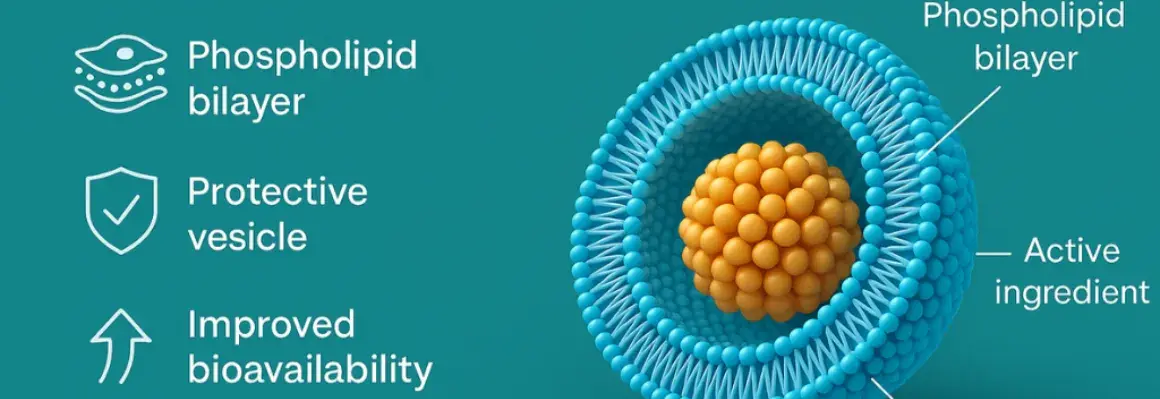
Structural Integrity and Encapsulation Stability Checks
Not only does a liposome that breaks down too soon not work well, but it can also act in a finished formula in an unpredictable way. This is why structural verification is seen as a core safety measure rather than a quality nicety. Hongda proves the stability of the vesicles using both HPLC data and TEM (transmission electron microscopy) images. This gives physical proof that curcumin is enclosed within bilayer vesicles instead of floating around freely. When dissolved, a properly made Liposomal Curcumin Powder should also show a noticeable Tyndall effect. This is a simple but telling sign that the phospholipid membrane has stayed together during processing.[2][3][6]
HPLC and TEM Structural Verification
Instrumental proof makes sure that the curcumin is really enclosed and not just mixed with phospholipids. This has a direct impact on how reliably the ingredient works in later uses. Hongda checks the amount of active curcumin using HPLC analysis, and TEM imaging shows the liposome structure clearly at the microscopic level. Buyers can check both the chemical content and the quality of the physical packaging of an item using these two different testing methods together before adding it to finished formulas. Hongda helps make sure that Liposomal Curcumin Powder works the same way in all kinds of goods, like pills, drinks, and functional health products, by mixing accurate analysis with structural proof.
Particle Size Consistency (100–200nm)
Particles are kept in a tight 100–200nm range by dynamic light scattering. This is done because particles of different sizes can become unstable and behave in strange ways when released into liquids. It is important to keep the particle distribution under control because the success of liposomes depends a lot on how regular and dispersed the vesicles are. Hongda keeps an eye on the particle size during production to keep them from sticking together and to make sure that the delivery qualities stay the same from batch to batch. Formulators can get more consistent processing results with this level of accuracy when making supplements, drinks, and other things that need advanced ingredient delivery. Nanoscale sizing that stays the same across the supply chain also helps with storage stability and product quality.[2][5][6]
|
Safety-Relevant Parameter
|
Specification
|
|---|---|
|
Encapsulation Efficiency
|
≥80% (Food Grade) / ≥90% (Pharmaceutical Grade)
|
|
Particle Size Range
|
100–200nm
|
|
pH Stability Range
|
3.0–7.0 (acidic beverage compatible)
|
|
Recommended Storage
|
Sealed, stored in the dark, 2–25°C
|
|
Shelf Life
|
24 months
|
|
Packaging Format
|
1kg/bag, 25kg/drum (contamination-controlled)
|
Electrostatic Stability in Acidic Formulations
Strong electrostatic resistance between vesicles in the pH range of 3.0 to 7.0 stops particles from sticking together or forming crystals. This is an important safety measure for companies that make acidic drinks or shots. Liposomal Curcumin Powder stays evenly distributed in different formulation settings as long as it stays electrostatically stable. Hongda checks the liposomal particles' physical stability to make sure they keep their shape while they are being processed and stored. This is especially helpful for companies that make drinks, since the way they look, feel, and suspend ingredients directly affect how well people like them. Stable performance in a range of pH levels gives formulators more freedom to come up with new delivery forms without compromising the ingredient's dependability.
Batch-to-Batch Uniformity Testing
Formulators don't have to guess whether one batch of Liposomal Curcumin Powder will behave differently from the next because the testing methods are the same for every production run. Hongda uses normal quality control methods to keep an eye on important factors like the amount of curcumin present, how well the particles are encapsulated, and how stable the product is. Before being shipped, each batch is checked against set standards. This keeps surprising differences from happening during large-scale production. This methodical approach is especially important for brands that need to place repeat orders with the same level of performance. Reliable number stability helps businesses keep the quality of their products high, makes quality control easier, and builds trust in their long-term supply relationships.
Manufacturing Environment Controls That Reduce Risk
Even a well-thought-out recipe can be affected by the place where it is made. This is where safety measures at the plant level come in. Hongda's plant is about 20,000 square meters and has more than ten modern production lines with 100,000-level cleaning workshops. These workshops keep stray particles from reaching sensitive stages of the packaging process. An SGS-standardized laboratory was set up with the help of university professors and is staffed by more than twenty professor-level researchers. It uses high-performance liquid chromatographs, gas chromatographs, and atomic absorption spectrophotometers to find problems with Liposomal Curcumin Powder before it gets to a customer's warehouse.
100,000-Level Purification Workshops
An air filter at the cleanroom level lowers the risk of infection, especially during the microfluidic cutting and drying stages, when particles are most likely to be affected by outside influences. In Hongda's 100,000-level cleaning workshops, sensitive liposomal structures are kept safe during production in a controlled environment as a liposomal curcumin powder manufacturer. Temperature, humidity, and cleanliness levels are carefully controlled to keep outside factors that could affect the quality of the product to a minimum. These strict environmental controls help keep the encapsulation working well and lower the risk of contamination during important steps in the process. For people around the world who want to buy Liposomal Curcumin Powder, a controlled production setting is a big sign of how reliable the manufacturing process is, even more so than basic ingredient testing.

Segregated Warehouse Storage Zones
Plant extracts, vitamins, and samples are kept separate and properly germ-free in a 3,000-square-meter building that is split into six separate areas. This stops products from different groups from coming into contact with each other.
Buyers who need documented proof of these safeguards before placing an order — certificates of analysis, TEM imaging, or customized specification sheets for Liposomal Curcumin Powder — are encouraged to reach Hongda's technical team directly at duke@hongdaherb.com, where formulation-specific safety questions can be answered before a commitment is made.
Trained Technical Staff Oversight
More than 150 workshop operation technicians work under standardized procedures, reducing the human-error variable that can otherwise affect consistency at high production volumes. Hongda provides systematic training covering production processes, equipment operation, hygiene requirements, and quality control procedures to ensure every technician understands their role in maintaining product safety. Experienced staff monitor critical steps such as encapsulation, drying, sampling, and packaging, allowing potential issues to be identified and corrected quickly. This combination of skilled personnel and documented operating standards helps maintain stable production performance, ensuring that each batch of Liposomal Curcumin Powder meets the same quality expectations required by global supplement manufacturers.

Pre-Shipment Final Testing
No batch leaves the facility without a final round of ingredient, residue, and microbial testing, functioning as the last checkpoint before Liposomal Curcumin Powder is released for export. Hongda conducts comprehensive verification of key quality indicators, including curcumin content, encapsulation efficiency, particle size, heavy metal levels, pesticide residues, and microbiological safety before shipment approval. This final evaluation ensures that finished products continue to meet established specifications after the complete manufacturing process. By combining final testing with batch-specific documentation and Certificates of Analysis, Hongda provides buyers with transparent quality evidence and greater confidence when incorporating Liposomal Curcumin Powder into commercial supplements, food, and wellness formulations.
Certifications That Confirm International Safety Compliance
Internal testing carries more weight when it is backed by external verification, which is why certification history is one of the clearest safety indicators a buyer can check. Since 2001, Hongda has secured food production and feed additive licenses, Halal and Kosher certification, BRC, FDA certification, and organic certification, and in 2025 added cGMP, FSSC22000, SC certification, ISO22000, ISO9001, and both EU and NOP organic certifications. For any company evaluating a liposomal curcumin powder manufacturer, this certification trail is a practical way to confirm that safety claims are verified by recognized third-party bodies rather than taken on faith.
These frameworks require documented process controls at every production stage, giving buyers structural assurance that safety is managed systematically rather than reactively.
Formal quality and food safety management certification confirms that Hongda's internal procedures are audited against globally recognized benchmarks, not just internal company policy.
These certifications confirm that ingredient sourcing and processing methods from a liposomal curcumin powder supplier meet religious and regulatory standards recognized across US, European, and Middle Eastern markets. Dual organic certification means raw material sourcing has been independently audited against strict input and processing rules, adding another verified layer to overall product safety.
|
Certification
|
Relevance to Safety
|
|---|---|
|
cGMP (2027)
|
Validated manufacturing process controls
|
|
FSSC22000 (2027)
|
Food safety system certification
|
|
ISO22000 / ISO9001 (2027)
|
Quality and food safety management
|
|
Halal / Kosher (2001–2027)
|
Ingredient and process compliance
|
|
FDA Certification (2001–2026)
|
US regulatory recognition
|
|
Organic EU / NOP (2027)
|
Verified organic sourcing standards
|
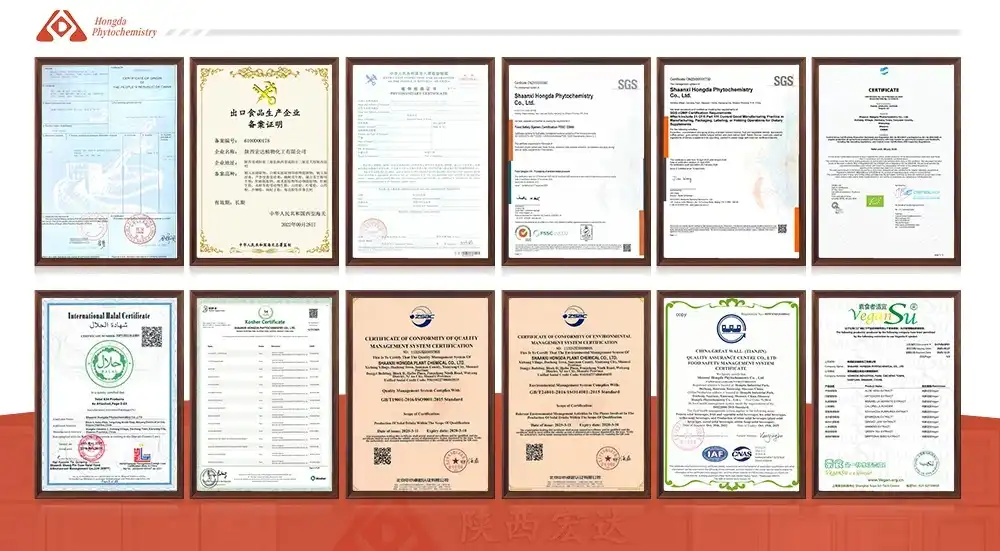
Conclusion
These frameworks require documented process controls at every production stage, giving buyers structural assurance that safety is managed systematically rather than reactively. [4]Safety in Liposomal Curcumin Powder comes from controllable, verifiable steps: screened raw materials, confirmed encapsulation structure, cleanroom-grade manufacturing, and internationally recognized certification. Shaanxi Hongda Phytochemistry Co., Ltd. builds each of these precautions into its standard process rather than treating them as extras. For brands seeking a dependable, well-documented liposomal curcumin source, Hongda's certified facility offers a strong foundation to formulate confidently and bring safer, higher-bioavailability products to market.
FAQ
1. How does Hongda verify that curcumin is truly encapsulated?
Through HPLC data combined with TEM imaging, which physically confirms curcumin sits inside bilayer phospholipid vesicles.
2. What storage conditions protect Liposomal Curcumin Powder stability?
Sealed storage in the dark between 2–25°C is recommended to preserve the phospholipid structure across the 24-month shelf life.
3. Is the phospholipid carrier tested for allergen risk?
Yes, non-GMO sunflower phospholipids are used instead of soy lecithin to reduce allergen exposure for a broader consumer base.
4. Which certifications support safety claims for this ingredient?
cGMP, ISO9001, ISO22000, FSSC22000, Halal, Kosher, FDA, and EU/NOP organic certifications all support documented safety compliance.
Source Safety-Verified Liposomal Curcumin Powder | HONGDA
Formulating with confidence starts with a supplier that treats safety as a built-in process, not an afterthought. Shaanxi Hongda Phytochemistry Co., Ltd. combines contaminant screening, structural verification, cleanroom manufacturing, and a growing international certification portfolio to support your next Liposomal Curcumin Powder project. Whether you need documented COAs, customized encapsulation specifications, or guidance on regulatory alignment for your target market, our technical team is ready to help. Contact us directly at duke@hongdaherb.com to request samples, documentation, or a formulation consultation today.
References
1. Anand, P., Kunnumakkara, A. B., Newman, R. A., & Aggarwal, B. B. (2007). Bioavailability of curcumin: problems and promises. Molecular Pharmaceutics.
2. Cheng, C., Peng, S., Li, Z., Zou, L., Liu, W., & Liu, C. (2017). Improved bioavailability of curcumin via liposomal encapsulation. Food & Function.
3. Feng, T., Wei, Y., Lee, R. J., & Zhao, L. (2017). Liposomal curcumin and its application in cancer therapy. International Journal of Nanomedicine.
4. Gupta, S. C., Patchva, S., & Aggarwal, B. B. (2013). Therapeutic roles of curcumin: lessons learned from clinical trials. The AAPS Journal.
5. Ipar, V. S., Dsouza, A., & Devarajan, P. V. (2019). Enhancing curcumin oral bioavailability through nanoformulations. European Journal of Drug Metabolism and Pharmacokinetics.
6. Zheng, B., & McClements, D. J. (2020). Formulation of more efficacious curcumin delivery systems using colloid science. Molecules.