




What purity checks should supplement brands carry out when sourcing bulk citicoline powder?
Bulk buying amplifies slight gaps in specifications. An incorrect form, poor test procedure, or fuzzy COA might become a production issue. Citicoline is also known as CDP-choline; however, a recognizable name is no assurance of identification, potency, or consistent purity. The citicoline powder of Hongda Phytochemistry, the brand of Shaanxi Hongda Phytochemistry Co., Ltd. (Shaanxi Hongda Phytochemistry Co., Ltd.) is backed by the company’s claimed production scale and laboratory facilities. This may make supplier certification more realistic for supplement brands, with each batch validated against the current paperwork. This advice is a risk-based purity checklist before you buy bulk citicoline powder.
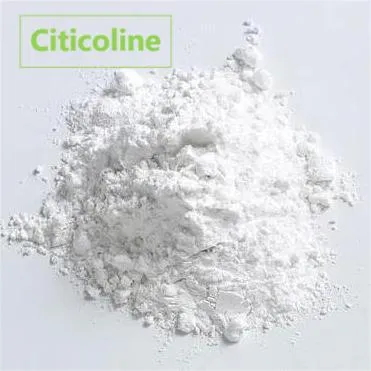
Define the material before setting its purity target
Confirm the identity and supplied form
First, be sure you know precisely what the seller means by "citicoline." The molecule is termed CDP-choline and is involved in phosphatidylcholine production [1]. It is not a catch-all word for any choline compounds and should not be confused with choline bitartrate, alpha-GPC, or lecithin. Current specification: Check chemical name, identification data, and any salt or hydration form given. Confirm that the material received, the documentation given, and the component listed on your formulation records are all the same specified substance.
Separate assay from total purity
An assay result is the measured amount of the target substance using a given technique and reporting basis. It may not necessarily purport to include all associated substances, contaminants, or residual solvents in the material. If the COA does not include a technique, reference standard, sample preparation, or if the result is presented as-is or on a drying basis, it might be difficult to interpret a “high assay” value. For citicoline powder, inquire how the assay is calculated and what additional tests are included in the purity profile. A good specification separates assay and related-substance limitations from other quality criteria. This enables comparison of supplier quotes and avoids a headline figure from being taken as the whole judgment of quality.
|
Item of Test
|
Limits of Test
|
Results of Test
|
|
Appearance
|
White crystalline or crystalline powder
|
Conform
|
|
Assay by HPLC
|
≥98%
|
99.85%
|
|
Identification
|
(1)A green colour is produced
(2)The retention time of the principal peak in the chromatogram obtained with the test solution is identical with that of the principal peak in the chromatogram obtained with the reference solution
(3)The infrared absorption spectrum is concordant with the standard spectrum.
(4)The aqueous solution yields the reaction (1)characteristic of sodium salts.
|
Complies
Complies
Complies
Complies
|
|
pH
|
6.0---7.5
|
6.9
|
|
Clarity, color of solution
|
Clear, colorless
|
Complies
|
|
Chloride
|
≤0.05%
|
Complies
|
|
Ammonium salt
|
≤0.05%
|
Complies
|
|
Iron salt
|
≤0.01%
|
Complies
|
|
Phosphate
|
≤0.1%
|
Complies
|
|
Related substances
|
5'-GMP≤0.3%
|
0.006%
|
|
Single impurity ≤0.2%
|
0.006%
|
|
|
Total Another Impurity≤0.7%
|
0.02%
|
|
|
Residual solvents
|
Limit of methanol≤0.3%
|
Undetected
|
|
Limit of ethanol≤0.5%
|
Undetected
|
|
|
Limit of acetone≤0.5%
|
Undetected
|
|
|
Loss on drying
|
≤6.0%
|
0.8%
|
|
Heavy Metals
|
≤5ppm
|
Complies
|
|
Arsenic salt
|
≤0.0001%
|
Complies
|
|
Endotoxin
|
<0.30EU/mg
|
Complies
|
|
Limit of microbe
|
Total bacterial count≤1000 CFU/g
Yeast & Mold≤100 CFU/g
E. Coli: Negative
|
< 10 CFU/g
< 10 CFU/g
Undetected
|
|
Conclusion
|
The product meets with the CP2020 standard.
|
|
Set acceptance criteria before ordering
Before you start evaluating rates, determine what tests and constraints your team needs for the market and product you want. The specification should include the ingredient identification, assay basis, impurity limits, moisture requirement, packaging, storage conditions and test techniques or method references. The restrictions should be justified based on the supplier’s procedure, relevant legislation, and your own risk assessment – NOT borrowed from another ingredient or inferred from a marketing page. Agree in advance how out-of-specification findings will be reviewed and if an independent laboratory may be utilized to settle a disagreement when qualifying wholesale citicoline powder. A defined specification protects both parties. It ensures more consistent acceptance choices and offers the supplier a clear objective to work toward for manufacture and batch release.
|
Quality question
|
Evidence to request
|
How to interpret it
|
|---|---|---|
|
Is this the declared ingredient?
|
Identification result against a suitable reference
|
Confirm identity, not just a matching product name
|
|
How much citicoline is present?
|
Assay result, method, and reporting basis
|
Compare results only when basis and method are clear
|
|
What other compounds are present?
|
Related-substance or impurity profile
|
Check against agreed, product-specific limits
|
|
How much water is present?
|
Moisture result with test method
|
Use the specification’s stated limit and method
|
Build a risk-based incoming-lot test panelUse fit-for-purpose identity methods
A good identification check should identify citicoline from likely alternatives, similar chemicals, and formulation components. A validated chromatographic technique may provide helpful proof of identification, but retention time alone may be inadequate if the method has not been proved to be selective. Additional confidence may be obtained via an orthogonal strategy depending on the supplier’s process and accessible methodologies. Ask the laboratory what reference standard they use, how they prepare the sample, and what acceptance criteria validate the identification. The approach should be suitable for the real citicoline powder matrix and not just naively taken from another product. The ICH advice on analytical procedure development and validation provides a framework to evaluate whether a technique is appropriate for its intended purpose [2][3].
Measure assay and related substances with adequate specificity
Assay and impurity testing should be performed in a manner that allows the assay of the target chemical to be determined without interference from relevant related compounds or excipients. An approved HPLC or UPLC method may be useful; however, the method name itself does not provide evidence of accuracy, precision, specificity, or appropriateness. Request the technique reference or a description of validation features. Determine if the test is conducted by the manufacturer or an outside laboratory. Also, for citicoline powder, inquire whether the standard includes related important chemicals and how findings are reported. A chromatographic technique should be supported by appropriate system-suitability controls and reference standards. Useful background for the evaluation of chromatographic methods is provided by USP General Chapter[2][3][4].
Screen contaminants according to source and exposure
A good contamination panel will represent how the item is created, handled, and packed. The risk evaluation may include elemental impurities, residual solvents, microbiological quality, moisture, and other process-related impurities depending on the process and relevant market criteria. Pesticide testing is especially essential if the raw-material route poses a genuine pesticide exposure risk; do not assume it is inherently the most informative test for all citicoline supply chains. For each test, verify analytes covered, method, reporting units, and limits applicable. Dietary supplement purchasers may utilize USP <2232> as a reference point for elemental contaminants and to validate local regulatory requirements.[5] The goal is to have a balanced panel that identifies meaningful hazards, without muddying the waters with a huge number of tests and proven control.”
|
COA field to review
|
Buyer’s verification question
|
Action if unclear
|
|---|---|---|
|
Lot number and sample identity
|
Does the COA match the shipment and label?
|
Hold the lot while records are reconciled
|
|
Assay and method
|
Is the method stated, and is the result basis clear?
|
Request clarification or supporting data
|
|
Impurity and contaminant results
|
Do the analytes and limits match the agreed specification?
|
Review the risk assessment and test scope
|
|
Laboratory details
|
Is the testing lab identified and competent for the method?
|
Ask for scope, method, or independent confirmation
|
Audit the lot history and the system behind the COATreat the COA as a batch record, not a promise
A supplier COA only has value if it is for the exact lot you are buying and provides findings against a definitive standard. Lot code, production or release date, test methods, units, and any result provided as “complies” without a numerical value. For the citicoline supplier, inquire what parameters are evaluated on each batch and what is validated regularly or by an outside lab. If a report lacks a test required by your specification, do not assume it was done; collect the needed proof. Also agree on sample retention and the investigation of an out-of-specification finding. An independent laboratory may be beneficial for qualification or a dispute, but the scope and approach need to be appropriate to the substance. ISO/IEC 17025: General criteria for the competence of testing and calibration laboratories. [6]
Check factory capability and its relevance to the product
Shaanxi Hongda Phytochemistry Co., Ltd. was founded in 2001. The firm states that it has a 20,000 square meter plant, more than ten sophisticated manufacturing lines, 100,000-class purifying workshops, and over 150 workshop personnel. It also says its factories produce up to 3,000 tons a year across all of its activities. That’s a company-wide capability, not a boast regarding citicoline production alone. The firm has two R&D institutes and a laboratory jointly built with university academics and according to SGS standards, with more than 20 R&D and testing personnel. The laboratory equipment reported included HPLC, GC, spectrophotometers, and atomic absorption devices. Ask what facility, line, and controls are applicable for the citicoline grade you are looking for. Ask for product-specific process and release documents.
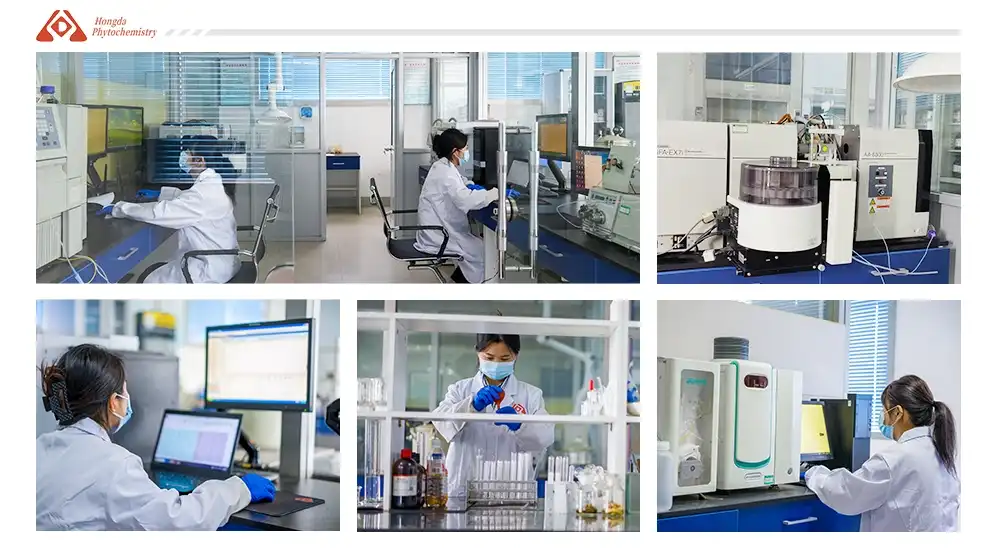
Verify certificates, traceability, and photo evidence
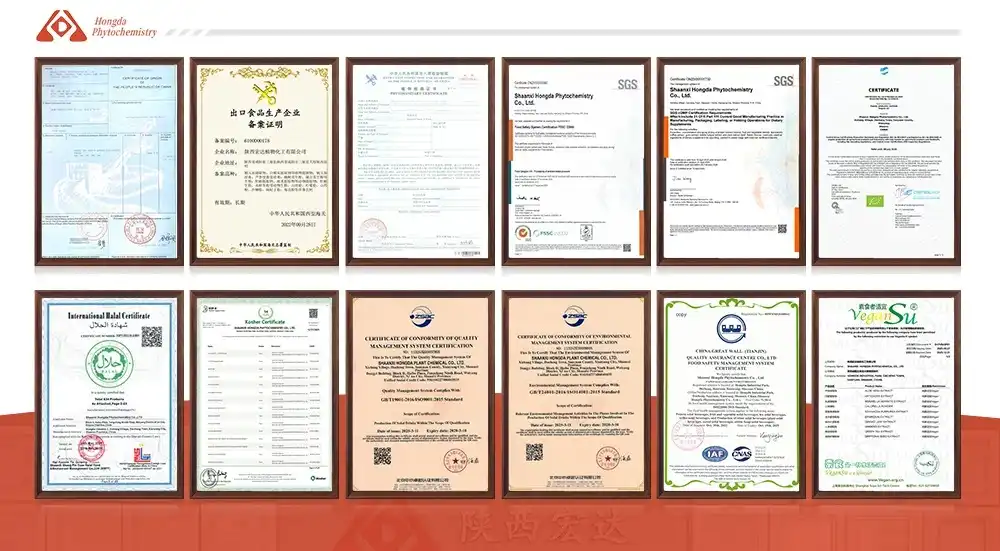
Hongda lists credentials including halal and kosher certification, BRC, food production licenses, and FDA-related credentials; it also reports cGMP, FSSC 22000, SC, ISO 22000, ISO 9001, and EU/NOP organic certifications added in 2025. Request and check existing certificates, their scope, validity, and site coverage. FDA registration does not mean the FDA approves or endorses a supplement. Similarly, organic certification of a facility or other product does not mean that citicoline is an organic ingredient. Hongda also mentions botanical planting bases; nonetheless, they don’t prove the source of citicoline; therefore, seek the ingredient’s own supply-chain information. A true picture case file with dated photos of the actual sample, lot label, and packaging with its COA, not a generic factory image offered as lot proof.
Qualify the commercial lot before you buy
Test a representative sample in your own system
The goal of a supplier’s release testing is different from your incoming qualification. Before you purchase a big quantity, request a representative sample with the lot-specific Certificate of Analysis and compare the material to your specified spec. Use a documented sampling strategy, identify the sample and lot clearly, and test the parameters that matter to your product. If the powder is to be combined with other actives or excipients, evaluate the powder in the process to which it will be subjected. Appearance alone cannot demonstrate identification or assay. Take a sample, and record the findings for comparison with future shipments. A well-documented pilot may demonstrate any changes in handling, flow, or formulation compatibility with buy citicoline in bulk before those discrepancies impact a full production batch.
Confirm storage, packaging, and delivery readiness
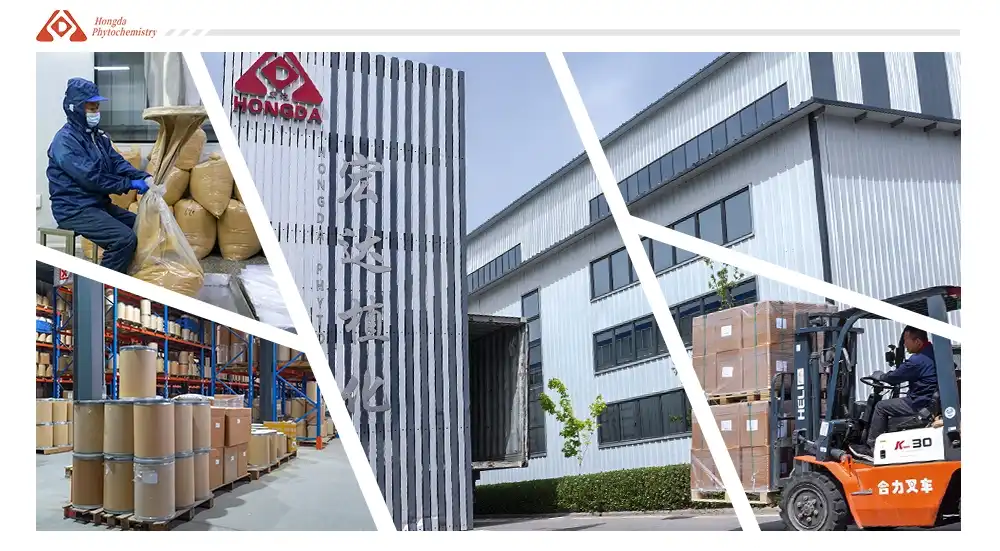
And a purity choice is not made when the lab data is clear. Ask about the product’s packaging, the supplier’s recommended storage conditions, and how the containers are safeguarded in transportation. Review the container label and lot coding. Provide shipping papers to the receiving and quality teams. Hongda has a 3,000-square-meter warehouse with six storage rooms. A and B are largely for fruit and vegetable powders, C and D for natural plant extracts, E for vitamins and amino-acid products, and F for samples. Instead of presuming it falls into one of those categories, ask what storage and handling regulations apply to the citicoline powder explicitly. When searching for citicoline powder, additionally check the availability and lead times for the grade and pack size you really want.
Compare suppliers with a decision-ready brief
A good sourcing brief will enable all candidates to answer the same questions: form of ingredient, assay technique and basis, impurity panel, batch COA, lab data, packaging, storage, lead time, and deviation management. Don’t only use the lowest-cost quote; use it while comparing citicoline sources. Teams looking for “buy citicoline in bulk” should note that volume is not a purity standard. Bulk purchasing increases the need for document review and incoming controls, not decreases them. If you are looking for citicoline powder from Hongda, please give us your goal specification, application,
and destination market to duke@hongdaherb.com. Before you go to a commercial order, the team may review product documentation and sample possibilities. At this point, a clear technical discussion might save time during certification.
Conclusion
Buy citicoline in bulk: purity certification begins with identification and form of supply, followed by assay interpretation together with related chemicals and risk-based contamination testing. A lot-specific COA, validated analytical procedures, and proven lab competency are greater proof than just a headline purity statistic. Brands should also examine whether manufacturing rules, certifications, and traceability records apply to the particular grade and location. Hongda Phytochemistry says it has considerable production and lab facilities. Buyers are advised to validate product-specific facts and to test a representative sample of the product against its own stated specification. Define acceptance criteria when you purchase, keep records for each batch, and only scale up if the evidence supports the choice.
FAQQ1: Is citicoline the same as CDP-choline?
A: The names commonly refer to the same compound. Confirm the supplied form in the specification.
Q2: Does a high assay prove complete purity?
A: No. Review related substances and relevant contaminant results separately.
Q3: Should every lot receive the same tests?
A: Follow your specification and risk assessment; confirm which tests are performed lot by lot.
Q4: What should a citicoline COA include?
A: At minimum, a matching lot ID, results, methods, units, and applicable limits.
Q5: Can I order a sample before buying wholesale?
A: Ask Hongda about sample availability and test it against your requirements.
Request a Bulk Quality Pack from HONGDA
Before you commit to a commercial order, request the documents that let your quality team make a sound decision: the current specification, a lot-specific COA, applicable certificates, storage guidance, and information about available samples. Share your target assay, test requirements, destination market, and preferred pack size so Hongda can respond to your actual purchasing brief. If your team is searching “buy citicoline in bulk,” use the conversation to confirm both quality criteria and supply details—not just price. A sample tested against your own specification is a practical next step for qualifying citicoline powder. For product information, sample options, or a quotation, contact duke@hongdaherb.com.
References
1. Kennedy EP, Weiss SB. The function of cytidine coenzymes in the biosynthesis of phospholipids. Journal of Biological Chemistry. 1956;222(1):193–214.
2. International Council for Harmonisation. ICH Q2(R2): Validation of Analytical Procedures. 2023.
3. International Council for Harmonisation. ICH Q14: Analytical Procedure Development. 2023.
4. United States Pharmacopeia. General Chapter <621>, Chromatography. USP–NF.
5. United States Pharmacopeia. General Chapter <2232>, Elemental Contaminants in Dietary Supplements. USP–NF.
6. International Organization for Standardization. ISO/IEC 17025:2017: General Requirements for the Competence of Testing and Calibration Laboratories.